Understanding time Addition Worksheets for Ages 8-9
6 filtered results
-
From - To
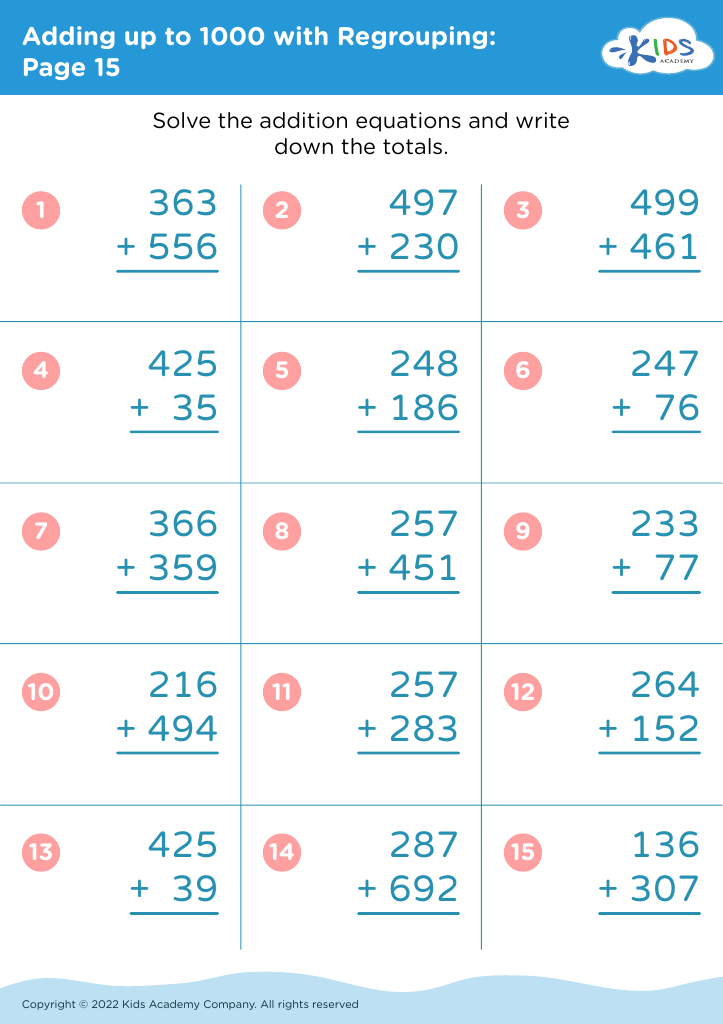
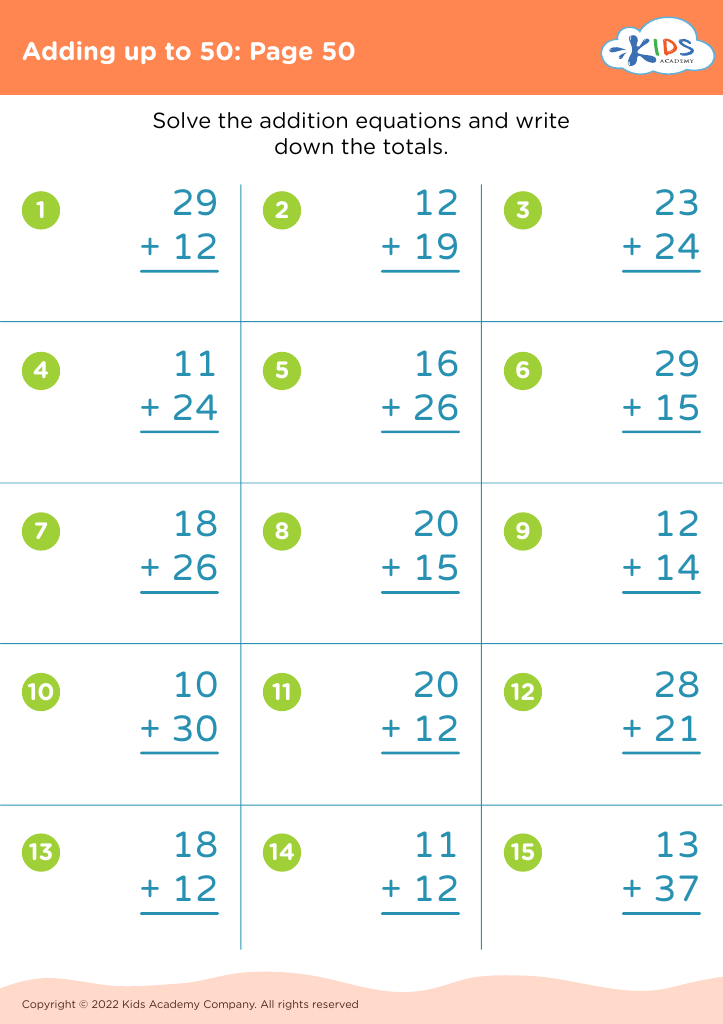
Discover our expertly designed "Understanding Time Addition Worksheets for Ages 8-9" which combine the fundamentals of time-telling and addition skills. Specially crafted for young learners, these engaging worksheets guide children through the basics of reading clocks, calculating time intervals, and adding minutes and hours. Boost your child's confidence in math while enhancing their time-management abilities. With colorful illustrations and clear instructions, our worksheets make learning fun and effective. Ideal for homeschoolers, teachers, and parents looking to support their child's educational journey. Unlock your child's potential today with our comprehensive and enjoyable time addition resources.
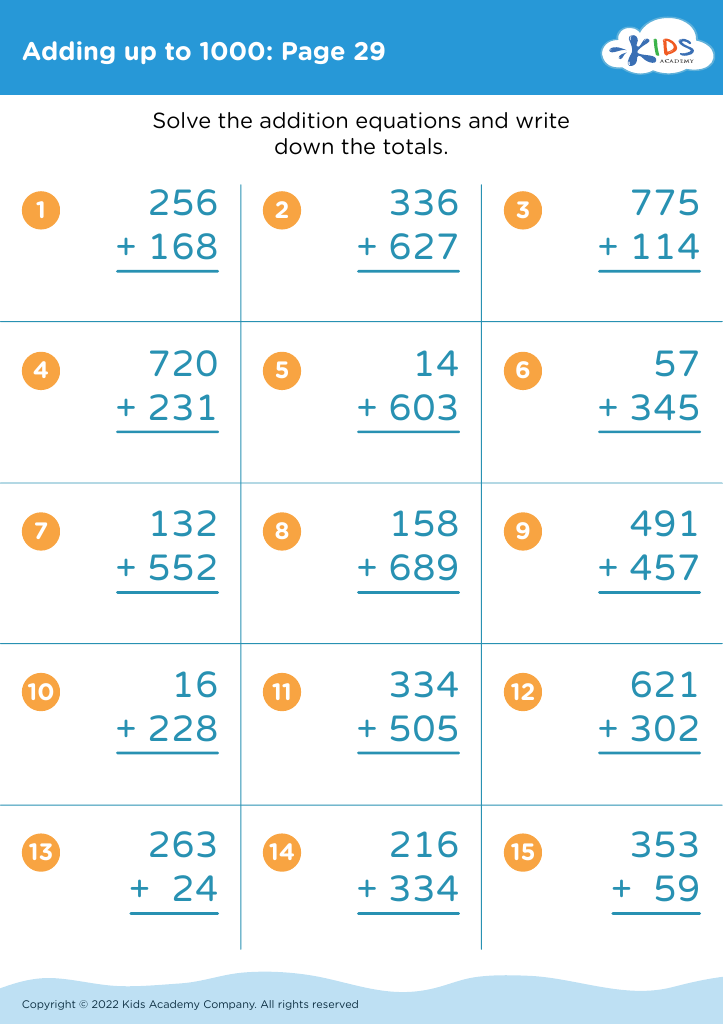
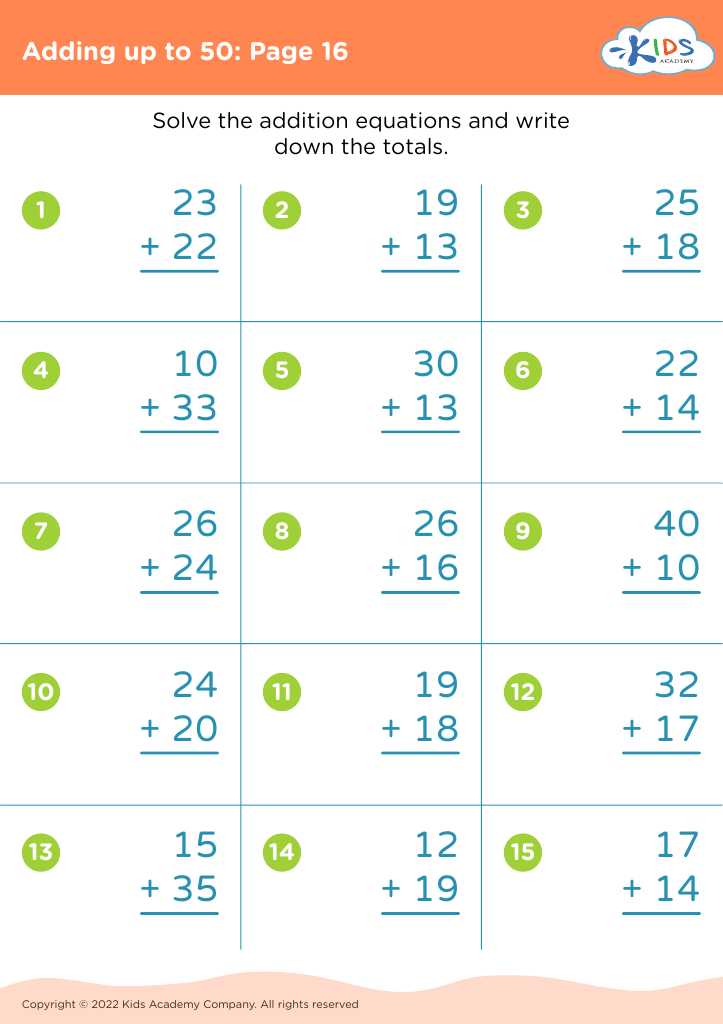
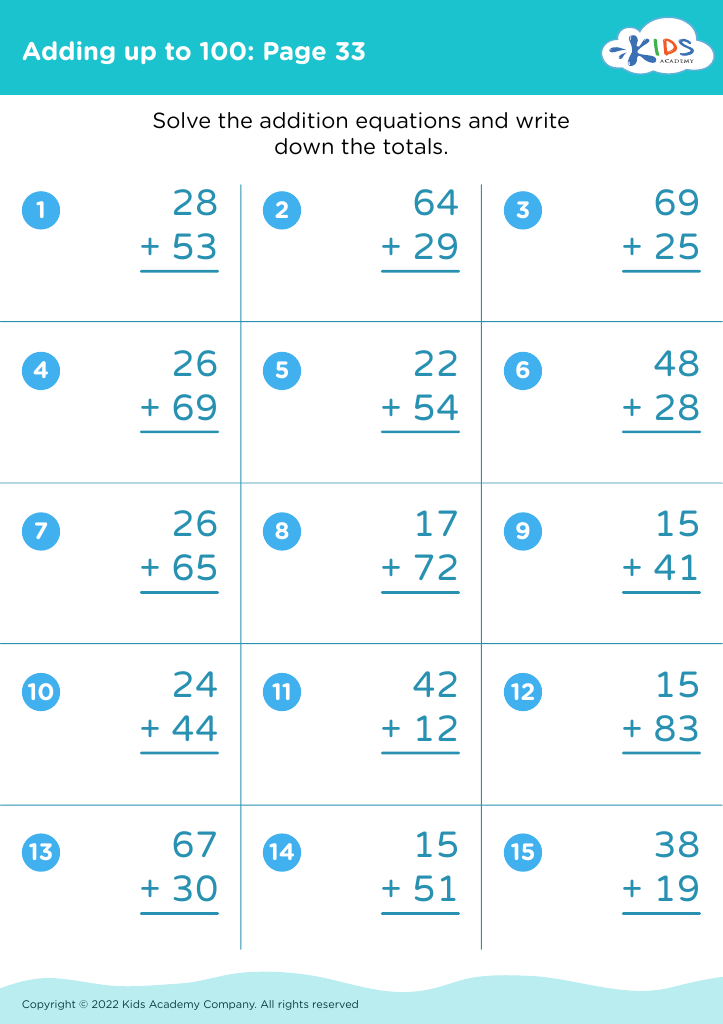
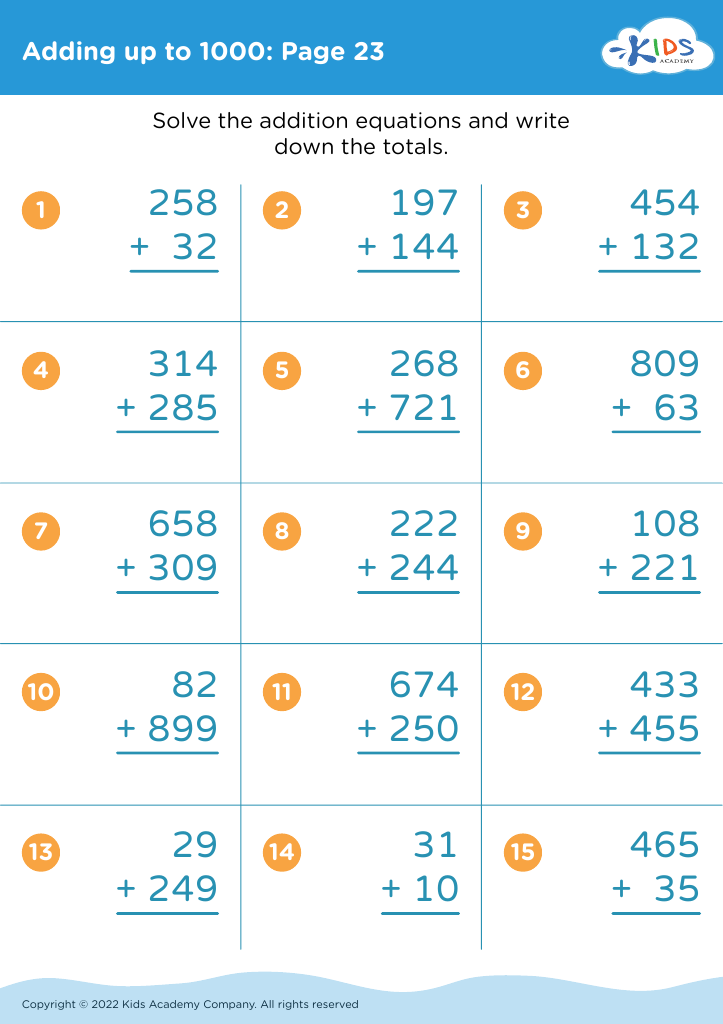







Understanding time addition is an essential skill for 8-9-year-olds, helping establish a foundation for time management, responsibility, and numeracy. When children grasp how to add minutes and hours, they start appreciating the concept of elapsed time, necessary for daily routines such as adhering to school schedules, completing homework, and participating in extracurricular activities.
Parents and teachers should emphasize this skill to foster a sense of structure and efficiency in children. For example, knowing how to calculate how long it takes to finish an assignment encourages better academic planning, reducing last-minute stress. It also nurtures independence as children learn to anticipate the duration of activities and manage their own time without constant reminders.
Moreover, understanding time addition enhances mathematical abilities by providing practical applications of arithmetic operations. Interpreting time involves critical thinking and the use of addition and sometimes subtraction, reinforcing these foundational skills in a meaningful context.
Overall, emphasizing time addition prepares children for real-world situations, boosting their confidence and self-discipline. It equips them with vital life skills that extend beyond the classroom, ultimately enabling them to become more organized, punctual, and self-reliant individuals.








