Visual interpretation Addition Worksheets for Ages 8-9
4 filtered results
-
From - To
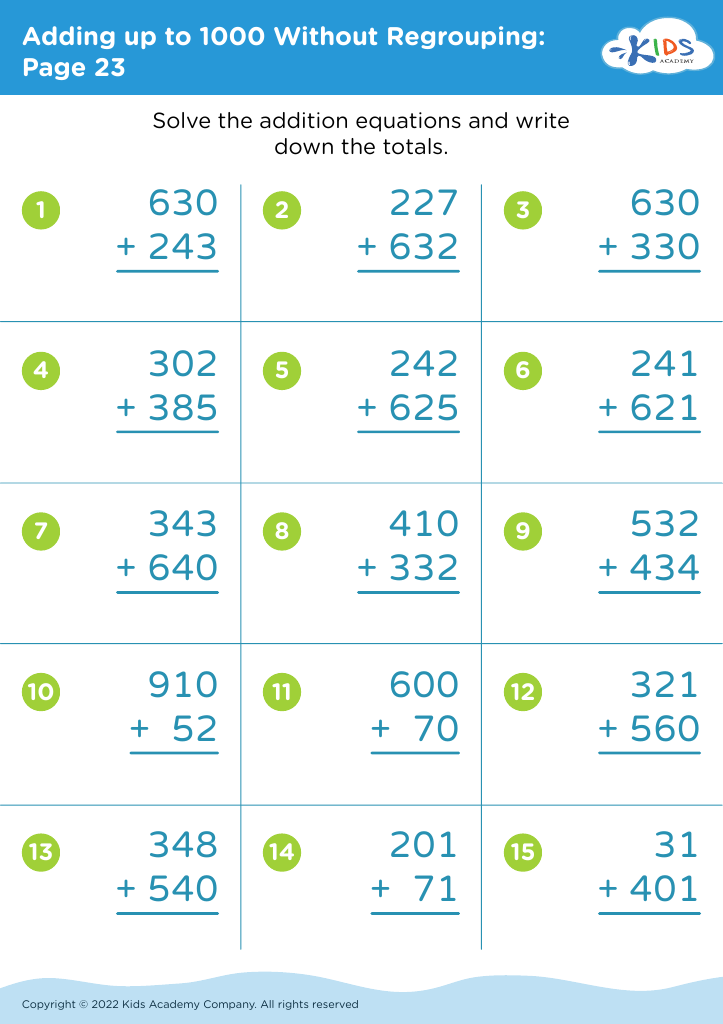
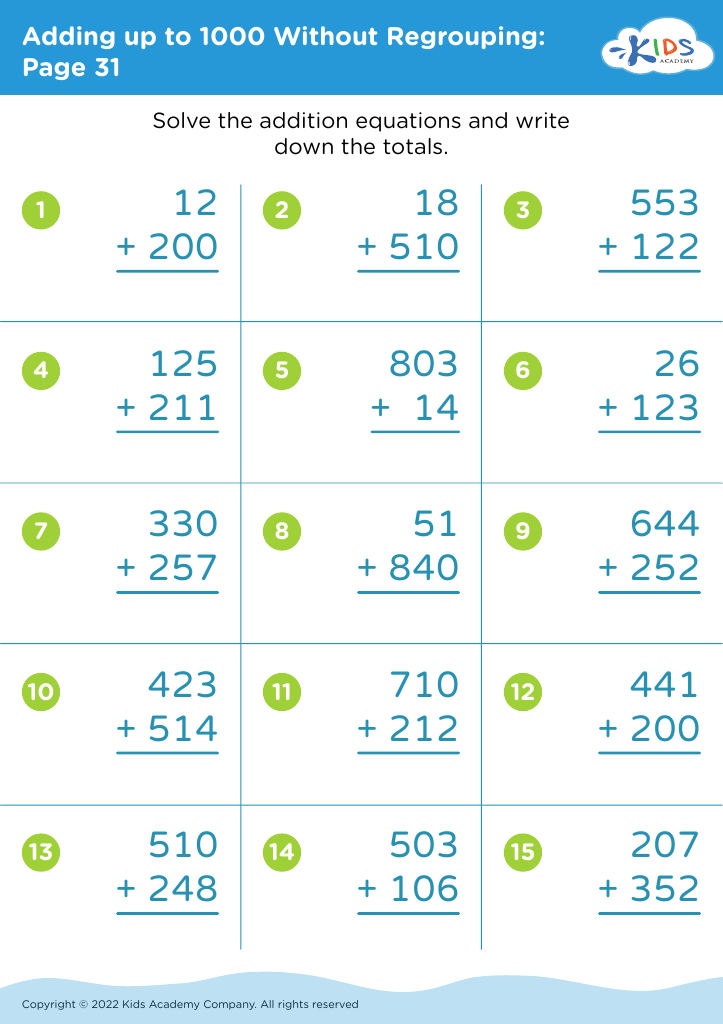
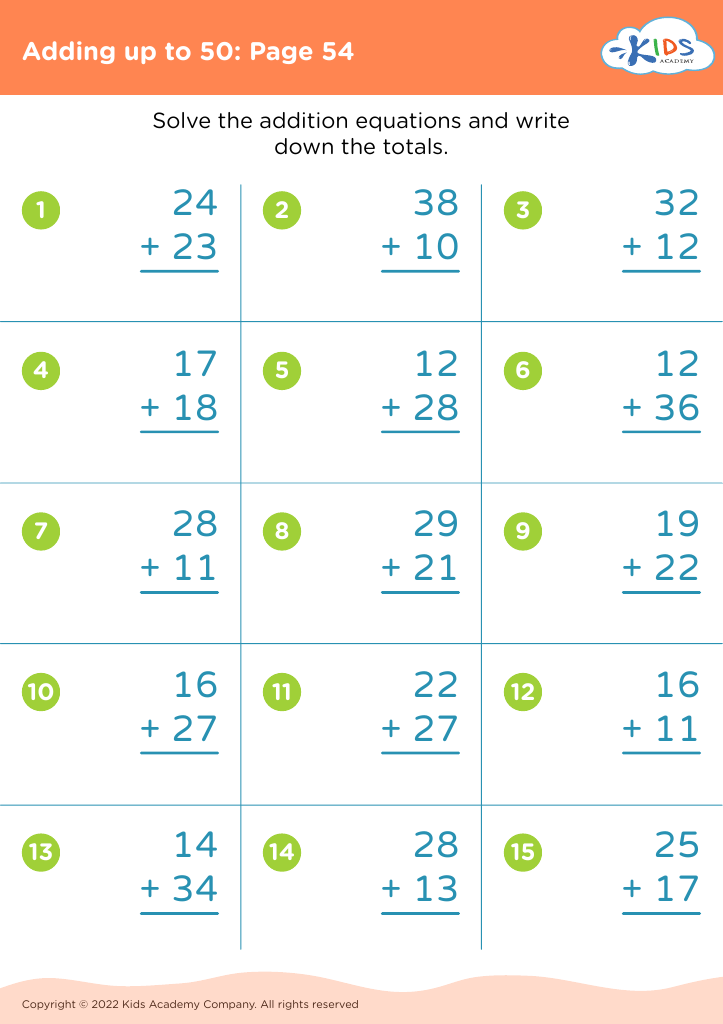
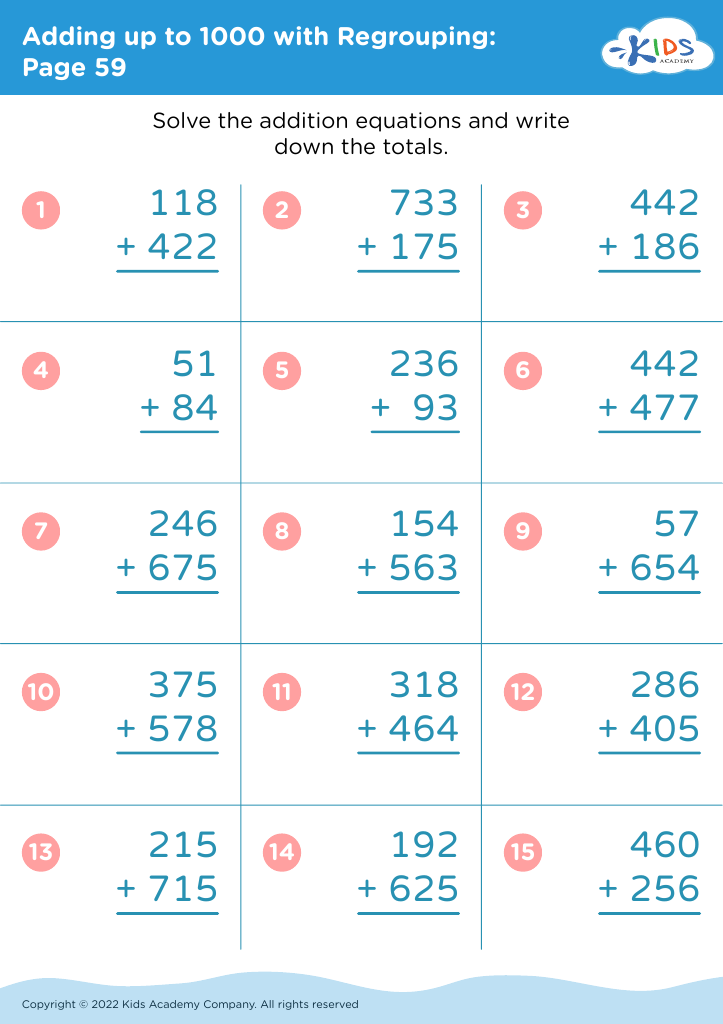
Discover our engaging Visual Interpretation Addition Worksheets designed specifically for children ages 8-9. These worksheets help young learners enhance their addition skills by using visual aids, such as pictures and diagrams, to transform abstract concepts into tangible experiences. With colorful and interactive exercises, kids will practice solving addition problems through visual representation, making learning both fun and effective. Our worksheets promote critical thinking and improve number sense, catering to various learning styles. Perfect for both classroom use and at-home practice, these resources will support your child's mathematical development and build confidence in their abilities. Start your journey to math mastery today!








Visual interpretation of addition is crucial for students aged 8-9 as it enhances their mathematical understanding and problem-solving skills. At this age, children are transitioning from concrete operations to more abstract thinking, making visual aids instrumental in solidifying their comprehension of addition concepts. When parents and teachers use visuals—like number lines, arrays, or grouping strategies—students can more effectively grasp how numbers relate to one another, making the addition process less intimidating.
Visual learning also caters to diverse learning styles. Children who find difficulty with traditional algorithms often embrace visual methods, thus fostering confidence in their abilities. Additionally, visual interpretation promotes critical thinking, as students learn to analyze and manipulate representations to solve problems. It encourages them to articulate their reasoning and enhances their communication skills.
Finally, integrating visual interpretations into addition practices prepares students for more complex math concepts later on. By building a solid foundation, educators and parents equip children with the tools necessary for academic success. In essence, visual interpretation serves not only as a pedagogical strategy but also as a gateway to a lifetime of mathematical competence and enjoyment. Hence, it is vital for parents and teachers to prioritize this approach in their instruction.








