Color recognition Arrays Worksheets for Ages 8-9
3 filtered results
-
From - To
Discover our engaging Color Recognition Arrays Worksheets designed specifically for kids aged 8-9! These worksheets help young learners develop essential color identification skills while reinforcing critical thinking and comprehension through array recognition. Each activity encourages creativity and fun, allowing students to explore colors in exciting ways. With a variety of exercises, children can practice sorting, matching, and identifying colors within diverse array patterns. Perfect for classroom use or at-home learning, these worksheets foster a colorful and interactive learning environment, ensuring your child enhances their cognitive skills while enjoying vibrant visual challenges. Dive into our collection and watch their knowledge blossom!
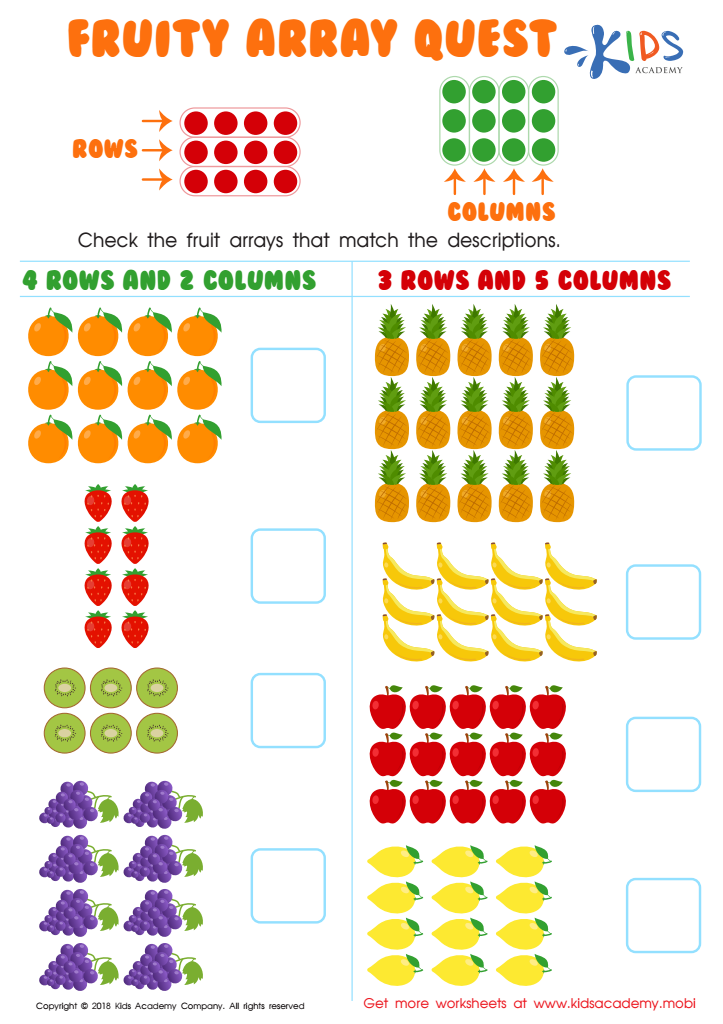
Fruity Array Quest Worksheet
 Assign to My Students
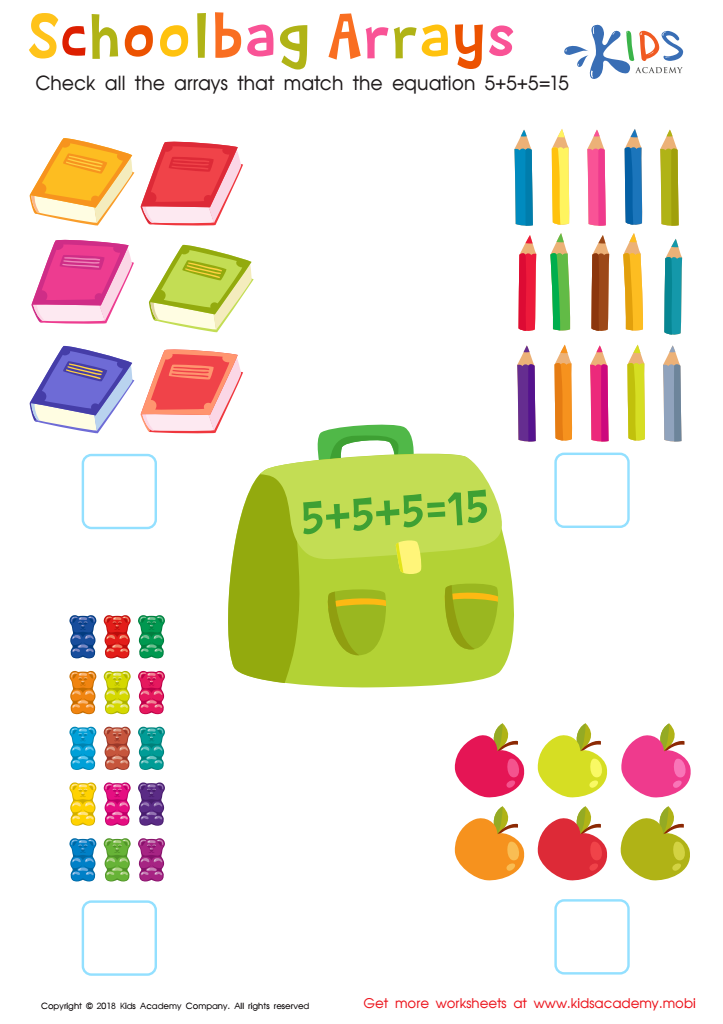
Schoolbag Arrays Worksheet
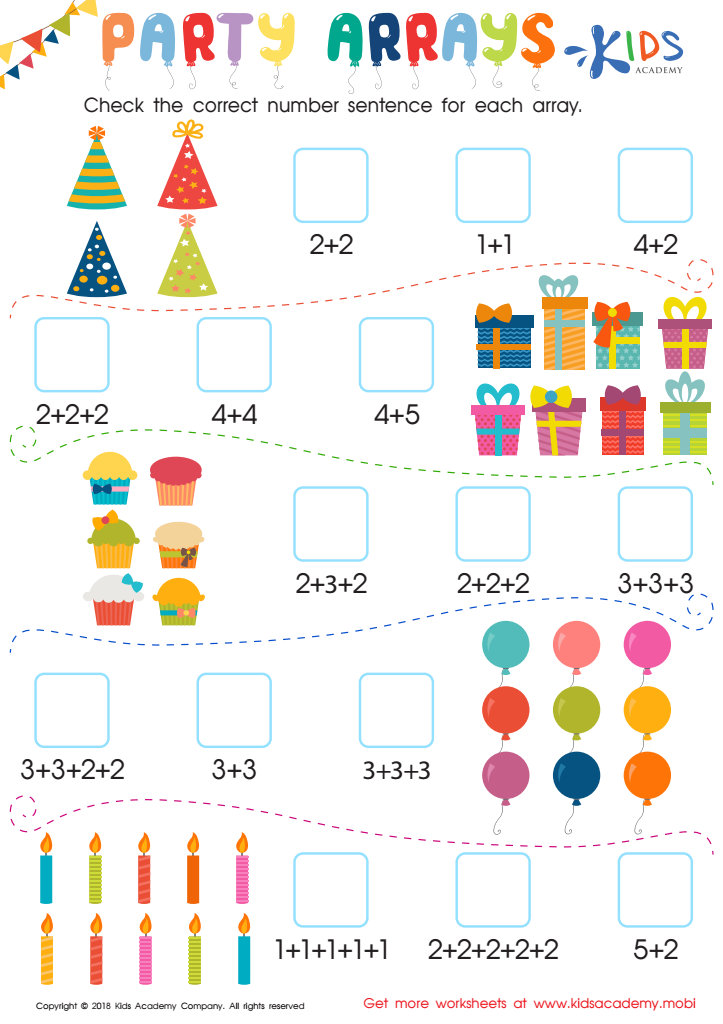
Party Arrays Worksheet








Color recognition is a fundamental skill that plays a crucial role in the development of children aged 8-9. Understanding and identifying colors is not just about aesthetics; it has significant implications for cognitive development and learning. For parents and teachers, fostering this skill enhances a child's ability to engage with the world around them. Color recognition aids in language development as children learn to describe objects, discuss emotions linked to colors, and expand their vocabulary.
Moreover, recognizing colors can improve children's observation skills and attention to detail, which are essential for problem-solving in various subjects like math, science, and art. Utilizing color recognition arrays—grids or systems that organize colors—can encourage children to experiment with combinations, improving their creativity and critical thinking.
In educational settings, working with color arrays can also facilitate collaborative learning experiences, where kids discuss and compare different colors, fostering teamwork and communication skills. Ultimately, teaching color recognition through structured activities not only supports academic growth but promotes emotional intelligence and personal expression. Parents and teachers should care about color recognition as it contributes to a well-rounded, enriched learning experience, setting the foundation for future academic success and personal development.








