Multiplication practice Arrays Worksheets for Ages 8-9
4 filtered results
-
From - To
Discover engaging "Multiplication Practice Arrays Worksheets" designed for children aged 8-9 at Kids Academy. Our expertly crafted worksheets help young learners grasp multiplication concepts through visual arrays, making math learning enjoyable and effective. Ideal for both classroom use and home practice, these worksheets aim to bolster your child's multiplication skills and confidence. With a variety of exercises, children can practice real-world problem-solving techniques in a fun and interactive manner. Enhance your child's math journey today with our comprehensive and stimulating multiplication arrays worksheets! Visit Kids Academy to start practicing and mastering multiplication.
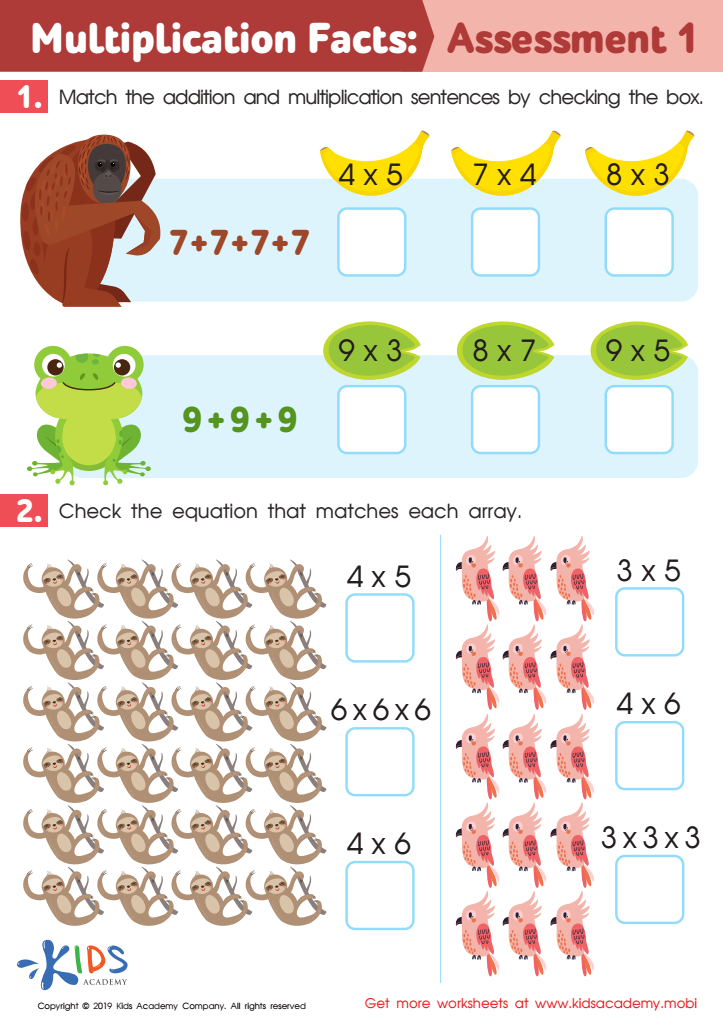
Multiplication Facts: Assessment 1 Worksheet
 Assign to My Students
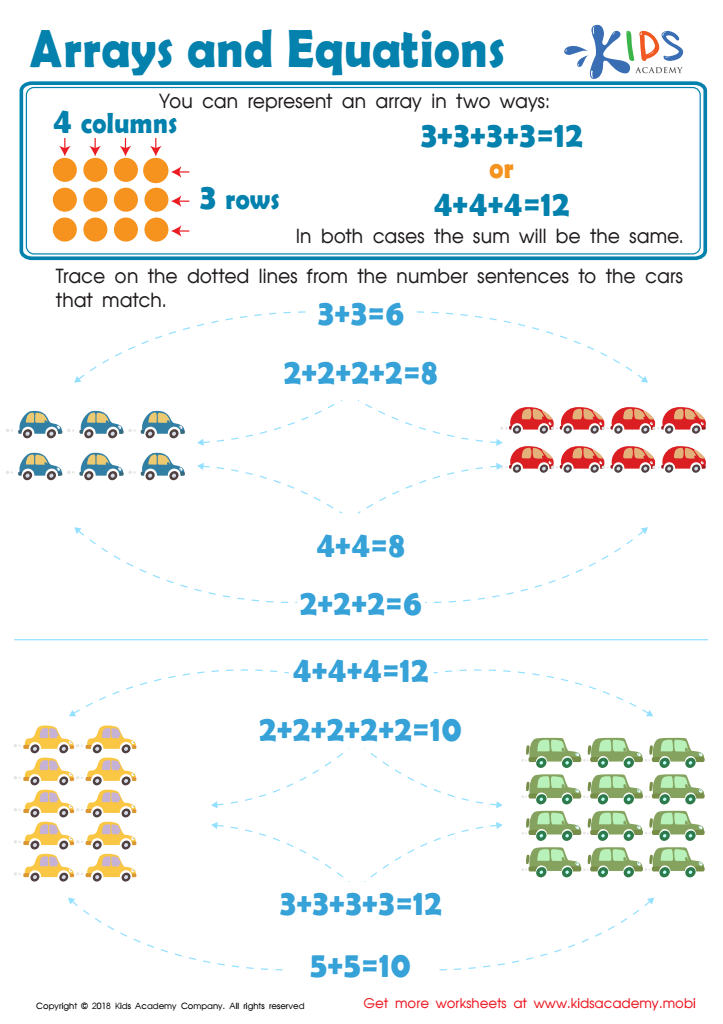
Arrays and Equations Worksheet
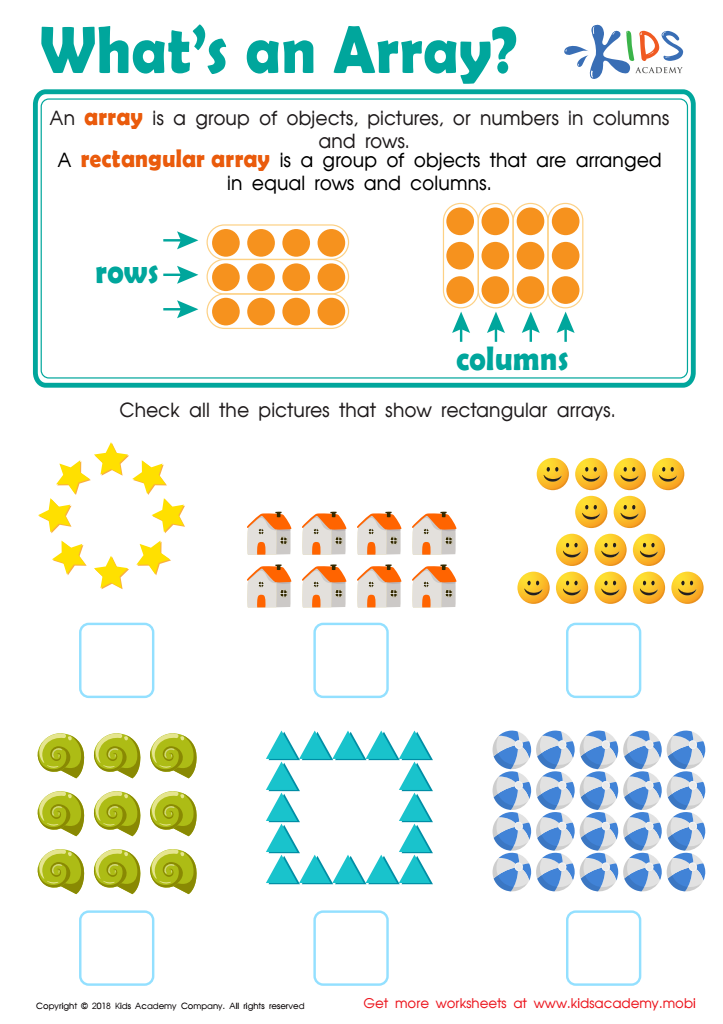
What's an Array? Worksheet
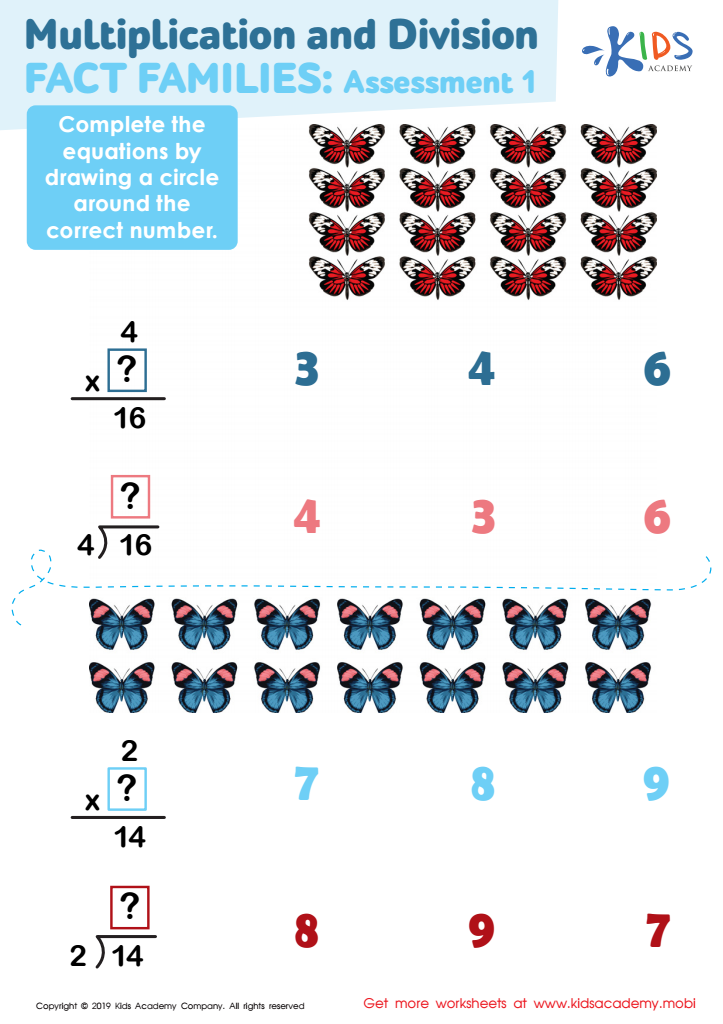
Multiplication and Division Fact Families Assessment 1 Worksheet








Multiplication practice arrays are essential for children ages 8-9 because they lay a strong foundation for mathematical understanding and problem-solving skills. Arrays visually represent multiplication problems, making abstract concepts more concrete and easier to grasp for young minds. For instance, they help children see the relationship between multiplication and addition, reinforcing the idea of repeated addition. By arranging objects in rows and columns, arrays also help students understand properties like commutativity (e.g., 3x4 is the same as 4x3).
Additionally, using arrays boosts spatial reasoning and organizational skills. When students manipulate arrays, they not only learn multiplication facts but also how to structure information logically. This tactile experience can enhance memory retention and recall, important aspects of early math learning.
For teachers, arrays offer an effective instructional tool, enabling differentiated instruction that caters to various learning styles. Visual learners, in particular, benefit significantly from the clear and precise structure of arrays. Parents can also use arrays at home to create a collaborative and engaging learning environment, reinforcing classroom lessons through enjoyable practice.
Ultimately, mastery of multiplication arrays leads to improved confidence and competence in math, paving the way for more advanced mathematical concepts in future grades. It’s an investment in children’s academic success and a stepping stone to a lifelong appreciation for mathematics.








