Number Recognition Arrays Worksheets for Ages 8-9
3 filtered results
-
From - To
Enhance your child's math skills with our Number Recognition Arrays Worksheets, specially designed for ages 8-9. These engaging worksheets offer a fun way for kids to master number recognition through the use of arrays. Each sheet is crafted to reinforce learning while boosting confidence in math. Our worksheets integrate visual aids and interactive activities, promoting the understanding of number patterns and relationships in a structured, easy-to-follow manner. Dive into a world of educational fun and watch your child’s number recognition skills soar with our expertly designed worksheets, available for immediate download.
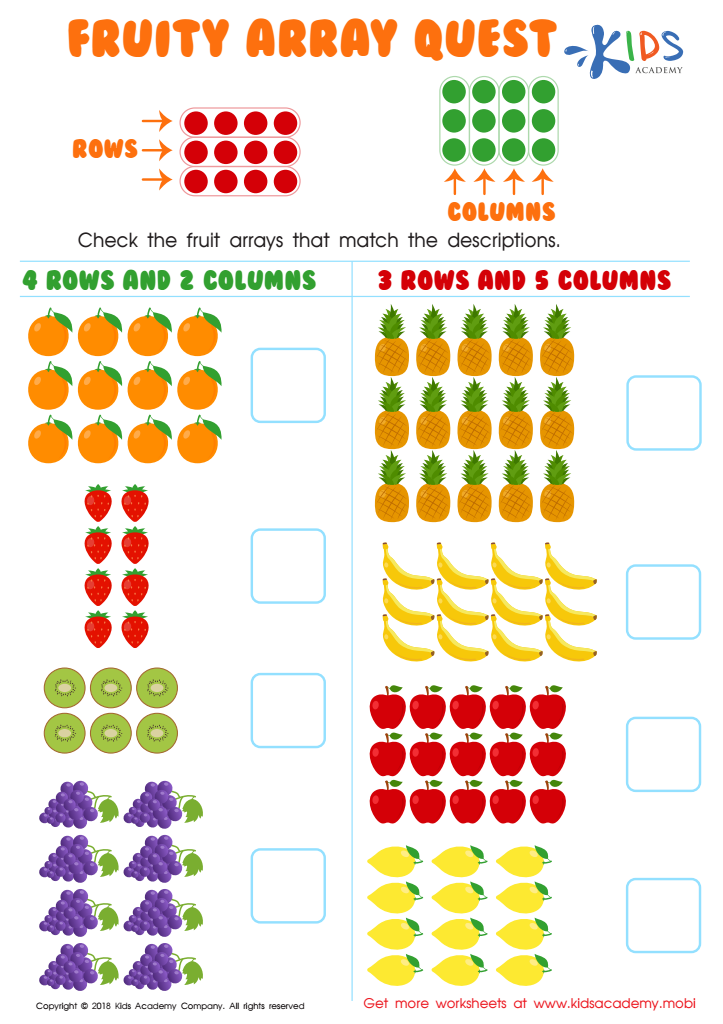
Fruity Array Quest Worksheet
 Assign to My Students
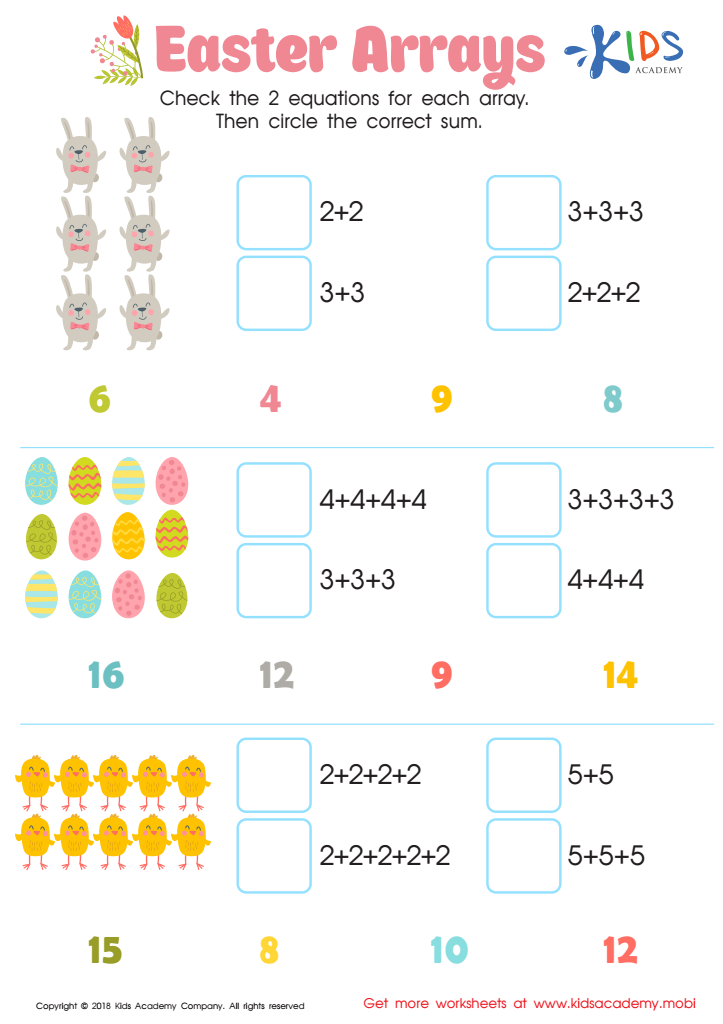
Easter Arrays Worksheet
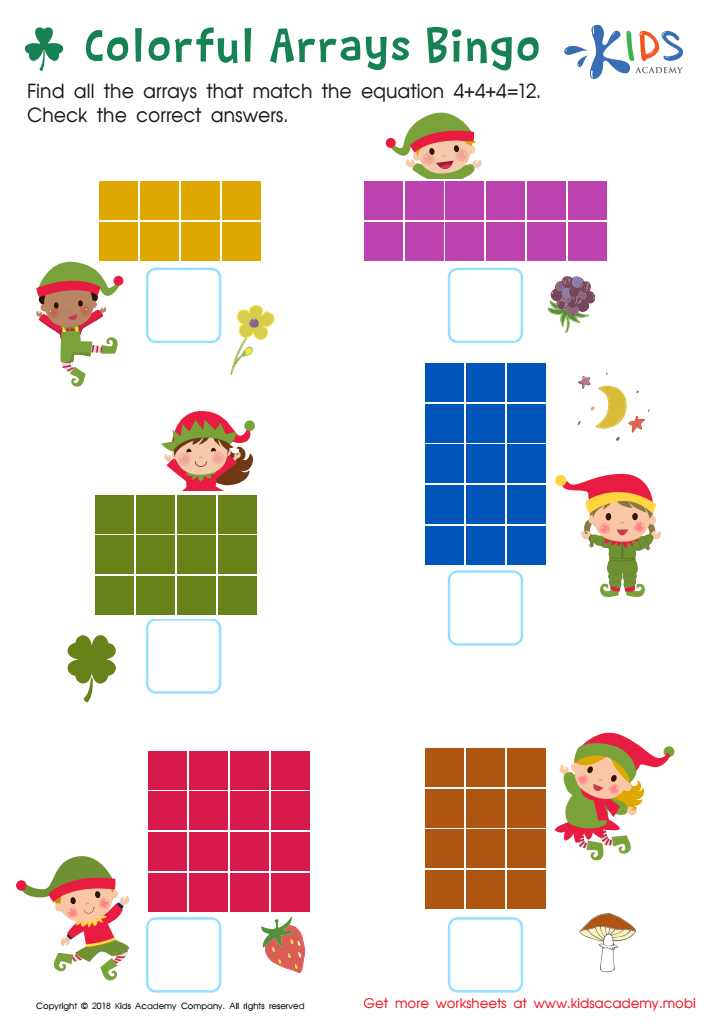
Colorful Arrays Bingo Worksheet








Number recognition arrays are crucial tools for children aged 8-9 because they bridge the conceptual gap between visuals and numerical values, fostering stronger mathematical comprehension. At this developmental stage, cognitive abilities are rapidly advancing, and children benefit from visually stimulating and interactive learning aids.
Number recognition arrays consist of organized arrangements of numbers in patterns or grids. These arrays help children in memorizing numbers, recognizing numerical patterns, and understanding place value—all foundational skills in mathematical literacy. Unlike rote memorization, number arrays encourage pattern recognition and the relational understanding of numbers, paving the way for more complex mathematical concepts such as addition, subtraction, multiplication, and division.
Teachers and parents should care about these arrays because they provide a hands-on and visual method to reinforce number sense, a critical component of early math education. Children are more engaged when they see numbers as part of patterns or sequences, making learning feel like a game rather than a mundane task.
Moreover, number recognition arrays cater to various learning styles, whether visual, kinesthetic, or auditory, ensuring that all children can benefit regardless of their preferred learning method. Emphasizing the use of number arrays can significantly enhance a child's confidence and proficiency in math, setting a strong foundation for future academic success.








