Reading comprehension Arrays Worksheets for Ages 8-9
5 filtered results
-
From - To
Enhance your child's reading comprehension and math skills with our engaging Reading Comprehension Arrays Worksheets designed for ages 8-9. These worksheets facilitate a deeper understanding of arrays in math through thoughtfully crafted reading passages and exercises. Each worksheet integrates mathematical concepts with reading tasks, enabling students to comprehend and apply array concepts effectively. By blending literacy and numeracy skills, our resources support holistic learning and development. Perfect for both classroom use and at-home practice, these worksheets are ideal for reinforcing essential skills and boosting confidence in young learners. Explore our worksheets for a fun, educational experience!
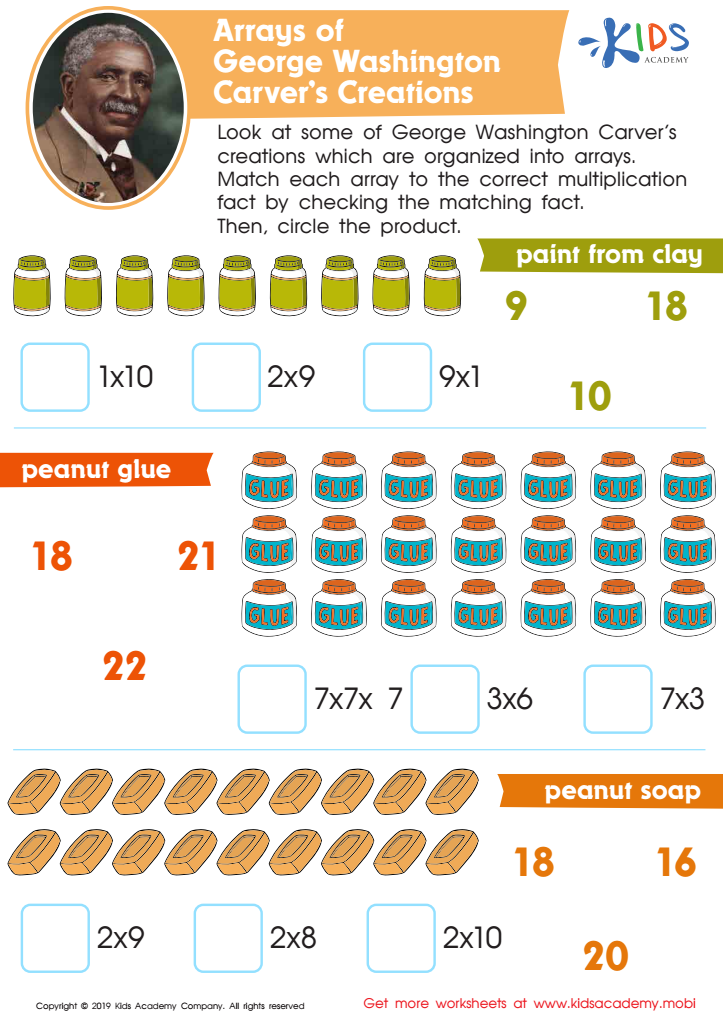
Arrays of George Washington Carver’s Creations Worksheet
 Assign to My Students
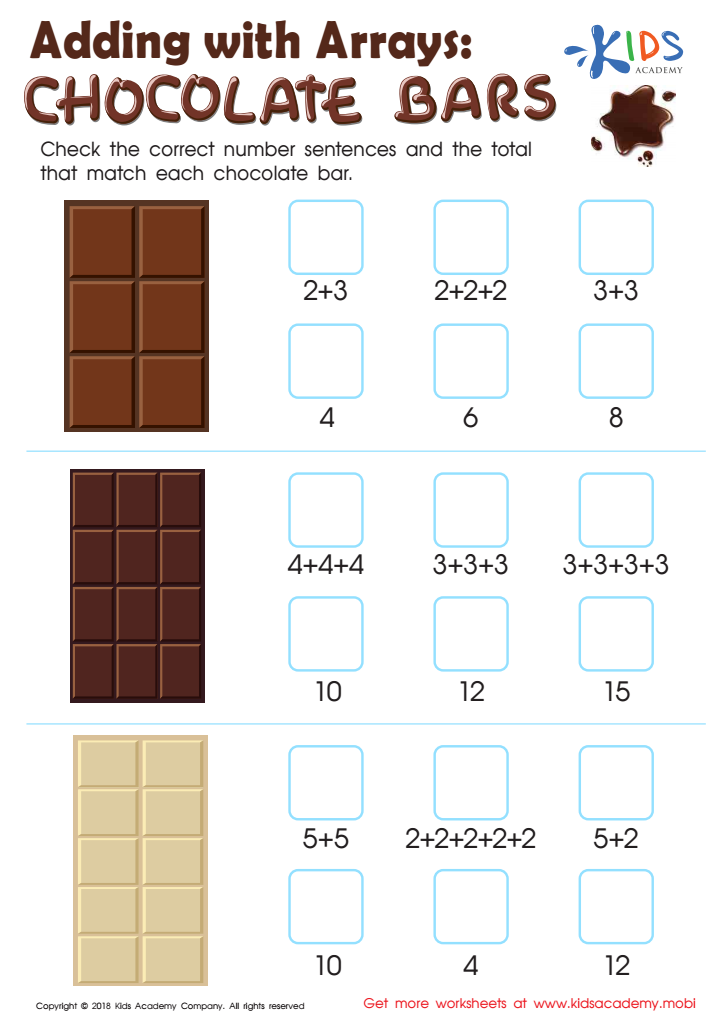
Adding with Arrays: Chocolate Bars Worksheet
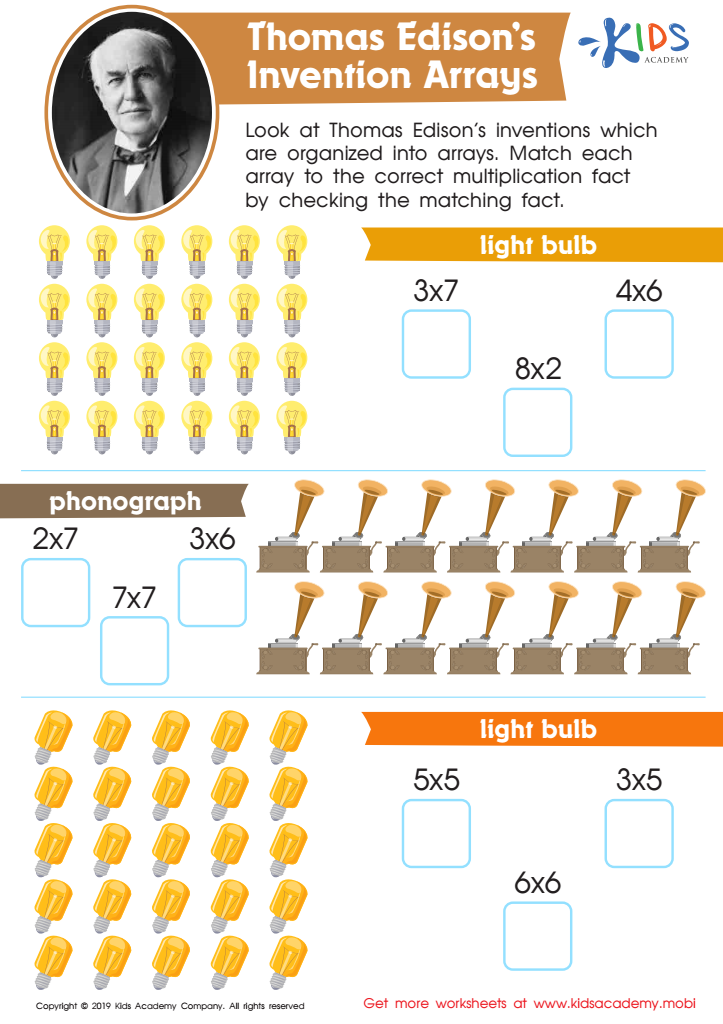
Thomas Edison’s Invention Arrays Worksheet
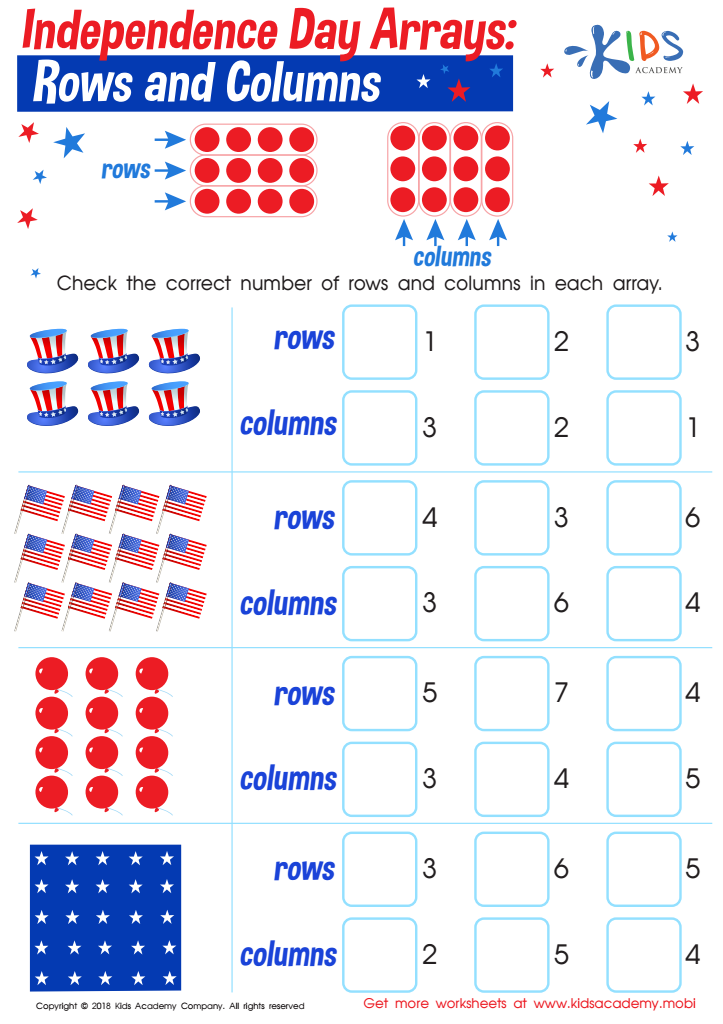
Independence Day Arrays: Rows and Columns Worksheet
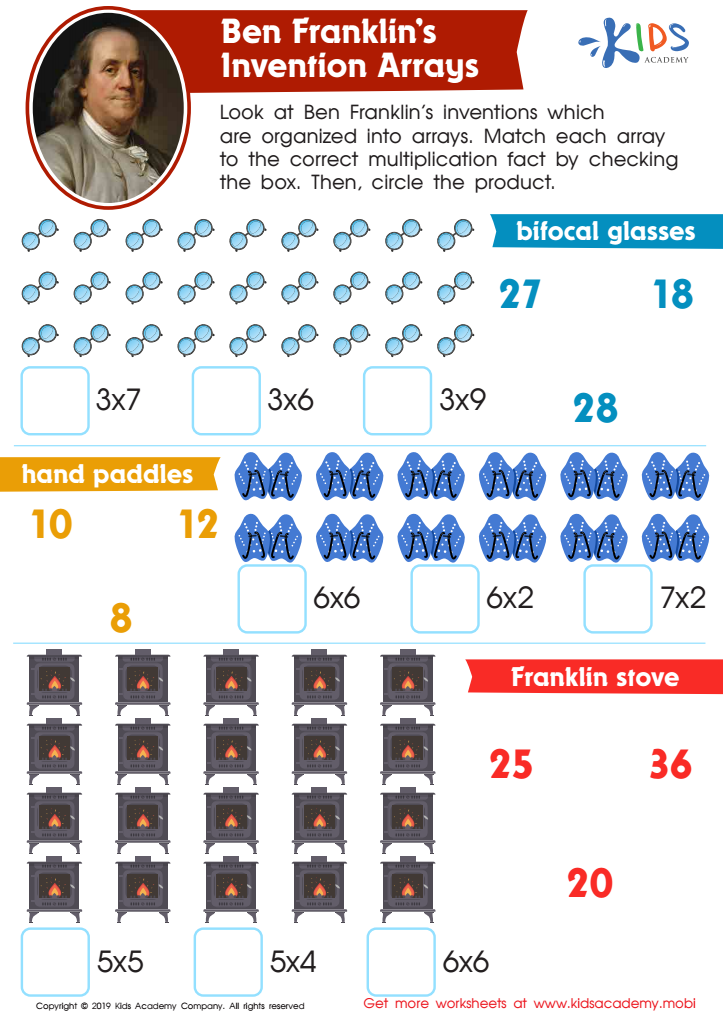
Ben Franklin’s Invention Arrays Worksheet








Reading comprehension arrays are essential tools that parents and teachers should care about for children ages 8-9. During this developmental stage, children transition from learning to read to reading to learn, making comprehension skills crucial. Reading comprehension arrays engage young learners, breaking down complex texts into manageable parts, promoting better understanding and retention of information. These arrays often include visual aids, simplified language, and interactive elements, catering to diverse learning styles and enabling children to grasp keywords, main ideas, and contextual clues more efficiently.
Caring about these arrays is also vital because strong reading comprehension skills form the foundation for academic success across subjects. A well-developed comprehension ability allows children to understand math problems, follow scientific instructions, and grasp historical contexts. Additionally, proficiency in three benchmarks: vocabulary building, critical thinking, and analytical skills. Encouraging young readers to practice with these arrays increases their confidence and fosters a positive attitude towards reading. This reflects long-term benefits, such as advanced literacy skills and a lifelong love for reading.
Furthermore, investing in reading comprehension arrays helps to identify and support struggling readers early on, providing timely interventions to close learning gaps. In conclusion, these arrays are indispensable in guiding children through their critical, formative years.








