Understanding patterns Basic Times Tables up to 12 Worksheets for Ages 8-9
3 filtered results
-
From - To
Our "Understanding Patterns: Basic Times Tables up to 12 Worksheets" are tailored for children ages 8-9, designed to make multiplication engaging and enjoyable. Through these expertly crafted worksheets, Kids Academy helps young learners explore the patterns and structures within times tables up to 12, promoting a solid understanding of basic math concepts. Each worksheet combines colorful visuals, interactive tasks, and real-world examples to reinforce learning and build confidence. Perfect for both classroom and home use, these resources aim to enhance mathematical skills while fostering a love for numbers in every child. Download today for fun, effective learning!
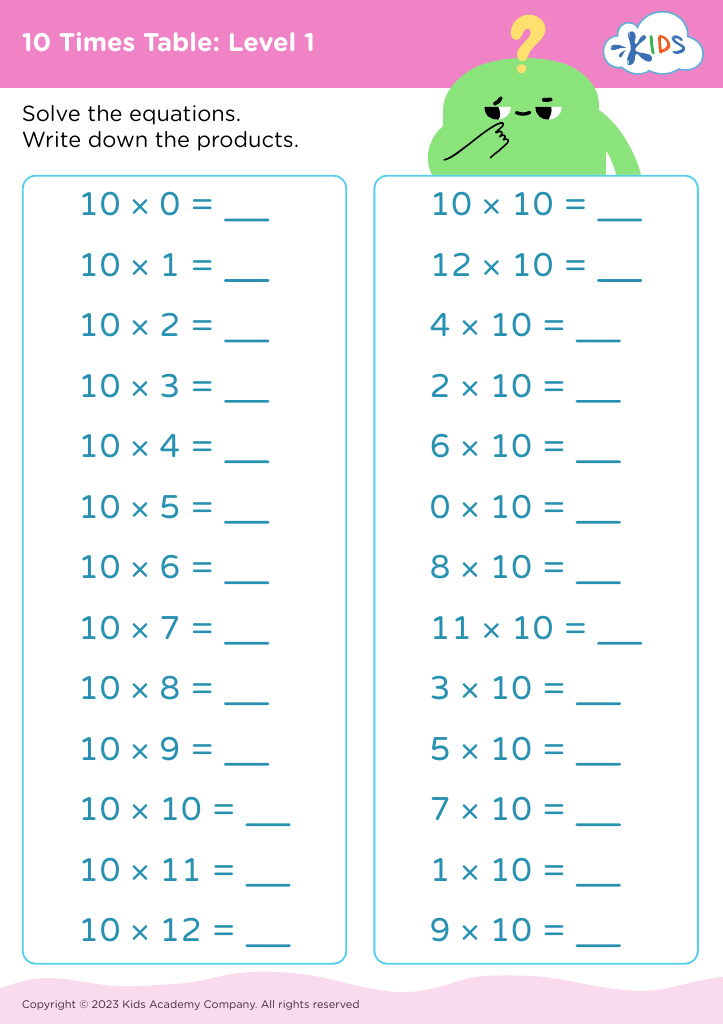
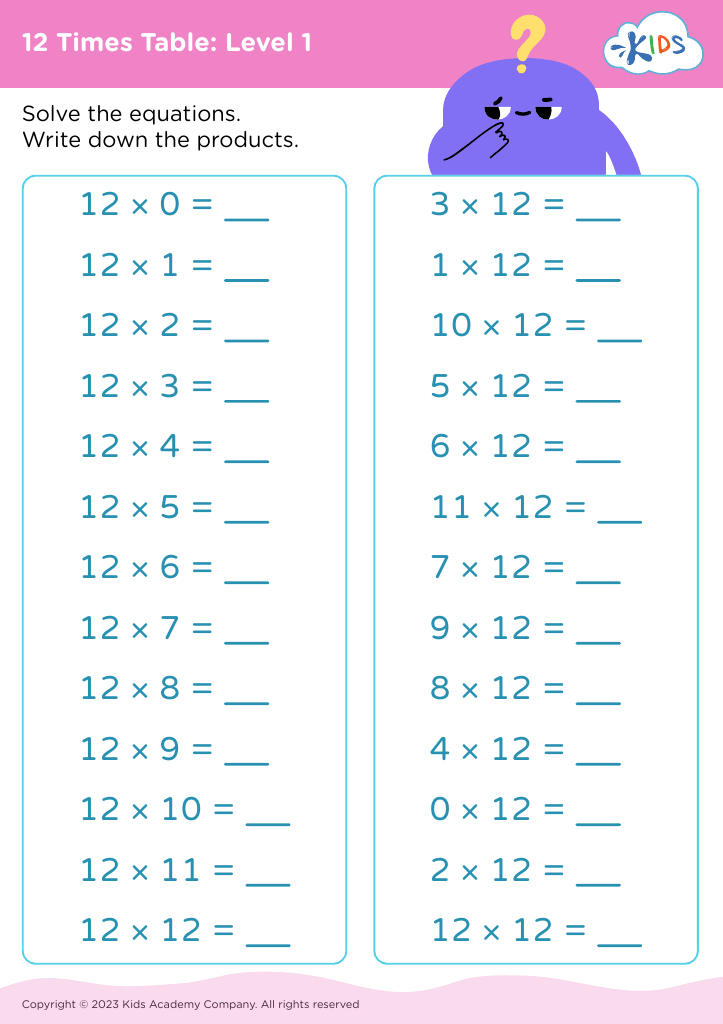
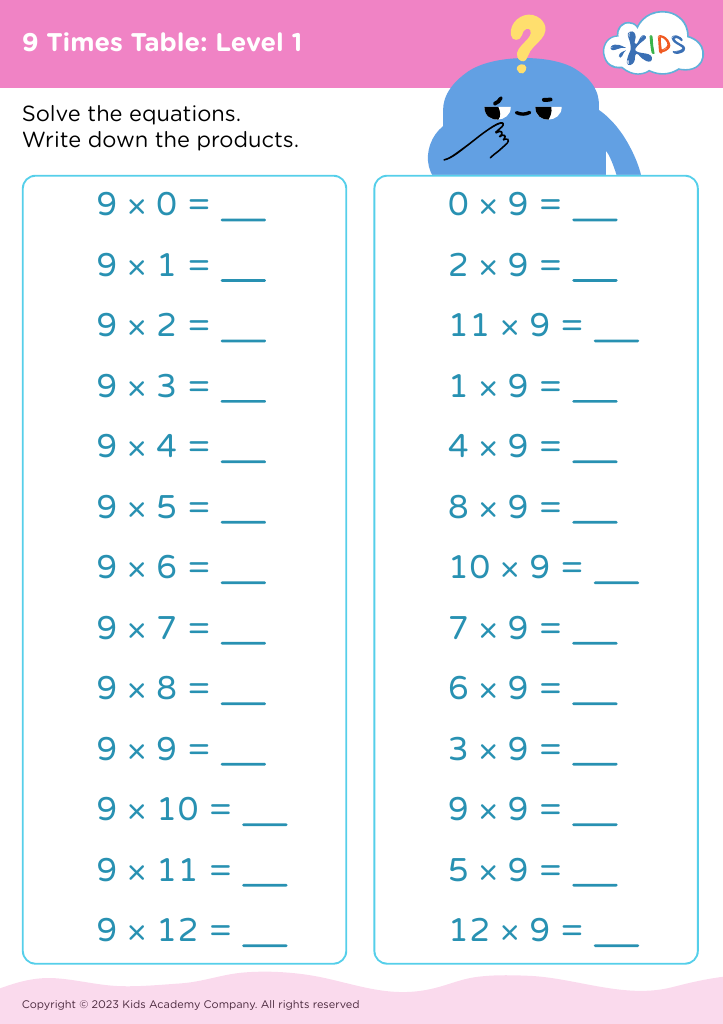


Understanding patterns and basic times tables up to 12 for children aged 8-9 is crucial for several reasons. At this developmental stage, children are building foundational skills in mathematics that will support their future learning. Familiarity with times tables enhances their ability to tackle more complex mathematical concepts with confidence.
Firstly, mastery of times tables promotes quicker problem-solving. When children have times tables committed to memory, they can solve multiplication and division problems more efficiently, which in turn helps them succeed in a variety of math topics, such as fractions, percentages, and algebra later on.
Secondly, recognizing patterns within times tables helps to develop critical thinking and analytical skills. Pattern recognition is a key cognitive skill that underpins a variety of academic subjects and everyday tasks. These patterns also help children understand the relationship between numbers, fostering a deeper comprehension of arithmetic.
Moreover, it boosts children’s confidence. As they become more proficient with their times tables, they experience a sense of accomplishment that encourages a positive attitude toward math and learning in general.
In conclusion, parents and teachers should emphasize understanding patterns and basic times tables for 8-9-year-olds to build a strong mathematical foundation, promote quicker problem-solving, support analytical skills, and enhance self-confidence in students.








