Visual representation comprehension Fractions of Shapes Worksheets for Ages 8-9
3 filtered results
-
From - To
Dive into our "Visual Representation Comprehension: Fractions of Shapes Worksheets" tailored for ages 8-9. These engaging worksheets help young learners understand fractions using visual shapes, fostering foundational math skills. Kids break down complex concepts by easily identifying parts of a whole in fun and interactive exercises. Ideal for classroom or at-home learning, these resources ensure students efficiently grasp fraction representation while enhancing their visual comprehension. Empower your child's math journey with this excellent tool designed by educational experts, only at Kids Academy. Explore now and watch as your child's confidence in fractions grows effortlessly!
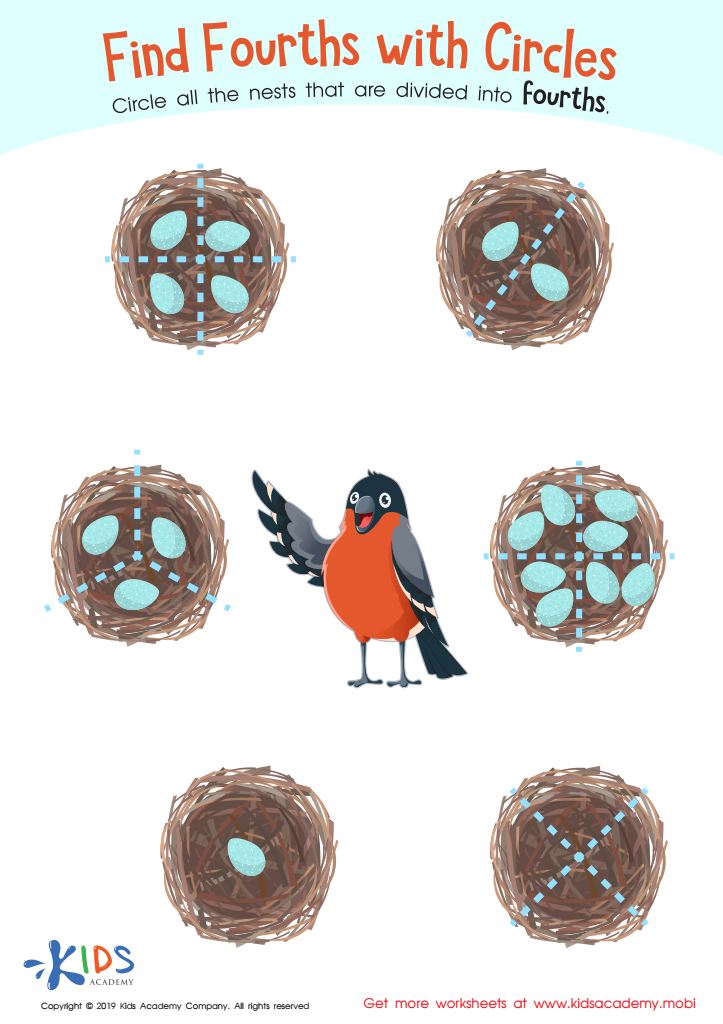
Find Fourths Circles Worksheet
 Assign to My Students
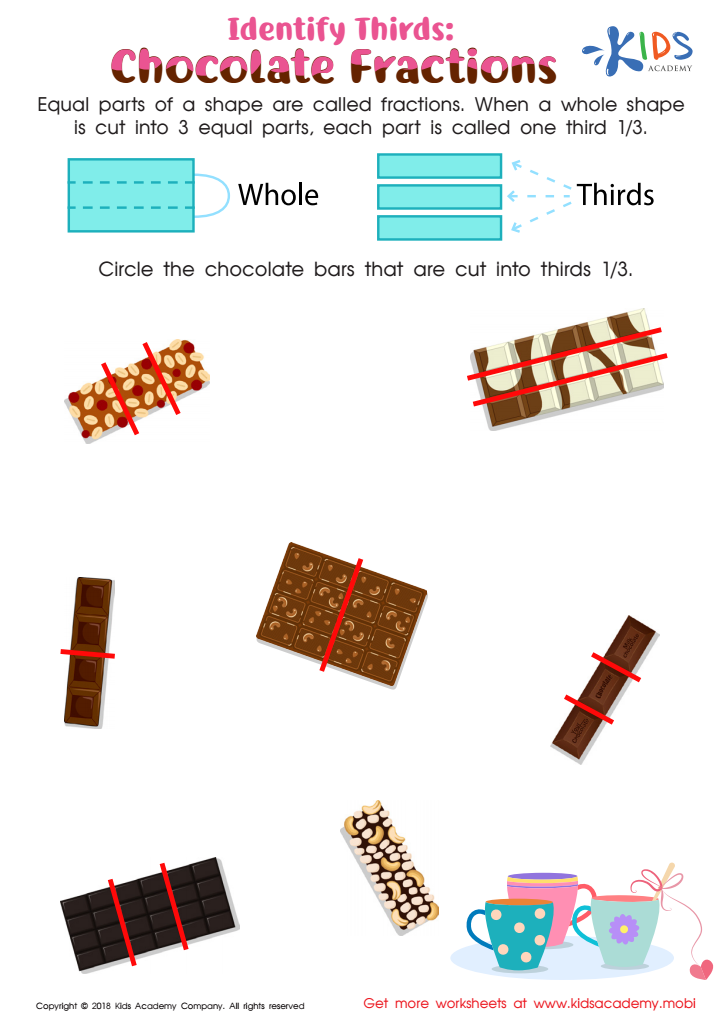
Identify Thirds: Chocolate Fractions Worksheet
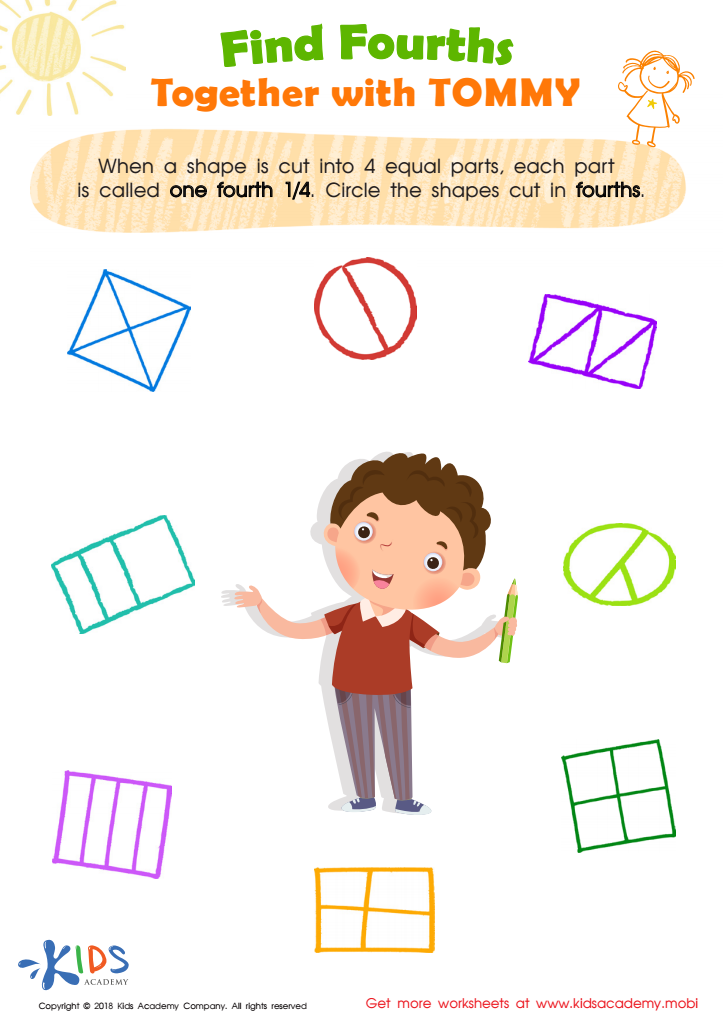
Find Fourths Together with Tommy Worksheet








Parents and teachers should care about visual representation comprehension of fractions of shapes for ages 8-9 because it forms a crucial foundation for mathematical understanding. At this age, children transition from concrete to abstract thinking. Visualizing fractions helps them grasp the concept of part-whole relationships, which is fundamental not just for fractions but for all future math topics, including algebra and geometry.
When students use visual aids like fraction pies or bar models, they can easily see how fractions such as 1/2 or 1/4 are parts of a whole shape. This visual manipulation aids in internalizing the concept more deeply than rote memorization. Moreover, visualizing fractions helps students solve everyday problems more intuitively, promoting better numeracy skills. For example, understanding that 1/2 of a pizza means splitting it into two equal parts extends to dividing objects, time, and even ideas into fraction-of-a-whole parts.
Additionally, mastering visual representations helps cater to diverse learning styles, ensuring that children who might struggle with purely numerical or verbal explanations can grasp the concept through images. Finally, success in visual fraction comprehension fosters confidence and reduces anxiety toward math, encouraging a positive attitude toward learning. Therefore, nurturing this skill at ages 8-9 sets sturdy educational and cognitive foundations.