Addition Practice Math Worksheets for Ages 8-9 - Page 3
64 filtered results
-
From - To
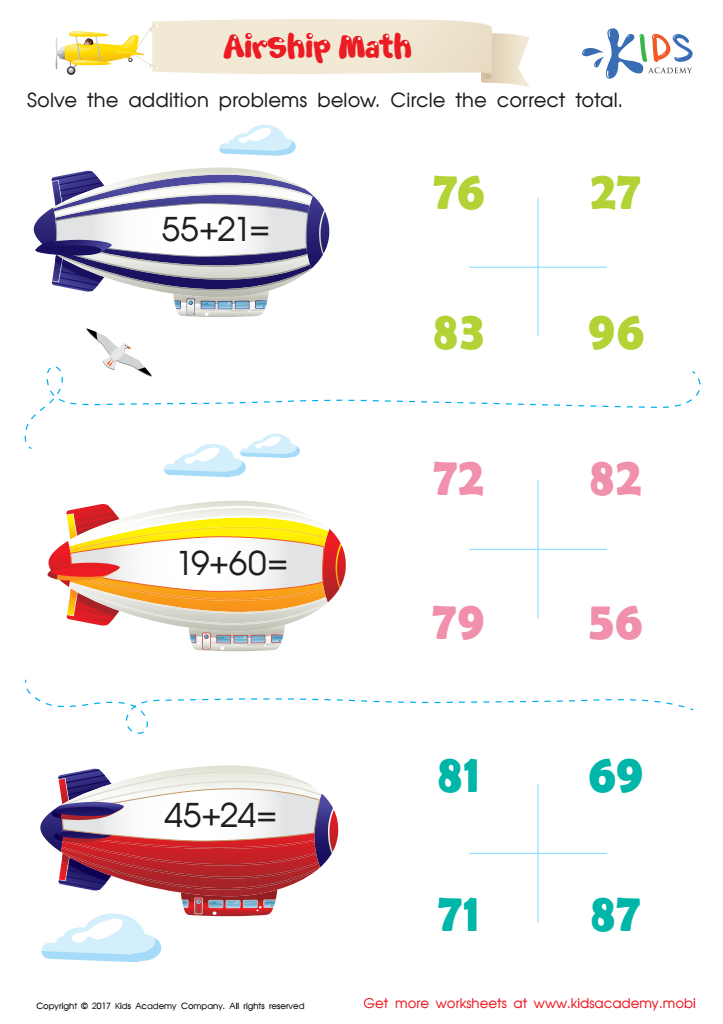
Airship Math Addition Printable
 Assign to My Students
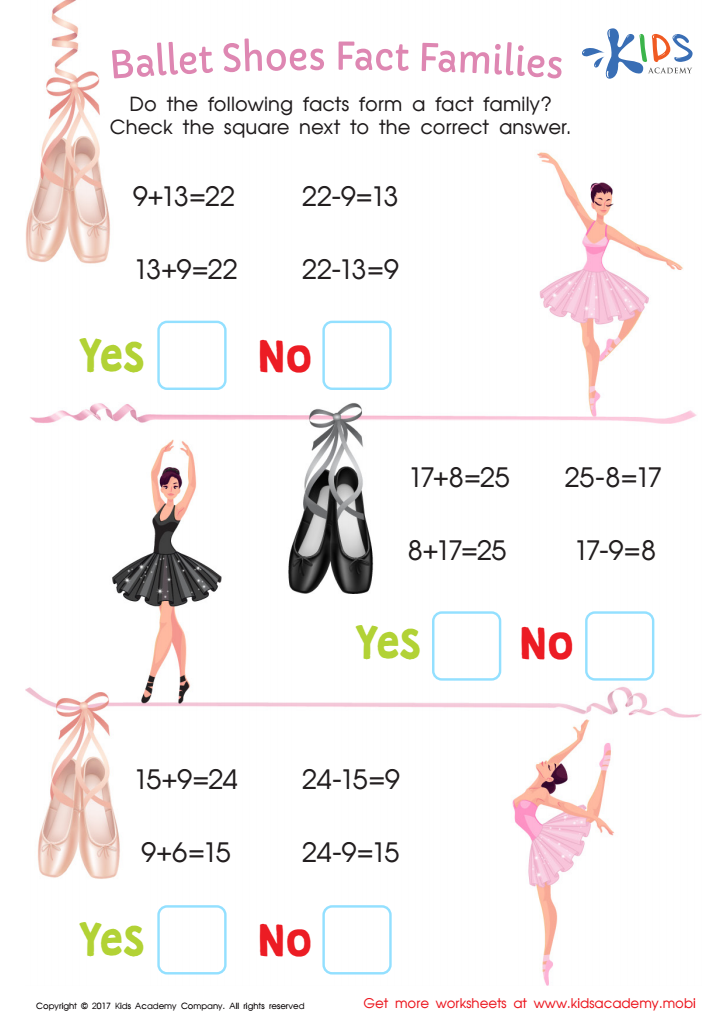
Ballet Shoes Fact Family Printable
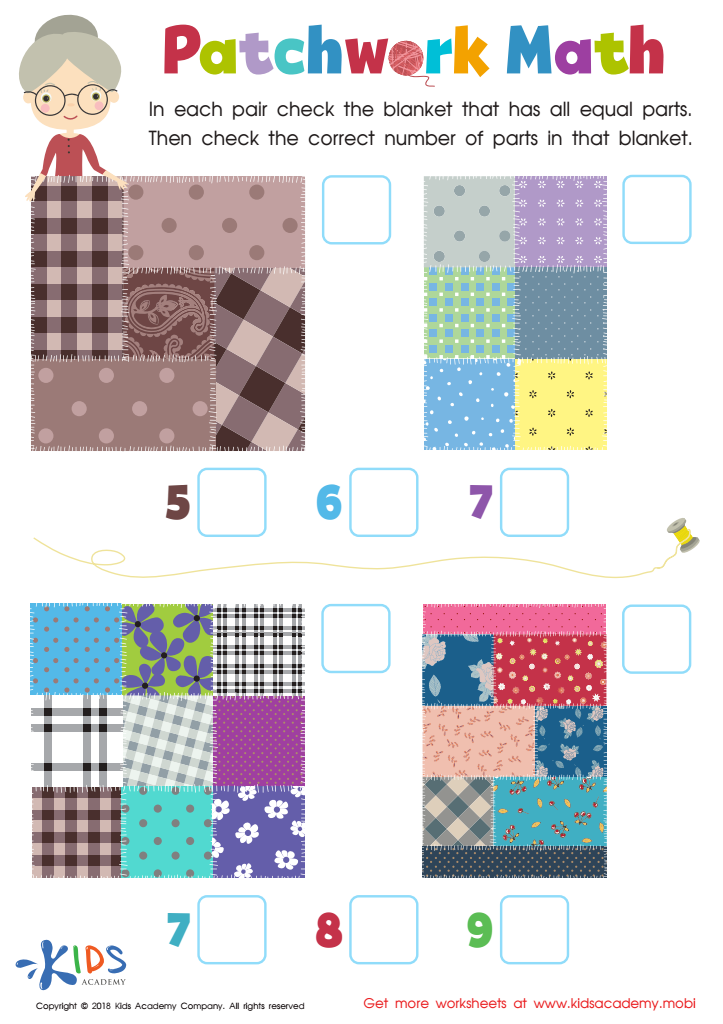
Patchwork Math Worksheet
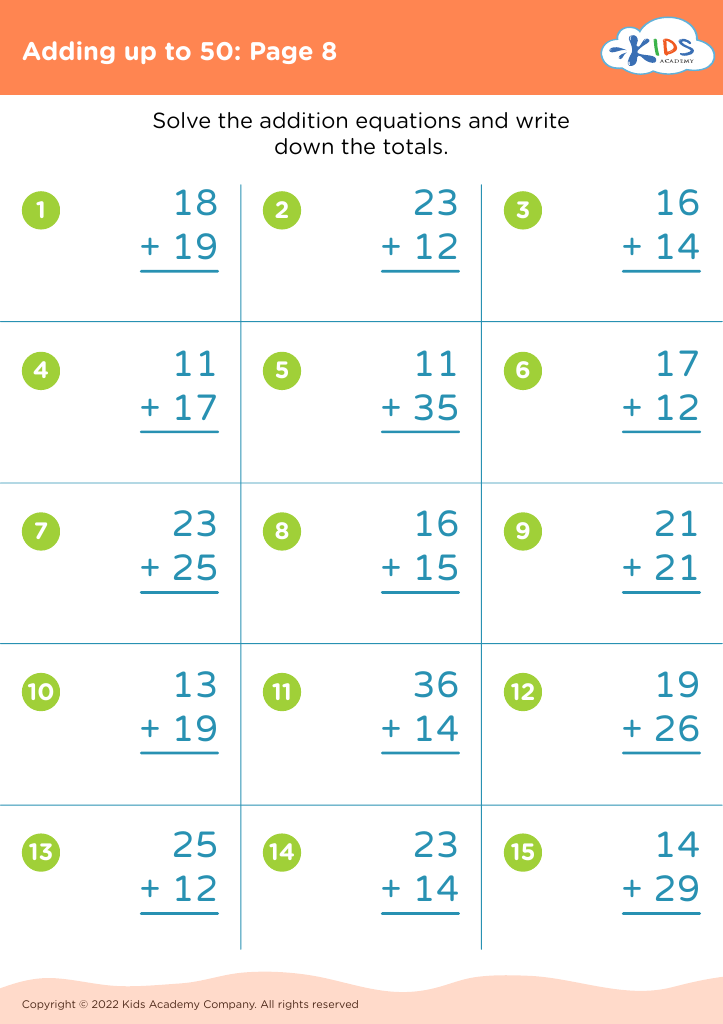
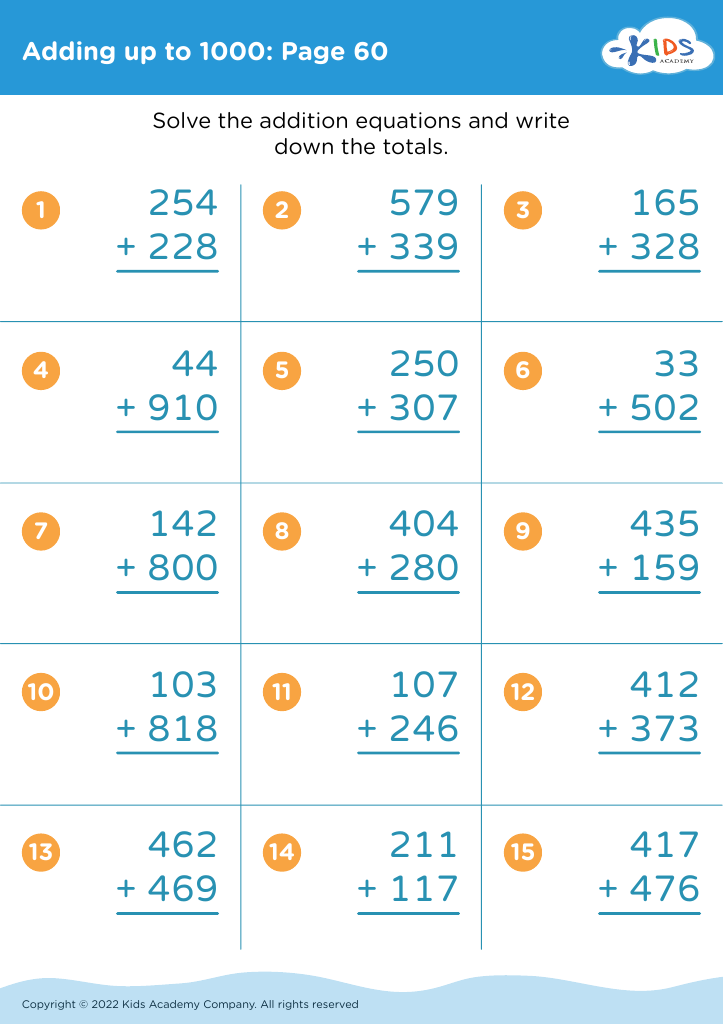
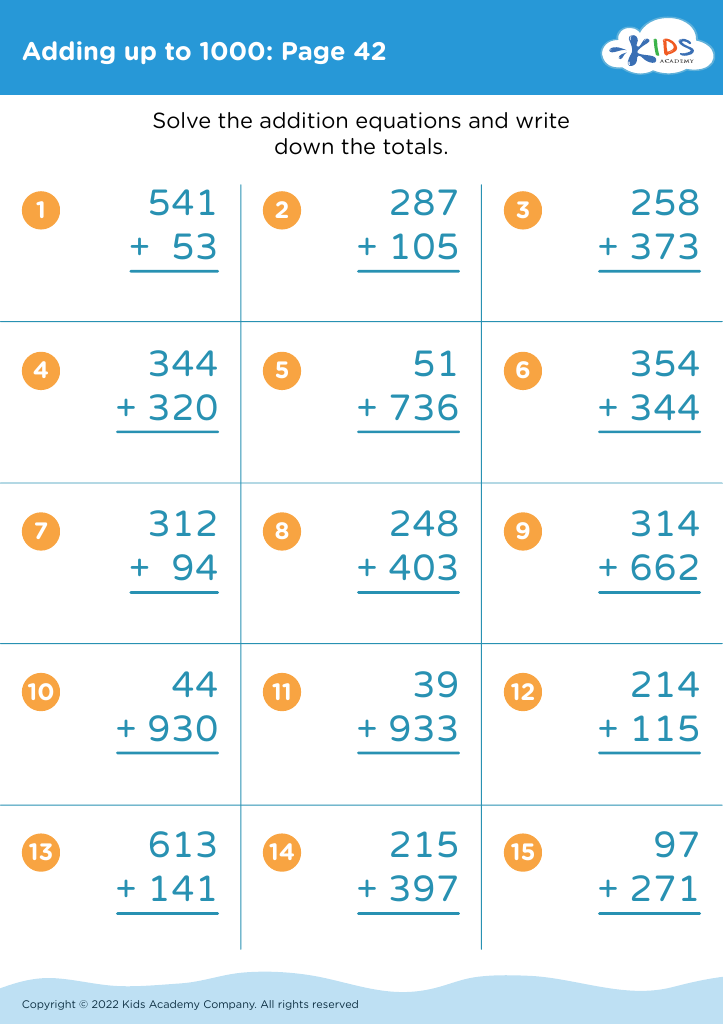
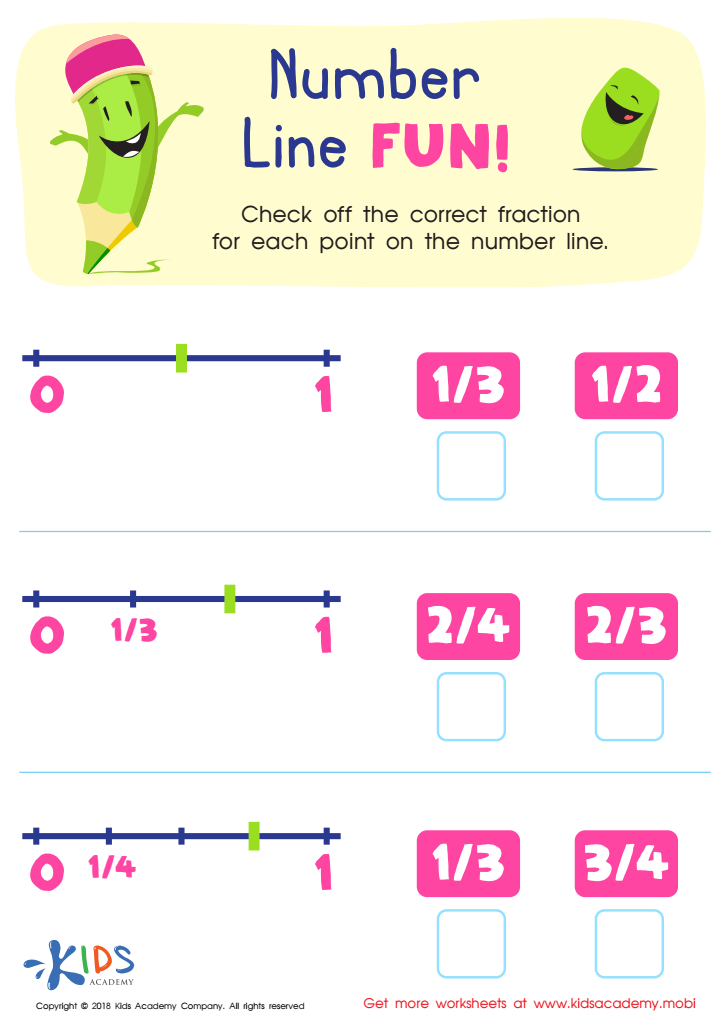
Number Line Fun Worksheet
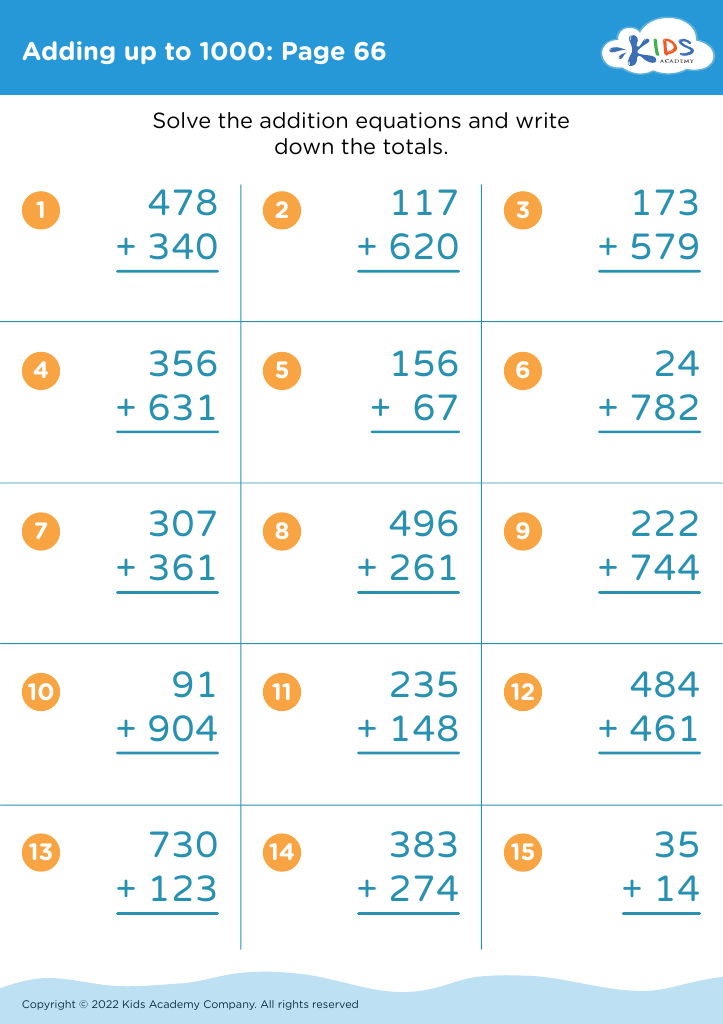
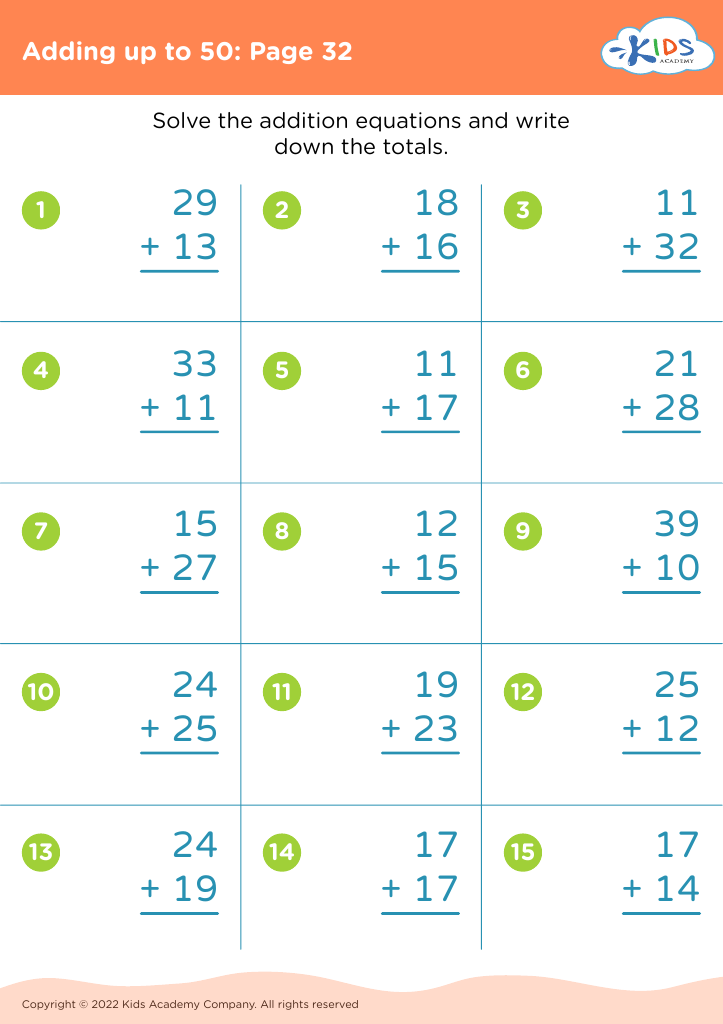








Addition practice is a cornerstone of mathematical proficiency for children ages 8-9, a developmental stage critical for laying the foundations of higher math skills. Parents and teachers should prioritize regular addition practice because it bolsters numerical fluency, allowing kids to perform more complex calculations smoothly in the future. As children master addition, their confidence in dealing with numbers grows, positively impacting their overall attitude towards math.
Moreover, addition skills are not isolated; they interconnect with other math areas such as subtraction, multiplication, and even algebra. Regular practice hones a child's ability to recognize patterns and relationships within numbers, fostering critical analytical skills. In real-life contexts, addition is ubiquitous—from calculating change during a shopping trip to measuring ingredients for a recipe.
Consistent addition practice aids cognitive development by sharpening focus, memory, and problem-solving abilities. It also promotes a growth mindset as children learn to approach challenges with perseverance. When parents and teachers actively engage children in addition practice through fun, interactive methods, it helps create a positive learning environment. This holistic emphasis on fundamental math skills equips kids with the tools they need for academic success and everyday practical tasks, establishing a robust base for lifelong learning.








