
Comparing shapes Math Worksheets for Ages 8-9
4 filtered results
Difficulty Level
Grade
Age
-
From - To
Subject
Activity
Standards
Explore our engaging "Comparing Shapes Math Worksheets" designed specifically for children aged 8-9. These printable activities offer a fun and interactive way for young learners to enhance their understanding of geometric concepts. Kids will practice comparing different shapes based on size, properties, and attributes, building critical thinking and spatial reasoning skills. With diverse exercises that involve real-world applications, these worksheets make learning both effective and enjoyable. Perfect for classroom use or at-home practice, help your children master the basics of geometry with our carefully crafted resources, and watch them grow into confident mathematicians!
Favorites
With answer key
Interactive
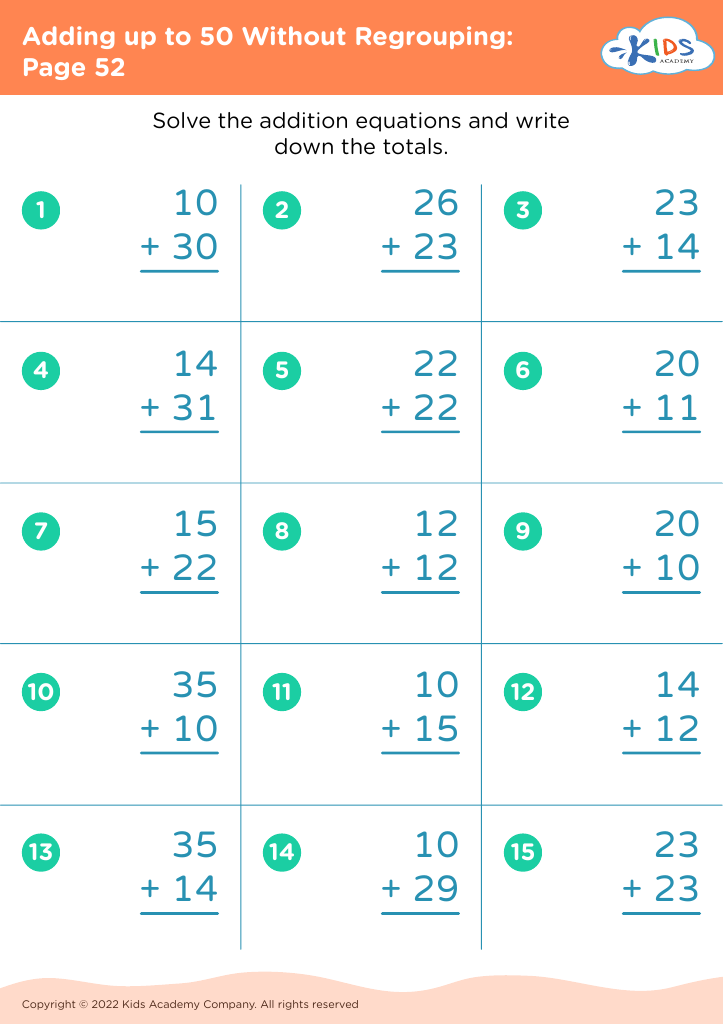
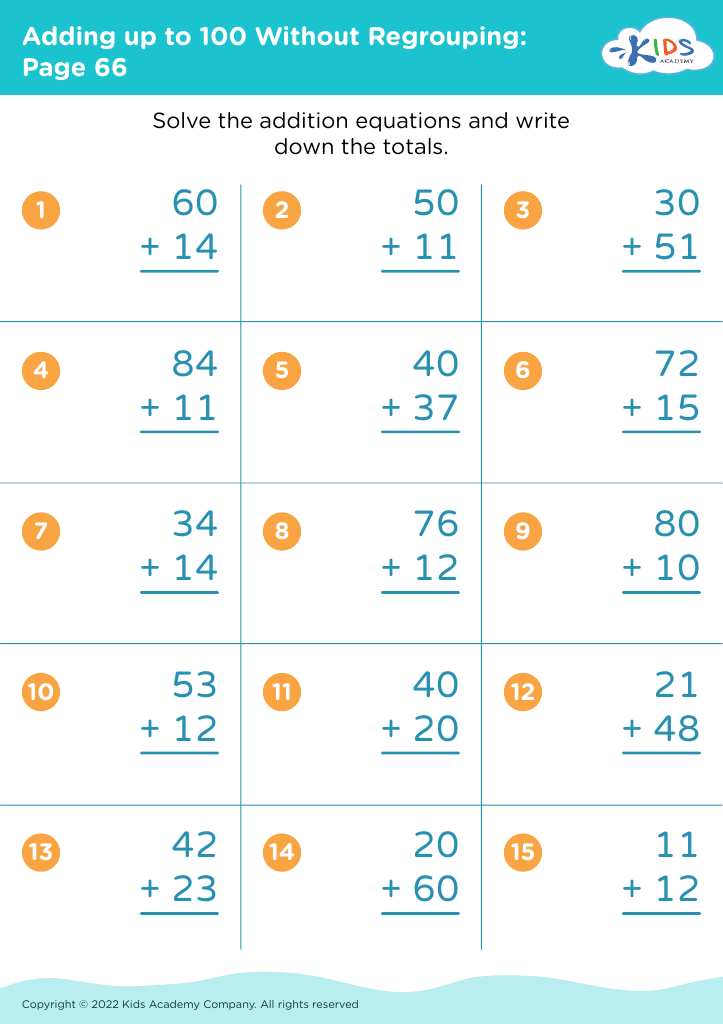
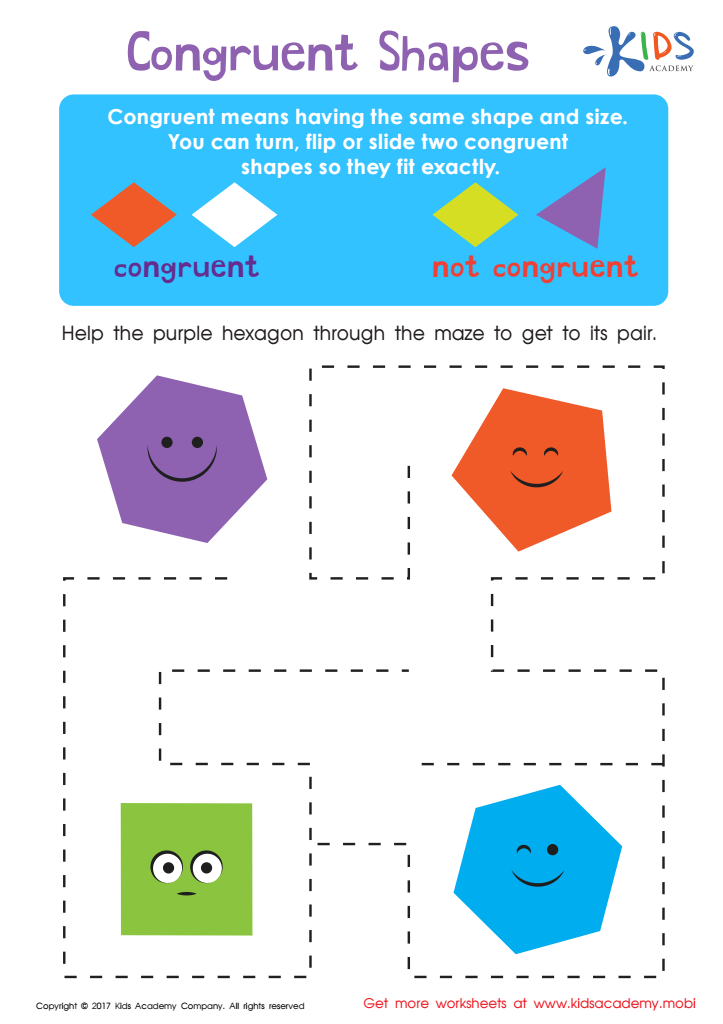
Congruent Shapes Worksheet
Help your child find the twin of the purple hexagon! This congruent shapes worksheet is great for increasing vocabulary while challenging mental rotation skills.
 Assign to My Students
Congruent Shapes Worksheet
Worksheet
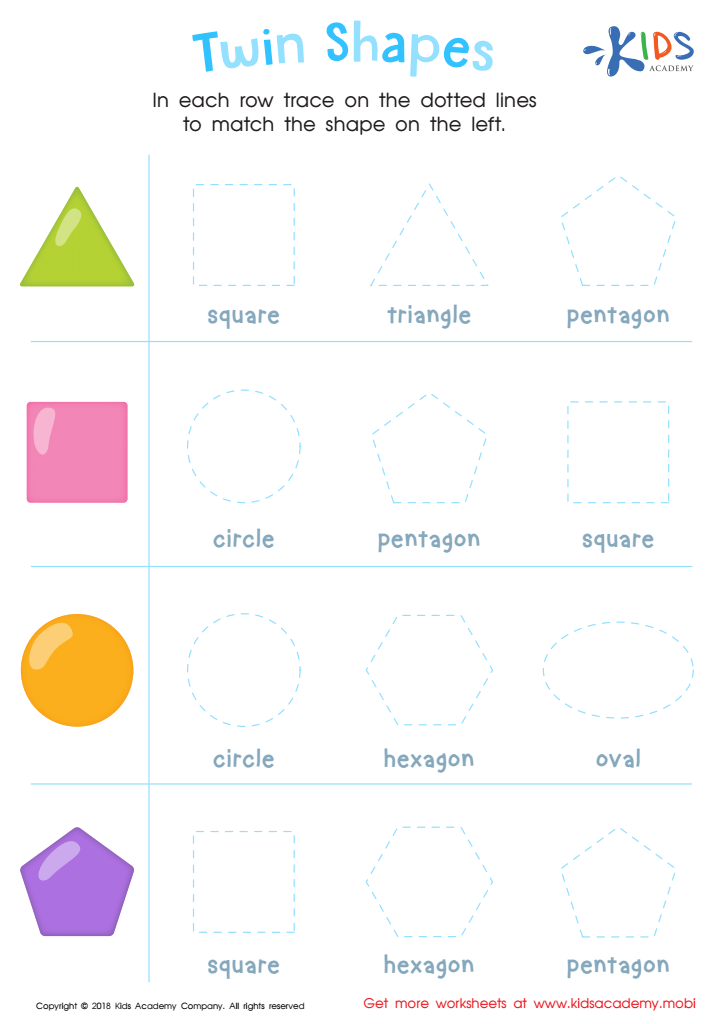
Twin Shapes Dot-to-Dot Worksheet
Test your child's ability to copy with this worksheet. Ask them to find and name the four shapes on the left. Then, they must match each with the dotted lines on the right. Help your child with all four shapes in this fun exercise.
Twin Shapes Dot-to-Dot Worksheet
Worksheet
Join Kids Academy for Free
Who is primarily going to use this learning content?





.jpg)

Comparing shapes in math is critical for children aged 8-9, as it cultivates essential cognitive and analytical skills. At this developmental stage, kids are curious and inclined to explore the world around them, making it an opportune time to introduce geometric concepts. Understanding and comparing shapes helps students recognize and describe properties of different objects, fostering spatial awareness and pattern recognition.
These skills are foundational for higher-level math and critical thinking. For instance, while comparing shapes, children learn to identify attributes such as the number of sides, angles, and symmetry. This hands-on, visual approach promotes better retention and comprehension of mathematical ideas, which can enhance number sense and problem-solving abilities.
Moreover, such activities can be intrinsically engaging for children. Using tangible objects or interactive tools, they can strengthen fine motor skills and hand-eye coordination. Importantly, these lessons often promote teamwork and cooperation when done in group settings, encouraging social interaction and communication skills.
From real-world applications like arts to understanding engineering fundamentals, the concepts children grasp now will continuously apply throughout their educational journey and everyday life. Thus, by caring about comparing shapes, parents and teachers lay a critical foundation for academic success and practical skill development.








