
Comparing weights Math Worksheets for Ages 8-9
3 filtered results
Difficulty Level
Grade
Age
-
From - To
Subject
Activity
Standards
Explore our engaging Comparinng Weights Math Worksheets designed specifically for children aged 8-9! These worksheets provide young learners with fun and interactive activities to help them develop essential skills in comparing weights. With colorful visuals and practical exercises, students will master concepts such as heavier, lighter, and equal weights. Our resources enhance critical thinking and problem-solving abilities, making math enjoyable and accessible. Ideal for classrooms or home learning, these worksheets will reinforce foundational measurement principles while keeping kids motivated and focused. Download our printable comparing weights worksheets now and give your child the confidence to excel in math while having fun!
Favorites
With answer key
Interactive
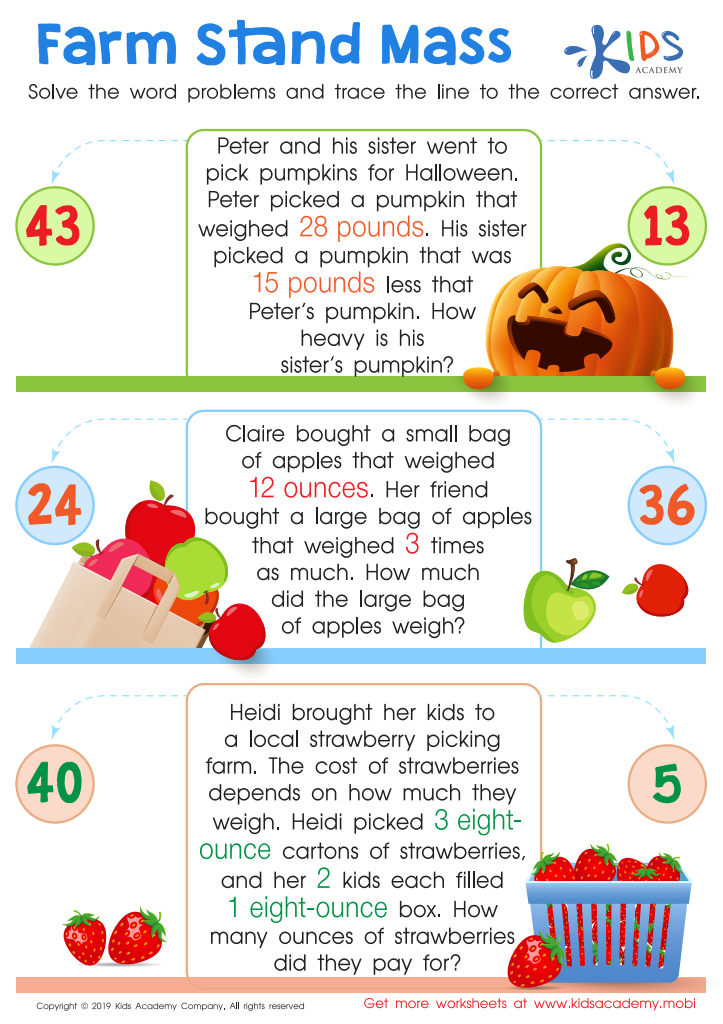
Farm Stand Mass Worksheet
Engage your kids in a fun learning adventure! Encourage them to practice what they learn in school using this worksheet. Look at the picture and read the problem together. Help them solve it and trace the line to the answer. Make learning enjoyable and your kids will be more motivated!
 Assign to My Students
Farm Stand Mass Worksheet
Worksheet
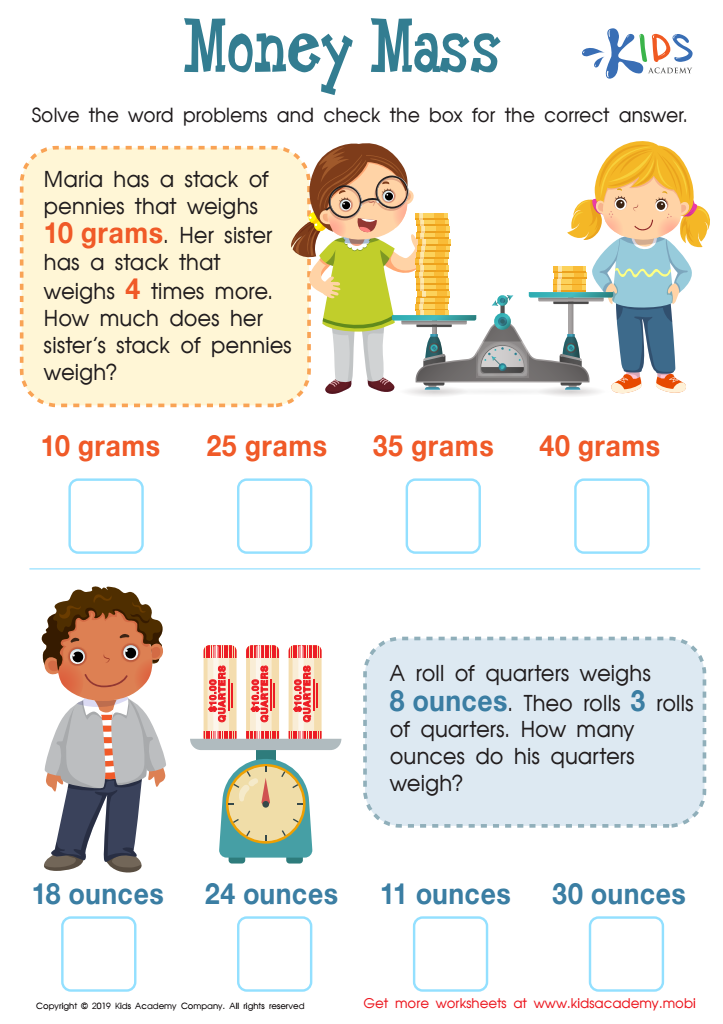
Money Mass Worksheet
By regularly working on math with your kids, they will become more confident. Ensure they understand the word problems in this printout, and help them solve it. Check the box for the correct answer of each to verify their work. With this practice, they will gradually get used to math and make progress.
Money Mass Worksheet
Worksheet
Join Kids Academy for Free
Who is primarily going to use this learning content?




.jpg)



Comparing weights is a vital mathematical concept for children aged 8-9, as it lays the groundwork for foundational skills they will utilize throughout their education and daily life. At this stage, children are developing critical thinking and problem-solving abilities, which are enhanced by hands-on activities like measuring and comparing weights. This skill fosters curiosity about the world around them, encouraging children to explore the concept of weight in practical contexts — from cooking to science experiments.
Additionally, understanding weight comparison aids in ensuring children develop numeracy skills, which are crucial for later mathematical concepts such as measurement and estimation. This knowledge not only enhances mathematical literacy but also helps them make informed decisions in real scenarios, such as understanding nutrition and portion sizes in healthy eating.
Moreover, activities that involve comparing weights can serve as a fun and engaging way to promote cooperative learning. When working together, children learn to communicate their thought processes, which strengthens both social skills and confidence.
For parents and teachers, supporting this learning objective shows commitment to the child's holistic development, helping them become confident, inquisitive learners well-equipped for future academic challenges. Encouraging weight comparison fosters a rich understanding of mathematics that goes beyond numbers.








