Develop number recognition Math Worksheets for Ages 8-9
5 filtered results
-
From - To
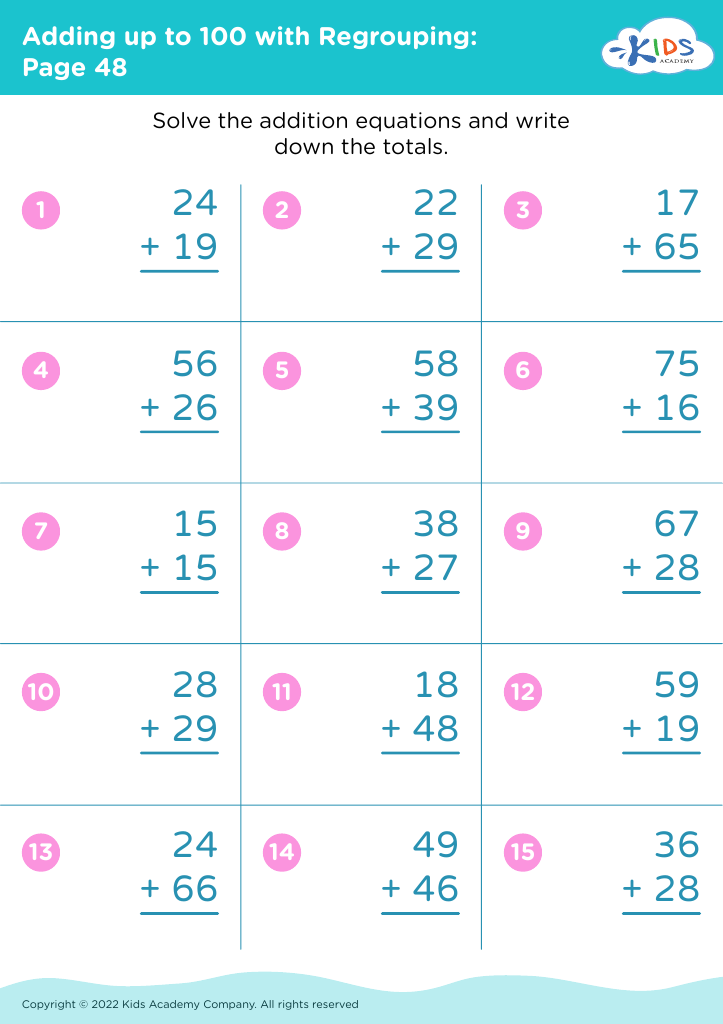
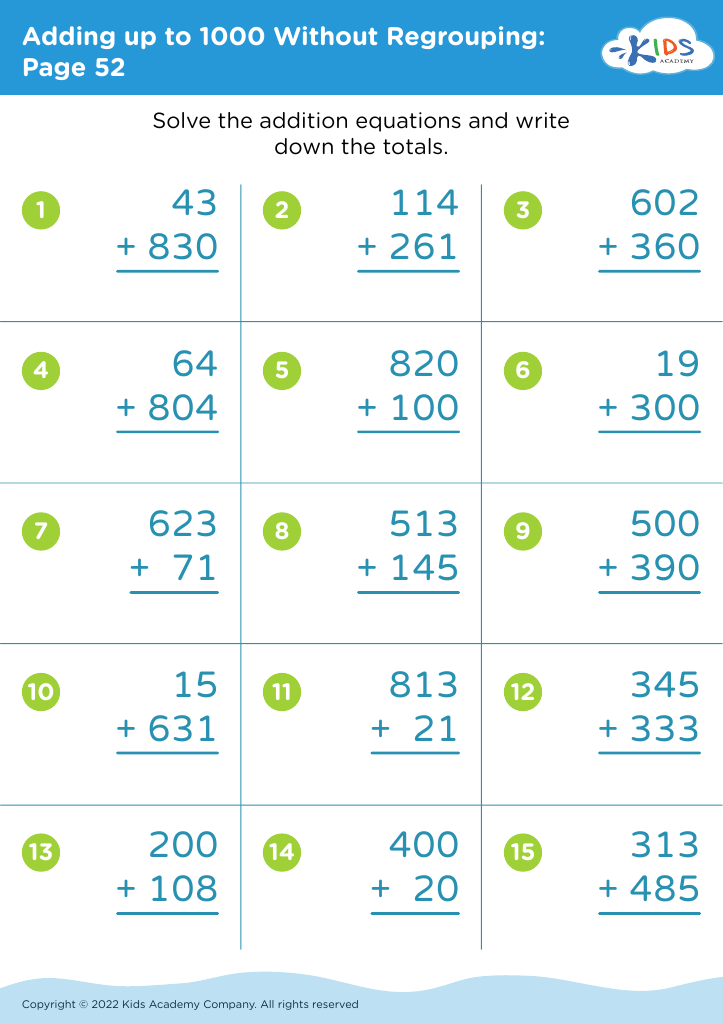
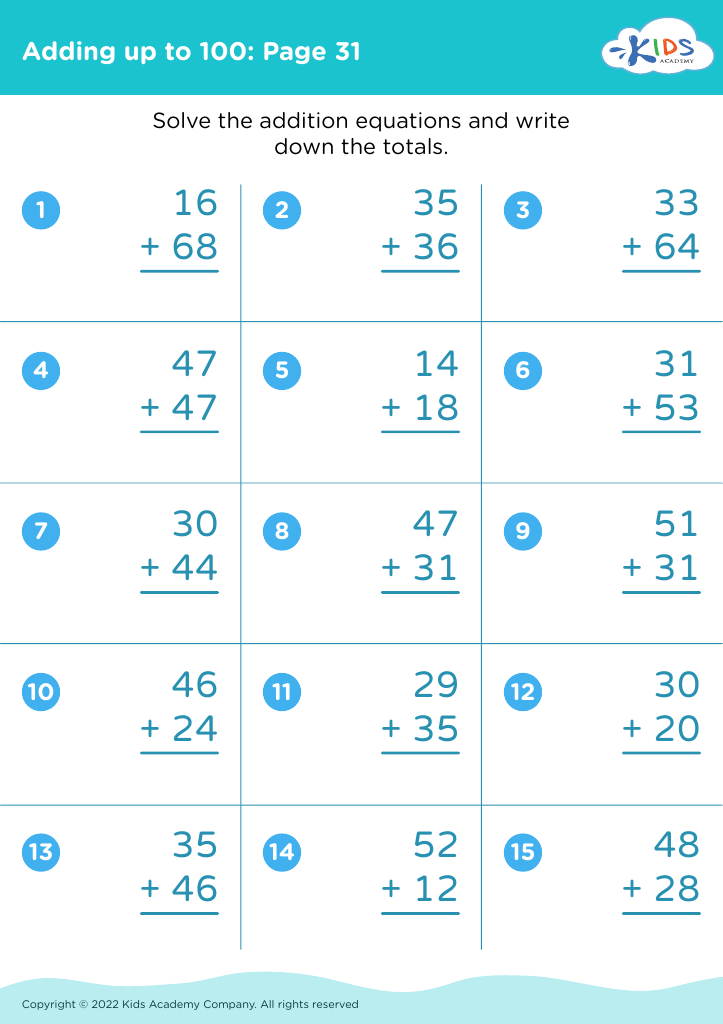
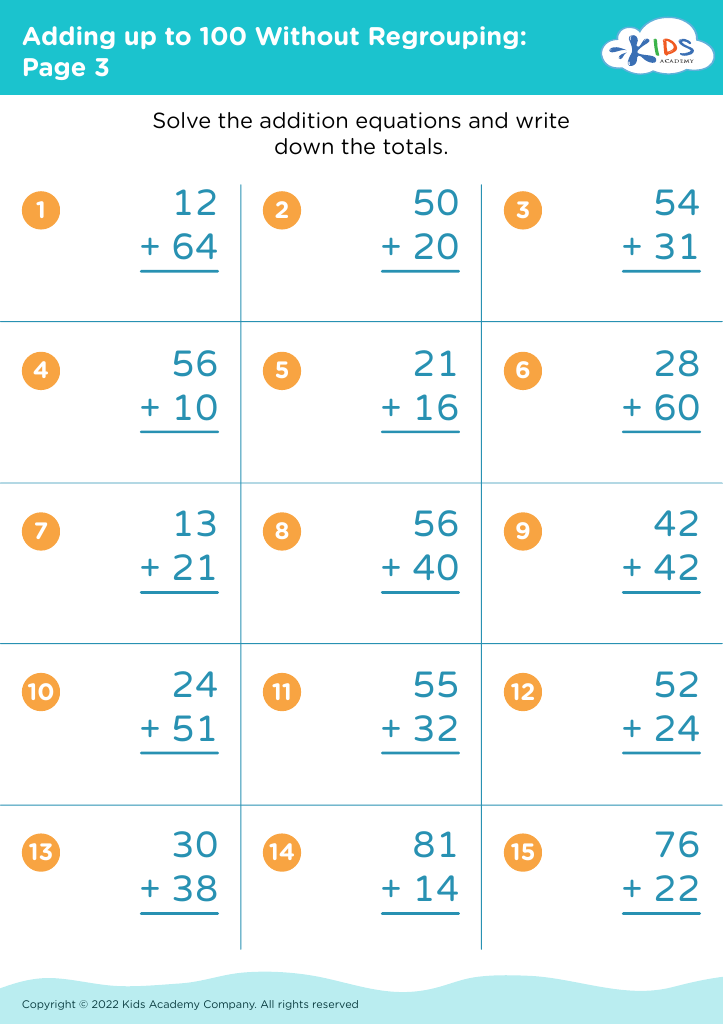
Enhance your child's math skills with our "Develop Number Recognition" worksheets tailored for ages 8-9! These engaging activities blend fun with education, promoting mastery of number recognition, a crucial skill for young learners. Each worksheet, crafted by experts, uses intriguing themes and practical exercises to make learning enjoyable and effective. Boost your child's confidence in math through hands-on tasks, enriching their ability to recognize, read, and write numbers confidently. Perfect for home or classroom use, these worksheets provide a foundational step towards mathematical success. Join us in making math exciting and accessible for every young student!
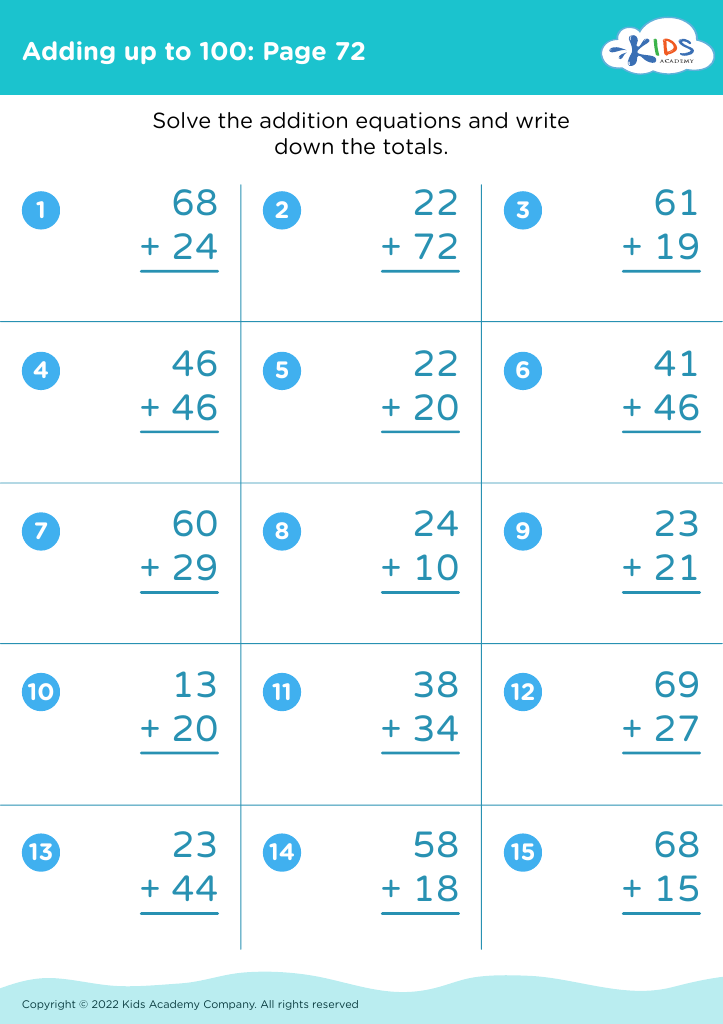








Parents and teachers should prioritize the development of number recognition in children aged 8-9 because it's foundational for their academic success and everyday skills. At this crucial stage, children are transitioning from basic counting to more complex mathematical concepts. Strong number recognition enables them to understand and perform arithmetic operations like addition, subtraction, multiplication, and division more effectively.
Moreover, good number sense is directly tied to problem-solving abilities. Children who can recognize and understand numbers can better grasp word problems and mathematical relationships, laying the groundwork for higher-level math skills like fractions and geometry. These skills are critical not just for mathematics, but for subjects like science and economics that require quantitative reasoning.
Beyond academics, number recognition also aids in real-world scenarios. It enhances a child's ability to manage money, tell time, and measure quantities—skills they'll use throughout their lives. Investing time in developing strong number recognition helps build confidence, reduces math anxiety, and fosters a positive attitude towards learning mathematics overall.
For these reasons, both parents and teachers should engage children with hands-on activities, games, and exercises that promote number recognition. By doing so, they’ll be supporting a comprehensive educational foundation that benefits various aspects of a child’s intellectual and practical development.








