Develops fine motor skills Math Worksheets for Ages 8-9
3 filtered results
-
From - To
Enhance your child's fine motor skills with our engaging math worksheets designed for ages 8-9! Our collection features a variety of activities that not only develop essential math concepts but also refine hand-eye coordination and dexterity. Through interactive exercises, kids will practice writing numbers, solving math problems, and completing shapes, all while having fun. This dual focus on fine motor development and mathematical thinking sets the stage for academic success. Perfect for home or classroom use, our worksheets promote both skill mastery and creativity in young learners. Download our printable worksheets today and watch your child flourish!
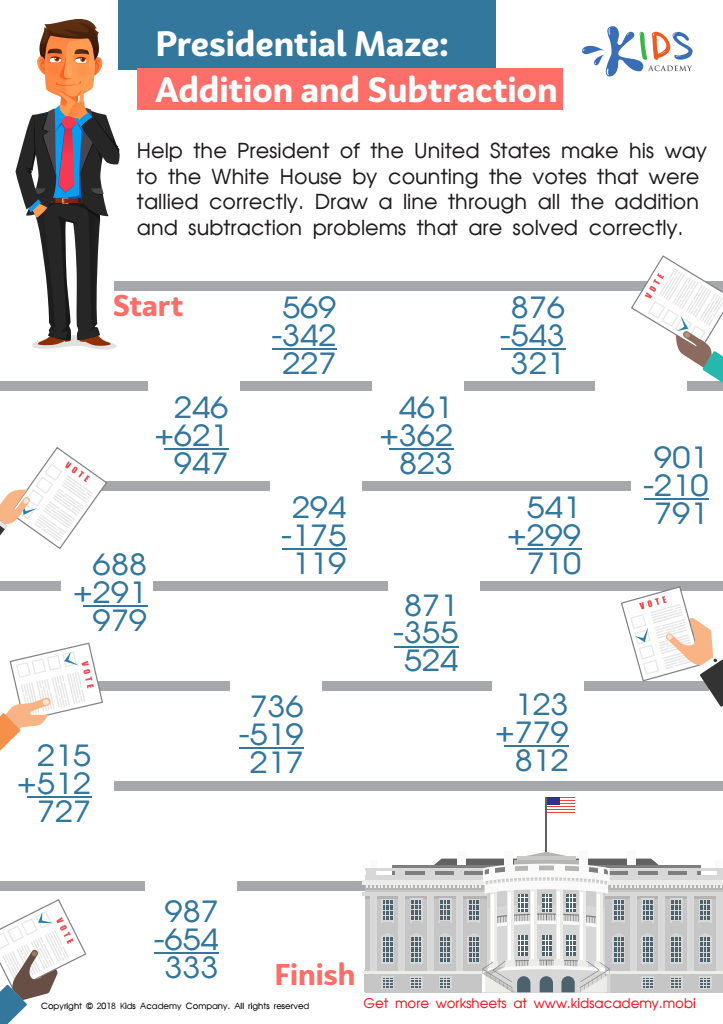
Presidential Maze: Addition and Subtraction Worksheet
 Assign to My Students
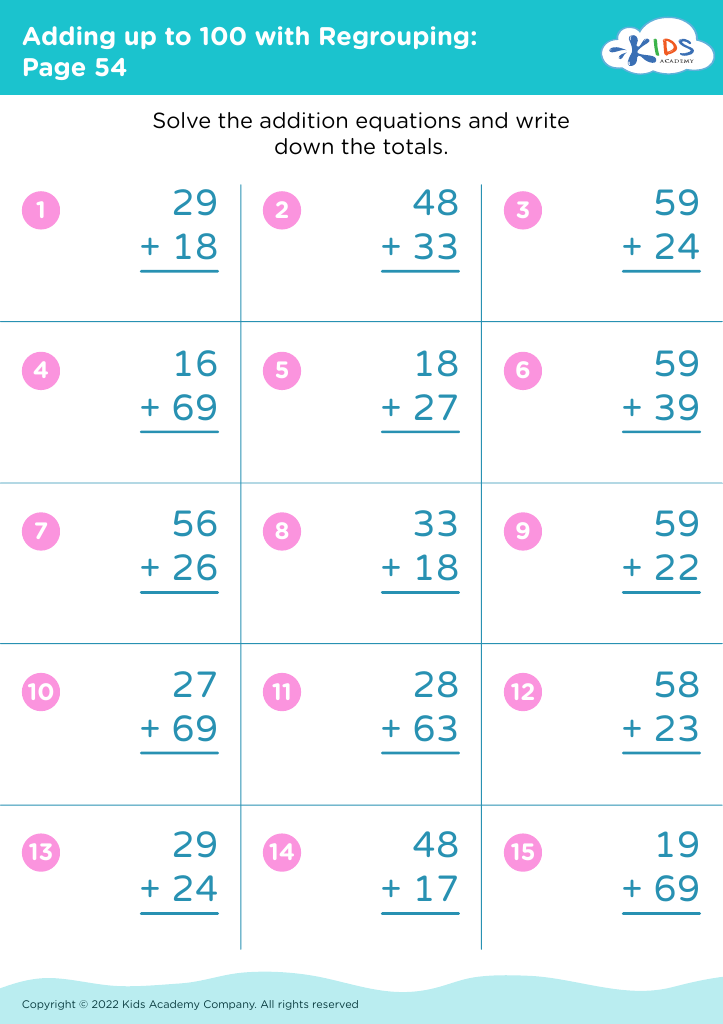
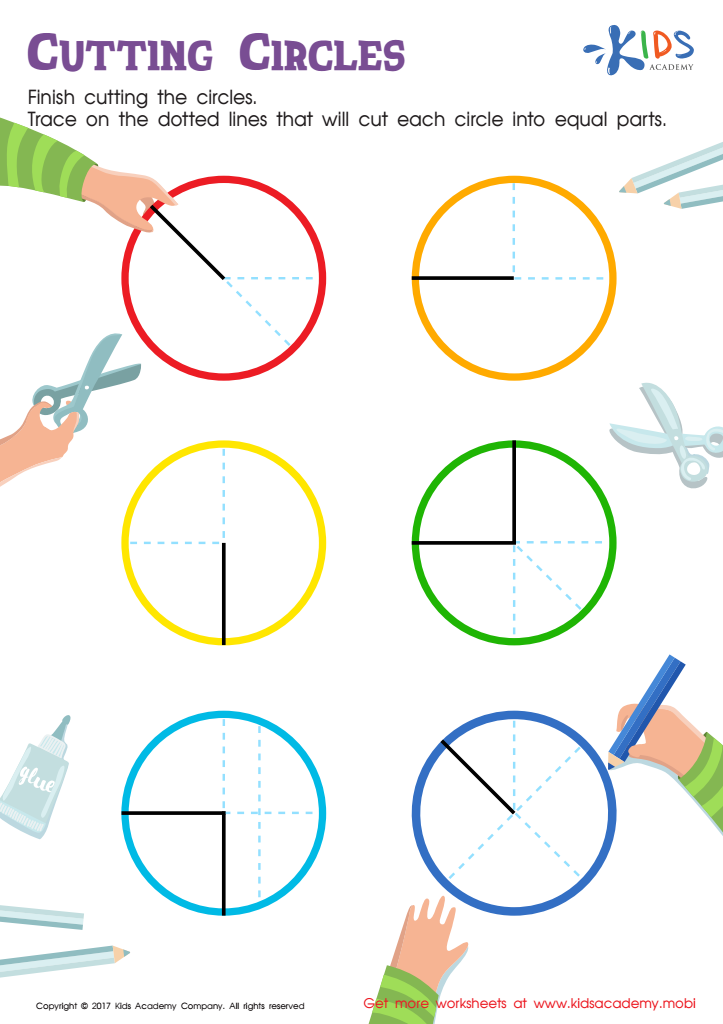
Cutting Circles Worksheet



.jpg)




Developing fine motor skills in children aged 8-9 is crucial for a variety of reasons, especially in the context of math education. At this age, children are becoming more adept at manipulating tools, which translates directly to their ability to work with math-related tasks, such as measuring, drawing graphs, or using manipulatives. Enhanced fine motor skills facilitate greater control over writing instruments, enabling clearer handwriting and efficiency in numerical computation, which is vital for solving math problems.
Moreover, fine motor skills can build a child's confidence; when they can effectively engage with mathematical tasks, they are more likely to participate actively in class and tackle challenging concepts. Engaging activities, such as cutting shapes, crafting, and using math manipulatives (like blocks or counters), can make math more interactive and enjoyable, helping diminish anxiety around the subject.
Lastly, fine motor skills contribute to overall cognitive development, fostering problem-solving abilities as children learn to navigate tasks requiring precision and coordination. For parents and teachers, focusing on fine motor development in conjunction with math instruction can lay a strong foundation for future learning, promoting academic success and a love of learning in children.








