
Financial literacy Math Worksheets for Ages 8-9
4 filtered results
Difficulty Level
Grade
Age
-
From - To
Subject
Activity
Standards
Enhance your child's understanding of financial literacy with our engaging Math Worksheets for ages 8-9. Designed to make learning about money fun and interactive, these worksheets cover essential financial concepts such as saving, budgeting, and basic financial decision-making. Through a variety of exercises and real-life scenarios, children will develop crucial skills that set the foundation for smart financial habits. Perfect for both classroom and home use, these worksheets align with educational standards, ensuring your child gains the knowledge to manage finances confidently. Visit our page to equip your young learners with the skills they need for a financially savvy future!
Favorites
With answer key
Interactive
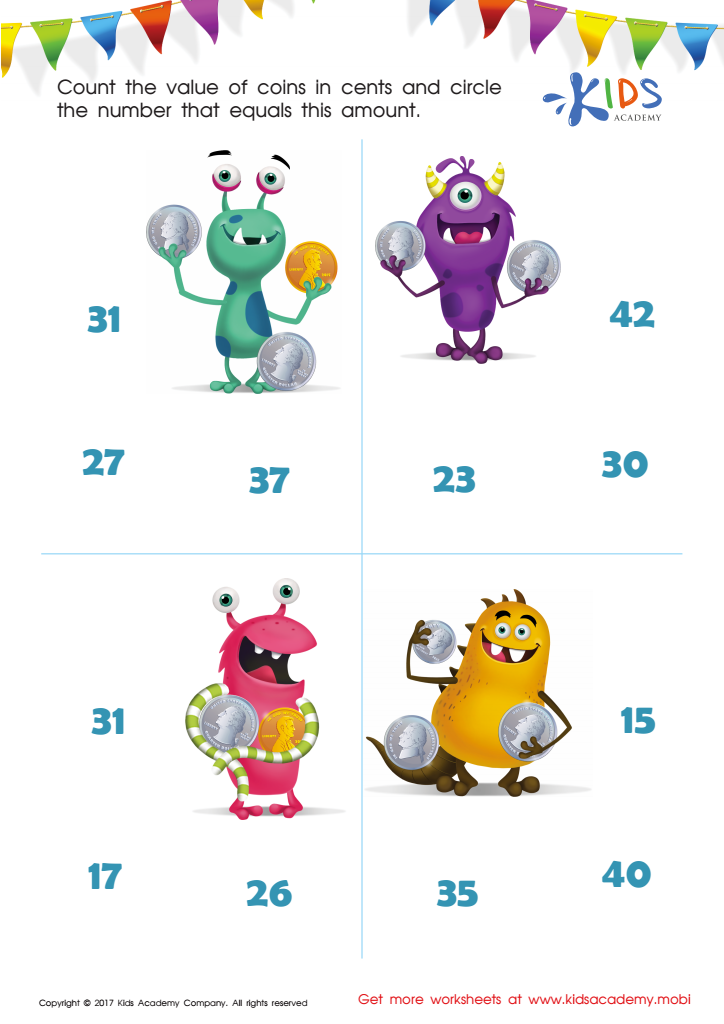
How Many Coins Money Worksheet
Have fun while counting coins: look at the monsters and count the coins in their hands. Challenge your little learners to count and write down the number of coins each one has. Enjoy the time together!
 Assign to My Students
How Many Coins Money Worksheet
Worksheet
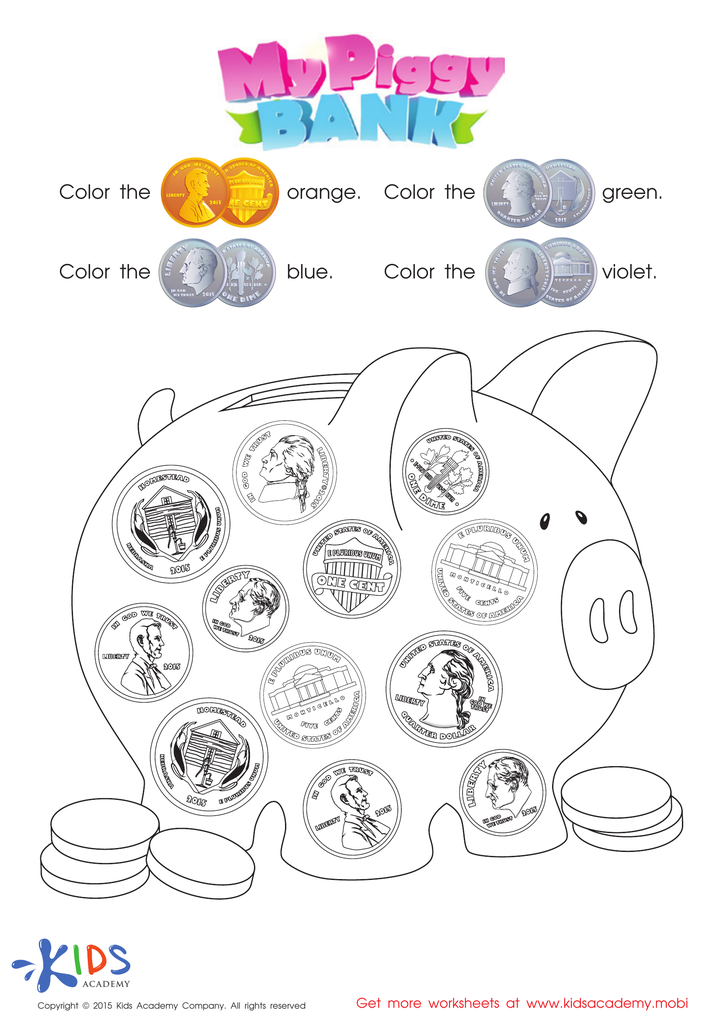
Recognizing Money Money Worksheet
Help the piggy bank by coloring its coins with Kids Academy's free money worksheets! Learn the different coins and their values with your kids. Printable worksheets are available to continue the lesson. Let's learn and have fun!
Recognizing Money Money Worksheet
Worksheet
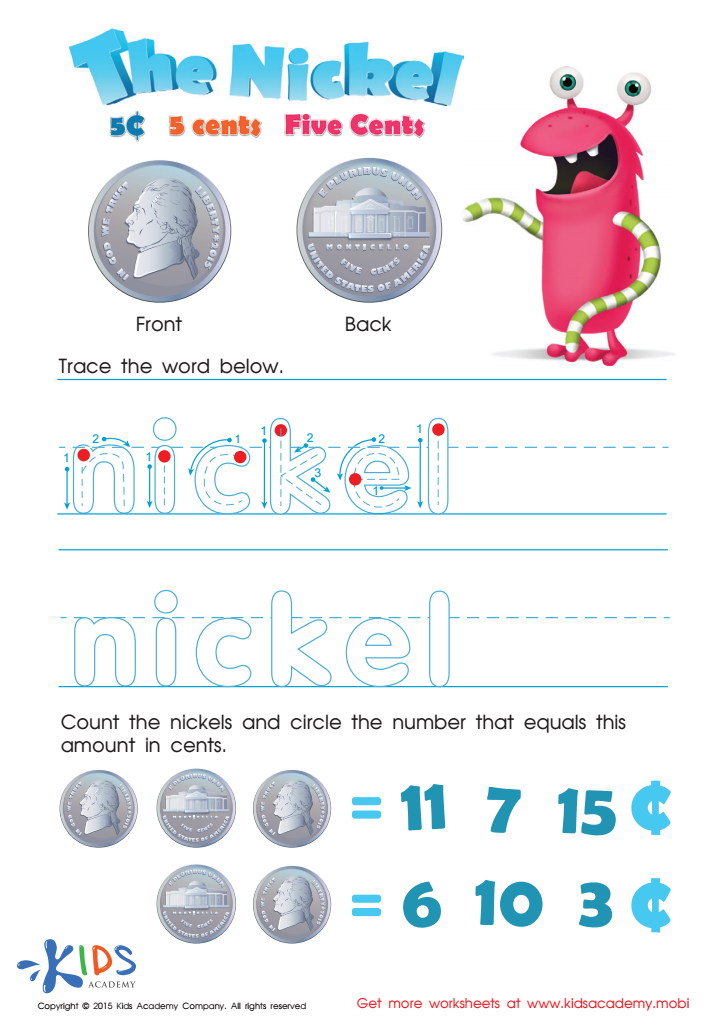
Five Cents or the Nickel Money Worksheet
Counting money games help kids make learning money fun and easy. Next up: the 5 cent coin, or nickel. Look at both sides and remember them. Then, trace the word "nickel" to help you remember. Finally, count the nickels and work out amounts in cents. Let's do this! Kids Academy helps make money learning easy and fun!
Five Cents or the Nickel Money Worksheet
Worksheet
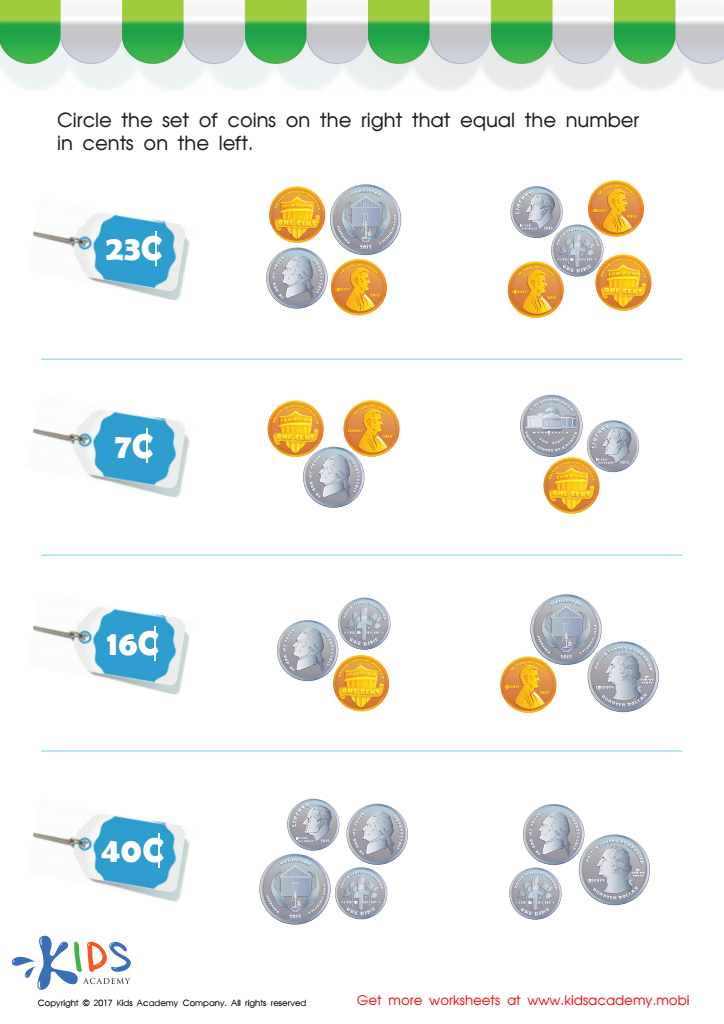
Picking the Coins You Need Money Worksheet
Let's learn to count money with Parents and Kids Academy! Investigate a real shop together: buy a globe, pencils, books, and a school bag using coins. Then, circle the coins you'll need. Visit our website for more free and fun money games for kids!
Picking the Coins You Need Money Worksheet
Worksheet
Join Kids Academy for Free
Who is primarily going to use this learning content?








Financial literacy at an early age equips children with essential skills for navigating daily life and making thoughtful financial decisions. For young minds aged 8-9, understanding basic money concepts such as saving, spending, and budgeting sets the groundwork for future financial health. Parents and teachers can play a pivotal role in embedding these crucial lessons early on.
Teaching financial literacy develops numeracy skills, allowing children to practice addition, subtraction, and other mathematical operations meaningfully. When kids comprehend that math is not just abstract numbers but something that applies to buying a toy or saving for a game, they appreciate its real-world significance. This contextual learning enhances both their math proficiency and enthusiasm for the subject.
Additionally, financial literacy fosters critical thinking and responsibility in young learners. Understanding needs versus wants, the value of money, and the importance of saving helps children develop wise decision-making skills that extend beyond finances into other areas of life. By integrating such lessons early, parents and teachers can instill habits and values that contribute to their overall well-being.
Parents and teachers should care about financial literacy math for 8-9 year-olds because it cultivates practical life skills, boosts academic achievement, and lays the foundation for responsible financial behavior in the future.








