Improve calculation speed Math Worksheets for Ages 8-9
4 filtered results
-
From - To
Boost your child's math skills with our engaging "Improve Calculation Speed" worksheets designed for ages 8-9! These specially crafted worksheets help children practice essential arithmetic operations—addition, subtraction, multiplication, and division—with a focus on enhancing calculation speed. Each worksheet features vibrant graphics and age-appropriate exercises to keep young learners motivated and excited about math. With varying levels of difficulty, kids will progressively build their confidence and proficiency. Perfect for classroom activities or at-home practice, our worksheets provide a fun, effective way to make math enjoyable while ensuring your child masters these vital skills. Unlock their potential today!
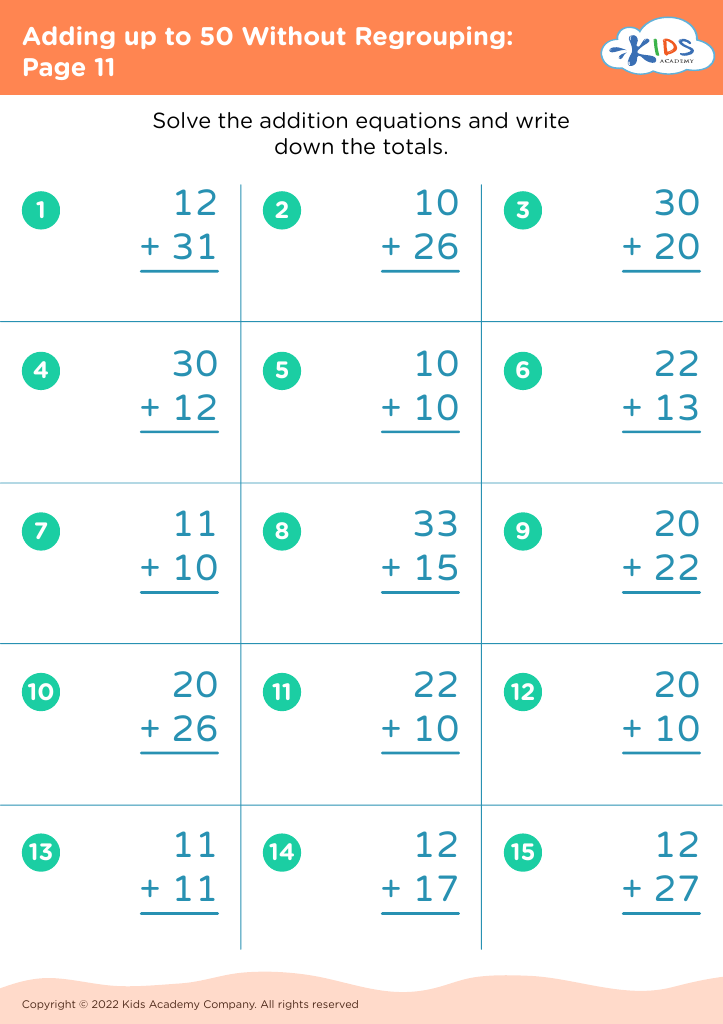
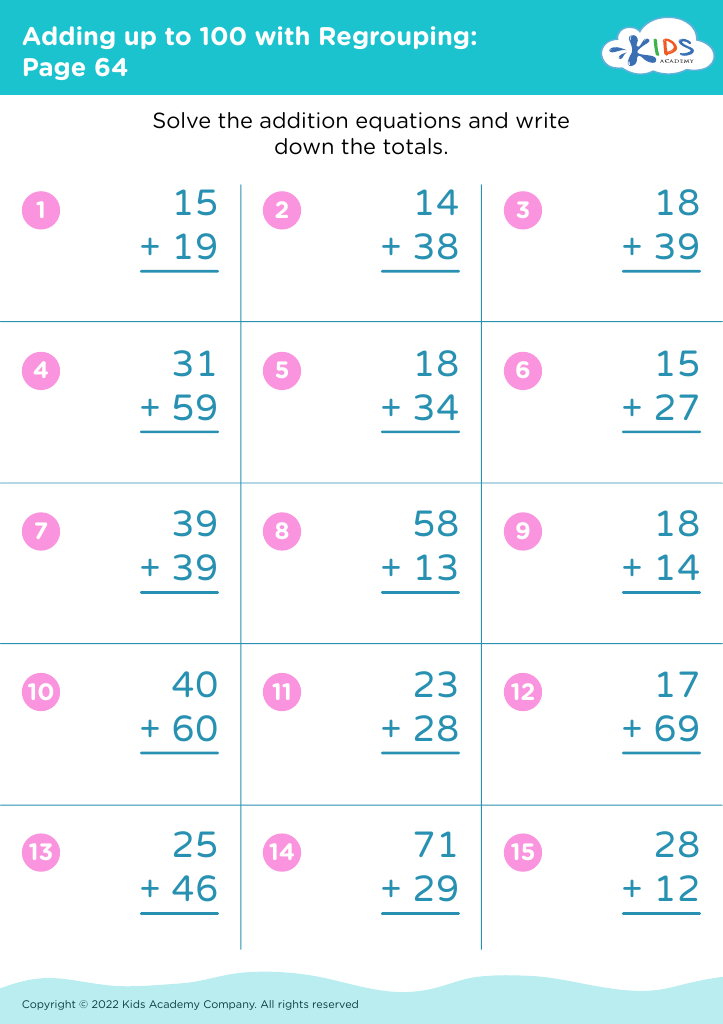
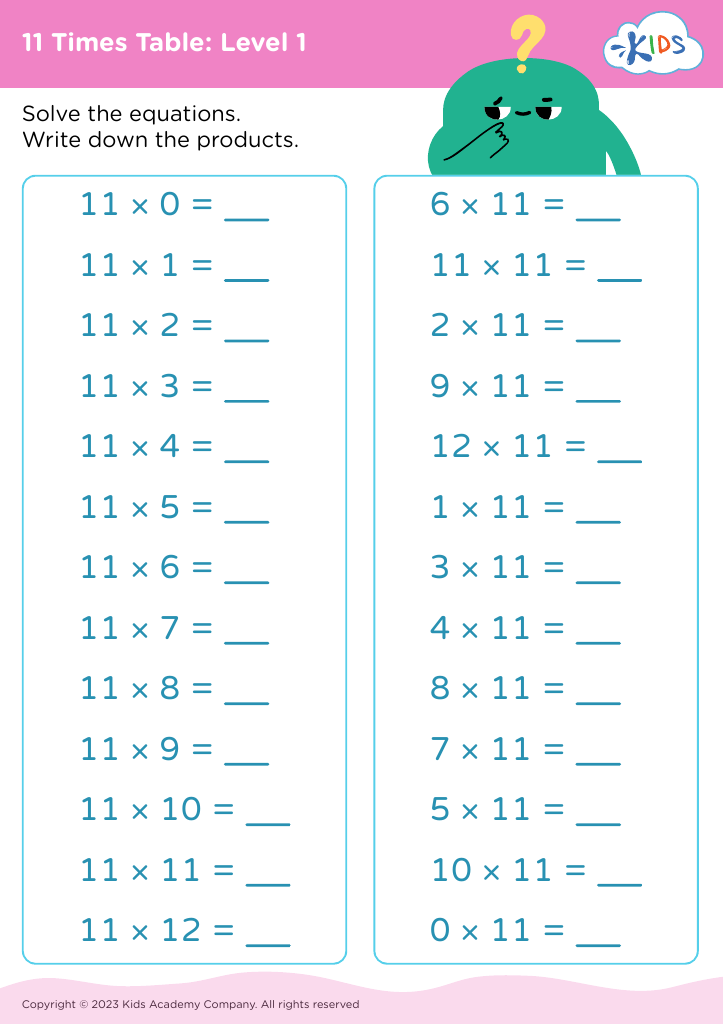
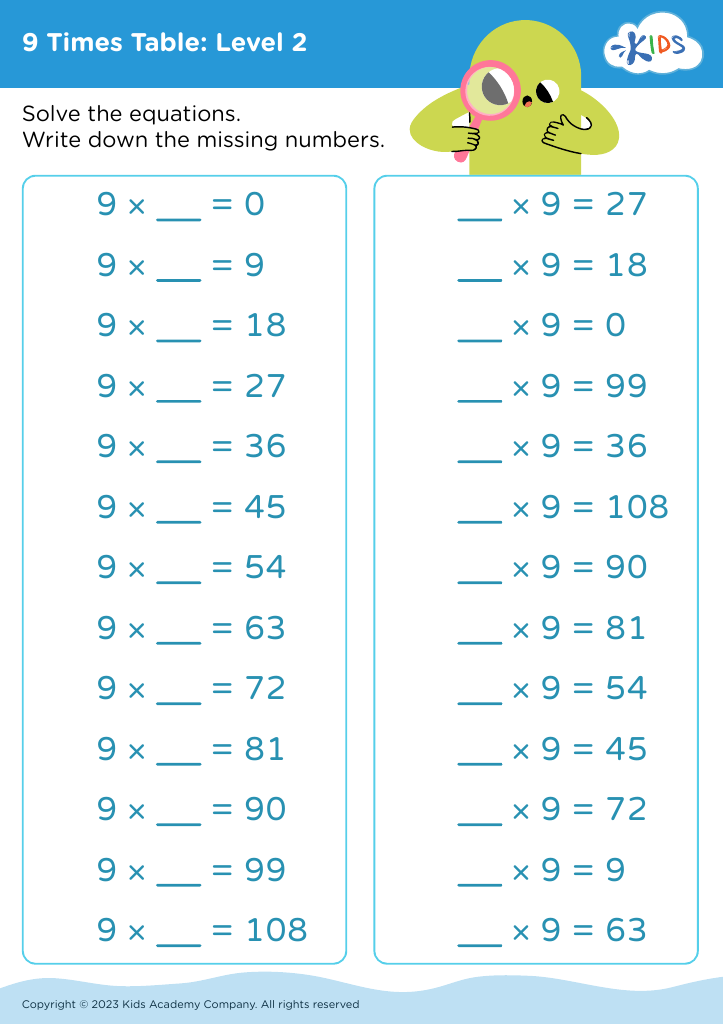







Improving calculation speed in mathematics for children aged 8-9 is essential for several reasons. Firstly, this age range is pivotal for building foundational math skills, as children transition from concrete understanding to more abstract concepts. Fast calculation skills enhance confidence, making children more willing to participate in math-related activities, thus reinforcing a positive attitude toward learning.
Secondly, proficient mental calculation lays the groundwork for higher-level math skills, including problem-solving and critical thinking. When children are quick and accurate in basic calculations, they can focus more on comprehending and solving complex problems rather than getting bogged down by arithmetic.
Additionally, improved calculation speed can significantly affect standardized tests and assessments. Students who can calculate quickly often complete exams with more accurate answers and less stress, setting them up for academic success.
Lastly, fostering calculation speed encourages resilience and perseverance. As children practice and improve, they learn the value of effort and dedication, skills that are valuable beyond the classroom. For teachers and parents, nurturing these skills ensures that children are not only competitive in academics but also prepared for future challenges in their educational journey. Ultimately, prioritizing speed in calculations cultivates a well-rounded and resilient learner.








