Improve counting skills Math Worksheets for Ages 8-9 - Page 2
44 filtered results
-
From - To
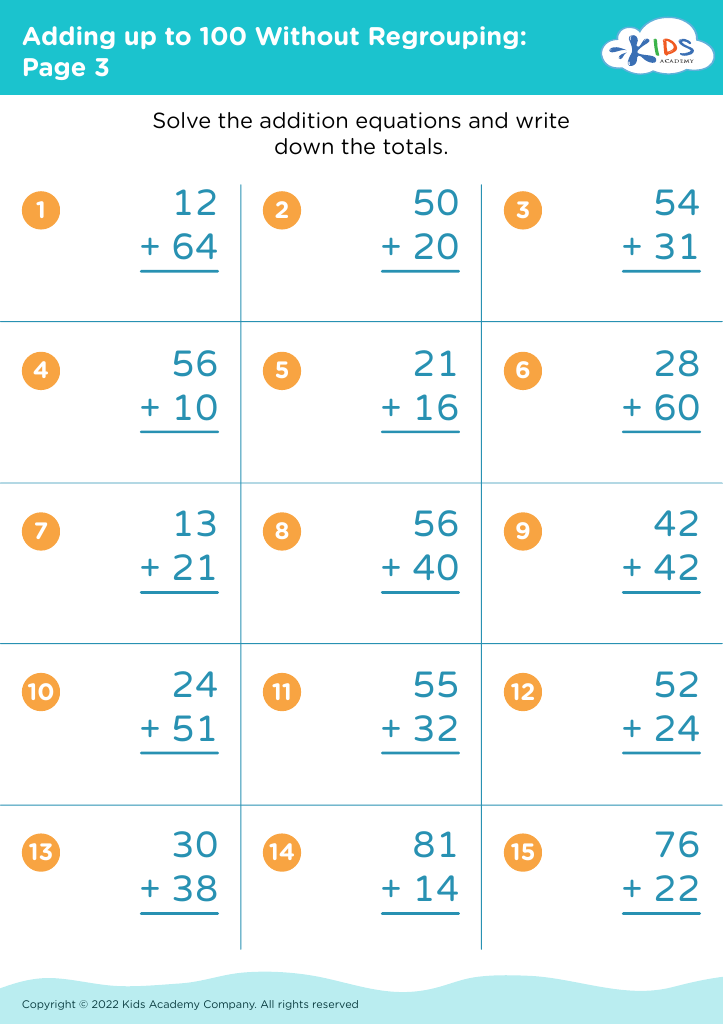
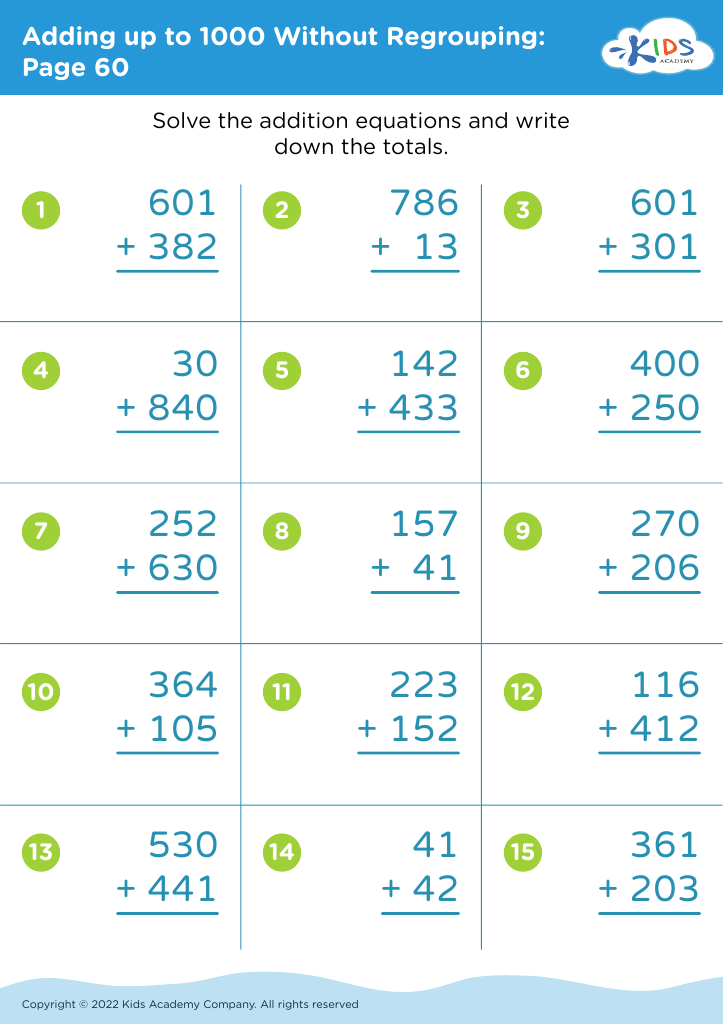
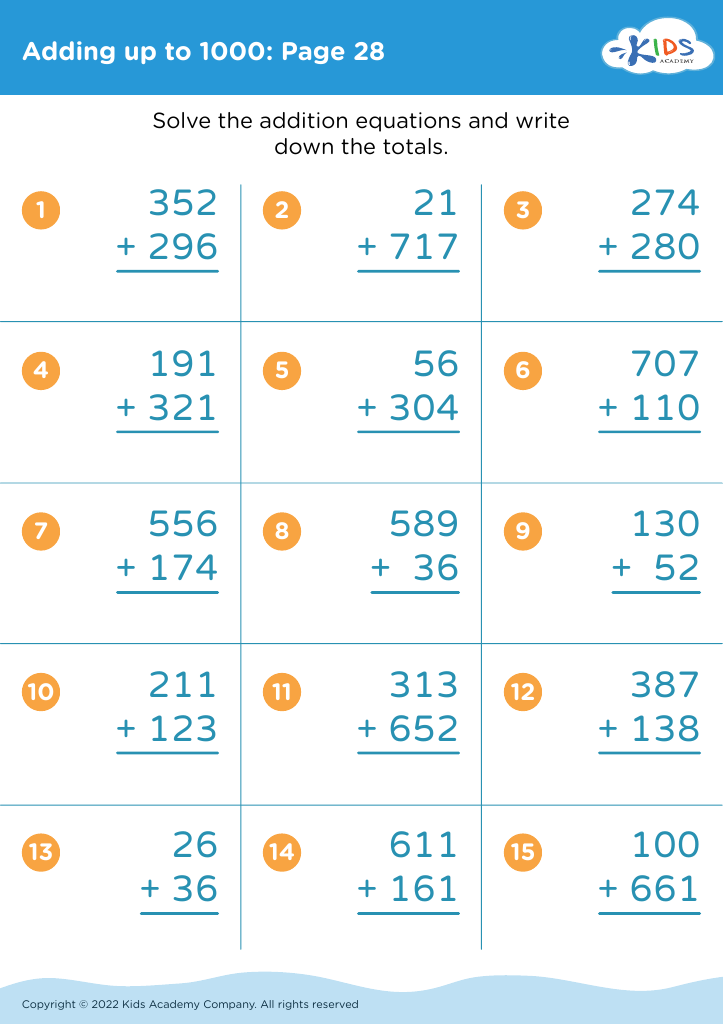
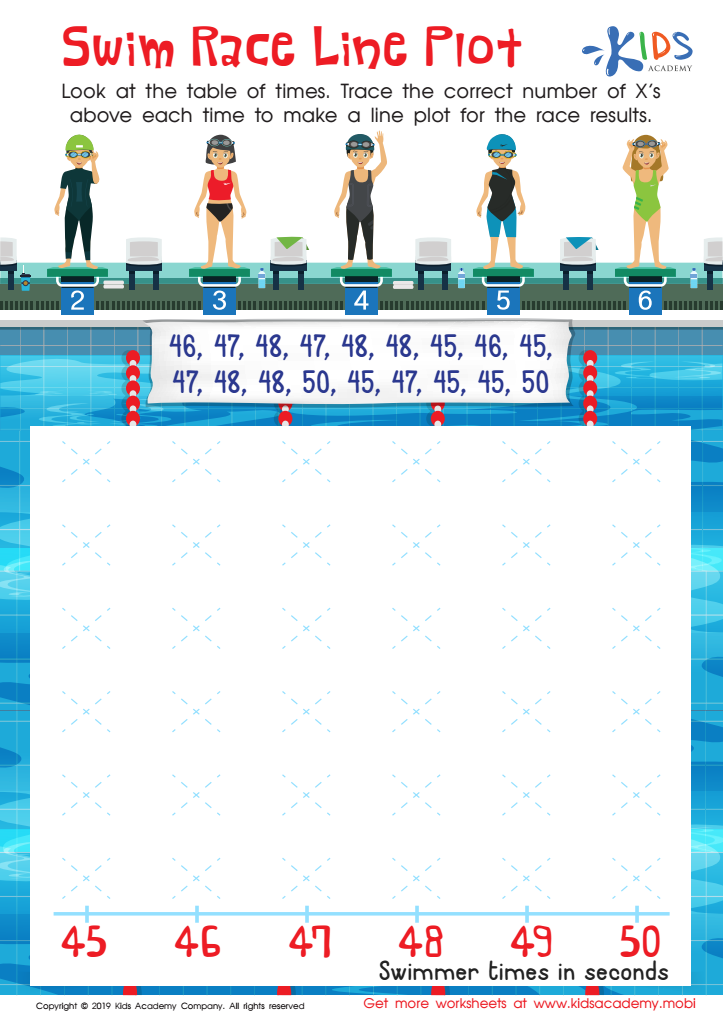
Swim Race Line Plot Worksheet
 Assign to My Students
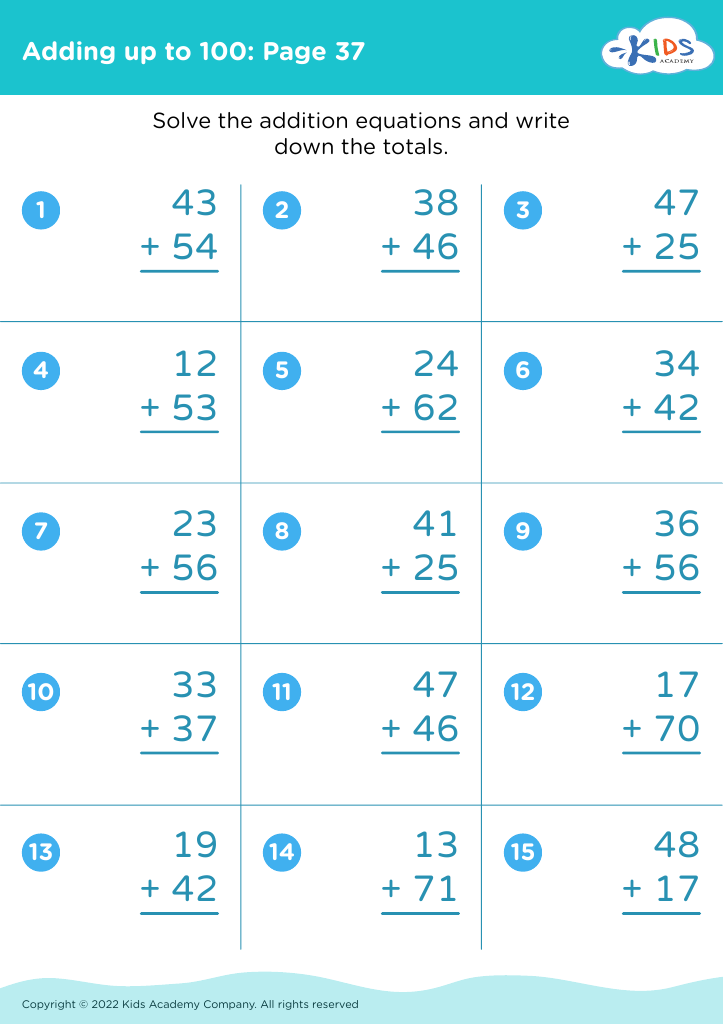
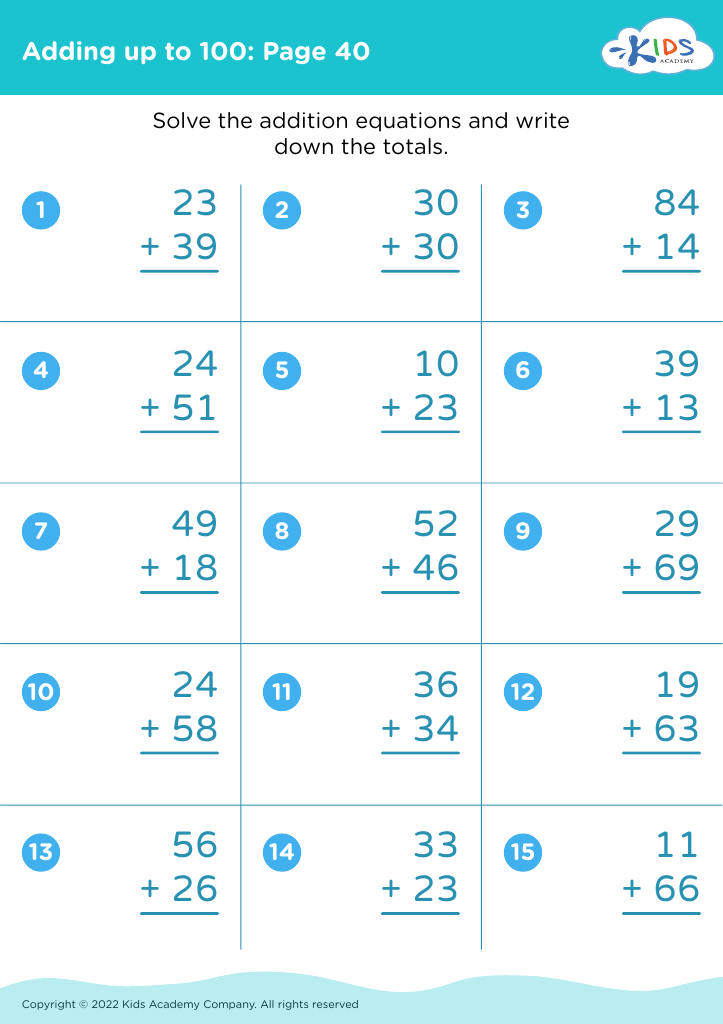
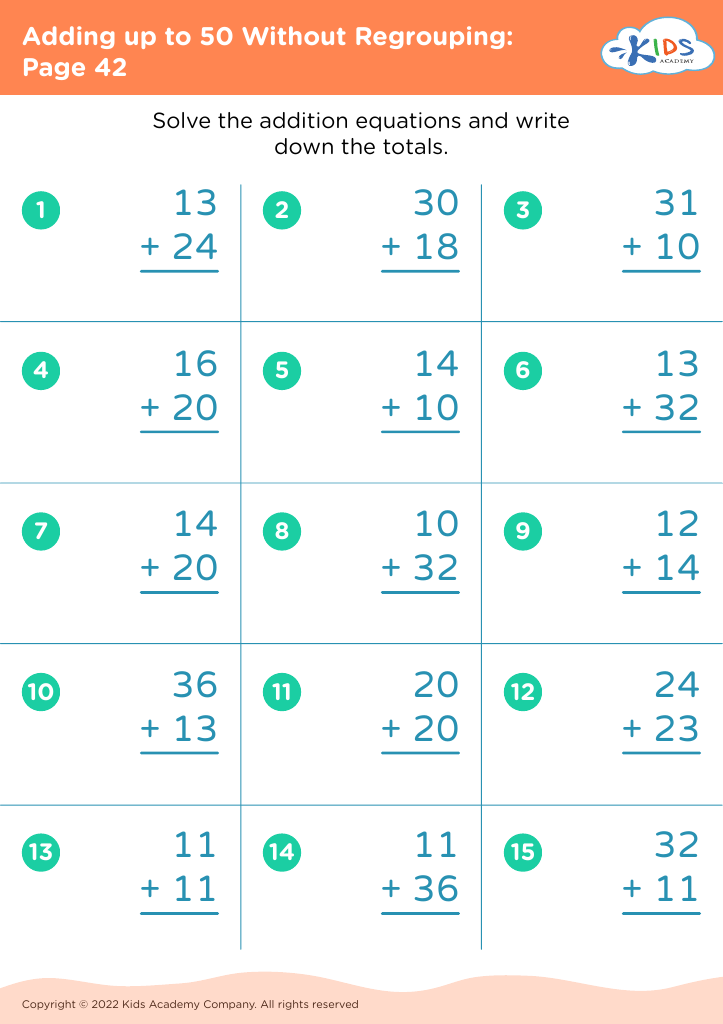
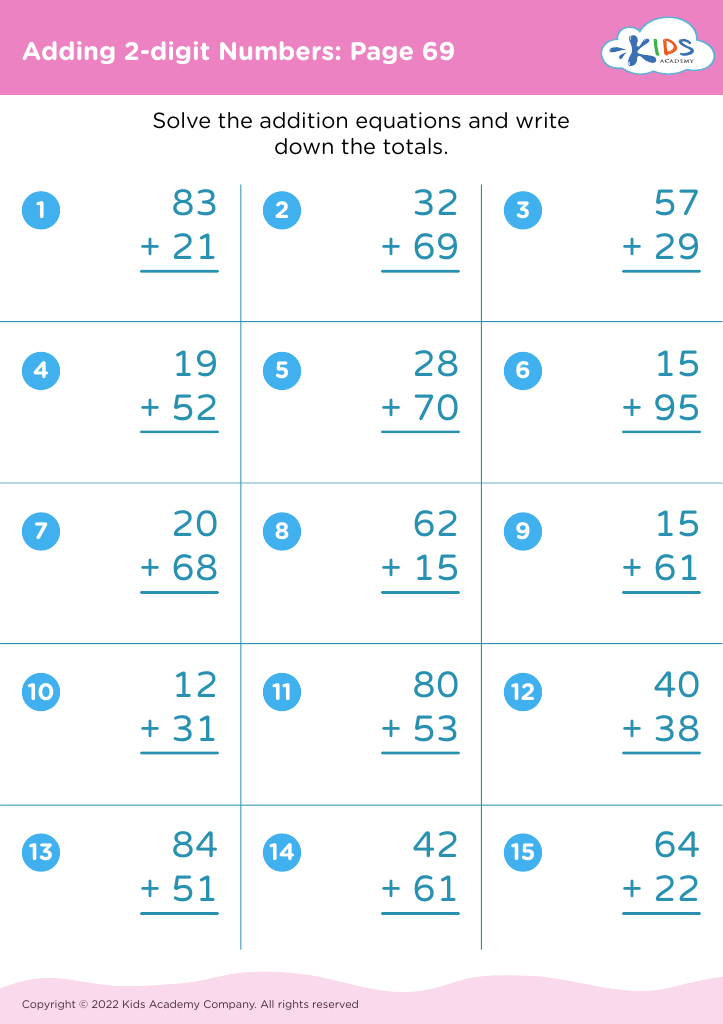
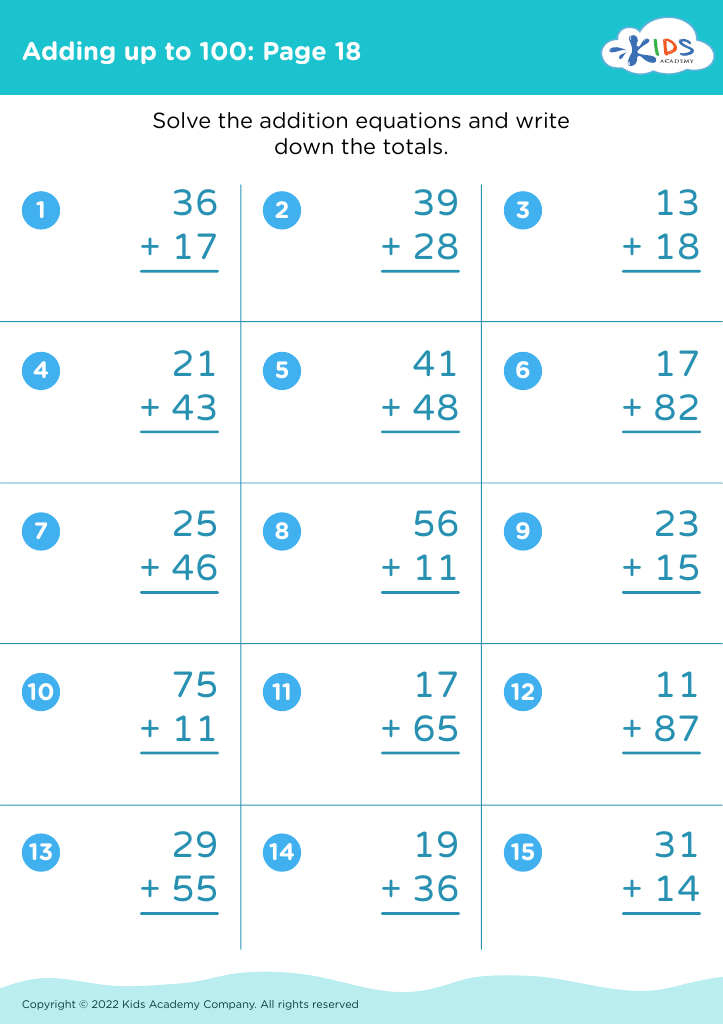
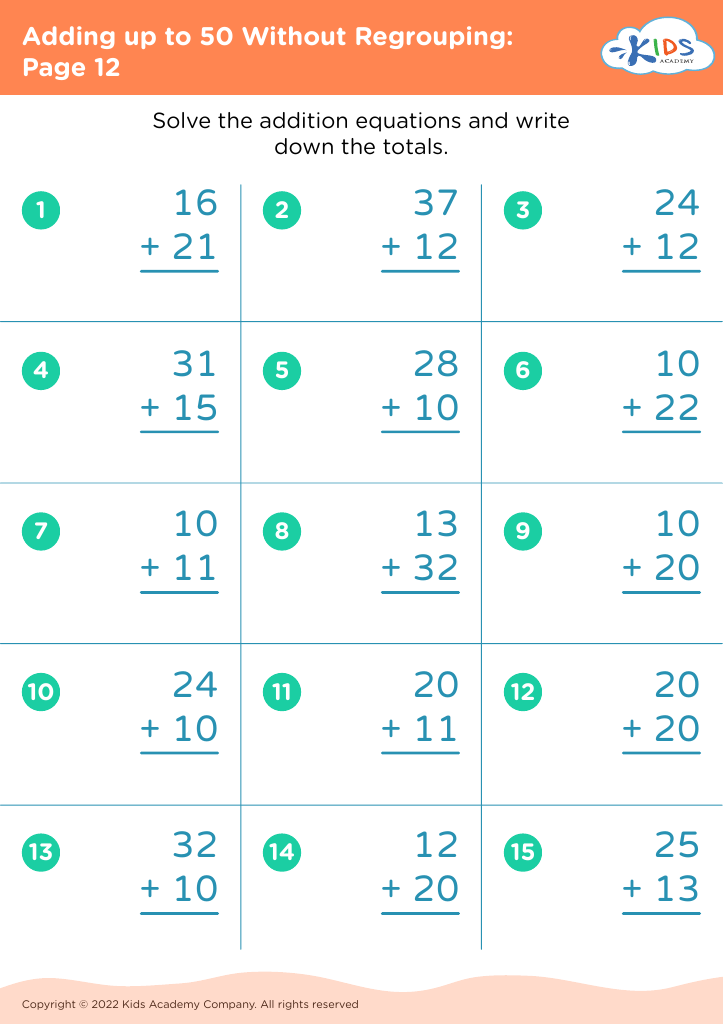
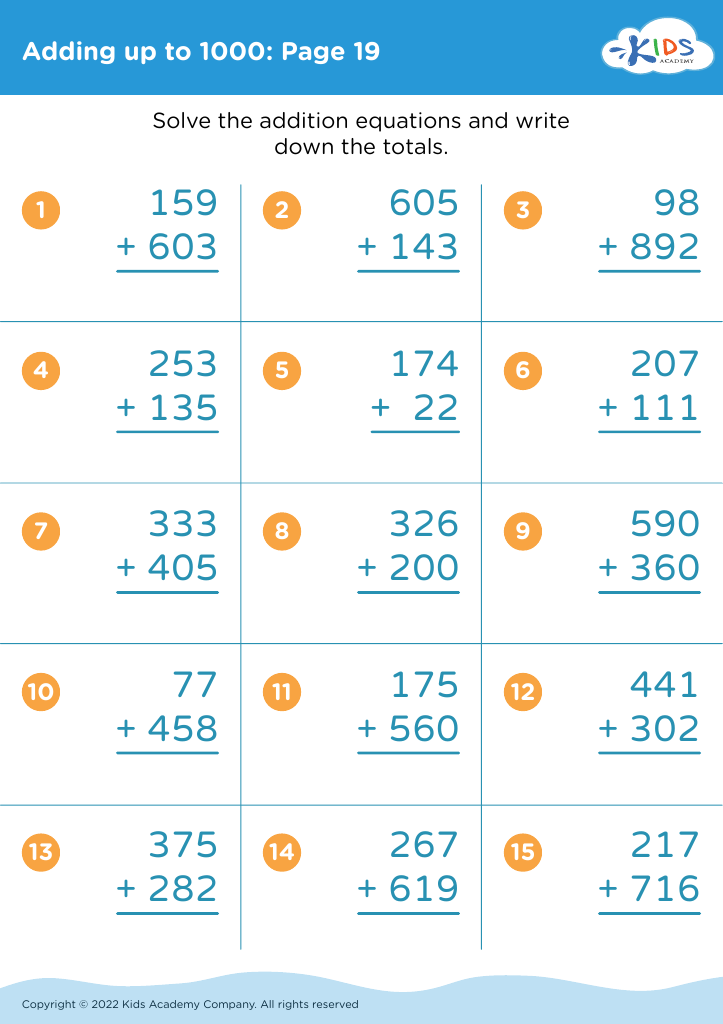
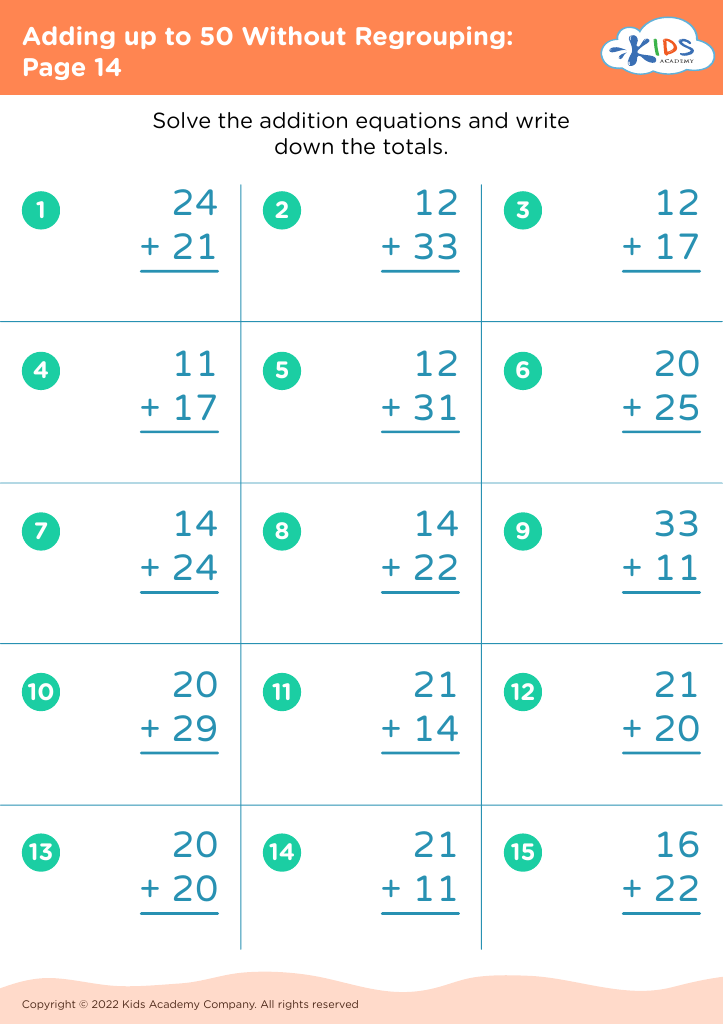
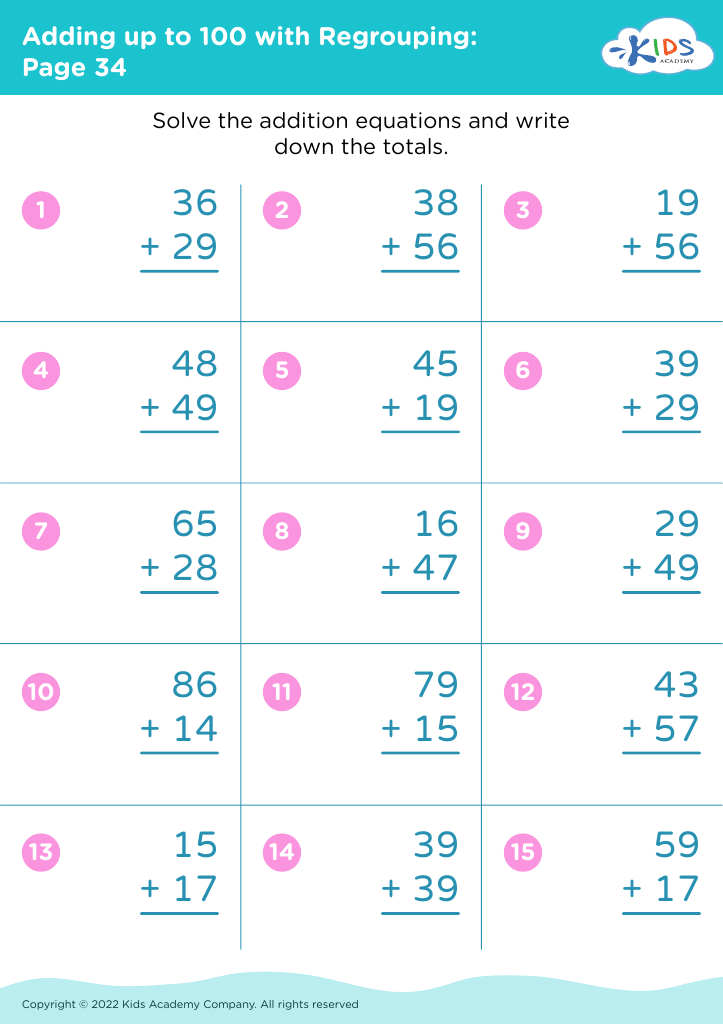
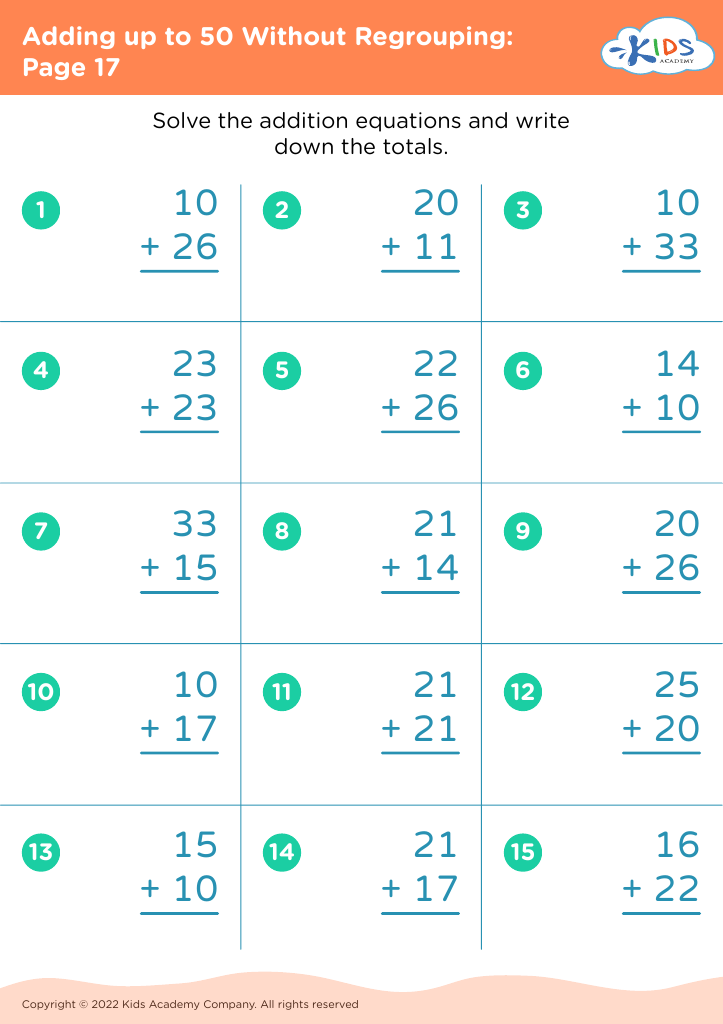
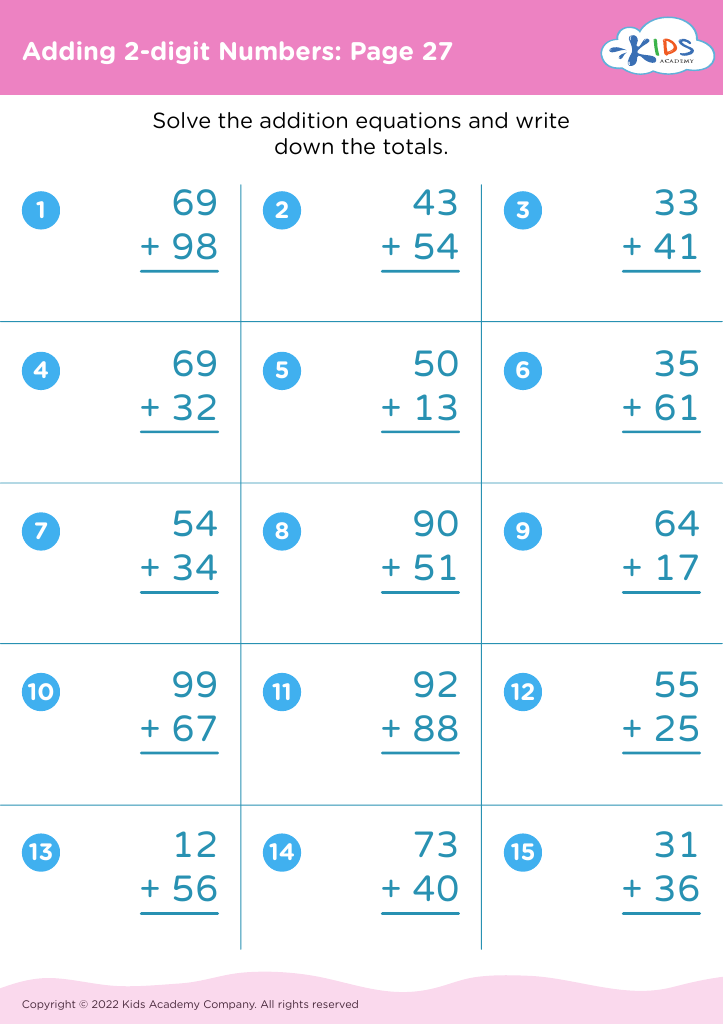
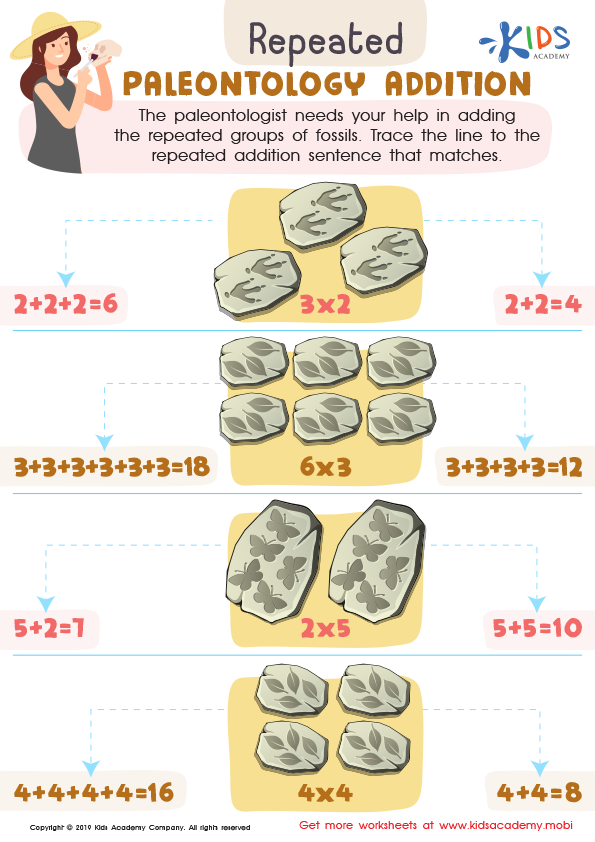
Repeated Archaeology Addition Worksheet
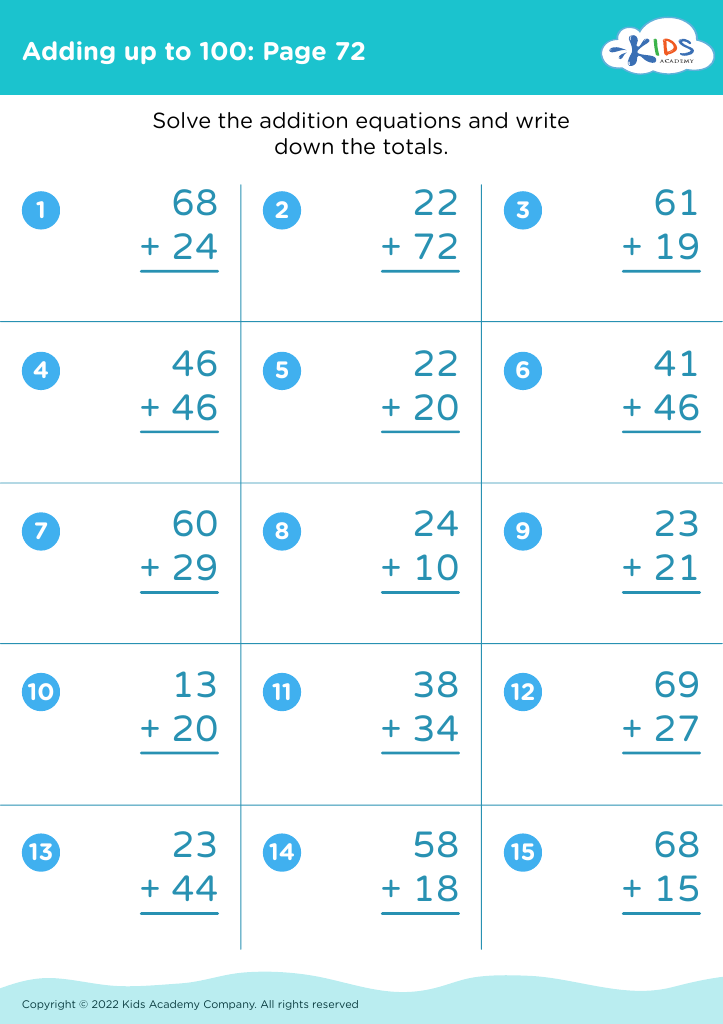
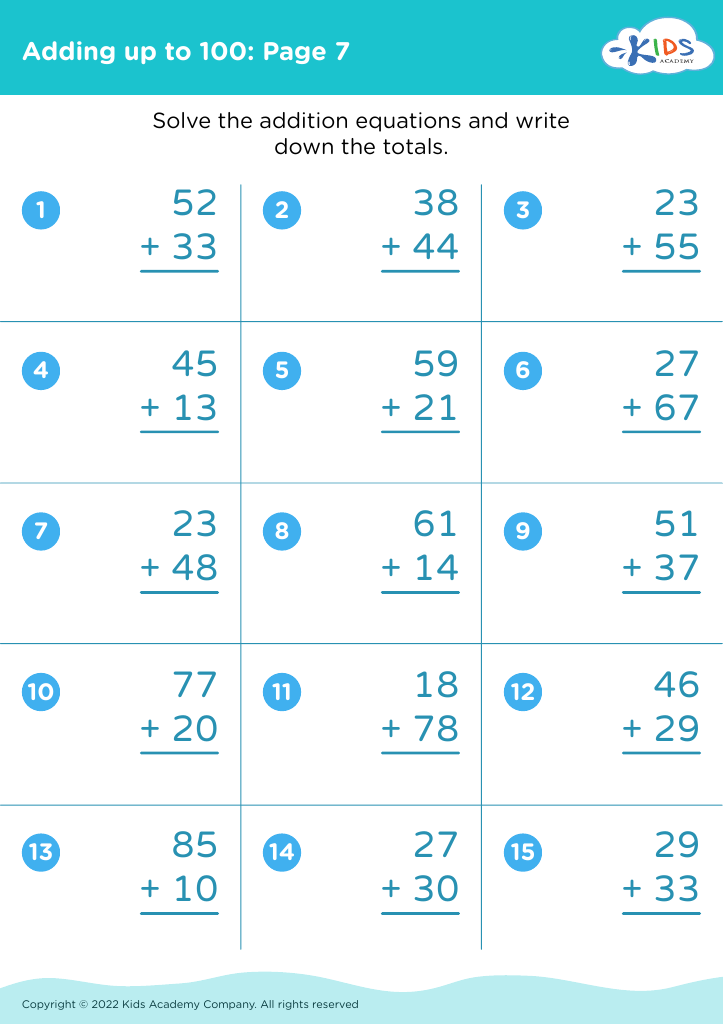
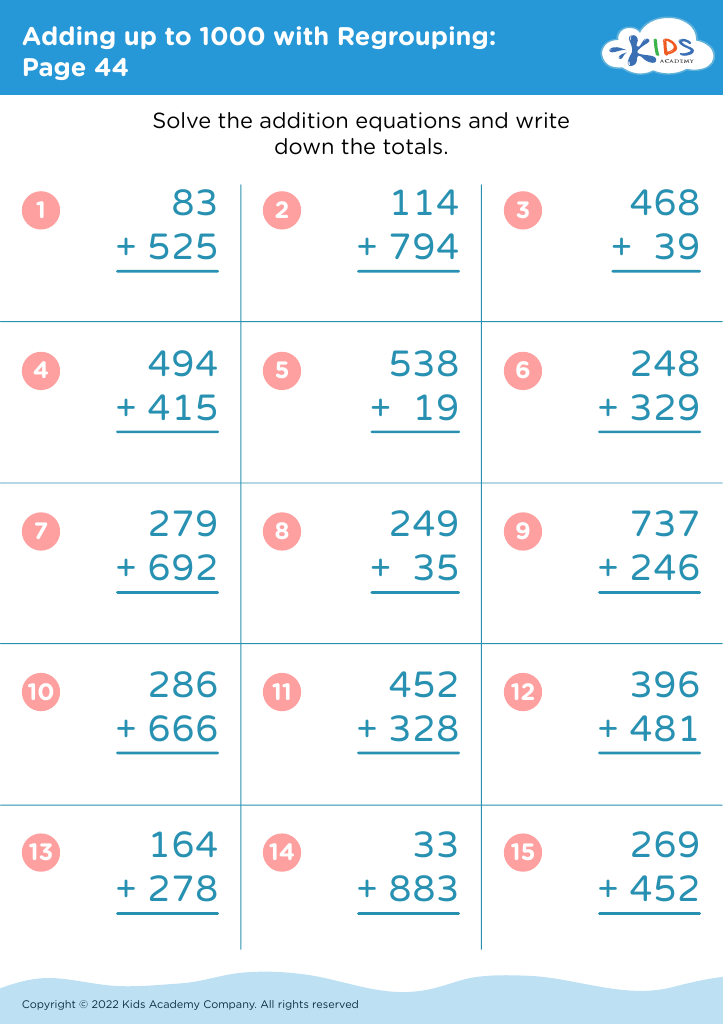
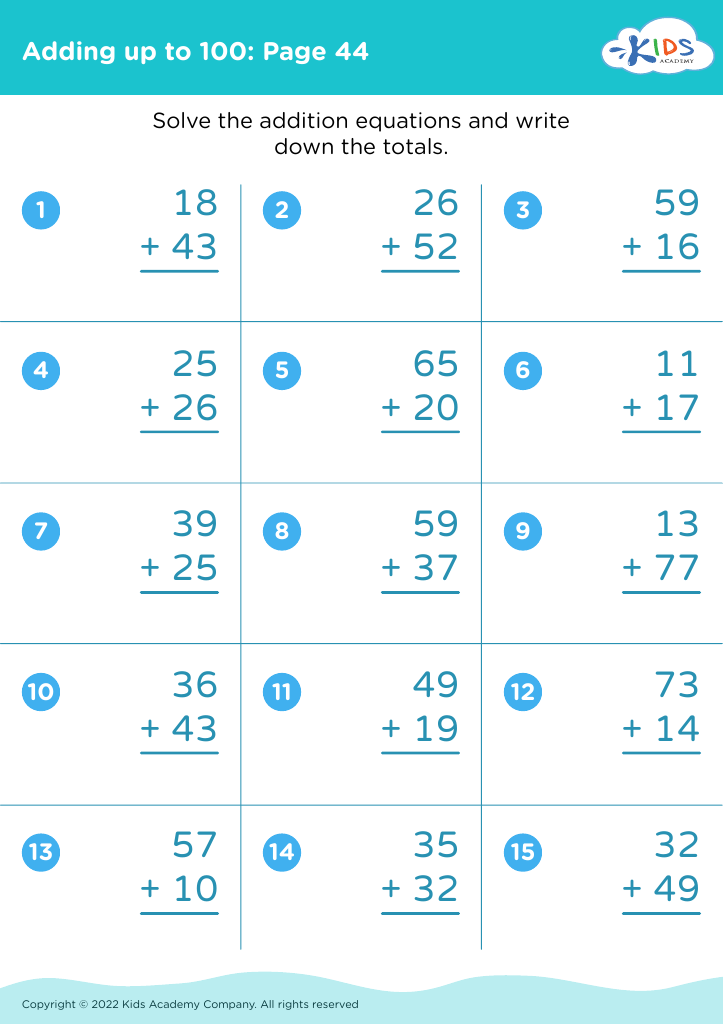








Improving counting skills in children aged 8-9 is crucial for their overall mathematical development and academic success. At this age, children begin to encounter more complex mathematical concepts such as addition, subtraction, multiplication, and division. Strong foundational counting skills enhance their ability to understand these concepts, enabling them to perform calculations accurately and efficiently.
Furthermore, counting skills foster critical thinking abilities and problem-solving strategies. Encouraging children to practice counting can also promote higher engagement in math-related activities, making the subject more enjoyable and less intimidating.
In addition, effective counting skills contribute to daily life applications. Children encounter scenarios where counting and estimation are necessary, such as during shopping or sharing items with peers. By strengthening these skills, parents and teachers empower kids to feel confident in their daily interactions and decision-making processes.
Moreover, investing in counting skills at this stage helps to cultivate a positive attitude toward math, potentially counteracting any anxiety or negative perceptions they might develop as they advance in their education. Overall, prioritizing counting skills in young learners lays a robust groundwork for future success across all academic disciplines.








