
Improving observation skills Math Worksheets for Ages 8-9
5 filtered results
Difficulty Level
Grade
Age
-
From - To
Subject
Activity
Standards
Enhance your child’s observation skills with our engaging math worksheets designed for ages 8-9. These thoughtfully crafted worksheets focus on sharpening critical thinking through fun and interactive activities. Ideal for young learners, they promote attention to detail and improve problem-solving abilities. Featuring colorful illustrations and diverse exercises, our resources make math enjoyable while helping children develop reasoning skills essential for academic success. Whether at home or in the classroom, these worksheets provide an effective way to encourage exploration and observation in math. Download now and watch your child's confidence and skills soar! Perfect for parents and teachers alike!
Favorites
With answer key
Interactive
Changing Leaves Worksheet
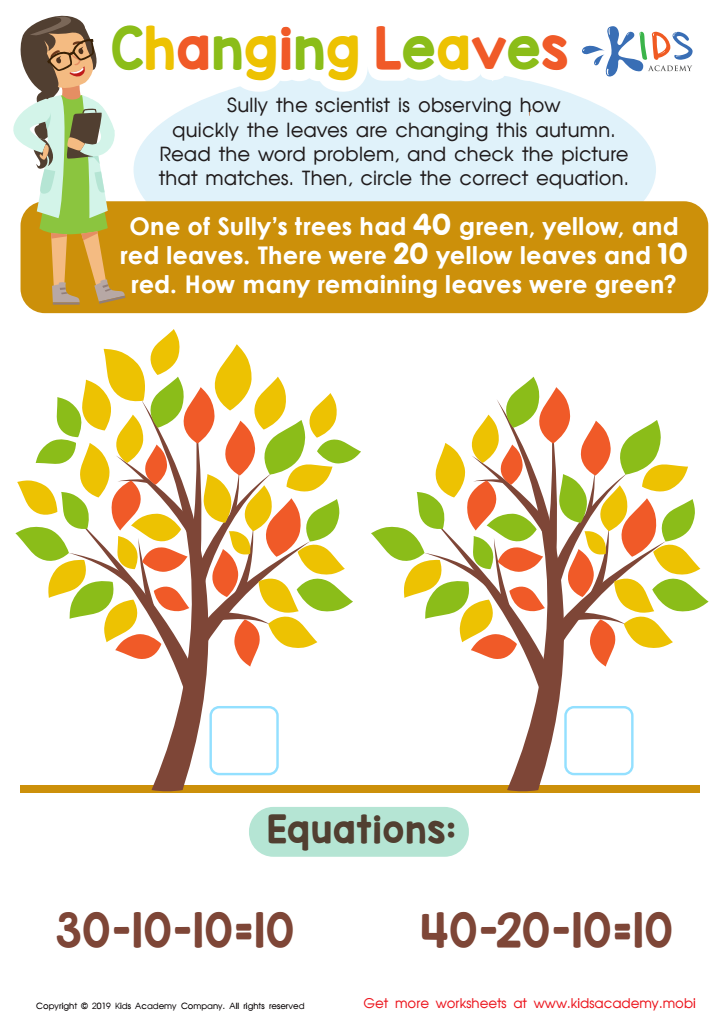
Fall is the perfect time for kids to help Sully the scientist observe the changing leaves! Download the free worksheet with a subtraction word problem and bolded info to find the matching equation and picture. It's a fun way for your tots to learn while they admire the reddening, yellowing, and orange leaves.
 Assign to My Students
Changing Leaves Worksheet
Worksheet
Comparing Biodiversity: Rainforest Animals Worksheet
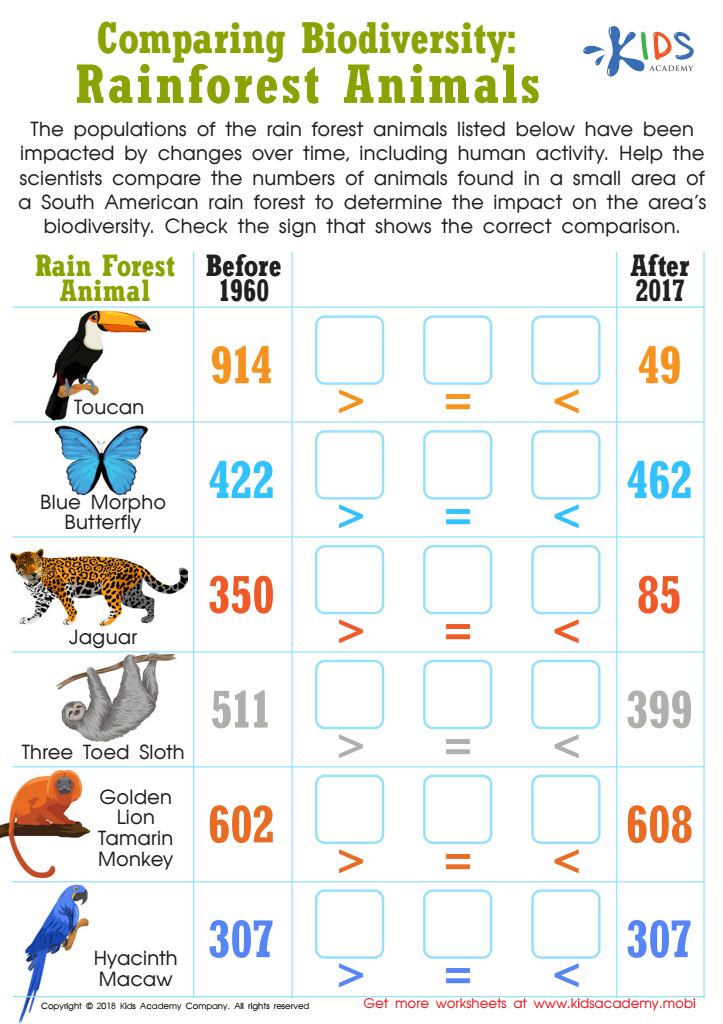
This dynamic PDF worksheet combines fun and education. Kids will explore rainforest animals and biodiversity, comparing numbers from 1960 to 2017. They'll strengthen number sense and reasoning skills while learning about area biodiversity and its effects. A perfect mix of math and social science!
Comparing Biodiversity: Rainforest Animals Worksheet
Worksheet
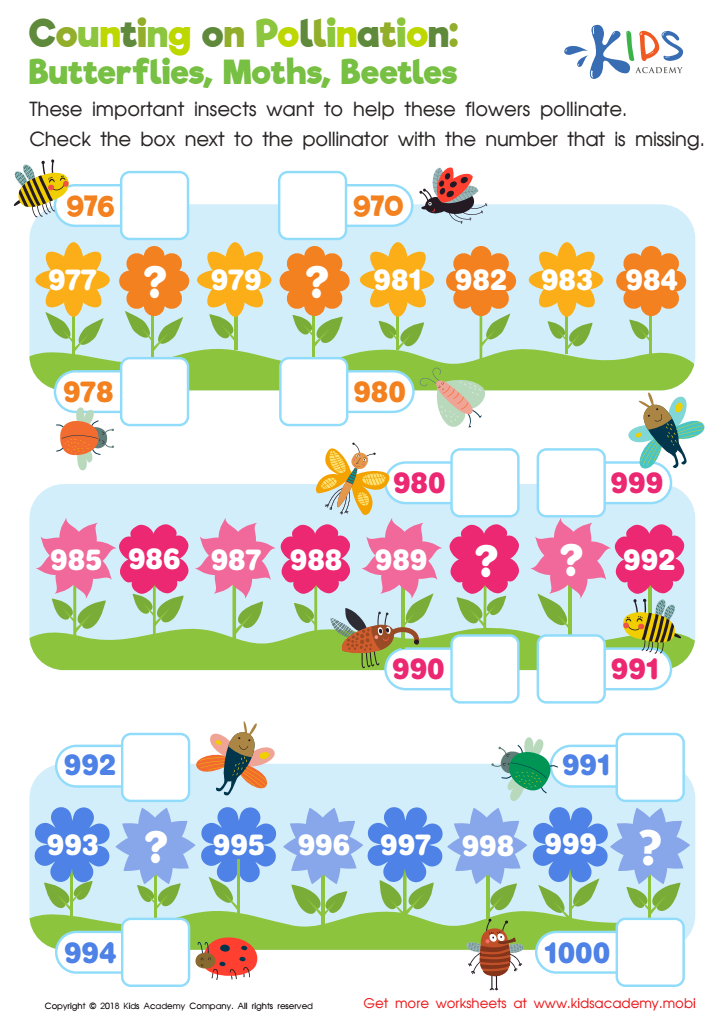
Counting on Pollination: Butterflies, Moths, Beetles Worksheet
A number line can help boost computation accuracy and efficiency. It can also be used with more advanced numbers. Help your child practice by having them identify missing numbers in sequences. This fun worksheet lets them help the pollinators in the process, as they strengthen their number sense.
Counting on Pollination: Butterflies, Moths, Beetles Worksheet
Worksheet
Join Kids Academy for Free
Who is primarily going to use this learning content?








Improving observation skills in mathematics for children aged 8-9 is essential for their overall development and understanding of mathematical concepts. At this age, students are transitioning from concrete to more abstract forms of thinking. Enhanced observation skills allow them to identify patterns, relationships, and properties of shapes and numbers more effectively. These skills lay the groundwork for critical thinking and problem-solving abilities that are vital not only in math but across various disciplines.
By honing observation skills, children become more adept at recognizing and analyzing data, which contributes to better mathematical reasoning. They learn to gather meaningful insights from their surroundings, whether it’s through interpreting graphs, analyzing statistics, or recognizing symmetrical patterns. This skill also enriches their learning experience in everyday life, fostering curiosity and encouraging a more engaged and inquisitive mindset.
Moreover, strong observation skills promote confidence in their ability to tackle math challenges, reducing anxiety often associated with problem-solving. For parents and teachers, supporting this development is paramount, as it empowers students to approach math with a positive attitude, ultimately leading to improved academic performance and a lifelong appreciation for the subject. Encouraging observation not only equips children with necessary skills but also nurtures a deeper understanding of their world.








