Mathematics skills Math Worksheets for Ages 8-9
3 filtered results
-
From - To
Enhance your child’s math journey with our Mathematics Skills Worksheets designed for ages 8-9! Our engaging collection helps young learners reinforce essential skills such as addition, subtraction, multiplication, and division. With a variety of interactive exercises, these worksheets not only make math fun but also build confidence in problem-solving. Tailored to meet educational standards, they offer a perfect balance of challenge and support. Whether at home or in the classroom, our resources help students master key mathematical concepts. Explore our printable math worksheets today to give your children the tools they need to succeed in their mathematical development!
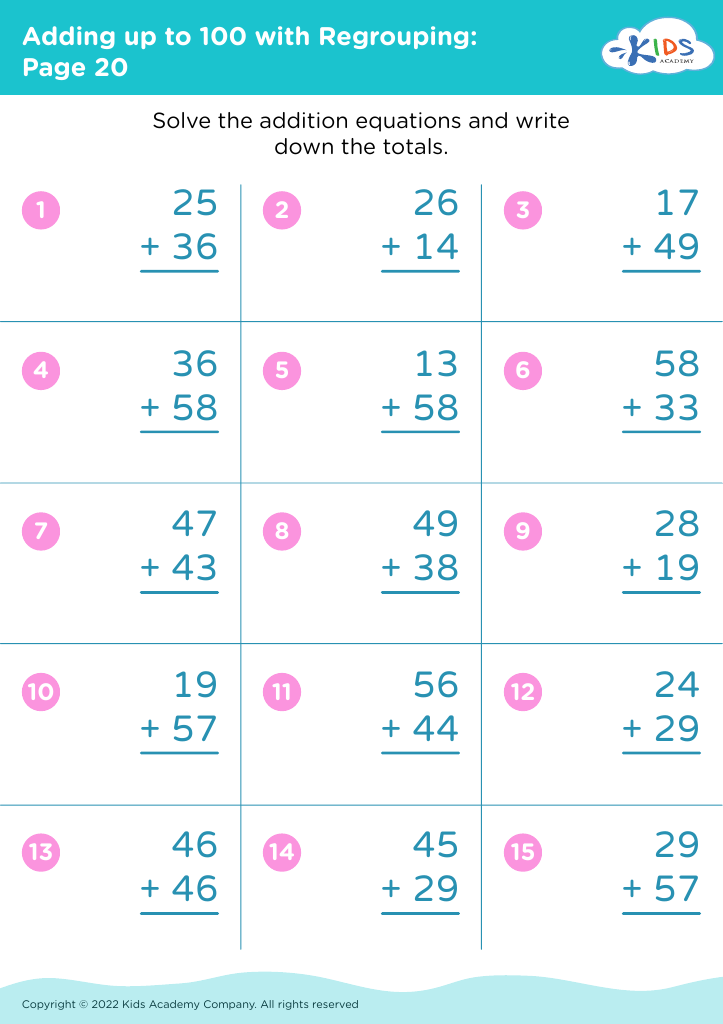
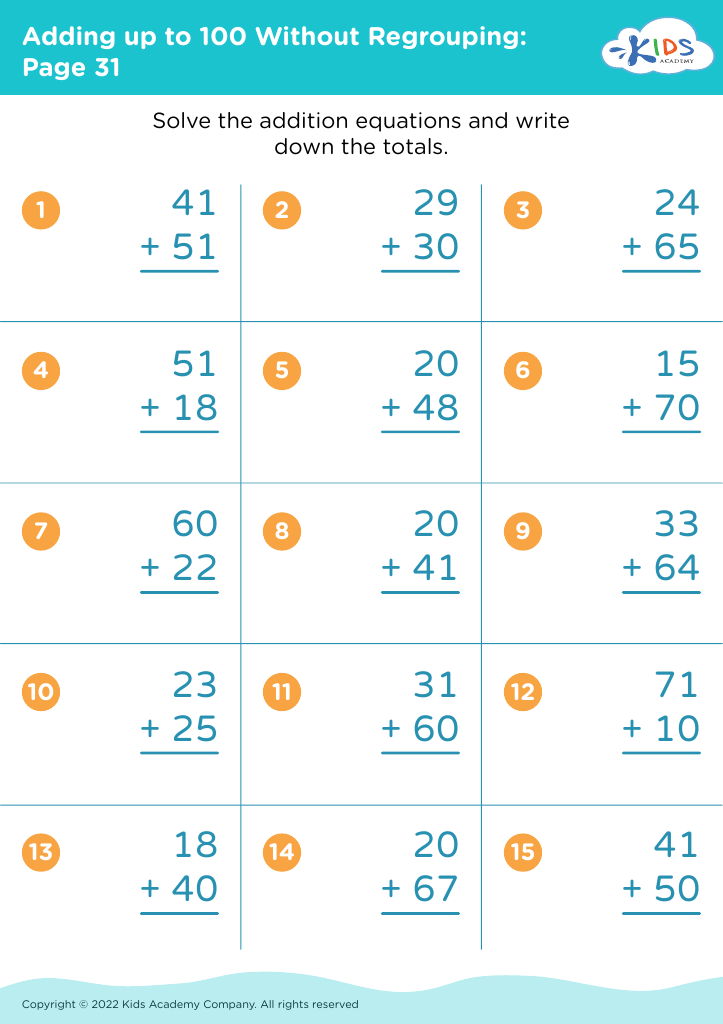
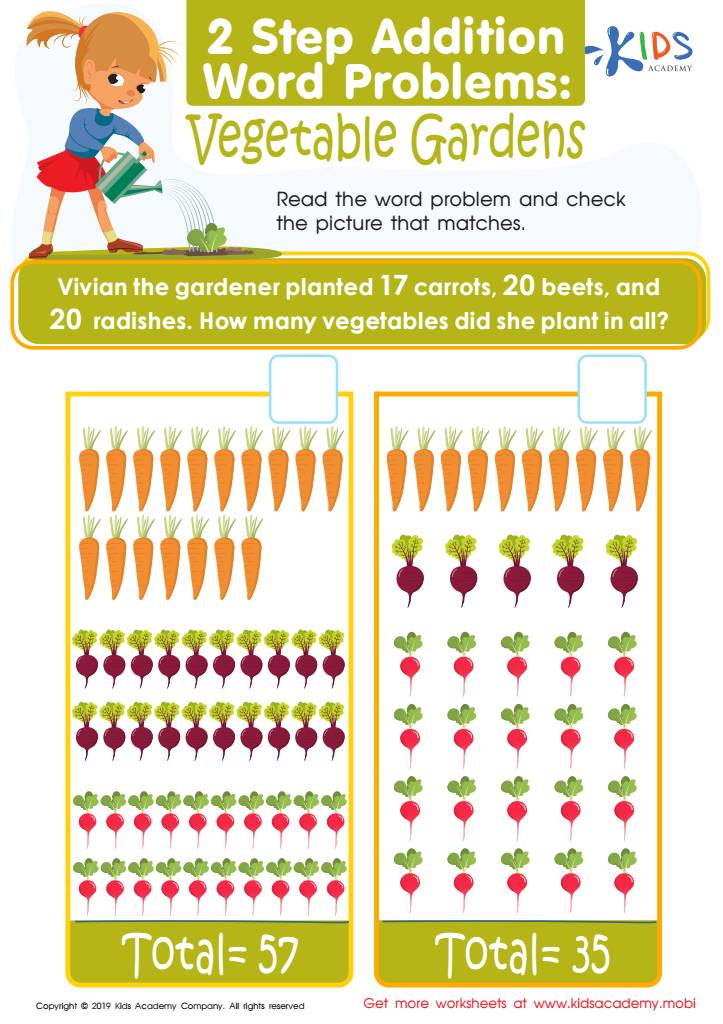
Vegetable Gardens Worksheet
 Assign to My Students








Mathematics skills are essential for children aged 8-9 as they lay a critical foundation for future learning and problem-solving abilities. At this stage, children transition to more complex mathematical concepts, such as basic multiplication, division, fractions, and preliminary geometry. Mastery of these skills is vital, as they directly influence academic performance in later years, especially in subjects that require analytical thinking and quantitative reasoning.
Moreover, math fosters important life skills, including logical reasoning, decision-making, and the ability to interpret data. As students encounter various everyday situations—from budgeting and shopping to cooking and time management—strong math skills empower them to navigate these scenarios with confidence and clarity.
Encouraging a positive attitude towards math can also help dismantle common stereotypes and anxieties associated with the subject, promoting perseverance and resilience. By supporting children’s math education, parents and teachers effectively equip them with tools for academic success and personal growth. Ensuring a solid grasp of math concepts at this age also prepares students for increasingly rigorous curriculum standards, making their overall educational journey smoother and more fruitful. Investing in children's mathematical education truly sets the tone for their lifelong relationship with learning and critical thinking.








