Motor skills development Math Worksheets for Ages 8-9
5 filtered results
-
From - To
Discover our engaging Motor Skills Development Math Worksheets designed specifically for children aged 8-9! These worksheets blend fun and learning, helping young learners enhance their fine motor skills while mastering key math concepts. Through various activities, such as tracing numbers, solving simple arithmetic problems, and completing patterns, students will improve their hand-eye coordination and dexterity. Our thoughtfully crafted exercises not only promote academic growth but also nurture essential physical skills necessary for everyday tasks. Ideal for classroom or home use, these worksheets provide an interactive way to reinforce math learning while supporting motor development. Start your child’s math journey today!
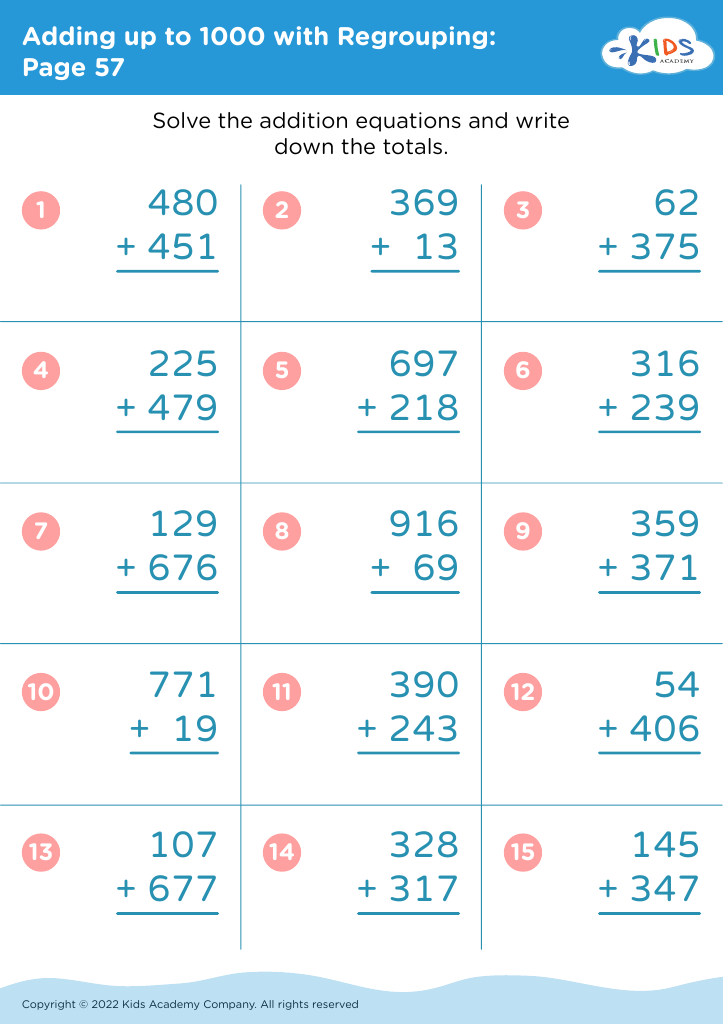
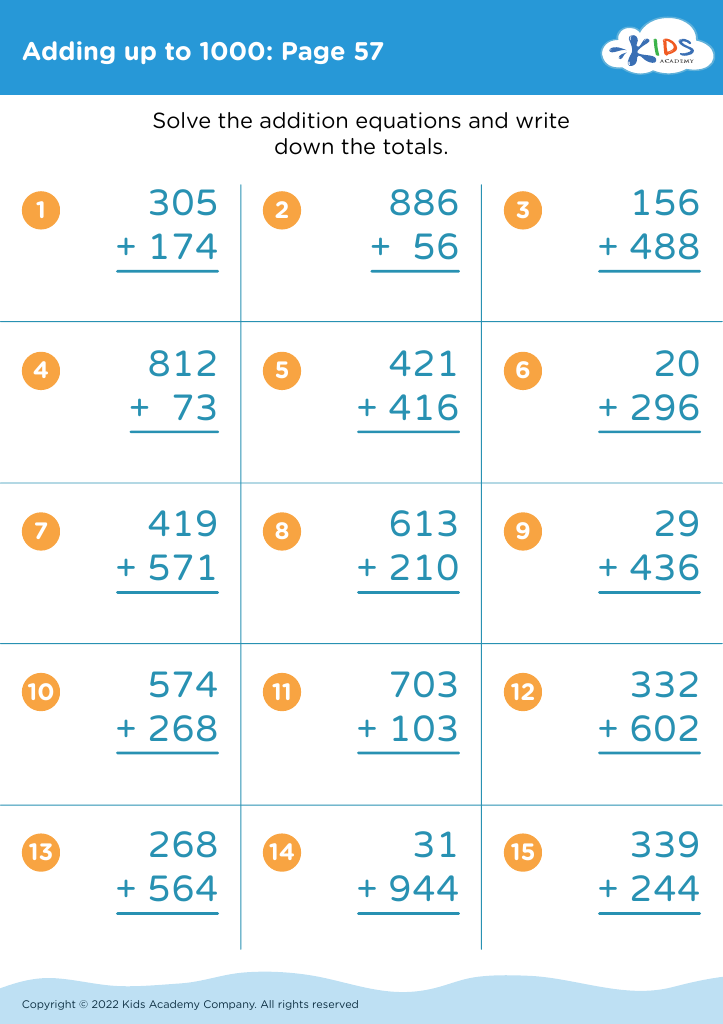
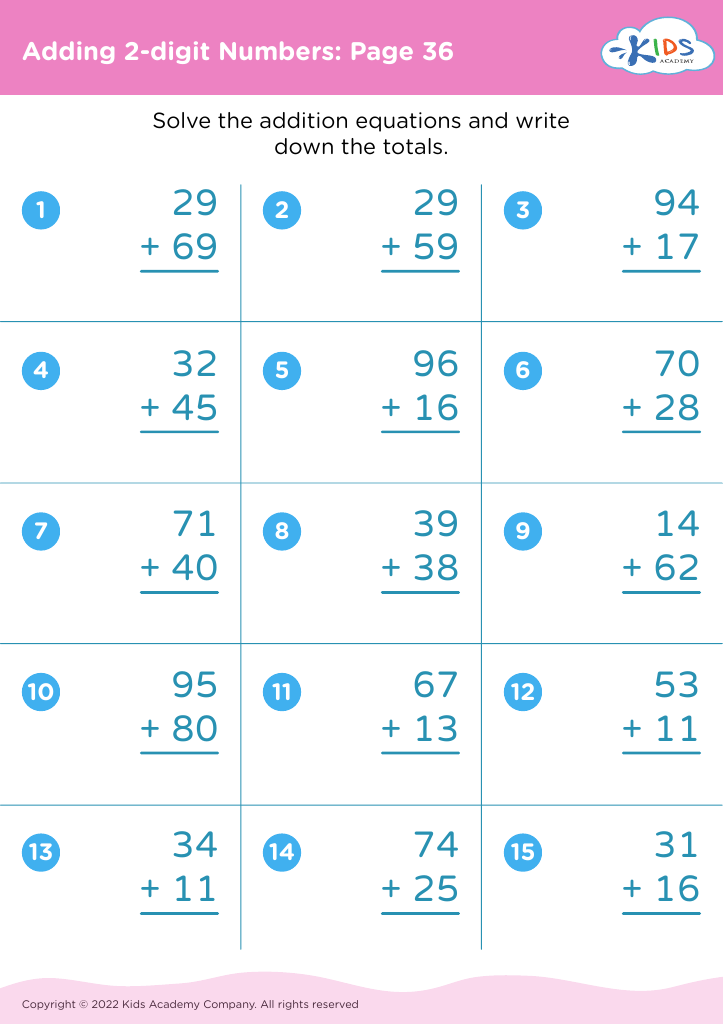

Dot to Dot Worksheet for 3rd Grade
 Assign to My Students








Motor skills development is essential for children aged 8-9, as it impacts their overall learning and cognitive abilities, especially in subjects like math. At this age, children’s fine motor skills—such as hand-eye coordination, dexterity, and control—become increasingly important as they engage with mathematical activities that require manipulative tools, such as counting blocks or geometric shapes.
When children develop their motor skills, they gain the ability to perform tasks with increased precision, which helps them to better visualize and comprehend mathematical concepts. For example, drawing geometric shapes or writing numbers requires coordination that can enhance their spatial awareness, a critical component of math understanding.
Additionally, engaging in activities that promote motor skills, such as using games that involve sorting, stacking, or tracing, not only captures children's attention but also reinforces their ability to handle numbers and calculations in a hands-on way.
Parents and teachers should, therefore, prioritize motor skill development alongside math instruction. Doing so fosters an environment where children can thrive, promotes their confidence in tackling math problems, and lays a solid foundation for more advanced mathematical concepts in the future. Supporting motor skill growth ultimately enables children to become more adept learners in all areas.








