
Numerical reasoning Math Worksheets for Ages 8-9
3 filtered results
Difficulty Level
Grade
Age
-
From - To
Subject
Activity
Standards
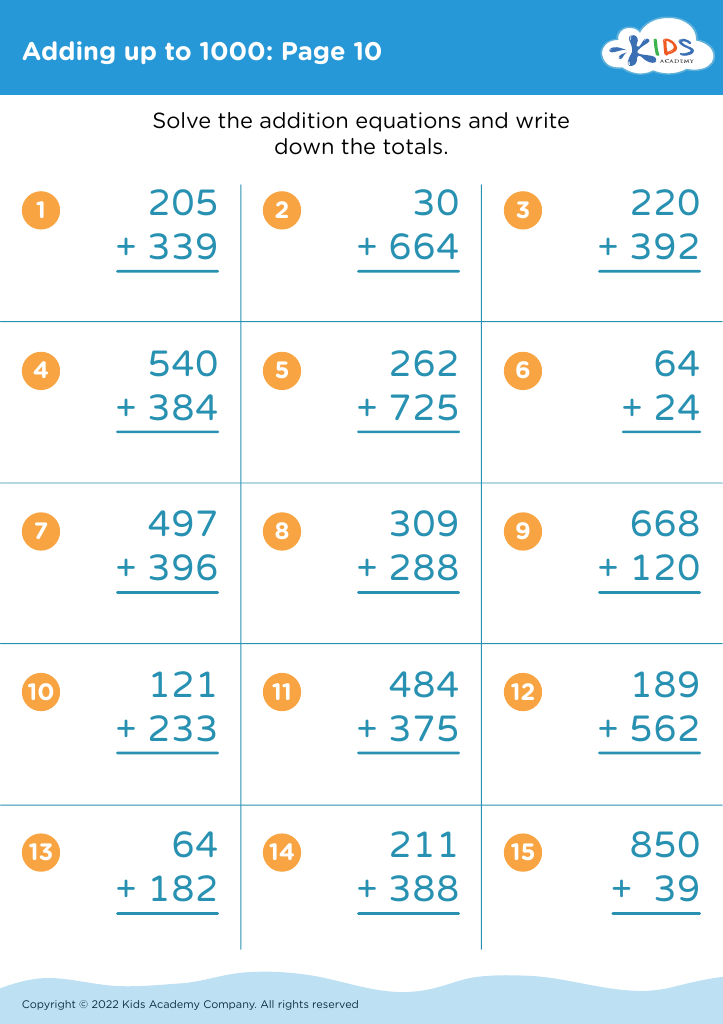
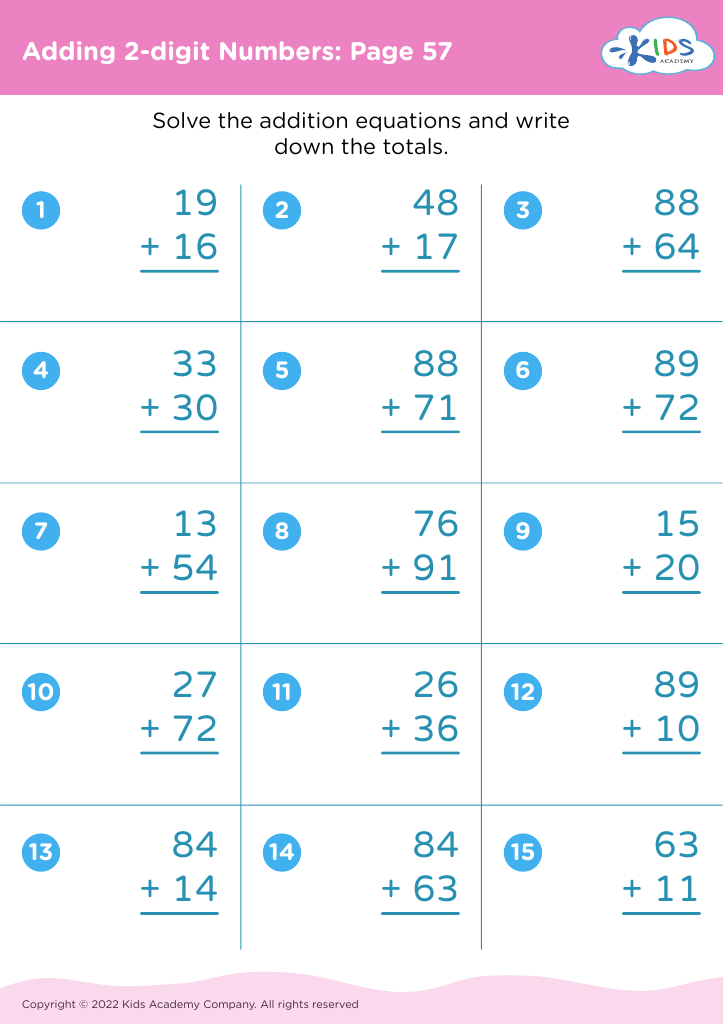
Enhance your child's mathematical skills with our engaging Numerical Reasoning Math Worksheets specifically designed for ages 8-9. These printable worksheets focus on developing critical thinking and problem-solving abilities through a variety of fun exercises. Children will encounter diverse tasks, from basic arithmetic to more complex number puzzles, fostering their confidence in handling numbers. Each worksheet aligns with educational standards, making them perfect for home practice or classroom use. Encourage your child’s love for math while building a strong foundational understanding that will benefit them in future learning. Explore our collection today to support your child's numerical reasoning journey!
Favorites
With answer key
Interactive
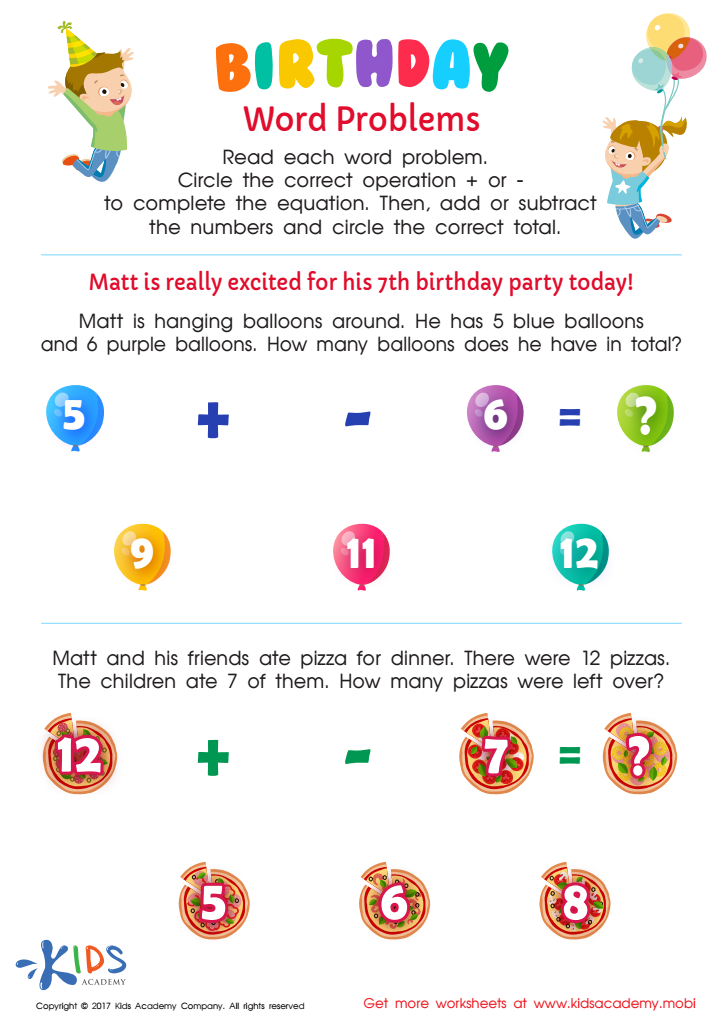
Birthday Word Problems Substraction Worksheet
This worksheet, Birthday Word Problems, is a great way to improve your child's math and literacy skills. It features tricky subtraction equations based on a birthday celebration - perfect for kids who love birthdays!
 Assign to My Students
Birthday Word Problems Substraction Worksheet
Worksheet
Join Kids Academy for Free
Who is primarily going to use this learning content?








Numerical reasoning is crucial for children aged 8-9 as it lays the foundation for critical thinking and problem-solving skills. At this developmental stage, children are honing their cognitive abilities and need to understand how to manipulate numbers and patterns effectively. This is not just about learning arithmetic; it helps them develop a deeper comprehension of the world around them.
Parents and teachers should prioritize numerical reasoning because it fosters confidence in mathematical abilities, empowering students to tackle more complex concepts in later years. Mastery of numerical reasoning enhances logical thinking and the ability to draw connections between different disciplines, including science and economics. Moreover, strong numerical skills are essential for real-life situations, such as budgeting, cooking, and planning events, which all involve calculation and estimation.
Supporting children in numerical reasoning also encourages a positive attitude toward mathematics, decreasing math anxiety. Engaging in activities that promote these skills at home and in the classroom—like puzzles, games, and real-life problem-solving—makes learning enjoyable. Ultimately, nurturing numerical reasoning in children is an investment in their academic success and equips them with essential skills for lifelong learning and everyday tasks.








