
Practice counting Math Worksheets for Ages 8-9
6 filtered results
Difficulty Level
Grade
Age
-
From - To
Subject
Activity
Standards
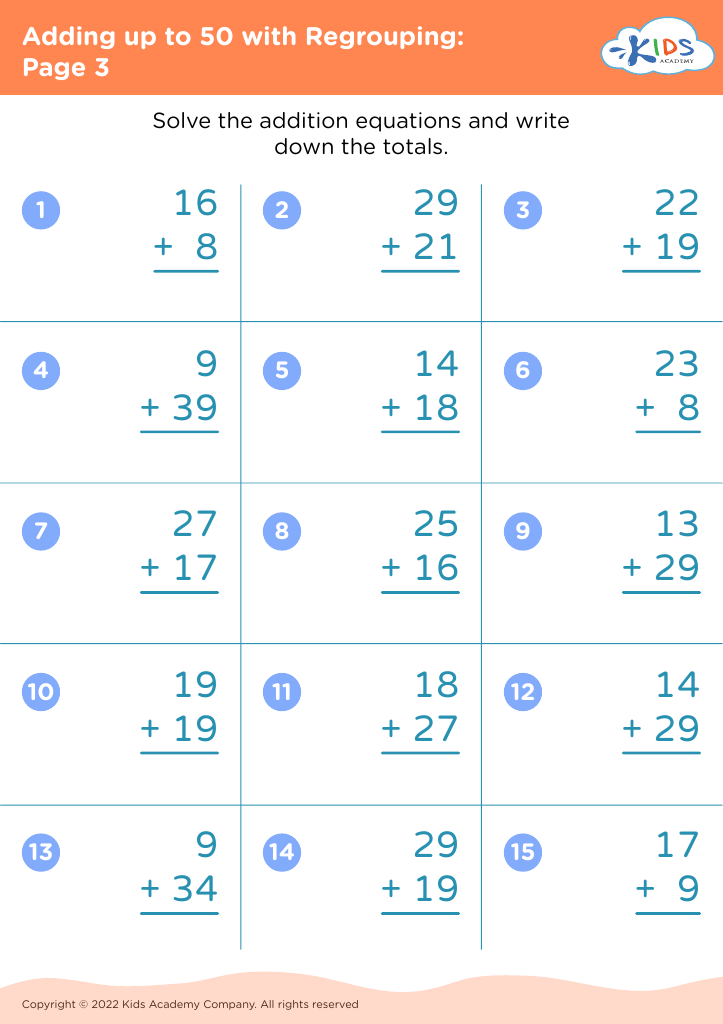
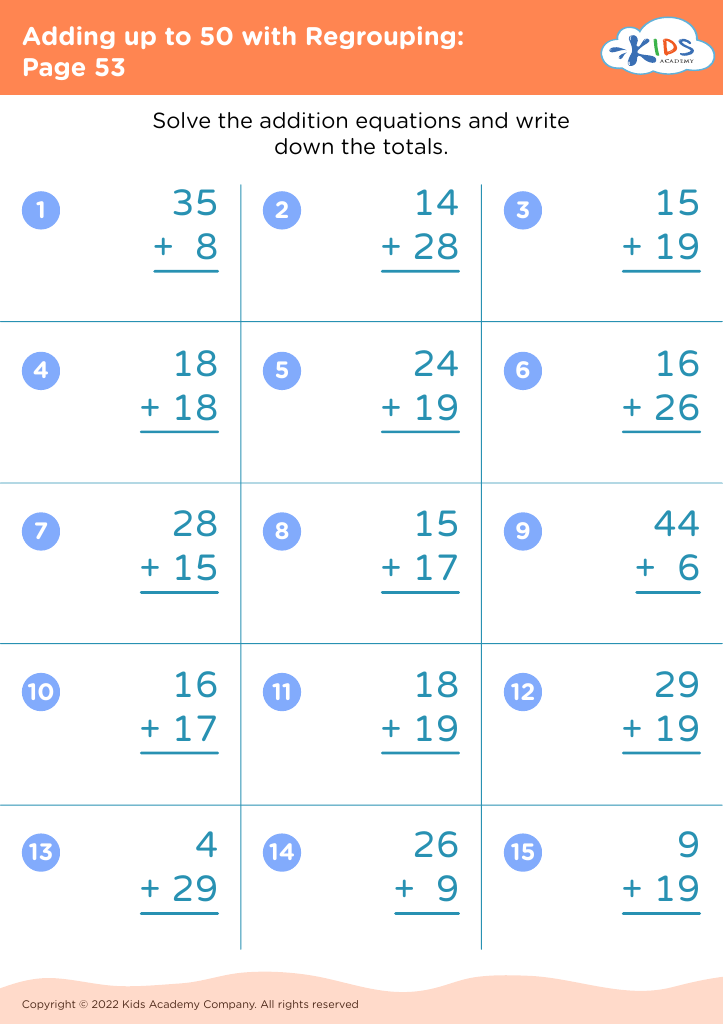
Our "Practice Counting Math Worksheets for Ages 8-9" are designed to make learning fun and engaging! These worksheets help children master essential counting skills, paving the way for fluency in addition, subtraction, and multiplication. The activities are crafted to enhance number sense, improve problem-solving abilities, and boost confidence with numbers. With colorful and interactive formats, these worksheets captivate kids' imaginations while reinforcing their math learning. Perfect for classroom use or at-home practice, they align with educational standards to support math proficiency in an enjoyable and effective way. Start building a love for math today!
Favorites
With answer key
Interactive
Join Kids Academy for Free
Who is primarily going to use this learning content?




.jpg)


.jpg)
Counting is a fundamental math skill that serves as a foundation for more advanced mathematical concepts. For children aged 8-9, practice in counting is vital for several reasons. First, strong counting skills develop numerical fluency, which helps children understand relationships between numbers, such as addition and subtraction, and lays the groundwork for multiplication and division. By solidifying these concepts early, children are better prepared to handle more complex math problems later on.
Furthermore, regular counting practice enhances problem-solving abilities and boosts confidence. When children can effortlessly count and recognize number patterns, they approach math with more interest and less anxiety, making learning a more enjoyable process. Practicing counting also improves memory and cognitive skills, as it requires children to remember sequences and apply logical thinking.
In addition, proficiency in counting is crucial for everyday tasks. Skills such as telling time, handling money, and measuring quantities all rely on a good foundation in basic math.
Ultimately, by focusing on counting practice at this important developmental stage, parents and teachers help ensure children build a robust mathematical framework. This investment in early math skills fosters not only academic success but also practical life skills that benefit children beyond the classroom.








