
Reading clocks Math Worksheets for Ages 8-9
4 filtered results
Difficulty Level
Grade
Age
-
From - To
Subject
Activity
Standards
Discover an engaging collection of Reading Clocks Math Worksheets designed for children ages 8-9! These worksheets provide a fun and interactive way to help young learners master the concept of telling time. Featuring a variety of exercises, students will practice reading both analog and digital clocks, improving their time-telling skills through visual aids and challenging problems. Perfect for classroom or home use, these worksheets encourage critical thinking and problem-solving. Boost your child's confidence in math while developing essential life skills. Explore our expertly crafted resources to make learning about time enjoyable and effective! Start turning hours into valuable learning moments today!
Favorites
With answer key
Interactive
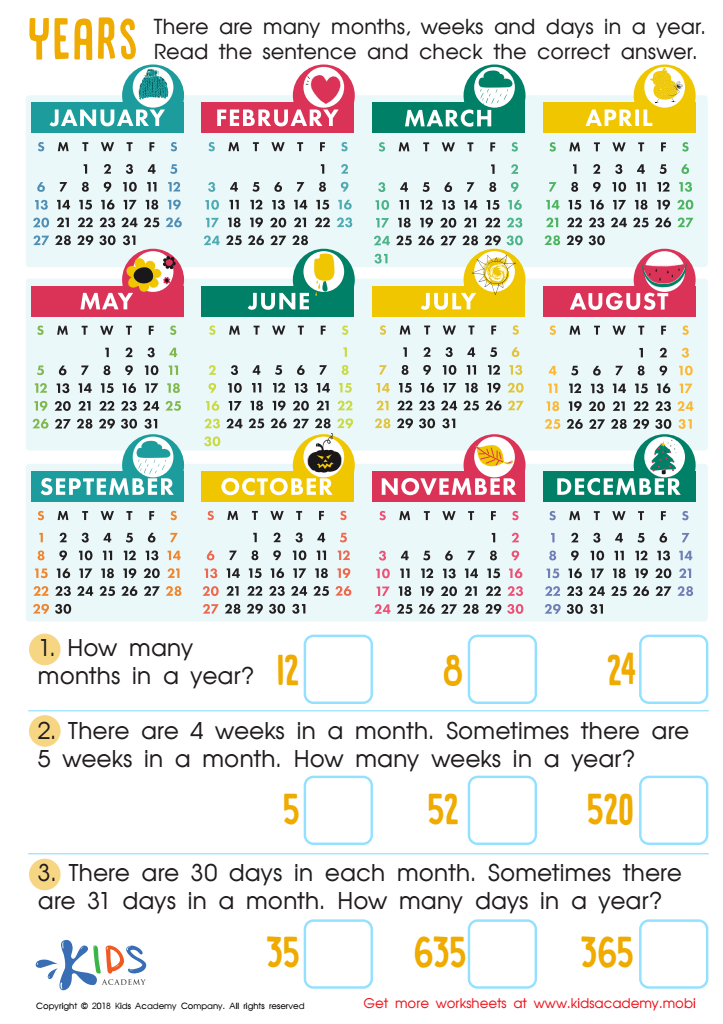
Years Worksheet
This worksheet is a great way to test your children's knowledge of the calendar. Ask them if they can name the days of the week and months in a year. Read and discuss the questions with them and help them find the right answers. Encourage them to check their answers.
 Assign to My Students
Years Worksheet
Worksheet
Join Kids Academy for Free
Who is primarily going to use this learning content?








Parents and teachers should prioritize teaching children how to read clocks and understand time for several important reasons. Mastering the concept of time is a critical life skill that fosters independence and accountability in children ages 8-9. By learning how to read clocks, students develop an understanding of punctuality and the importance of managing their schedules, aiding in their transition to increased responsibility in both school and home life.
In addition, teaching reading clocks enriches math skills. It integrates numerical understanding with concepts such as fractions and ratios, as children learn to divide a clock into hours and minutes. This real-world application of math helps solidify foundational concepts, making math more engaging and relevant.
Furthermore, reading clocks can enhance verbal skills. Discussing time encourages children to articulate their thoughts and plans clearly, fostering communication skills that are essential for personal and academic success.
Ultimately, teaching children to read clocks nurtures their cognitive, social, and emotional development, equipping them with essential tools for navigating everyday tasks, fostering independence, and promoting a sense of responsibility that they will carry forward into adulthood. Recognizing the significance of these skills is vital for their holistic growth.








