Times table familiarity Math Worksheets for Ages 8-9
3 filtered results
-
From - To
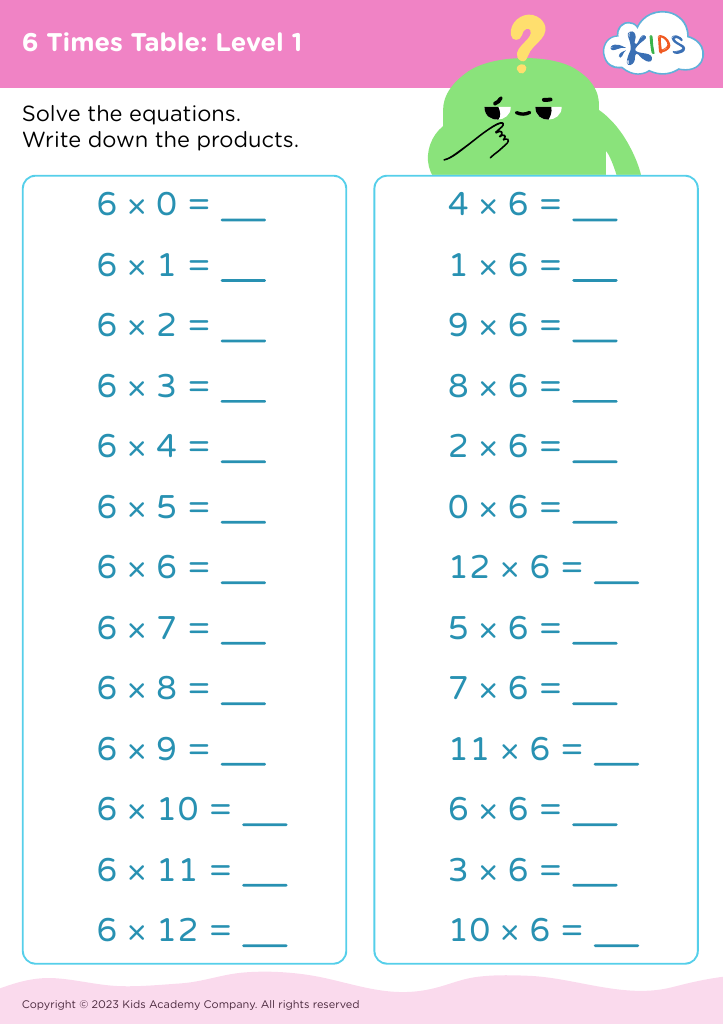
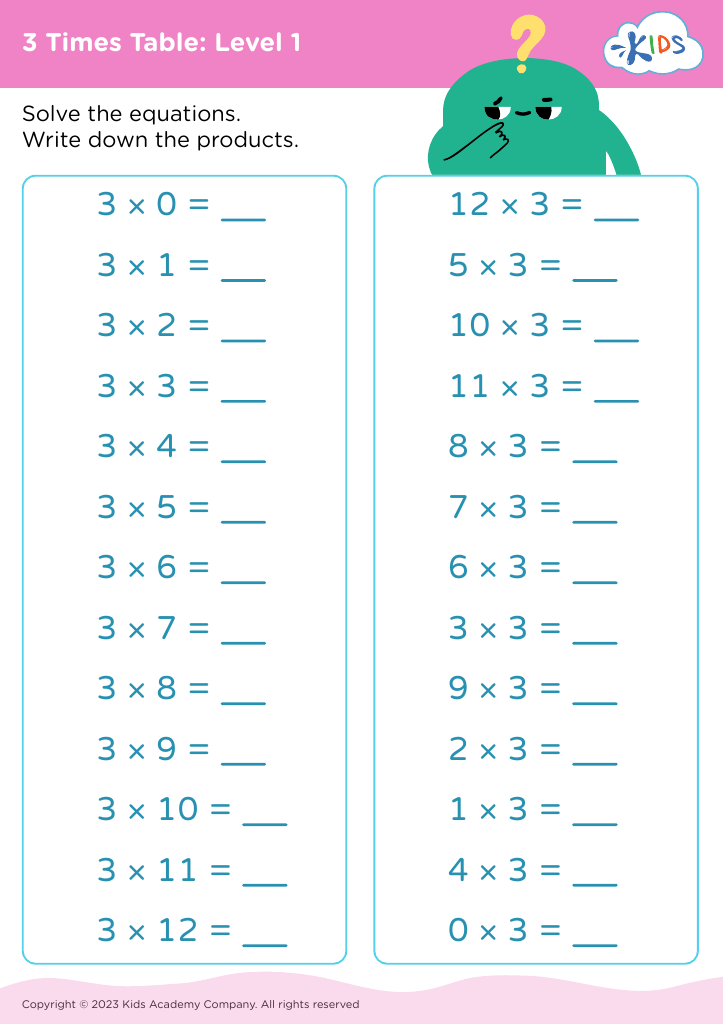
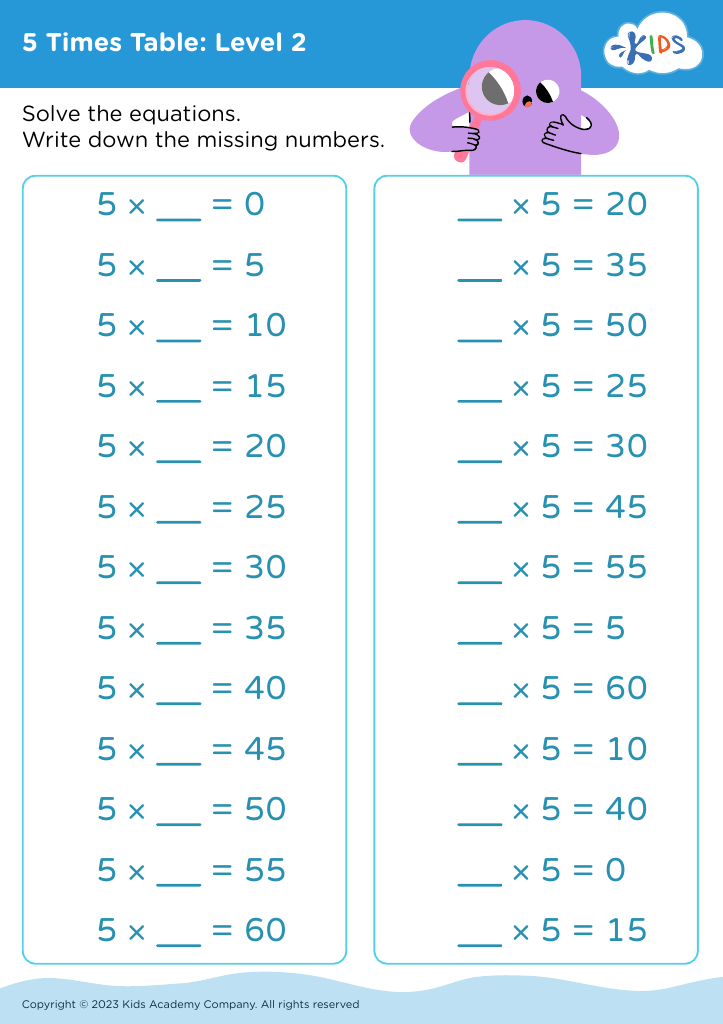
Our "Times Table Familiarity Math Worksheets for Ages 8-9" are designed to make learning multiplication fun and effective. These printable worksheets help children master their times tables with engaging activities and exercises. Perfect for reinforcing classroom lessons, each worksheet allows kids to practice and build confidence in their multiplication skills at their own pace. With a variety of problems to solve, your child will develop a strong foundation in math that will benefit them in higher grades. Ideal for both home and school use, these worksheets make learning times tables an enjoyable experience. Start your child’s journey to math success today!




.jpg)
.jpg)
Parents and teachers should prioritize times table familiarity for children ages 8-9 because it serves as a crucial cornerstone in foundational mathematics comprehension. During these formative years, children develop cognitive skills that are essential for their future academic success. Knowing their times tables helps to bolster these skills and builds confidence in math.
Firstly, a solid grasp of multiplication tables facilitates quicker problem-solving abilities, enabling children to perform more complex arithmetic operations with ease. This automaticity frees cognitive resources, allowing children to focus on higher-order math concepts like fractions, division, and eventually algebra, which are crucial for middle and high school curricula.
Secondly, frequent practice with times tables instills discipline and enhances memory retention, crucial life skills extending beyond mathematics. Thirdly, familiarizing students with multiplication concepts against the backdrop of everyday scenarios—such as splitting portions or understanding time—makes learning relevant and engaging.
Moreover, multiplication competency impacts standardized test performance where such questions are frequent. Low stress and anxiety levels in mathematical contexts are other vital byproducts, contributing to a positive learning experience. When parents and educators collaborate to support math learning in these early stages, they lay a foundation not just for good grades, but for analytical and critical thinking skills fundamental to lifelong learning and problem-solving.








