Understanding number relationships Math Worksheets for Ages 8-9
3 filtered results
-
From - To
Discover the perfect blend of fun and education with our "Understanding Number Relationships Math Worksheets" for ages 8-9. Crafted to foster a comprehensive grasp of numerical connections, these worksheets feature engaging exercises aimed at enhancing students' problem-solving skills and mathematical thinking. From sequencing and comparing numbers to identifying patterns, each worksheet is designed to build a strong foundational understanding. Perfect for both classroom use and at-home practice, our math worksheets not only challenge young minds but also make learning an exciting adventure. Equip your child with the tools to excel in math and develop a lifetime love for learning.
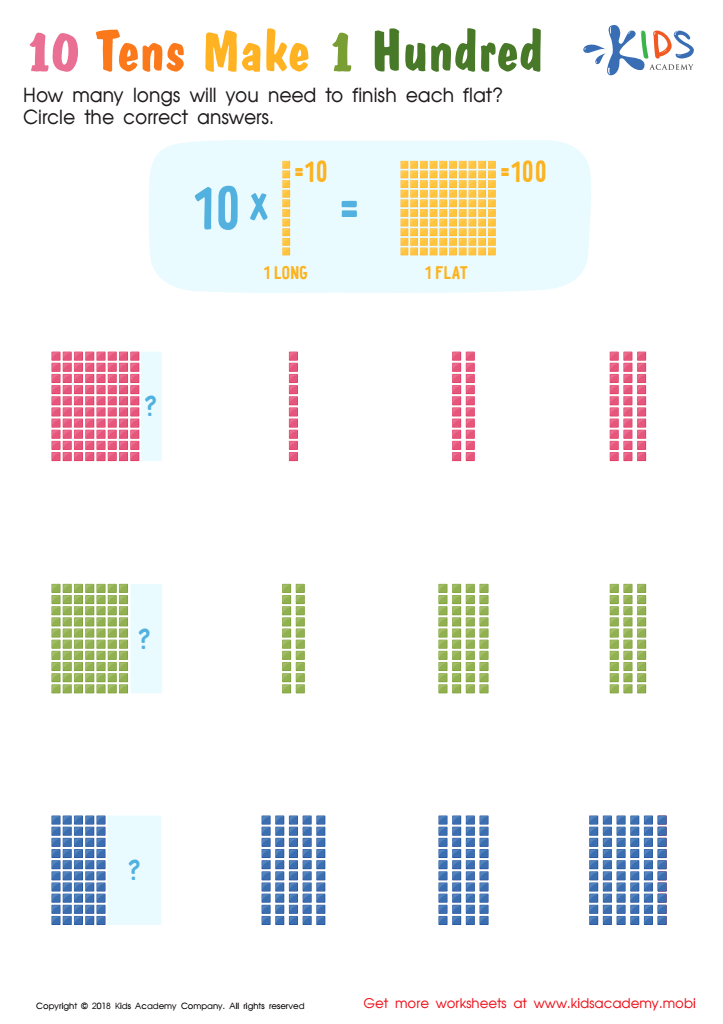
10 Tens Make 1 Hundred Worksheet
 Assign to My Students
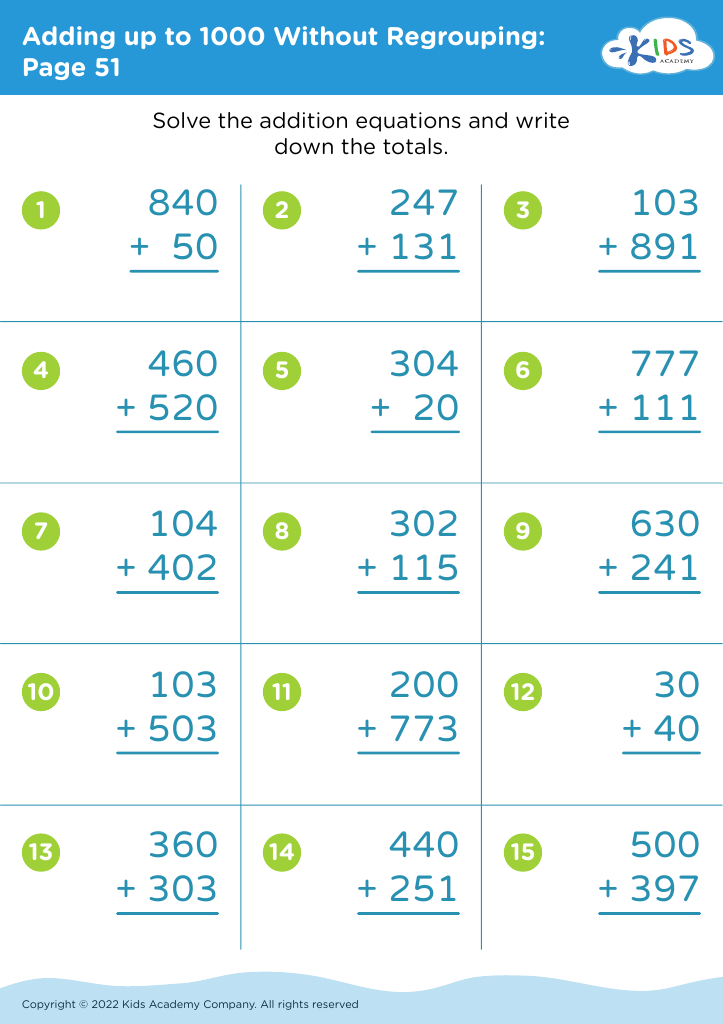
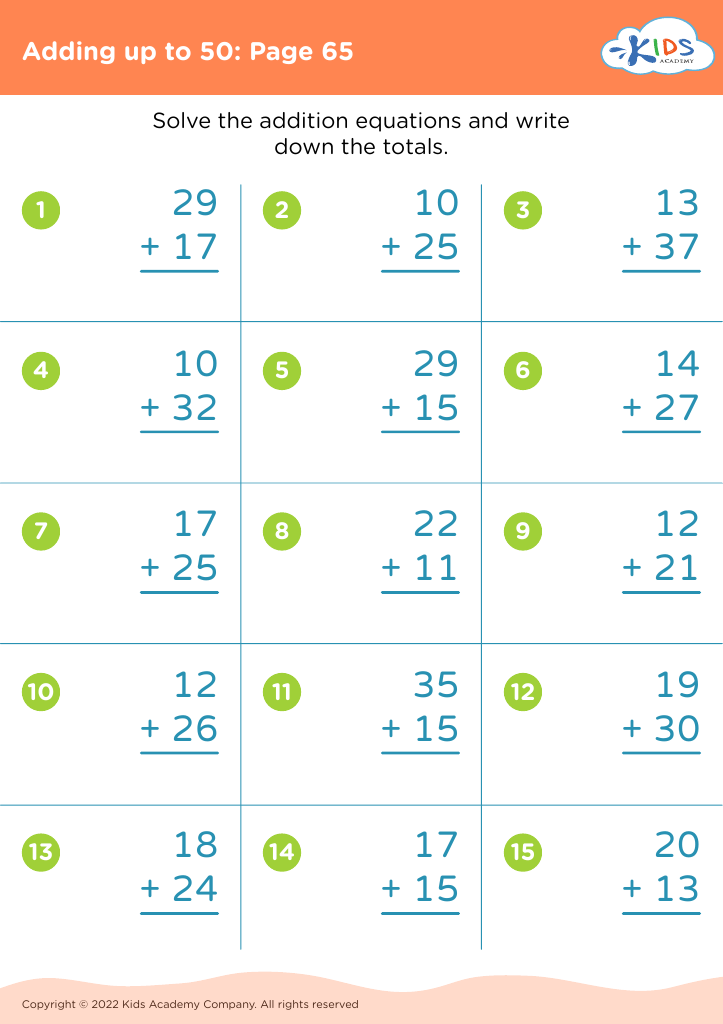







Understanding number relationships is crucial for children aged 8-9 because it lays the foundation for more advanced mathematical concepts and problem-solving skills. This age typically aligns with the transition from basic arithmetic to more complex operations, such as multiplication, division, and fractions. Grasping number relationships helps children see connections and patterns in math, promoting logical thinking and analytical skills.
For instance, understanding that 7 + 3 equals 10 can help a child quickly deduce that 10 - 7 equals 3, fostering an early appreciation for inverse operations and mathematical balance. Mastery of these relationships also supports mental math, which enhances their ability to solve problems efficiently and check their work for errors. Beyond the classroom, these skills are vital for everyday tasks like making change, measuring ingredients for a recipe, or understanding time.
Parents and teachers play pivotal roles in reinforcing these concepts through engaging activities and real-life applications. Fostering a strong mathematical foundation during these formative years boosts confidence and sets the stage for future academic success. Moreover, instilling a positive attitude towards math can help dispel anxiety and empower children to tackle advanced subjects with enthusiasm and resilience.








