Mental math skills Subtraction Worksheets for Ages 8-9
6 filtered results
-
From - To
Boost your child’s subtraction abilities with our engaging Mental Math Skills Subtraction Worksheets designed specifically for ages 8-9! These carefully crafted worksheets will help your young learner practice subtracting numbers mentally, enhancing their speed and accuracy while reinforcing crucial math concepts. Each activity encourages critical thinking and problem-solving, making math both fun and educational. Perfect for home or classroom use, our printable worksheets offer a variety of exercises to challenge and excite your child, helping them gain confidence and build a strong foundation in arithmetic. Start their math journey today with Kids Academy!
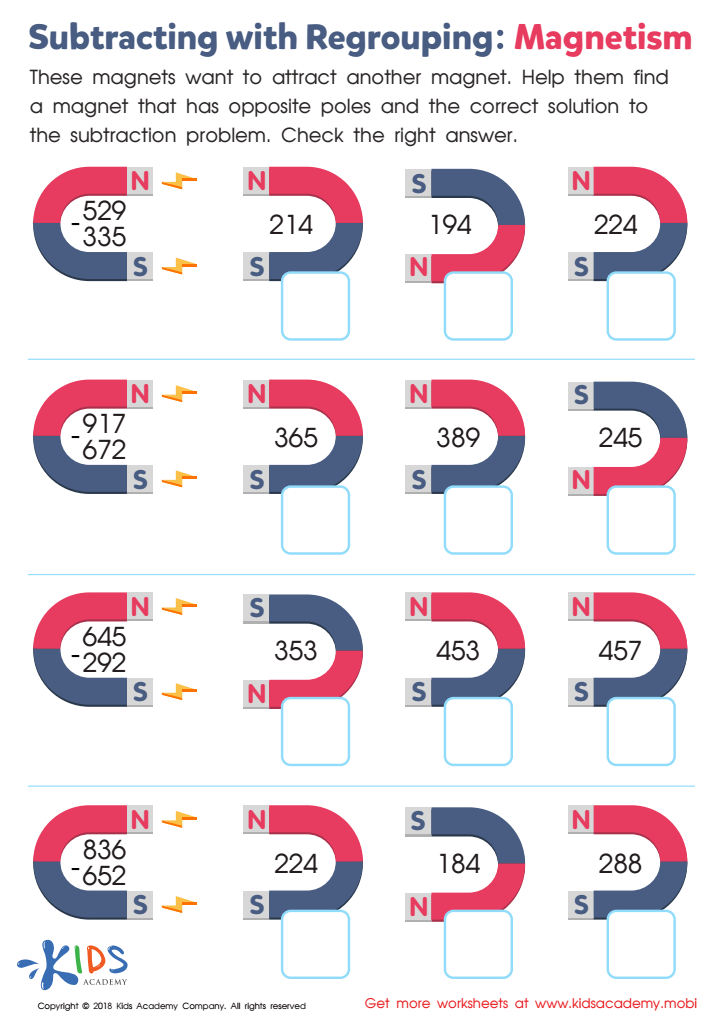
Subtracting with Regrouping: Magnetism Worksheet
 Assign to My Students
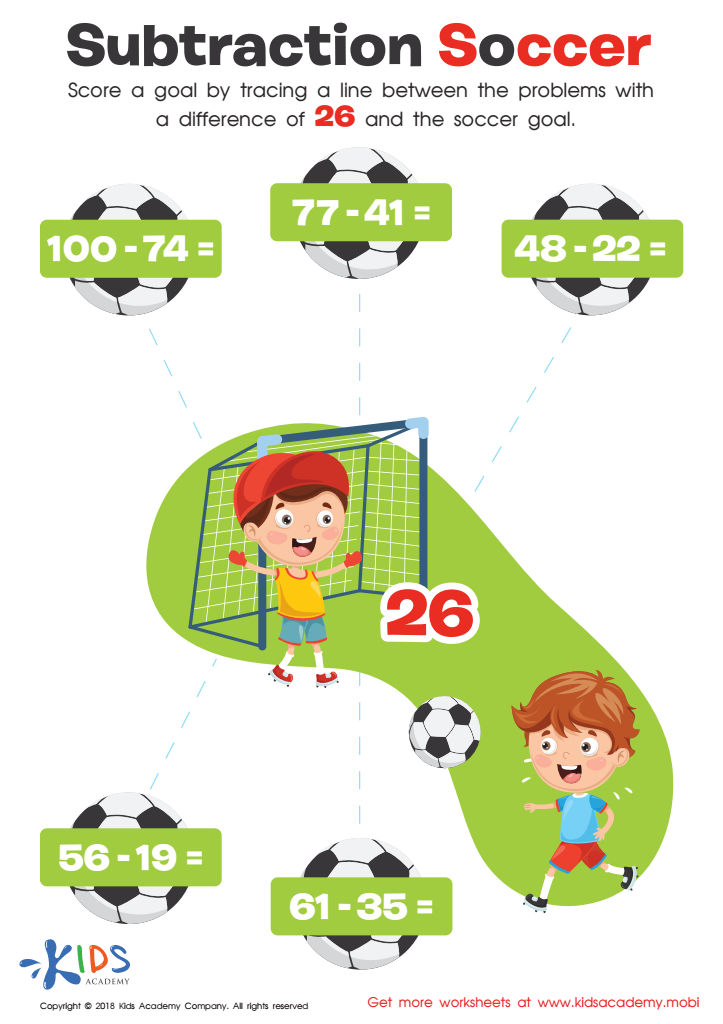
Subtraction Soccer Worksheet
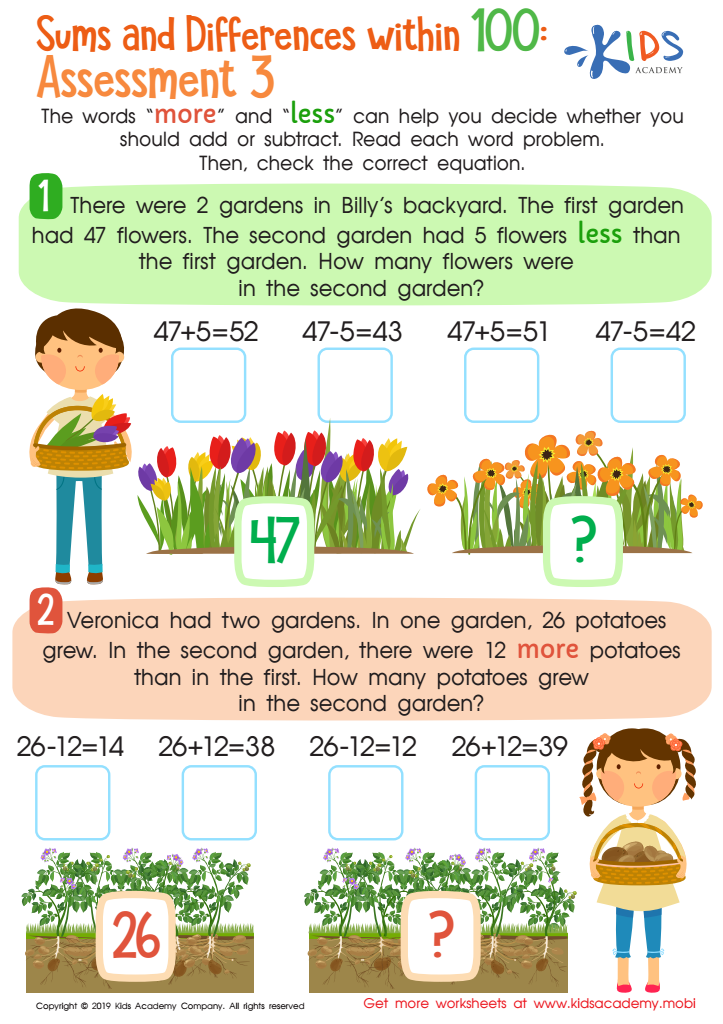
Sums and Differences Within 1 - Assessment 1 Worksheet
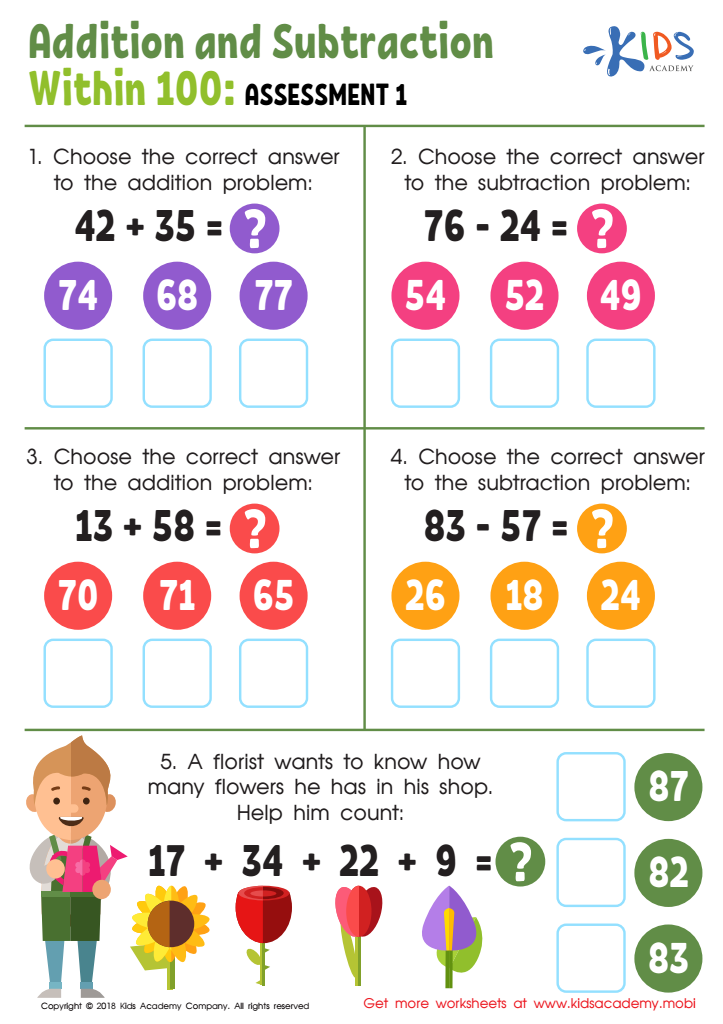
Addition and Subtraction Within 100 Worksheet
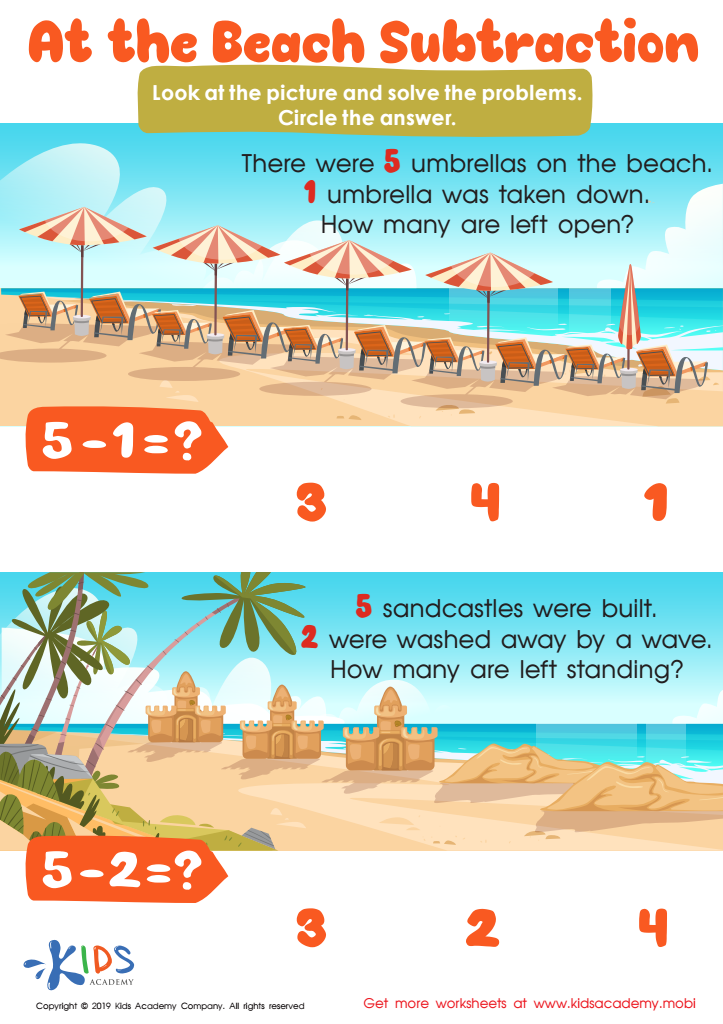
At the Beach Subtraction Worksheet
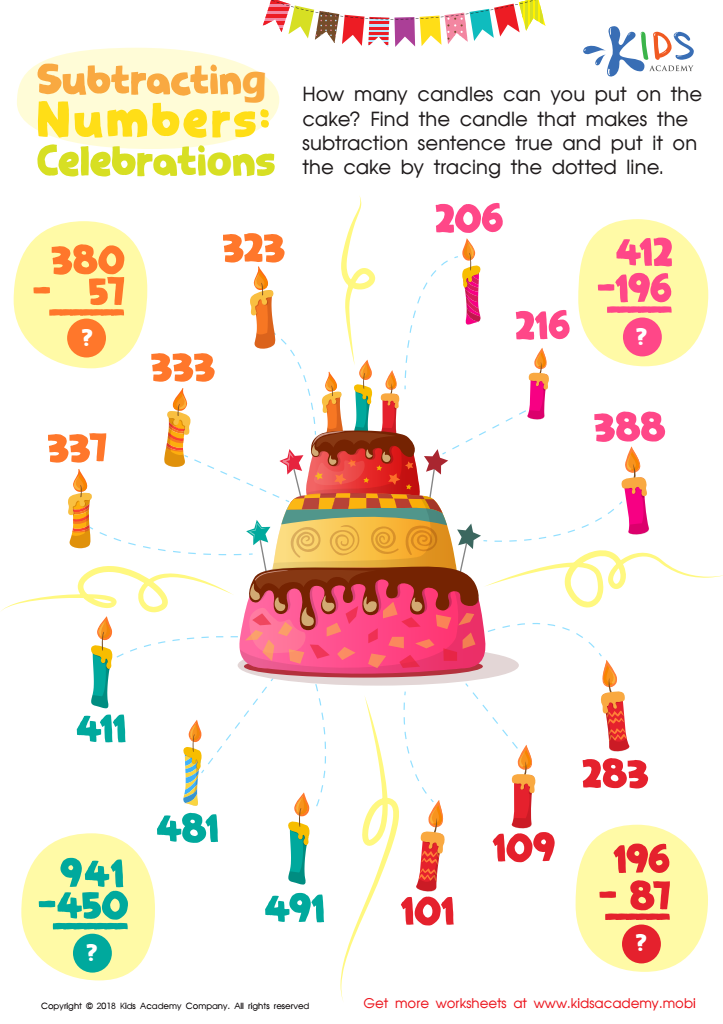
Subtracting Numbers: Celebrations Worksheet





.jpg)


Mental math skills, especially subtraction, are crucial for children ages 8-9 as they form the building blocks for advanced mathematical concepts and everyday problem-solving abilities. At this age, children develop cognitive functions such as memory, concentration, and logical thinking, and mastering mental subtraction strengthens these skills significantly.
Parents and teachers should care about mental math because it enhances a child's confidence and independence in handling numbers without relying on paper or calculators. This independence fosters a positive attitude towards mathematics, reducing math anxiety and promoting a lifelong love for learning. Moreover, proficient mental subtraction aids in quick decision-making and improves performance in other academic subjects, contributing to overall educational success.
Furthermore, mental math encourages critical thinking and analytical skills. Children learn to approach problems from different angles, employ various strategies, and build robust mental models for number relationships. These skills are not only vital for academic success but are also essential for practical, everyday situations such as managing finances, time, and resources.
Finally, parents and teachers should recognize that supporting the development of mental math skills can build a solid foundation for a child's future. Through engaging practices at home and targeted learning in the classroom, children can develop a natural flair for mathematics, preparing them for more complex studies and real-world challenges.








