Number Recognition Subtraction Worksheets for Ages 8-9
3 filtered results
-
From - To
Boost your child's math skills with our Number Recognition Subtraction Worksheets for Ages 8-9. Specifically designed for young learners, these engaging worksheets help children enhance their subtraction abilities while ensuring they easily recognize and understand numbers. Catering to both classroom and home learning, the worksheets provide a mix of fun, educational activities that make mastering subtraction enjoyable. Developed by education experts, each sheet aligns with standard math curriculums and is perfect for building confidence in budding mathematicians. Ideal for extra practice or homework, these resources are an excellent way to reinforce fundamental math concepts and foster a love for numbers.
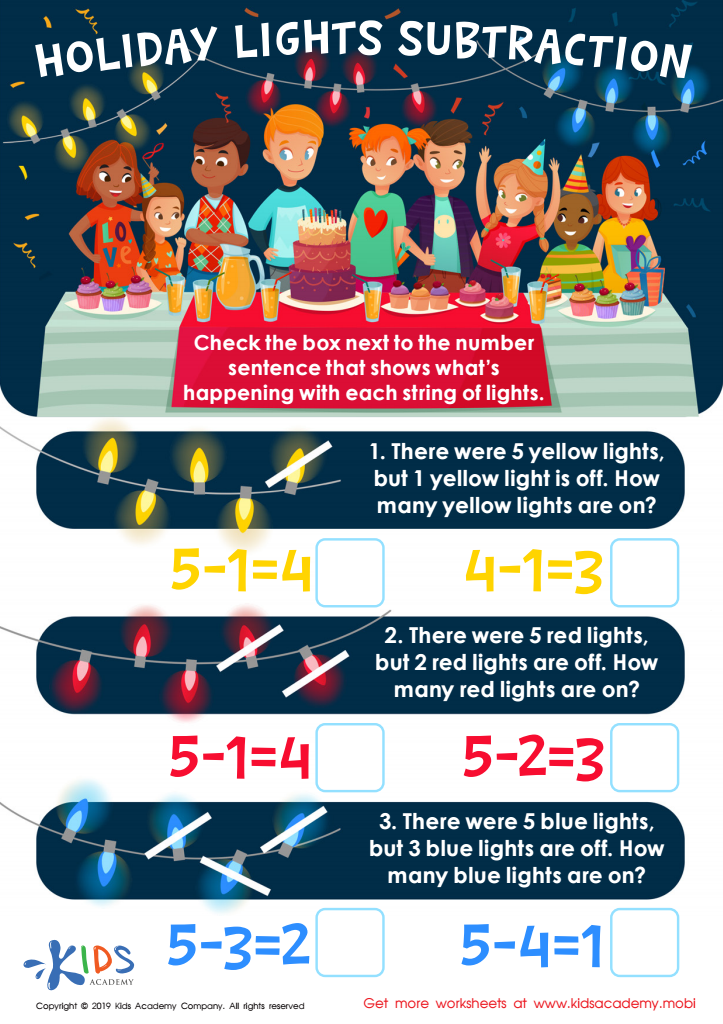
Holiday Lights Subtraction Worksheet
 Assign to My Students
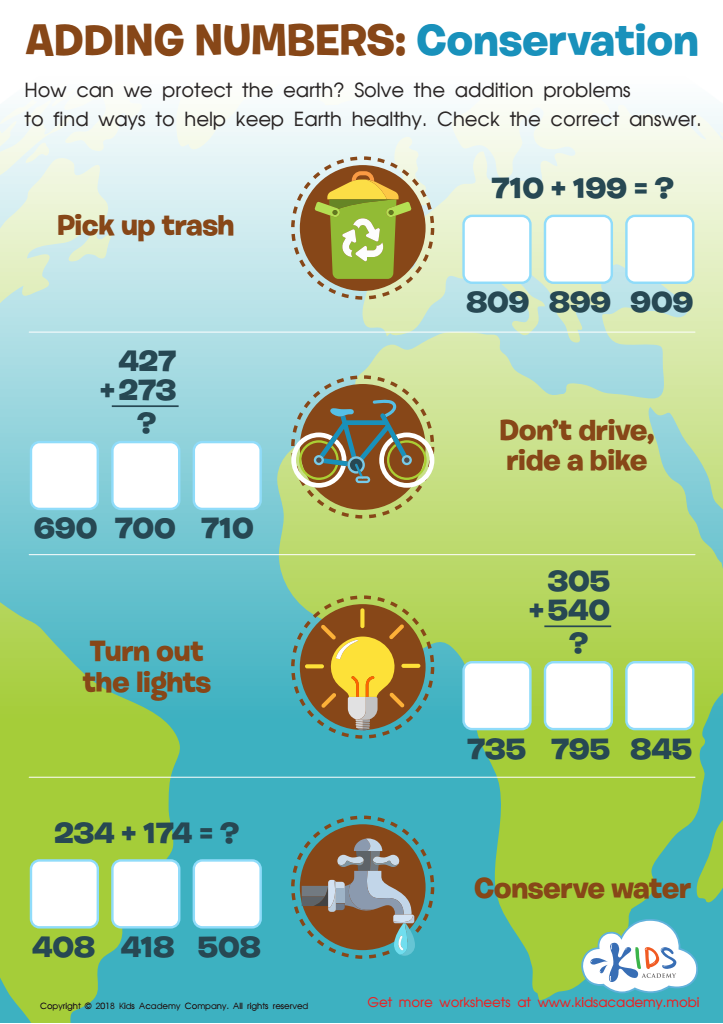
Adding Numbers: Conservation Worksheet
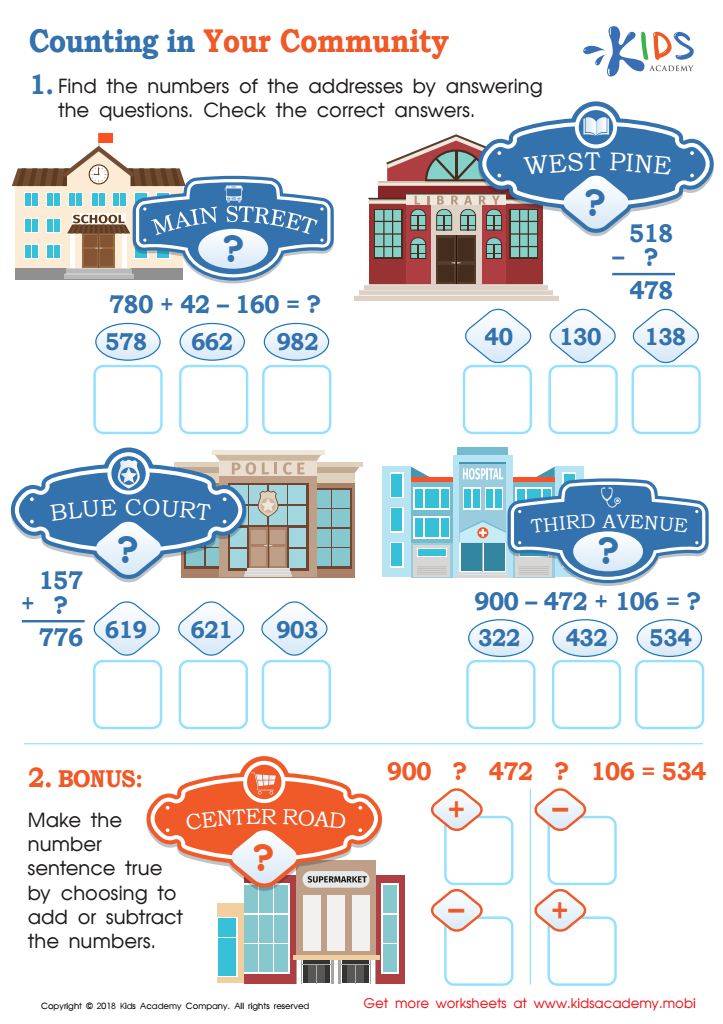
Counting in Your Community Worksheet








Number recognition and subtraction skills are critically important for children aged 8-9 as they lay the groundwork for more advanced mathematical concepts. At this age, children are transitioning from simple arithmetic to more complex math, and a strong grasp of number recognition and basic operations like subtraction is essential.
Firstly, seamless ability to recognize numbers helps children perform subtraction easily and accurately. This, in turn, boosts their confidence and competence in handling mathematical problems. Accurate subtraction is fundamental not only in math classes but also in real-life situations, such as making change, measuring ingredients, or comparing quantities.
Moreover, subtraction extends beyond basic arithmetic. It fosters critical thinking and problem-solving skills, as children begin to explore more advanced concepts like negative numbers, place value, and understanding the relationship between addition and subtraction. These are building blocks for algebra and higher-level math.
Teachers and parents should emphasize number recognition and subtraction to ensure children avoid math anxiety and stay academically on track. Supportive and engaging learning environments, enriched with activities and practical applications, can make mastering these skills enjoyable and effective. Consequently, investing time and resources in bolstering children's abilities now can lead to stronger academic performance, better problem-solving skills, and a positive attitude toward learning in the future.








