Understanding patterns Times Tables Worksheets for Ages 8-9
3 filtered results
-
From - To
Unlock your child's potential with our "Understanding Patterns Times Tables Worksheets" designed specifically for ages 8-9. These engaging resources help children delve into the world of multiplication by exploring numerical patterns that enhance their math skills. Through fun and interactive activities, students will learn to recognize relationships in times tables, fostering a deeper understanding of math concepts. Our worksheets cater to various learning styles, ensuring every child can grasp the fundamentals of multiplication in a fun and stimulating environment. Set your child on the path to math mastery and watch their confidence soar with these essential learning tools!
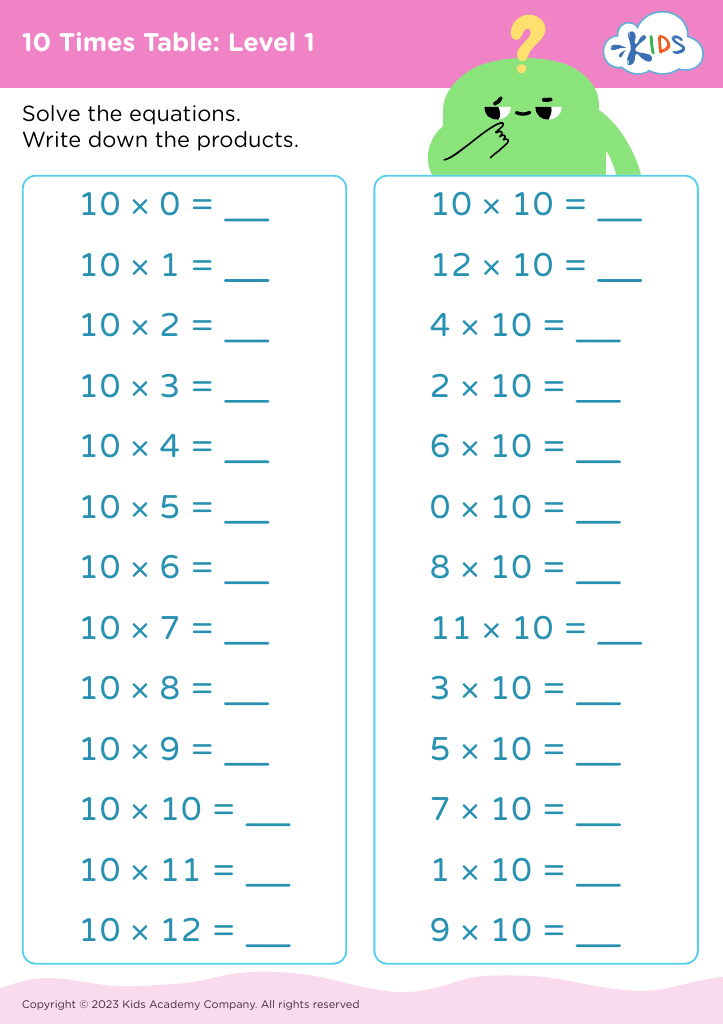
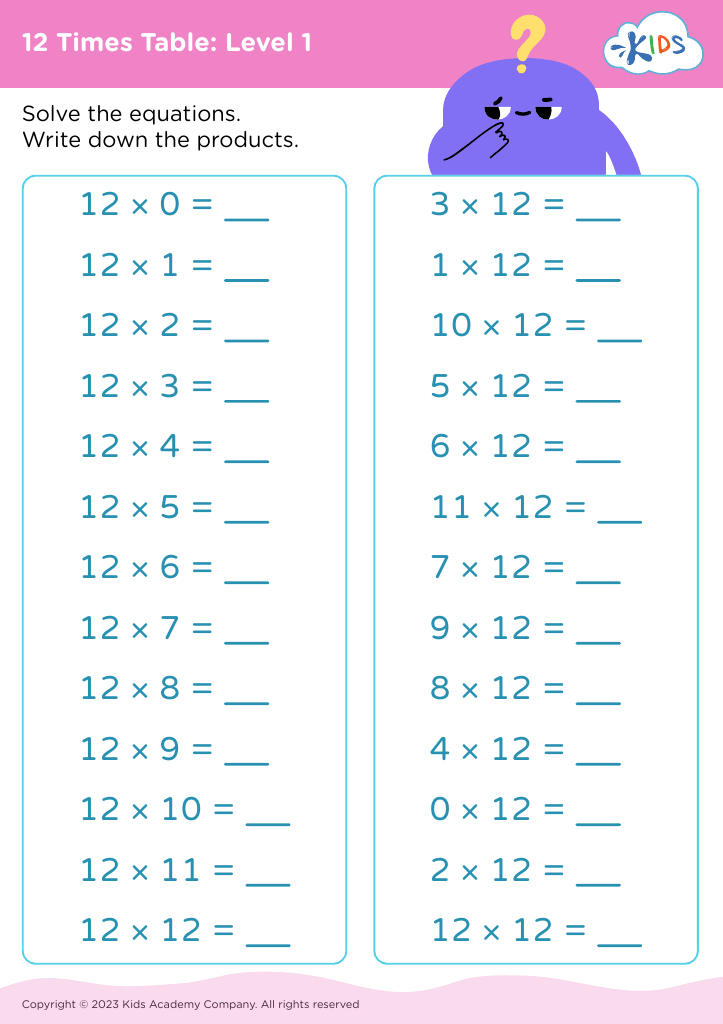
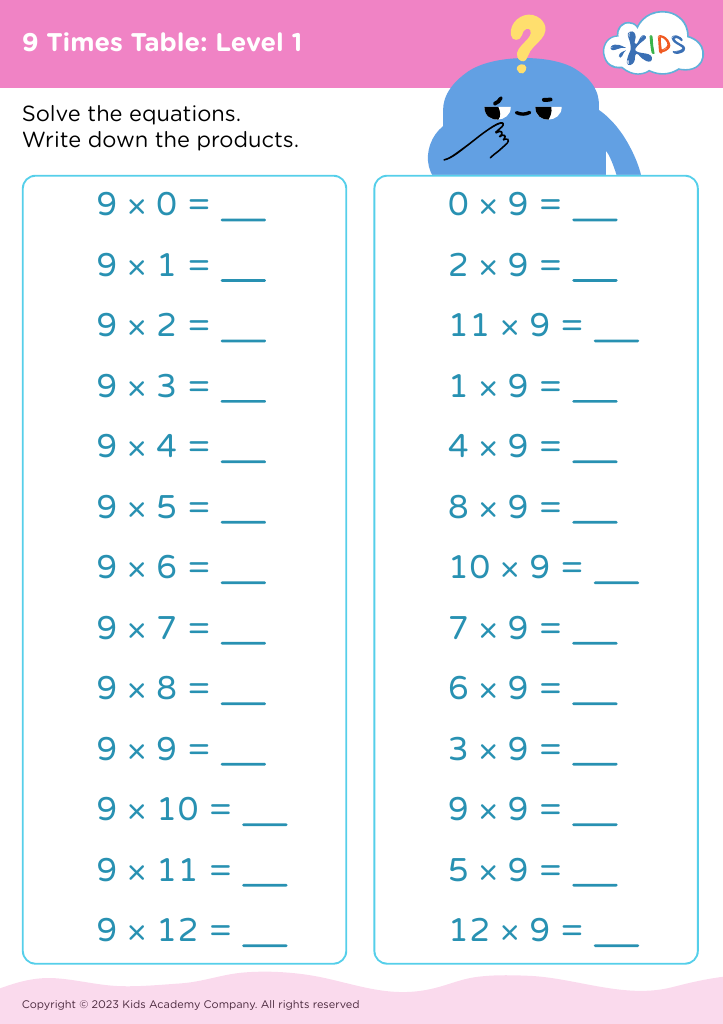





Understanding patterns in times tables is crucial for children aged 8-9, as it lays a foundational understanding of mathematics that goes beyond rote memorization. At this age, students are increasingly encountering more complex arithmetic and mathematical concepts. Recognizing patterns helps them make connections between numbers, which enhances their problem-solving skills and improves their ability to tackle advanced topics in the future, such as fractions, division, and algebra.
When children learn to identify the regularities in times tables—like how each even number or multiple of ten follows a specific sequence—they develop critical thinking and reasoning abilities. This encourages a growth mindset, as they discover that mathematics is not just about finding the right answer but also understanding the “why” and “how” behind it.
Teachers and parents who emphasize pattern recognition promote a deeper engagement with math, making it more enjoyable and less intimidating. Furthermore, this understanding can boost children’s confidence during tests and daily calculations, supporting their overall academic success. In a world increasingly reliant on quantitative skills, fostering proficiency in times tables through pattern awareness is an investment in a child's future education and career opportunities. Making math relevant and interesting can pave the way for lifelong learners.








