Basic Addition Skills Building Vocabulary Worksheets for Ages 8-9
3 filtered results
-
From - To
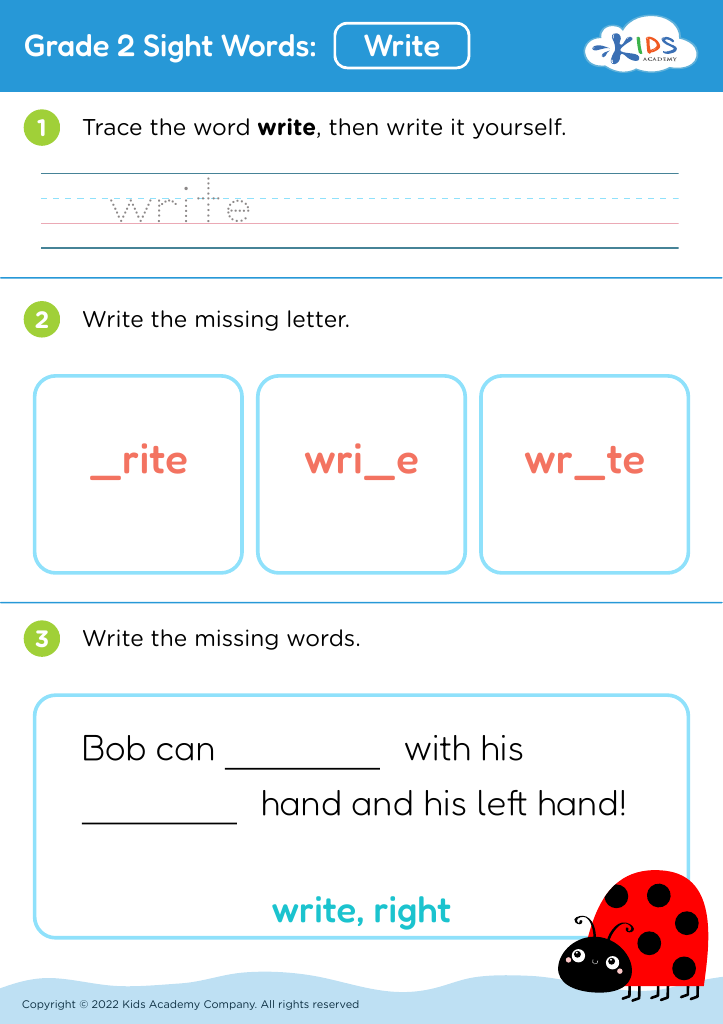
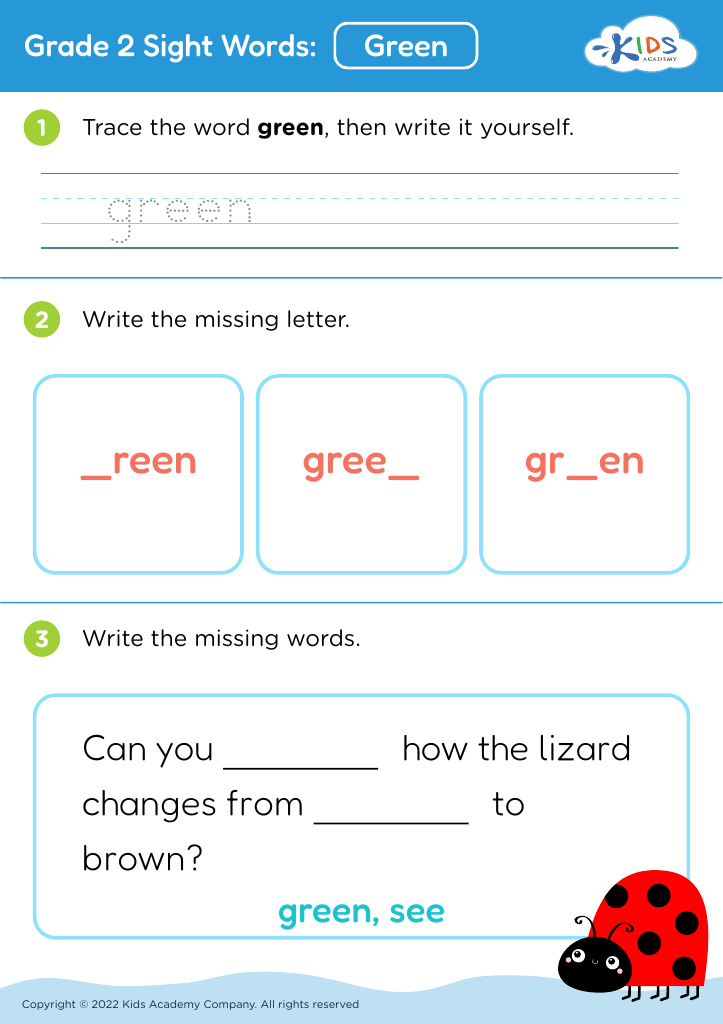
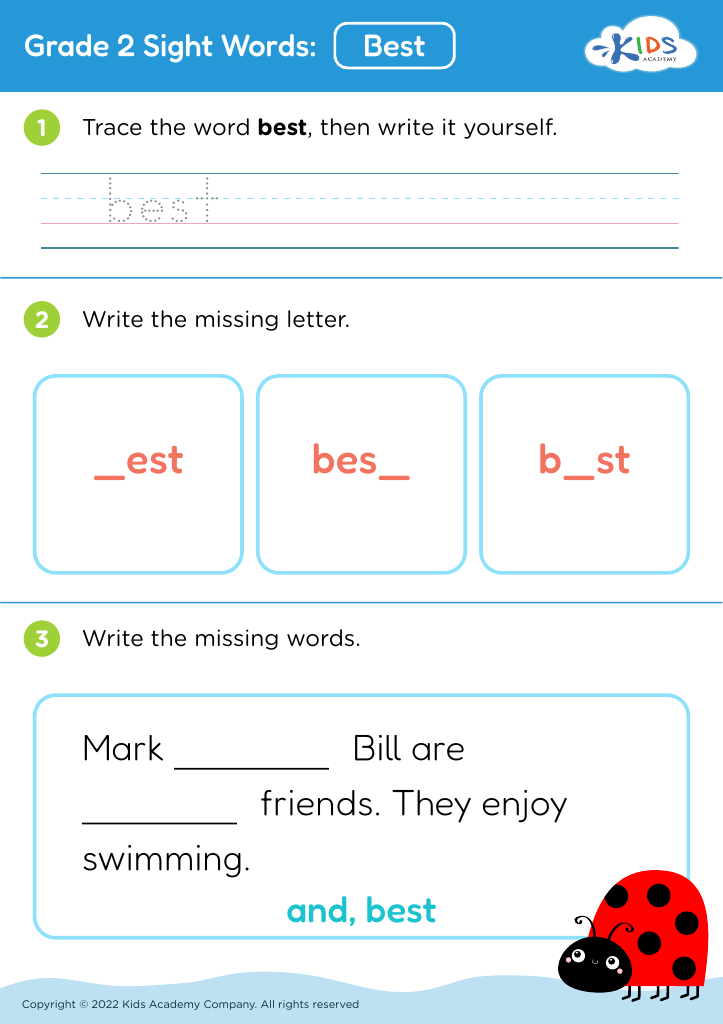
Enhance your child's math skills with our engaging Basic Addition Skills Building Vocabulary Worksheets tailored for ages 8-9. These worksheets are designed to strengthen fundamental addition concepts while enriching vocabulary. Each worksheet features fun and interactive exercises that challenge young learners to master addition through unique word problems and practical applications. Ideal for use at home or in the classroom, our resources encourage critical thinking and foster a love for learning. Help your child build confidence in their math abilities and improve their vocabulary simultaneously. Explore our worksheets today to make learning enjoyable and effective!













.jpg)





Parents and teachers should prioritize building basic addition skills for children aged 8-9 because these foundational skills are critical for their overall academic success. At this age, students transition from concrete operations to more abstract thinking, making it essential for them to master basic arithmetic. Proficient addition skills enable children to tackle more complex mathematical concepts such as subtraction, multiplication, and division, which they will encounter in higher grades.
Additionally, a strong grasp of basic addition boosts children's confidence in their math abilities. This self-assuredness encourages a positive attitude towards learning and fosters a growth mindset, helping them to approach challenges with resilience. Furthermore, proficiency in addition is not just vital for math class but is also utilized in everyday life, from shopping to cooking.
Building vocabulary around math concepts enhances understanding, allowing children to articulate processes and solutions clearly. This linguistic aspect is often overlooked but is crucial for effective problem-solving. Parents and teachers can support this by incorporating engaging activities, games, and discussions into learning. By focusing on both skills and vocabulary, we equip students with the tools they need to succeed academically and in real-world situations, ultimately laying the groundwork for lifelong learning.








