Coloring skills Building Vocabulary Worksheets for Ages 8-9
3 filtered results
-
From - To
Boost your child's vocabulary and creativity with our Coloring Skills Building Vocabulary Worksheets for Ages 8-9! Combining the joy of coloring with engaging educational exercises, these worksheets help children expand their word knowledge and enhance their spelling and comprehension skills. Each worksheet includes fun vocabulary activities paired with vibrant coloring sections designed to reinforce learning. Perfect for both classroom and at-home use, our worksheets make vocabulary building an enjoyable and interactive experience. Watch your child's language skills flourish as they express their artistic talents and discover new words. Start their journey to literacy success today!
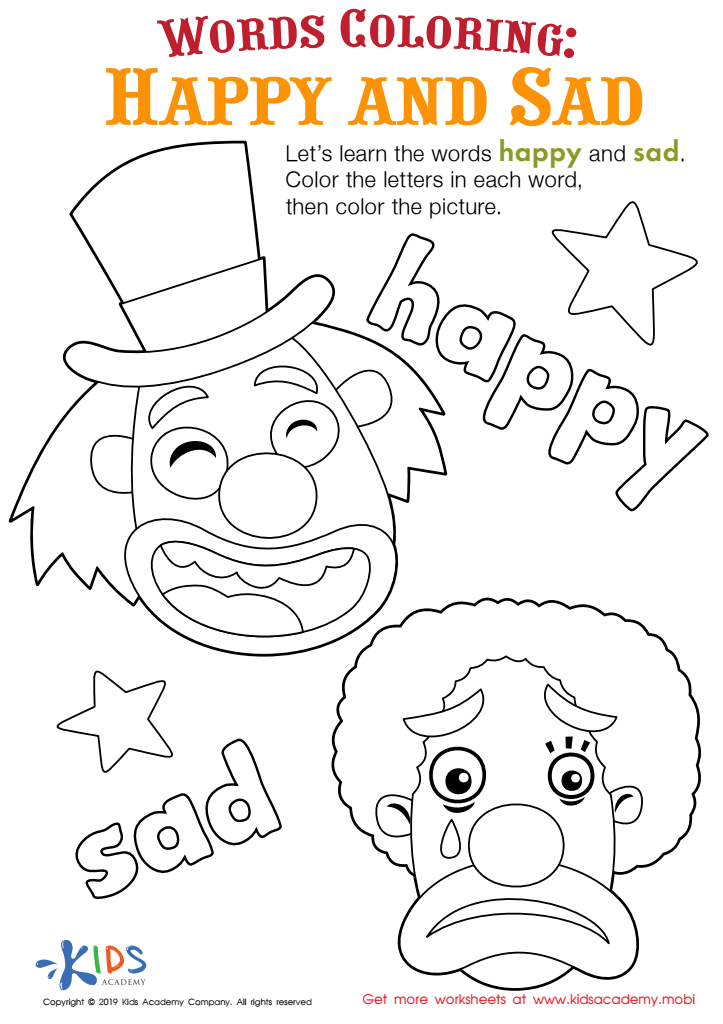
Happy and Sad Words Coloring Worksheet
 Assign to My Students











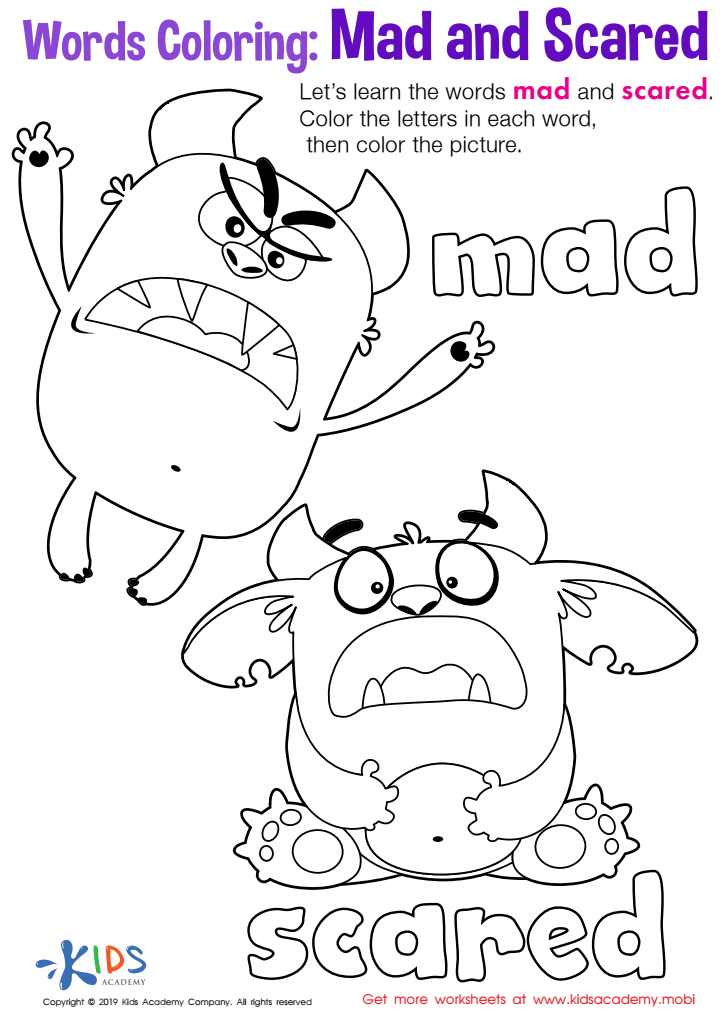
Mad and Scared Words Coloring Worksheet
Assign to My Students








Fostering coloring skills in 8-9-year-olds is significant because it nurtures creativity, fine motor development, and cognitive abilities. Engaging in coloring activities encourages children to pay attention to detail, practice hand-eye coordination, and refine their grip which is foundational for writing skills. Furthermore, coloring is linked to improving focus. As children color within lines and choose appropriate colors, it requires a level of concentration, thus strengthening their ability to concentrate on other tasks, including academic work.
Simultaneously, integrating vocabulary building at this stage is crucial for language development and academic success. As children are exposed to new words, their comprehension abilities and expressive language skills improve. This can enhance reading comprehension, making it easier for them to understand texts across various subjects. It also supports social communication, allowing them to articulate thoughts clearly and confidently, improving peer interactions and collaborative learning.
Hence, parents and teachers should prioritize activities that incorporate both coloring and vocabulary building, as it supports holistic development. Encouraging storytelling sessions where children describe their colorful artwork unifies both skills, making learning enjoyable and effective, and laying a strong foundation for more complex academic and social skills in future.








