Moral lesson understanding Building Vocabulary Worksheets for Ages 8-9
3 filtered results
-
From - To
Introduce your 8-9-year-old learners to essential moral lessons while boosting their vocabulary with our engaging worksheets. Designed to inspire critical thinking and discussion, these worksheets bridge the gap between language skills and character education. Kids will enhance their vocabulary as they explore important stories and scenarios that teach fundamental values such as honesty, kindness, and respect. Perfect for blending literacy and ethical learning, these activities are tailored to encourage young minds to internalize and articulate moral concepts effectively. Get started today and help your child grow both intellectually and morally! Explore our rich collection of Moral Lesson Understanding Building Vocabulary Worksheets.
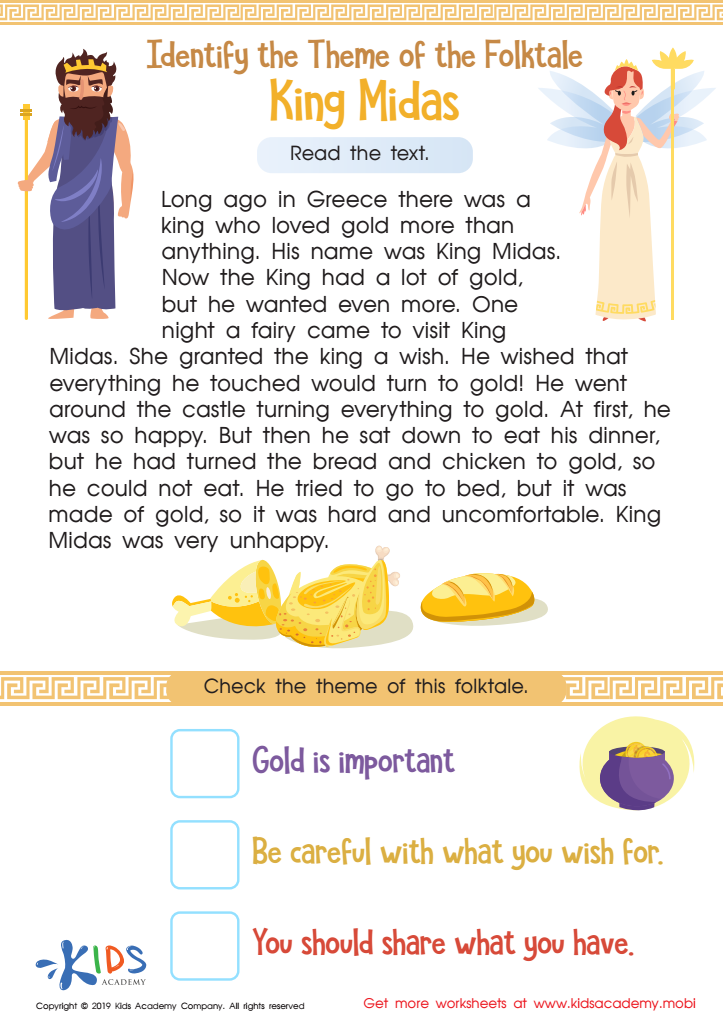
King Midas Worksheet
 Assign to My Students











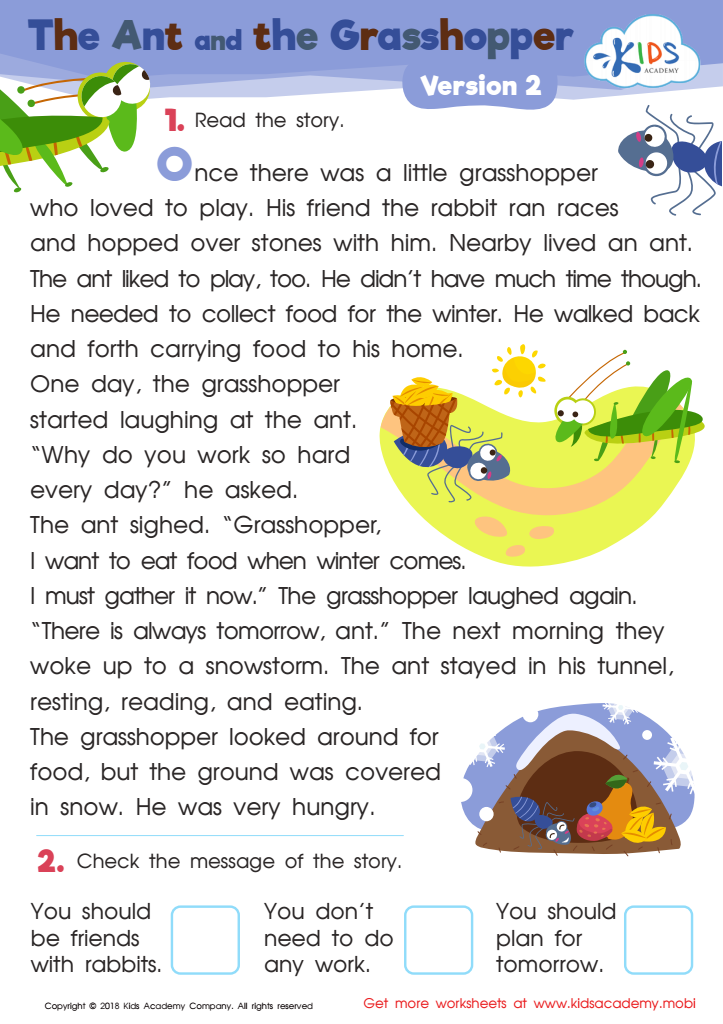
The Ant and The Grasshopper Version 2 Worksheet
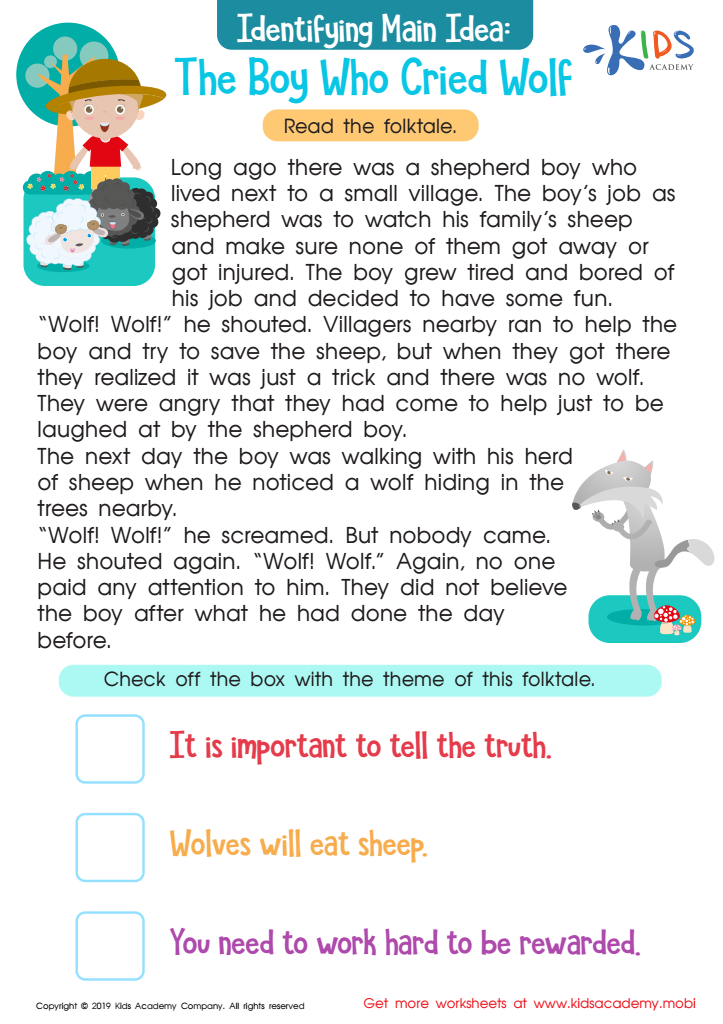
The Boy Who Cried Wolf Part 2 Worksheet







.jpg)
Moral lesson understanding and vocabulary-building are crucial areas of development for children aged 8-9, contributing significantly to their overall growth. At this age, kids are forming their foundational worldview, and comprehending moral lessons helps shape their sense of right and wrong. Teaching moral lessons nurtures empathy, respect, and responsibility, which are essential for forming positive relationships with peers and adults. It encourages critical thinking and decision-making, equipping children to navigate social situations more effectively.
Additionally, this period is pivotal for vocabulary development. A rich vocabulary enhances communication skills, aids in the expression of complex thoughts, and improves reading comprehension. With a broader vocabulary, children can understand and internalize moral stories and lessons more profoundly, allowing them to discuss and reflect on these concepts meaningfully.
Together, understanding moral lessons and building a robust vocabulary help children become conscientious, articulate, and empathetic individuals. Parents and teachers play an integral role by integrating these elements into daily interactions and lessons. Sharing stories with moral underpinnings, engaging in discussions, and encouraging reading diverse materials collaboratively cultivate an environment where children thrive in both moral and verbal domains, preparing them for future social and academic success.








