Analytical thinking Reading Fiction Worksheets for Ages 8-9
3 filtered results
-
From - To
Enhance your child's analytical thinking skills with our engaging Reading Fiction Worksheets designed for ages 8-9. These worksheets encourage young readers to delve deeper into narratives, helping them identify themes, character motivations, and plot developments. By analyzing stories creatively, children learn to express their thoughts clearly and confidently. Engaging exercises foster critical thinking and comprehension, enabling them to make connections and predictions about the text. Ideal for use in the classroom or at home, our worksheets provide valuable practice that transforms reading into an exciting exploration of ideas. Empower your child’s literary journey and watch their analytical abilities flourish!
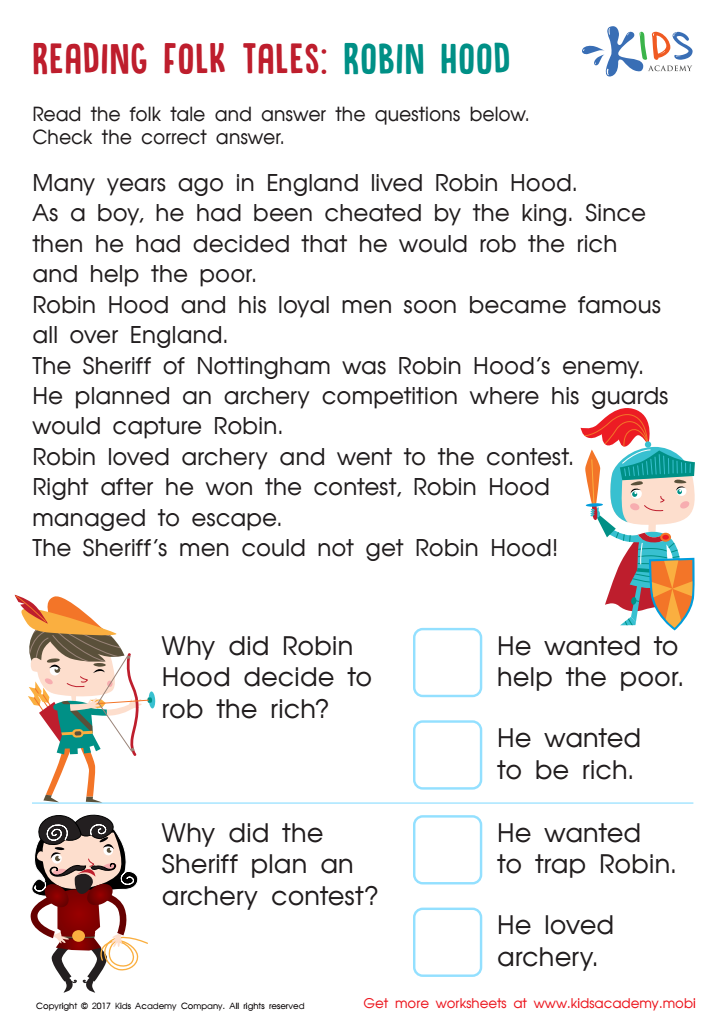
Robin Hood Folktale Worksheet
 Assign to My Students
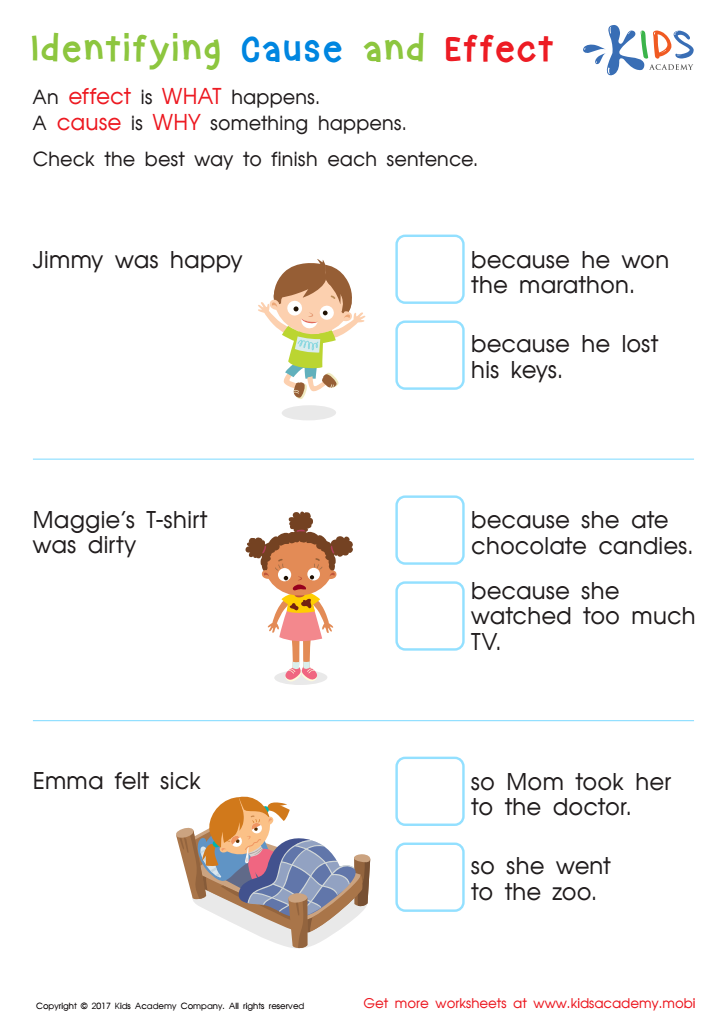
Indentifying Cause and Effect Worksheet
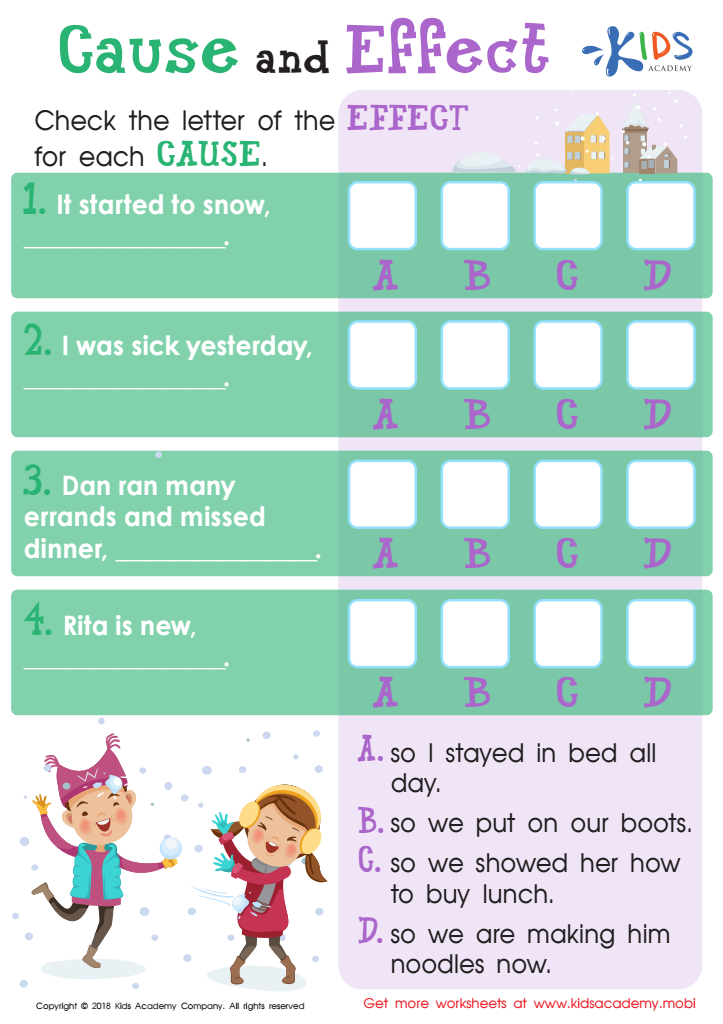
Cause and Effect Worksheet







Analytical thinking is crucial for children aged 8-9, especially when reading fiction, as it enhances their comprehension and critical skills. At this age, children's cognitive abilities are rapidly developing, and fostering analytical thinking helps them dissect stories, relate to characters, and grasp underlying themes. Engaging with fiction encourages children to make inferences, ask questions, and predict outcomes, sharpening their reasoning skills.
When parents or teachers encourage analytical thinking in reading fiction, it nurtures curiosity and promotes a love for literature. This engagement not only aids in comprehension but also helps children articulate their thoughts clearly, fostering effective communication skills. As they analyze plots and character motivations, children build empathy, as they learn to understand perspectives different from their own.
Furthermore, these skills translate into greater academic success across subjects as analytical thinking strengthens problem-solving abilities, important in mathematics and science as well. In essence, supporting analytical thinking through fiction reading empowers children to think critically and creatively, preparing them for future challenges in a rapidly evolving world. Encouraging this practice can inspire lifelong learning and a deeper appreciation for the complexities of narratives, benefiting their overall development.








