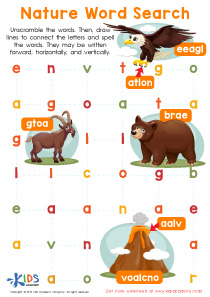
Counting skills Sight Words Worksheets for Ages 8-9
12 filtered results
Difficulty Level
Grade
Age
-
From - To
Subject
Activity
Standards
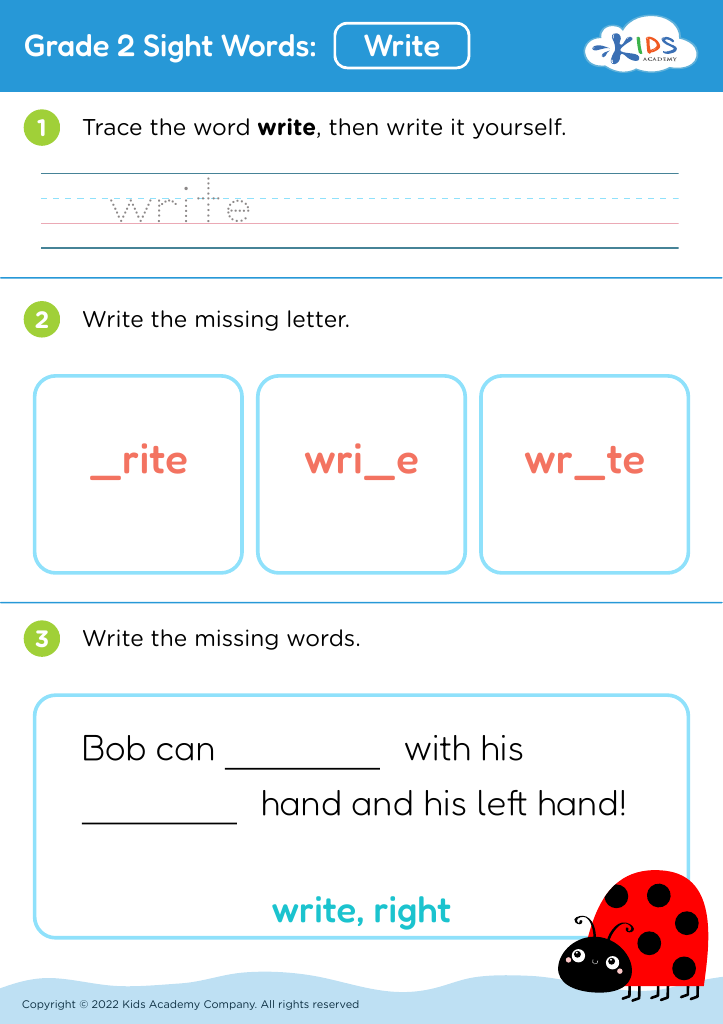
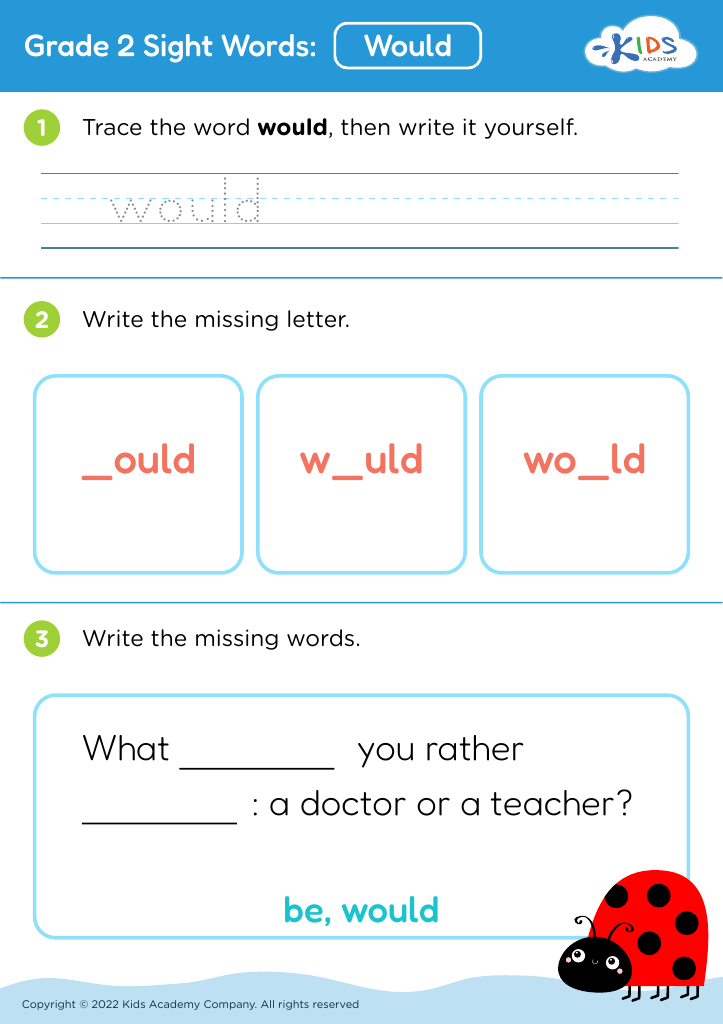
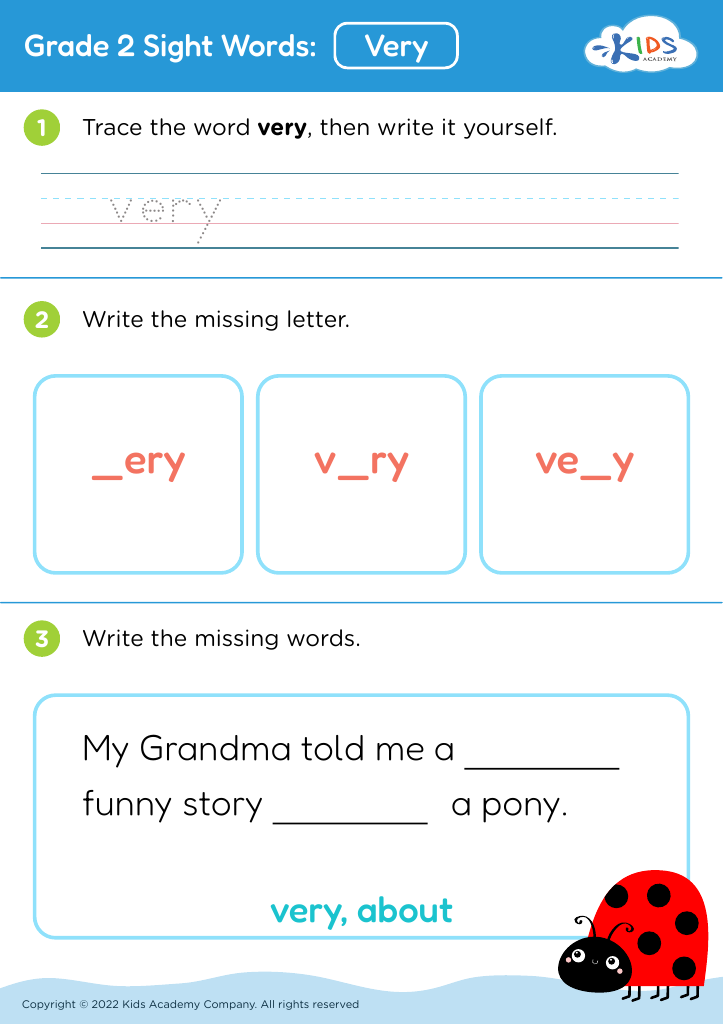
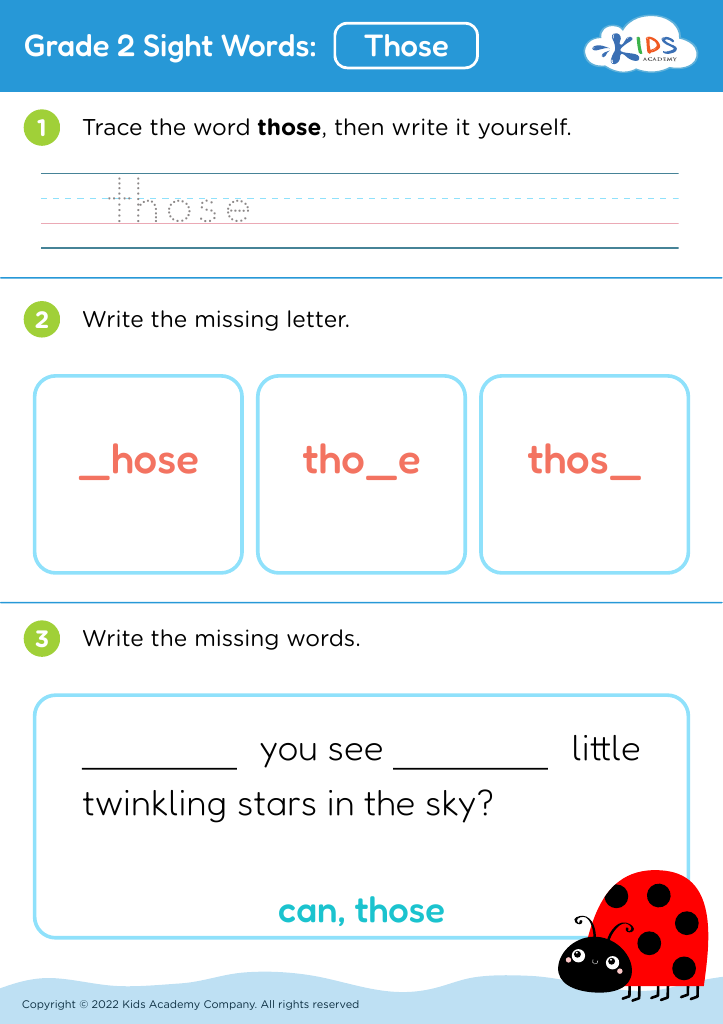
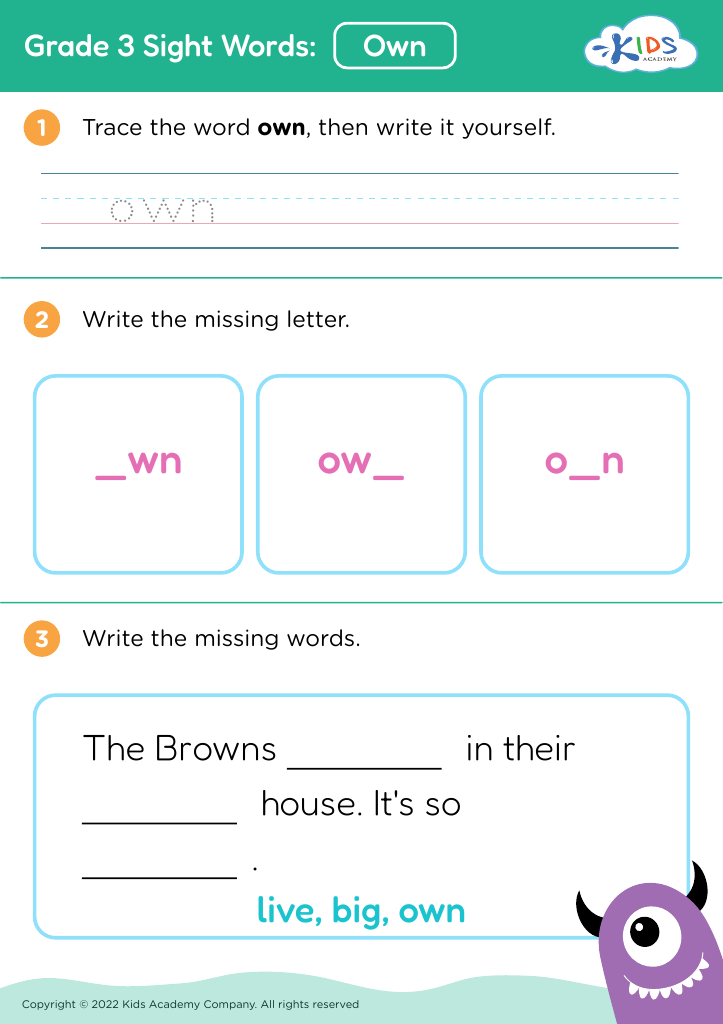
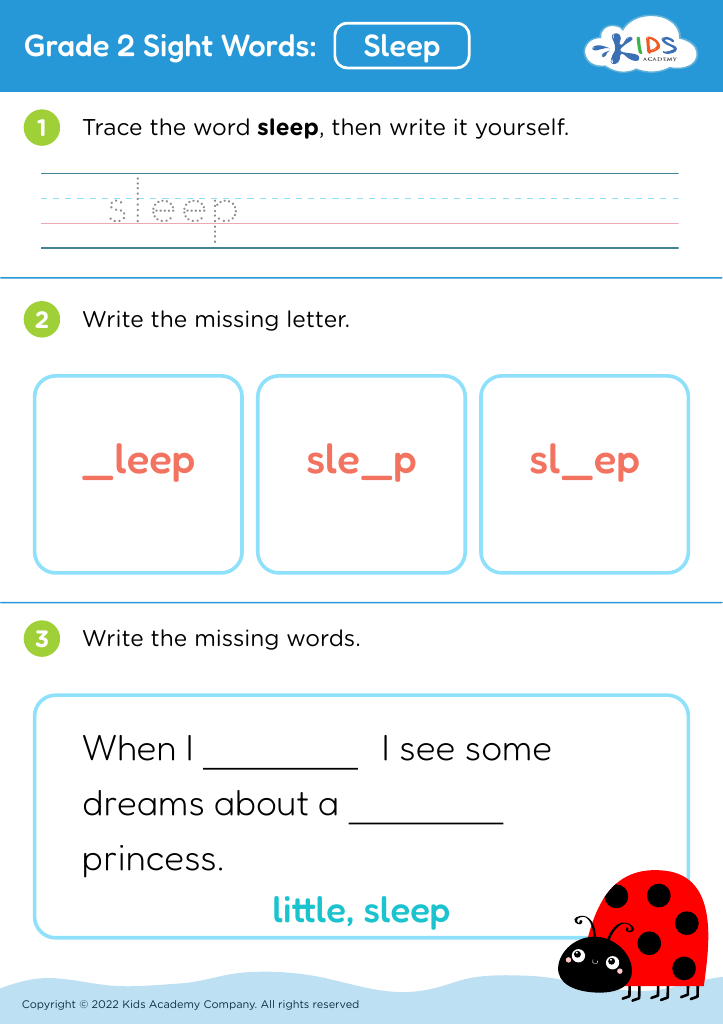
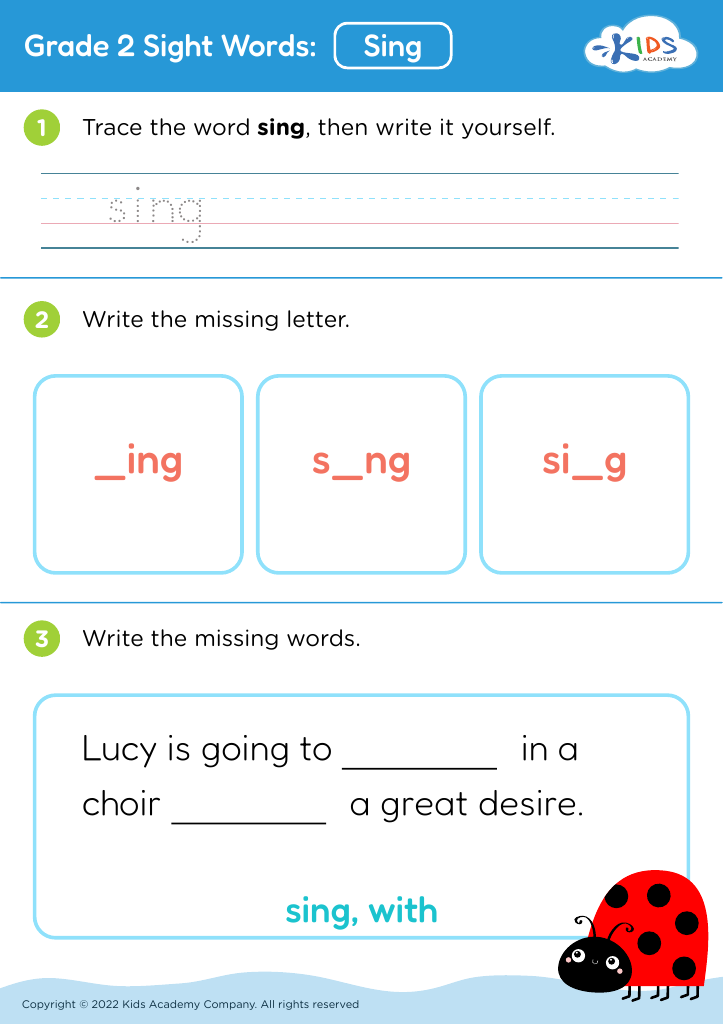
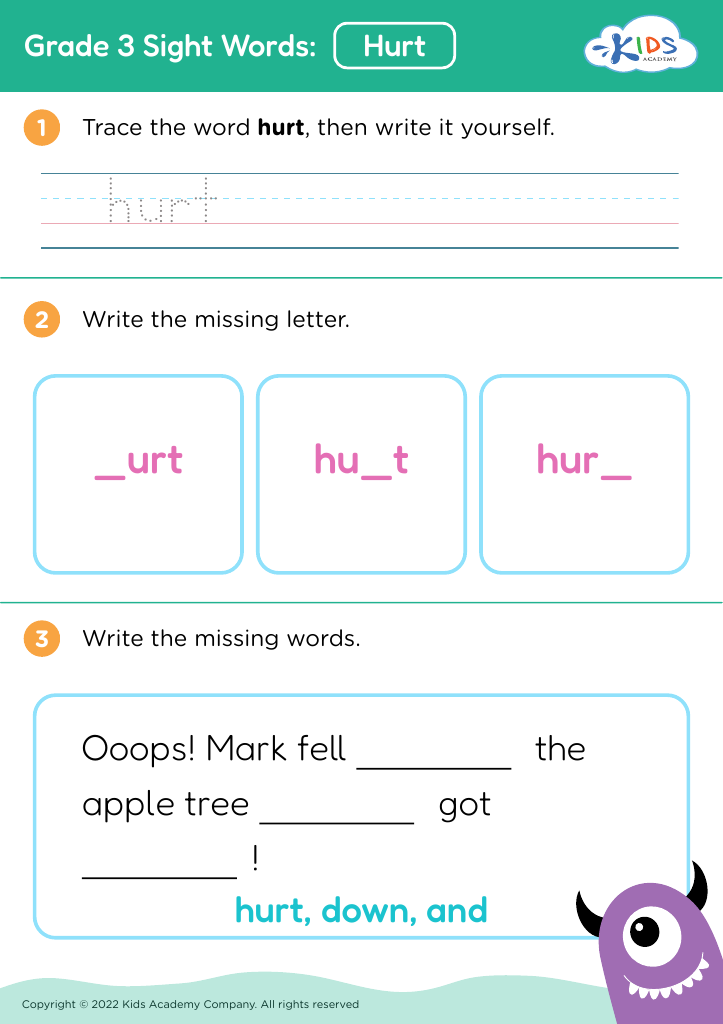
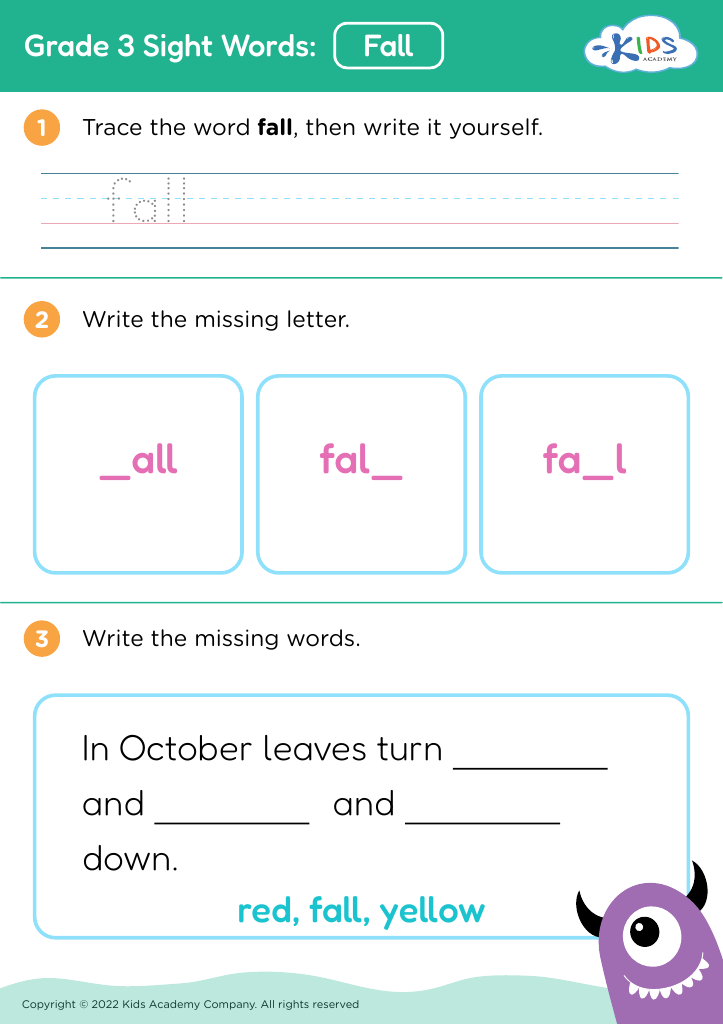
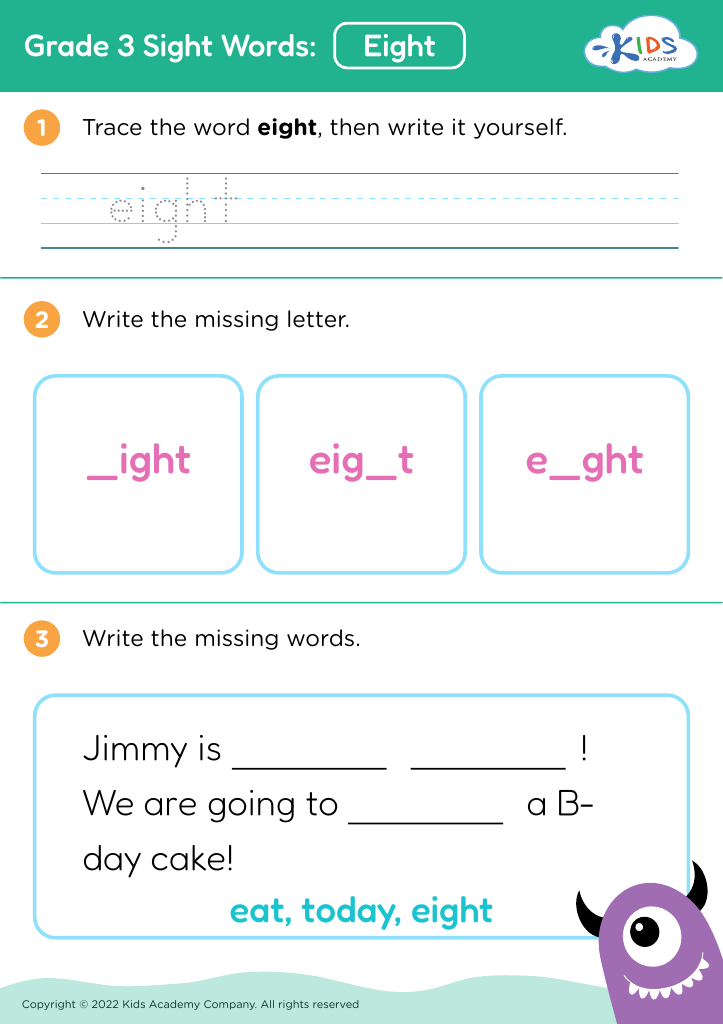
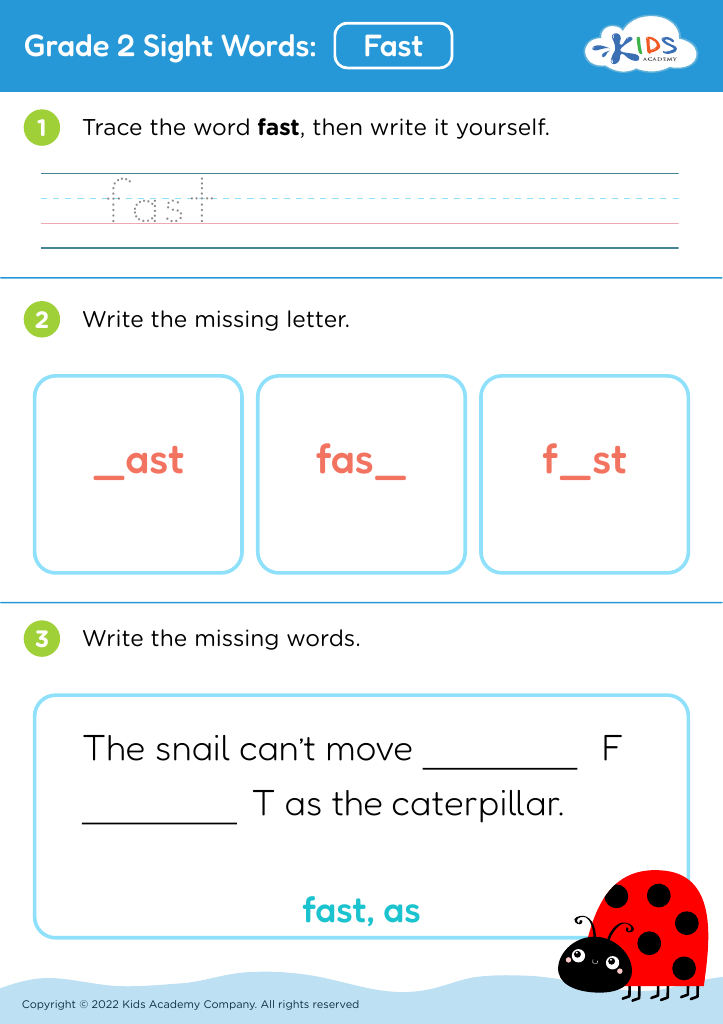
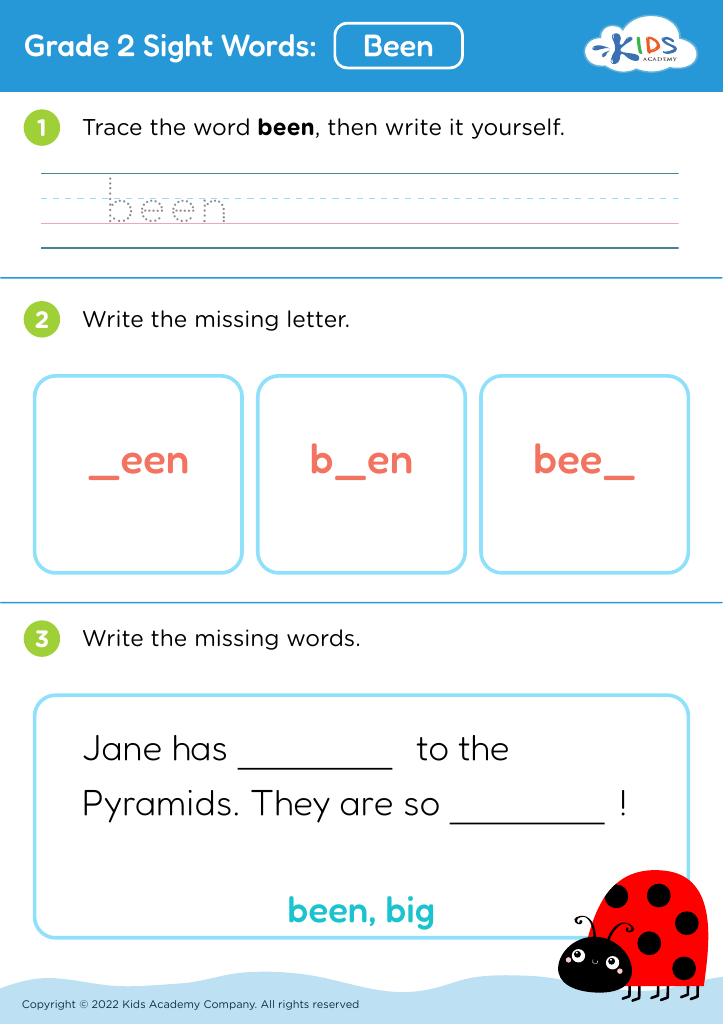
Elevate your child's reading and numeracy skills with our engaging Counting Skills Sight Words Worksheets tailored for ages 8-9! This resource effectively combines sight word recognition and counting practice, fostering a deeper understanding of both literacy and math concepts. Each worksheet is designed to stimulate learning through vibrant visuals and engaging exercises, helping children confidently hone their skills. Perfect for homeschooling, extra practice, or classroom use, these worksheets encourage interactive learning while fostering a solid educational foundation. Let your child become proficient in sight words and counting with our carefully crafted activities, ensuring a fun and fruitful learning experience!
Favorites
With answer key
Interactive







Join Kids Academy for Free
Who is primarily going to use this learning content?








Counting skills and sight words are fundamental components of early literacy and numeracy that significantly impact a child's academic success, especially for ages 8-9. At this critical stage, children are transitioning from basic recognition to more complex reading and mathematical problem-solving.
Counting skills enable students to understand number relationships, perform basic arithmetic, and develop a foundation for more advanced mathematical concepts. Proficiency in counting also contributes to their ability to engage with real-life scenarios, such as telling time and managing finances, fostering critical life skills.
Similarly, sight words are essential for reading fluency. Mastery of commonly used words increases reading speed and comprehension, allowing children to focus on understanding the text rather than decoding every single word. This skill empowers children to express themselves in written form, participate in discussions, and gain more enjoyment from reading, which in turn motivates them to explore more challenging literature.
For parents and teachers, encouraging the development of these skills can enhance a child's academic confidence and enthusiasm for learning. By prioritizing counting and sight word proficiency, they lay a strong foundation for future educational endeavors, scientific understanding, and lifelong learning. Investing in these areas now will create confident learners ready to tackle more complex challenges in the future.