Following instructions Sight Words Worksheets for Ages 8-9
4 filtered results
-
From - To
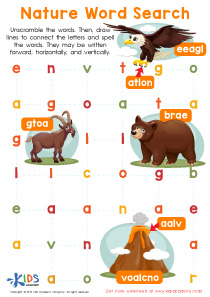
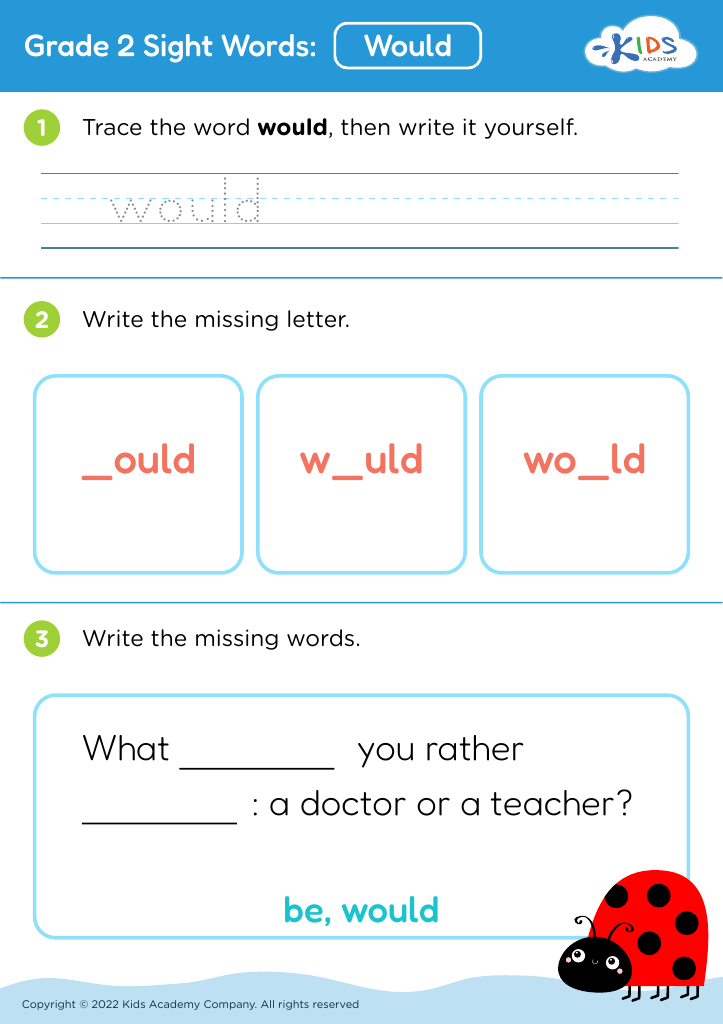
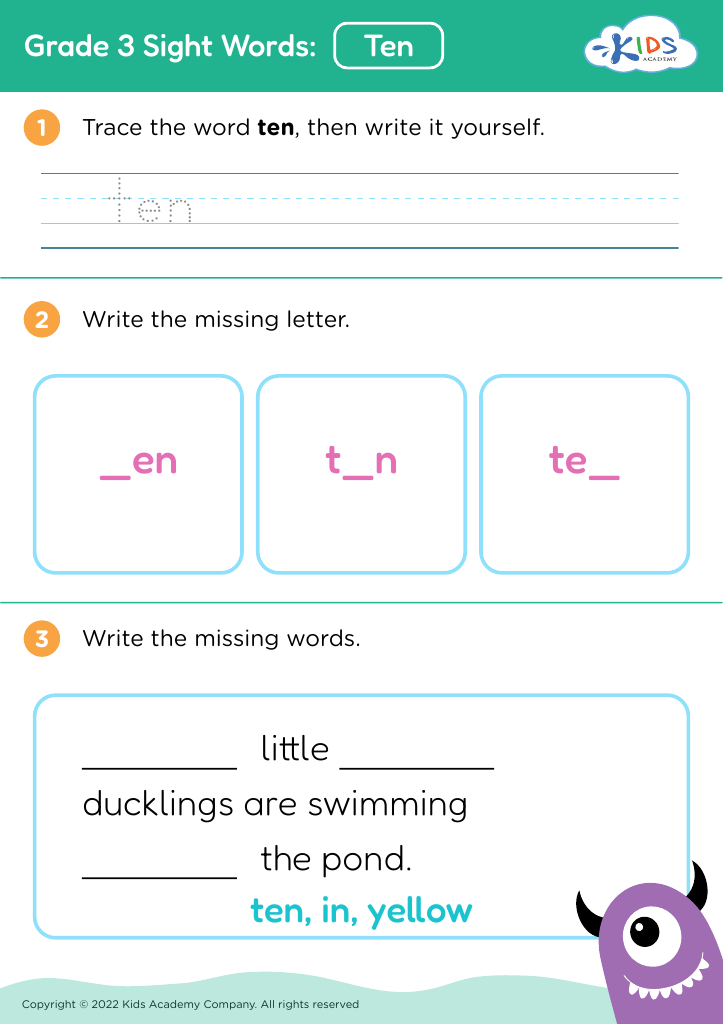
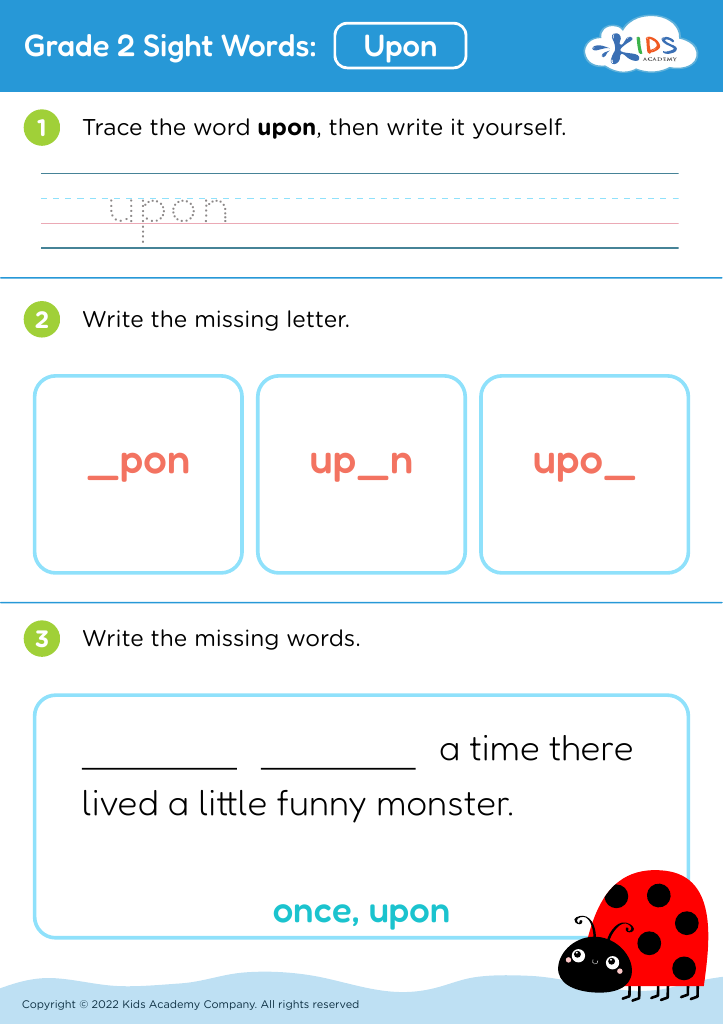
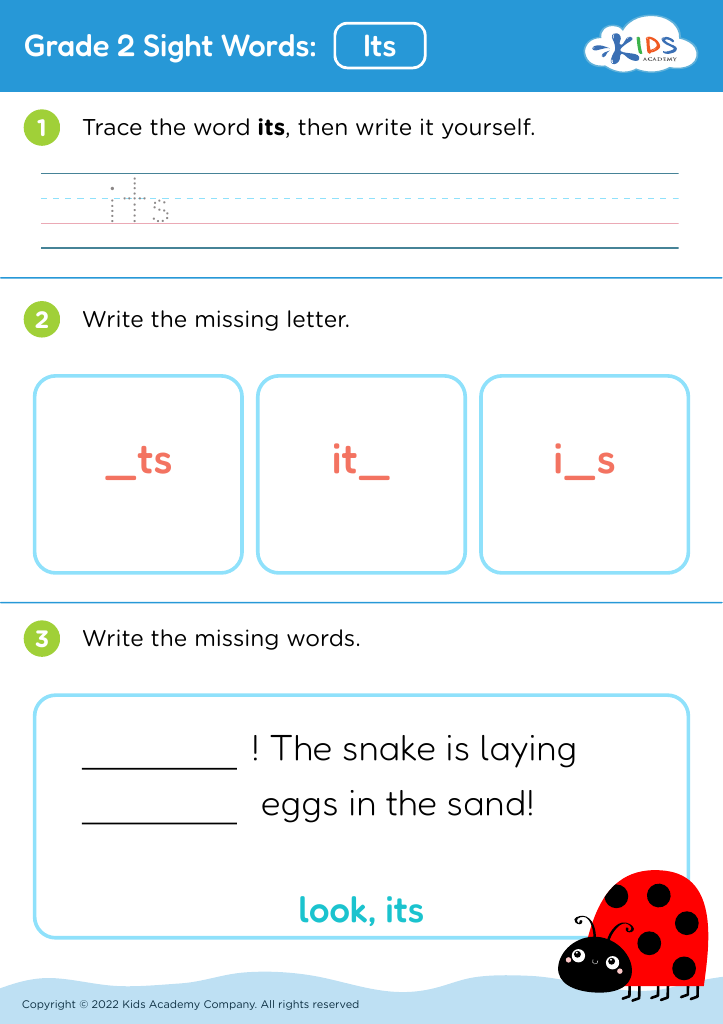
Enhance your child's reading skills with our Following Instructions Sight Words Worksheets designed for ages 8-9. These engaging worksheets help young learners master critical sight words while following step-by-step instructions. Our carefully curated activities promote comprehension, attention to detail, and confidence in reading. Each worksheet offers a variety of fun exercises, from matching patterns to completing sentences, all aimed at reinforcing essential vocabulary. Perfect for home or classroom use, these resources cater to different learning styles and provide a valuable learning experience that fosters independence and cognitive development. Download today and watch your child thrive in reading!











.jpg)



Parents and teachers should prioritize teaching “Following Instructions” and “Sight Words” to children aged 8-9 as these skills are foundational for academic success and everyday life. At this age, children are transitioning from learning to read to reading to learn. Mastering sight words—common, frequently used words—enhances fluency and comprehension, allowing children to focus on understanding the text rather than struggling with individual words. This increases their confidence and encourages a love for reading.
Following instructions, on the other hand, is a critical skill that affects all areas of learning and social interaction. The ability to understand and act on various directives is essential for completing assignments, engaging in group activities, and even following rules during play. When children master these skills, they are more likely to perform well academically and interact positively with their peers and teachers.
Furthermore, honing these skills at this age fosters independence and self-reliance. Parents and teachers can facilitate this learning through supportive practices—such as engaging reading sessions and collaborative games that emphasize instruction-following—laying the groundwork for lifelong learning, critical thinking, and social competency. Thus, investing in these skills is crucial for holistic child development.