Spelling practice Sight Words Worksheets for Ages 8-9
8 filtered results
-
From - To
Enhance your child's vocabulary with our Spelling Practice Sight Words Worksheets, designed specifically for ages 8-9. These engaging, educational worksheets focus on essential sight words to improve reading fluency and spelling skills. Each worksheet offers a variety of activities to reinforce word recognition, spelling patterns, and context usage, making learning both effective and enjoyable. Perfect for at-home practice or classroom use, these worksheets ensure your child builds a strong literacy foundation. Explore our collection and watch your child’s confidence soar as they master critical sight words through engaging and interactive practice.
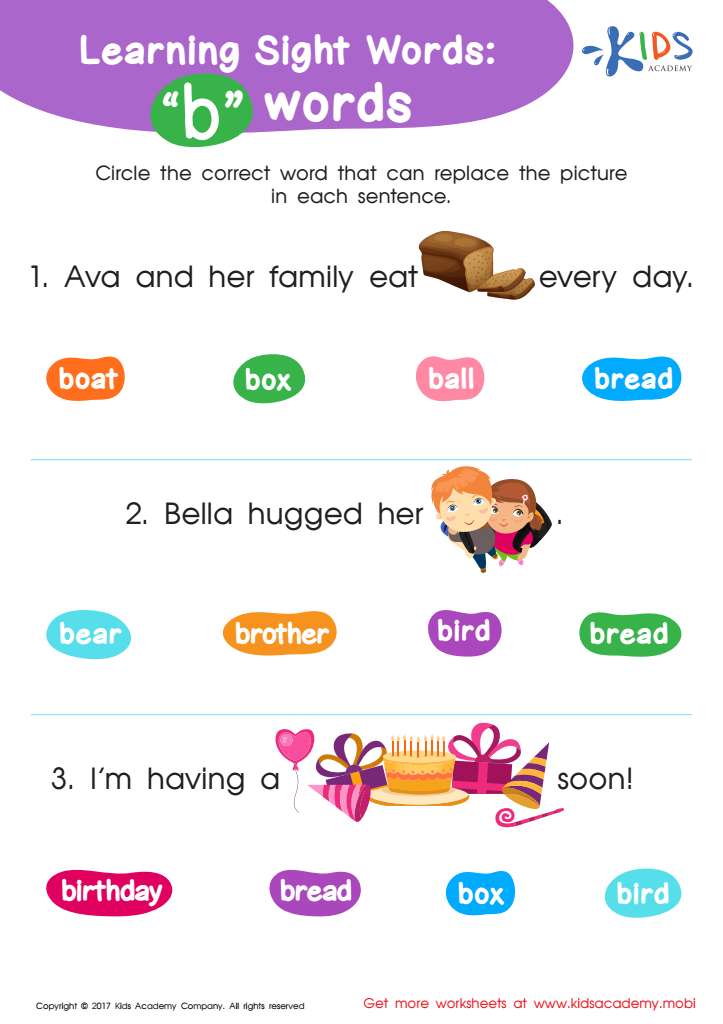
Sight Words Free Worksheet – B Words
 Assign to My Students






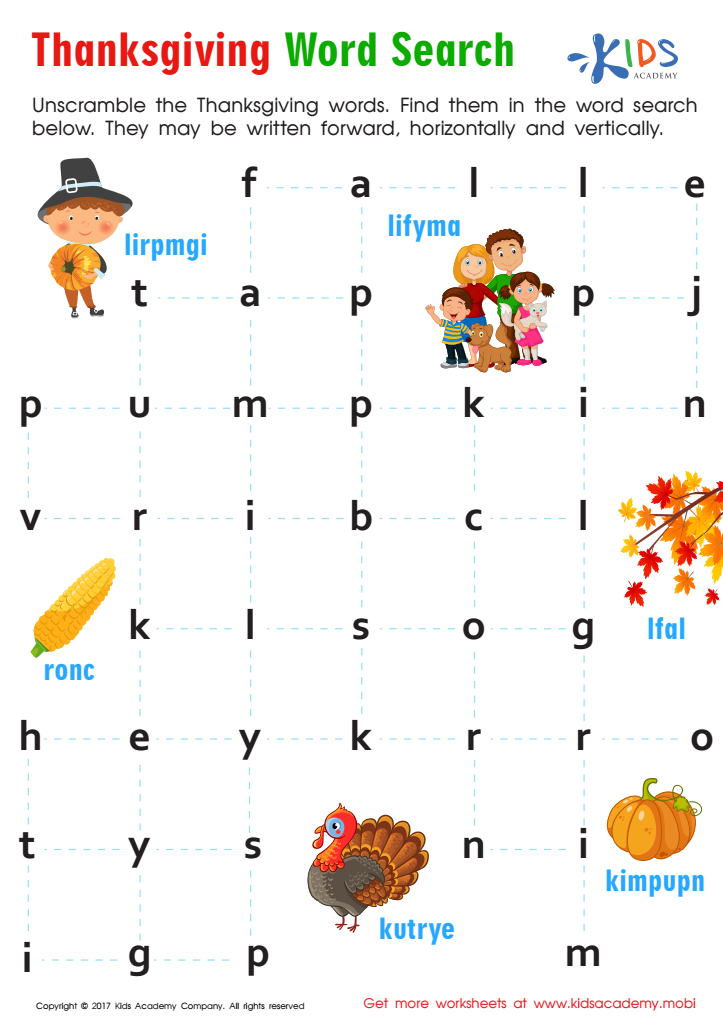
Thanksgiving Word Search Sight Words Worksheet
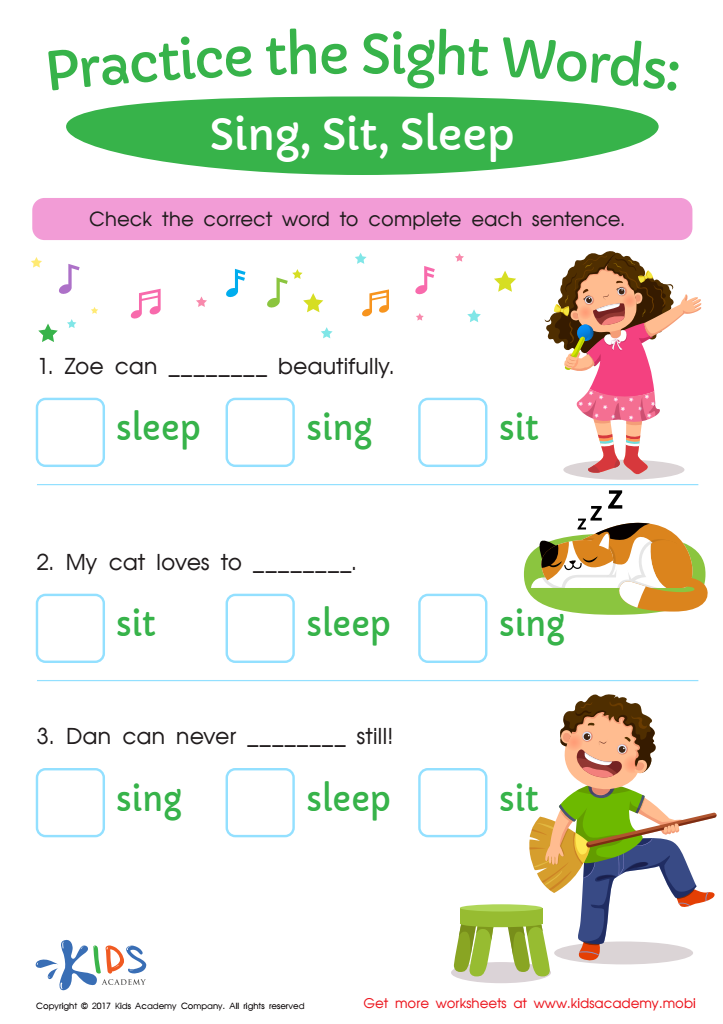
Sing, Sit, Sleep Sight Words Worksheet
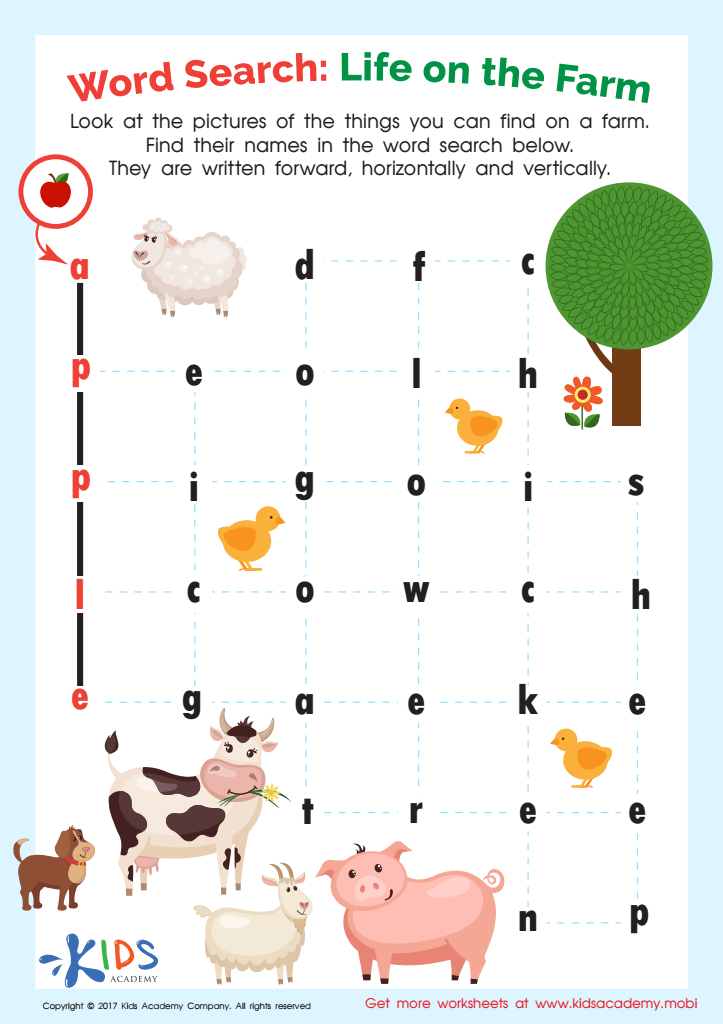
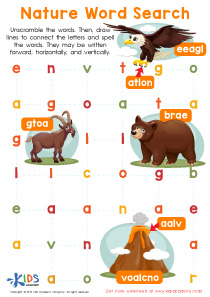
Word Search Puzzles Worksheet
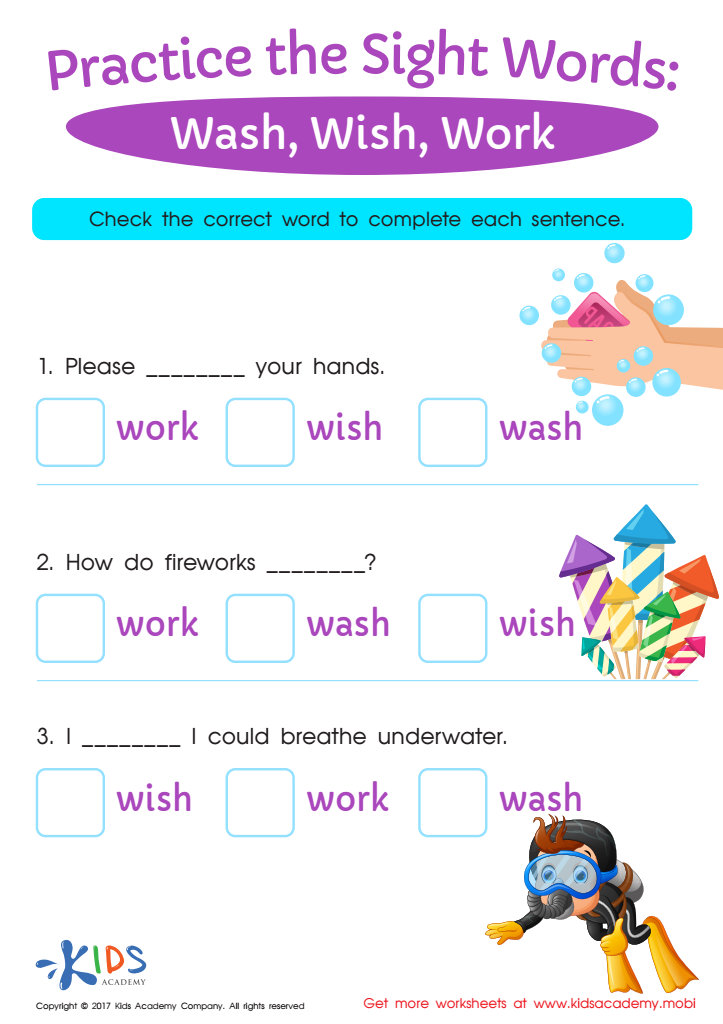
Wash, Wish, Work Sight Words Worksheet
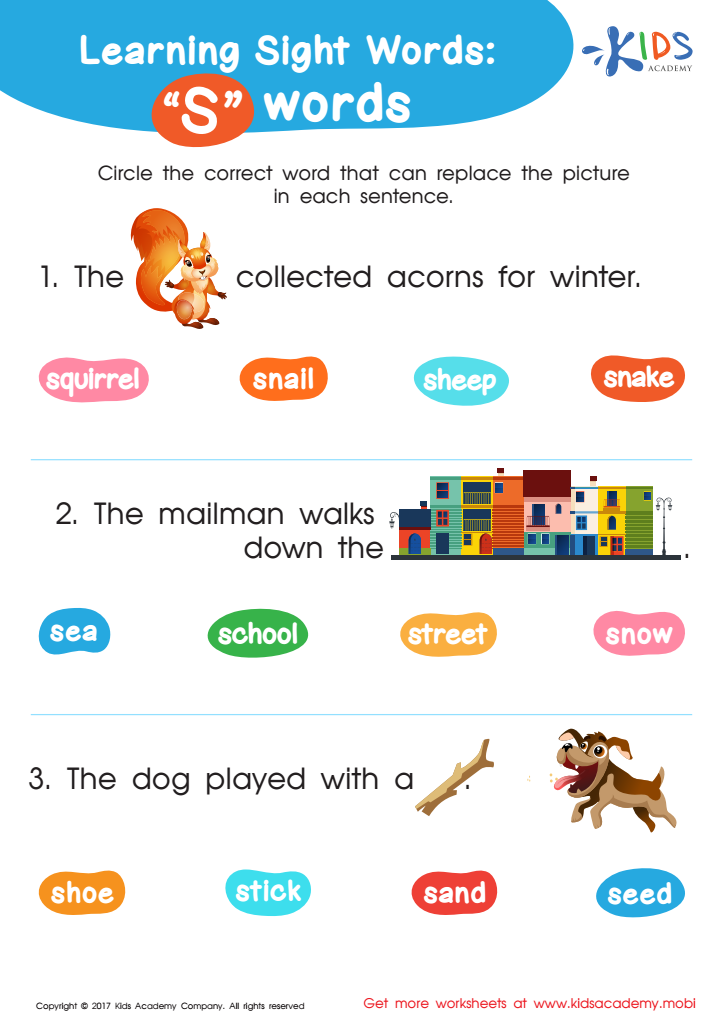
S Words Sight Words Worksheet
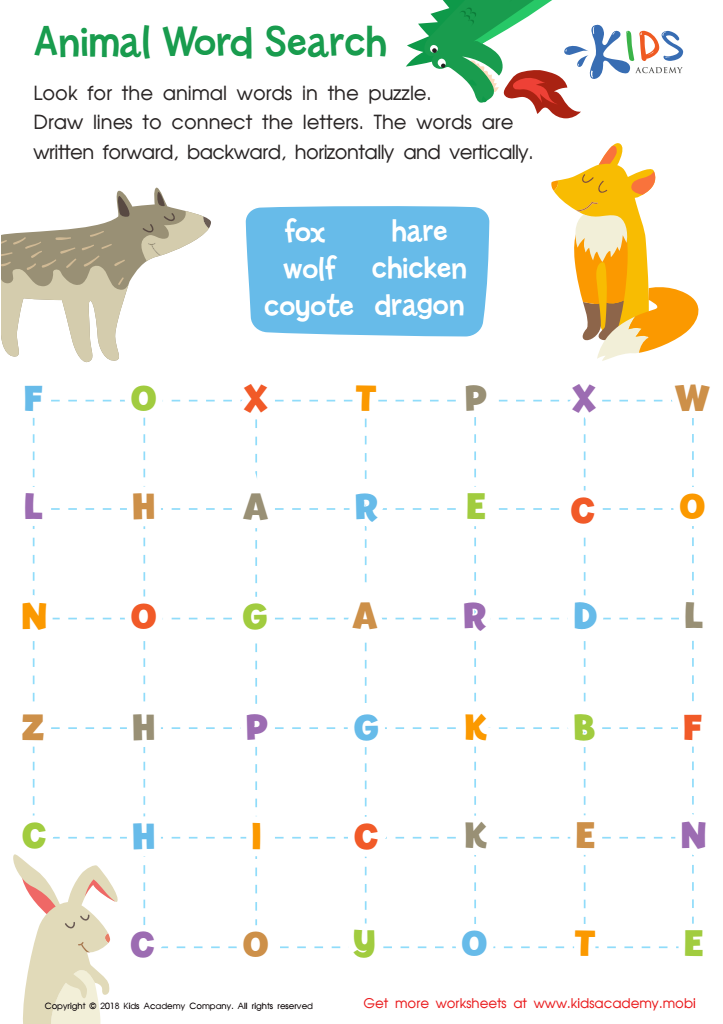
Animal Word Search Worksheet
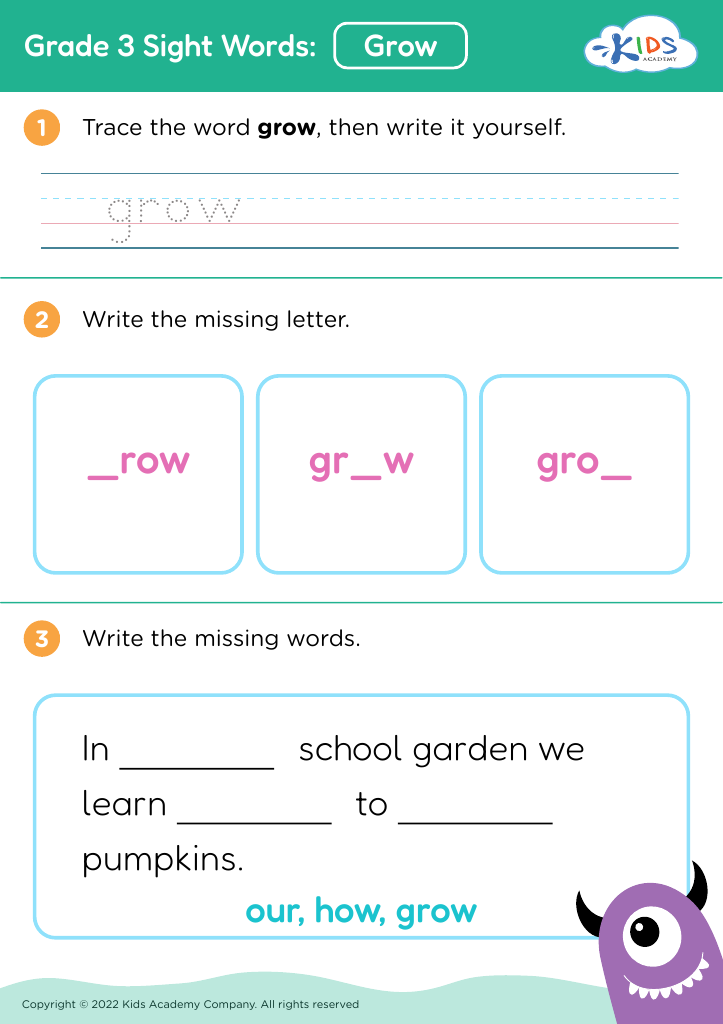








Spelling practice and mastering sight words are critical for children ages 8-9 because they form the foundational skills necessary for effective communication and comprehensive reading. Sight words are common words that children must recognize instantly. This quick recognition helps young readers achieve fluency, allowing them to read more smoothly and understand text better. Fluent reading encourages confidence and fosters a love for learning, which is essential for academic success.
At this age, children are transitioning from "learning to read" to "reading to learn." Thus, a focus on spelling and sight words aids in improving their decoding skills, enabling them to tackle more complex texts across subjects like science, history, and math. Accuracy in spelling also enhances writing skills, facilitating clearer and more effective expression of their thoughts and ideas. Moreover, early practice strengthens their ability to retain correct spelling patterns, which aids in vocabulary development—crucial for both academic achievement and everyday communication.
Parents and teachers who prioritize spelling and sight word practice help children build lifelong literacy skills. Exposure to a broad range of vocabulary also widens their understanding of the world around them, laying the groundwork for critical thinking and academic exploration in subsequent years. Overall, consistent practice in these areas underpins comprehensive educational development.