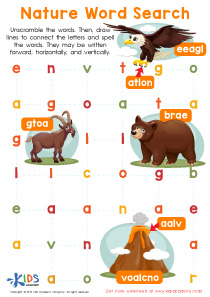
Vocabulary enhancement Sight Words Worksheets for Ages 8-9
6 filtered results
-
From - To
Boost your child's reading skills with our Vocabulary Enhancement Sight Words Worksheets designed for ages 8-9! These engaging worksheets focus on increasing vocabulary through fun and effective exercises. Children will practice recognizing and using high-frequency sight words, improving their reading fluency and comprehension. Our thoughtfully crafted activities include word matching, fill-in-the-blanks, and sentence construction, making learning enjoyable and interactive. Perfect for home or classroom use, these worksheets help build a strong foundation in language skills that are essential for academic success. Equip your child with the tools they need to excel in reading with our quality resources tailored for young learners!
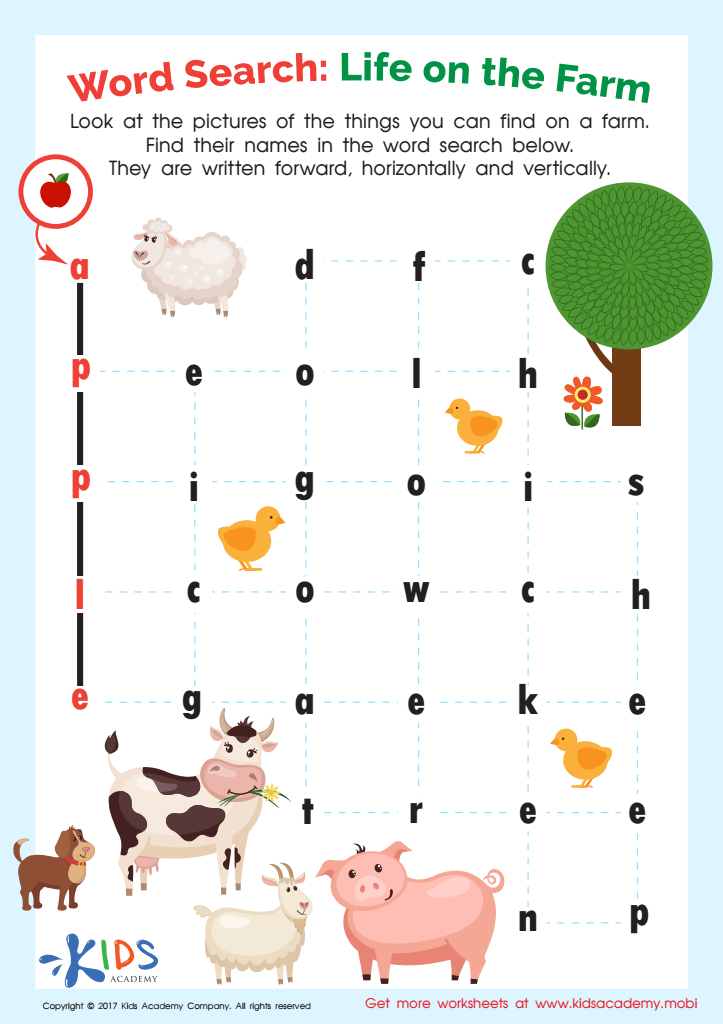
Word Search Puzzles Worksheet
 Assign to My Students







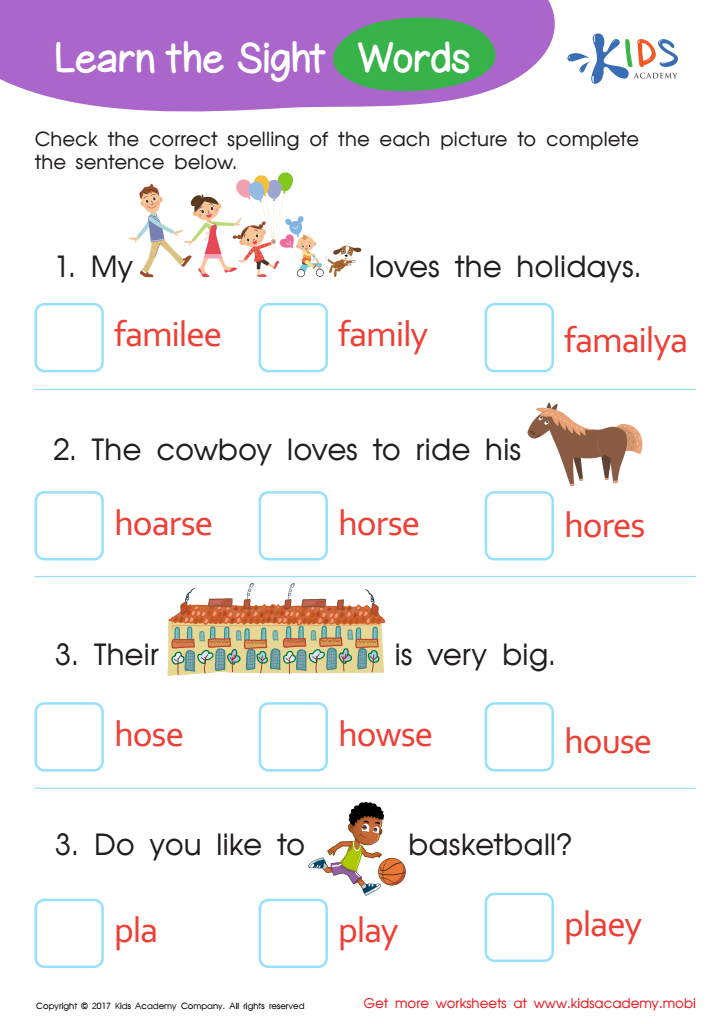
Family, Horse, House, Play Sight Words Worksheet
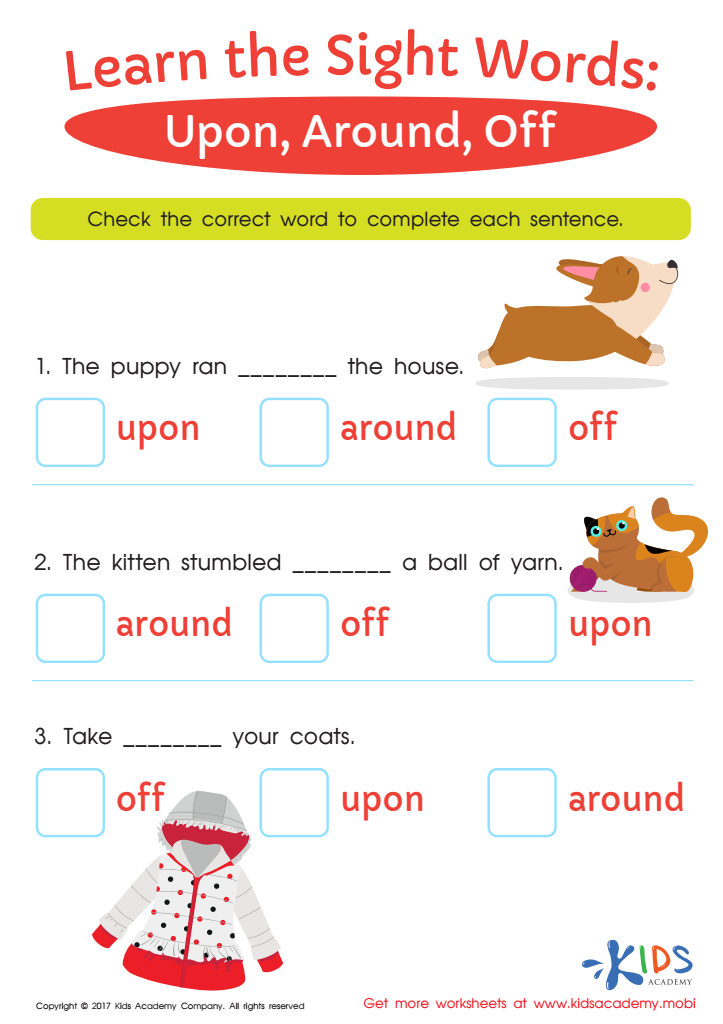
Upon, Around, Off Sight Words Worksheet
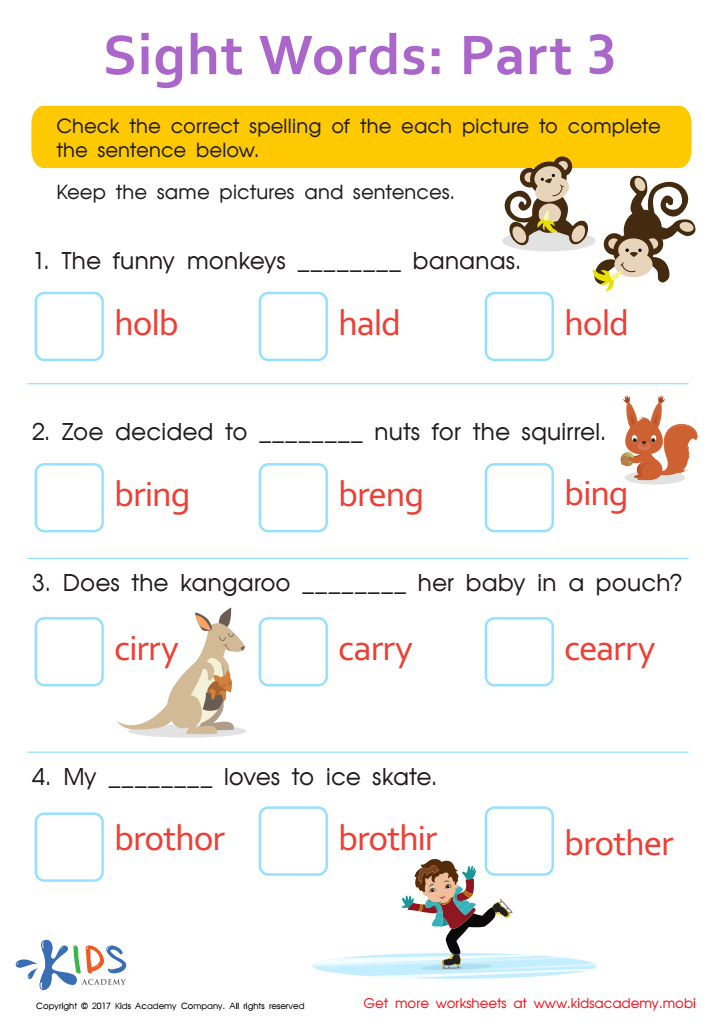
Hold, Bring, Carry, Brother Sight Words Worksheet
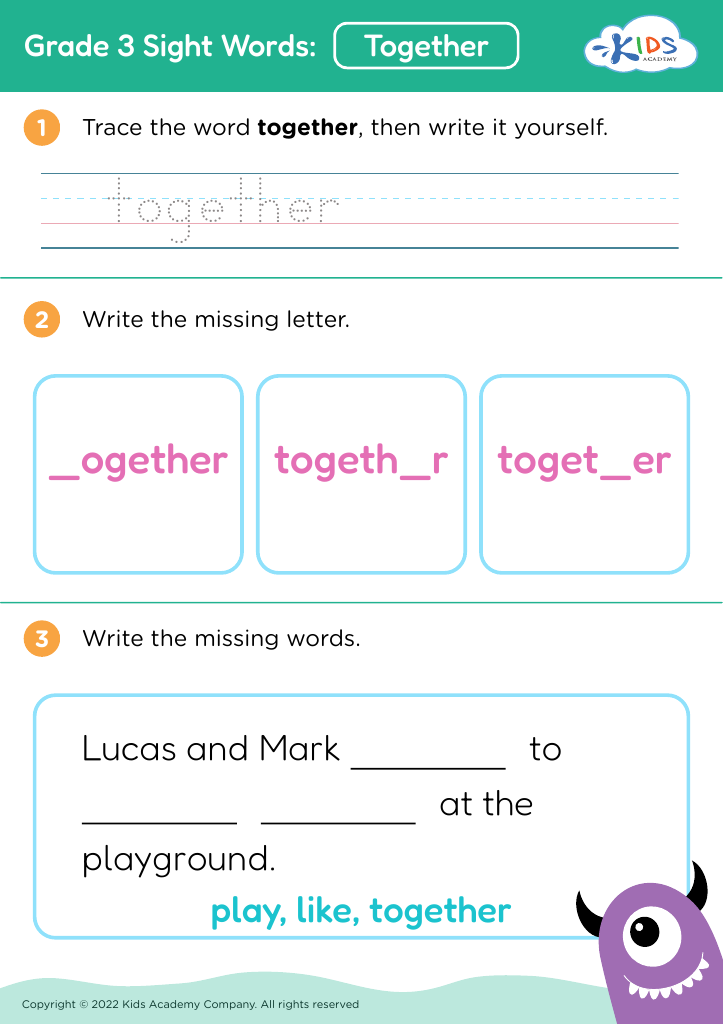
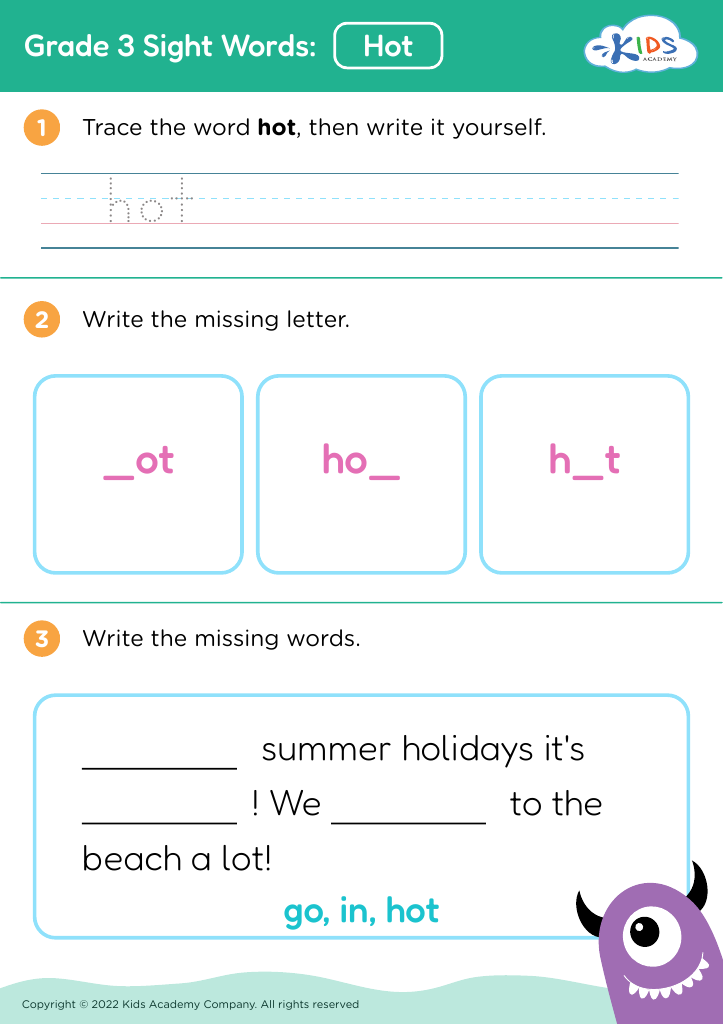








Vocabulary enhancement and a focus on sight words for ages 8-9 are crucial for a child's academic development and overall communication skills. At this age, children are transitioning from learning to read to reading to learn. A strong vocabulary allows them to grasp complex concepts across subjects such as science, social studies, and literature. Sight words—common words that children are encouraged to recognize on sight—improve reading fluency, which is essential for developing comprehension skills.
Having a robust vocabulary helps children express their thoughts more effectively and engage in meaningful discussions. Parents and teachers play a vital role in this enhancement by incorporating vocabulary-building exercises in daily routines, such as reading together, discussing new words, and implementing engaging activities that promote practice.
Moreover, strong vocabulary skills contribute to a child's confidence in communication, both in written and spoken forms. This boosts their chances of success in academic settings and social interactions. By caring about vocabulary enhancement and sight words, parents and teachers open doors for lifelong learning and facilitate a lifelong love of reading, ultimately shaping more articulate and knowledgeable individuals. Investing time in vocabulary during these formative years significantly benefits children's futures in both education and beyond.