Animal Classification Animals Worksheets for Ages 8-9
3 filtered results
-
From - To
Enhance your child's understanding of animal classifications with our engaging Animal Classification Worksheets tailored for ages 8-9. These worksheets are designed to make learning fun as students explore various categories such as mammals, birds, reptiles, amphibians, and fish. With a variety of interactive exercises, including matching, sorting, and fill-in-the-blank activities, kids will develop critical thinking skills while building their knowledge about the animal kingdom. Perfect for home or classroom use, our worksheets encourage curiosity and foster a love of science through enjoyable learning experiences. Start their journey into the fascinating world of animals today!
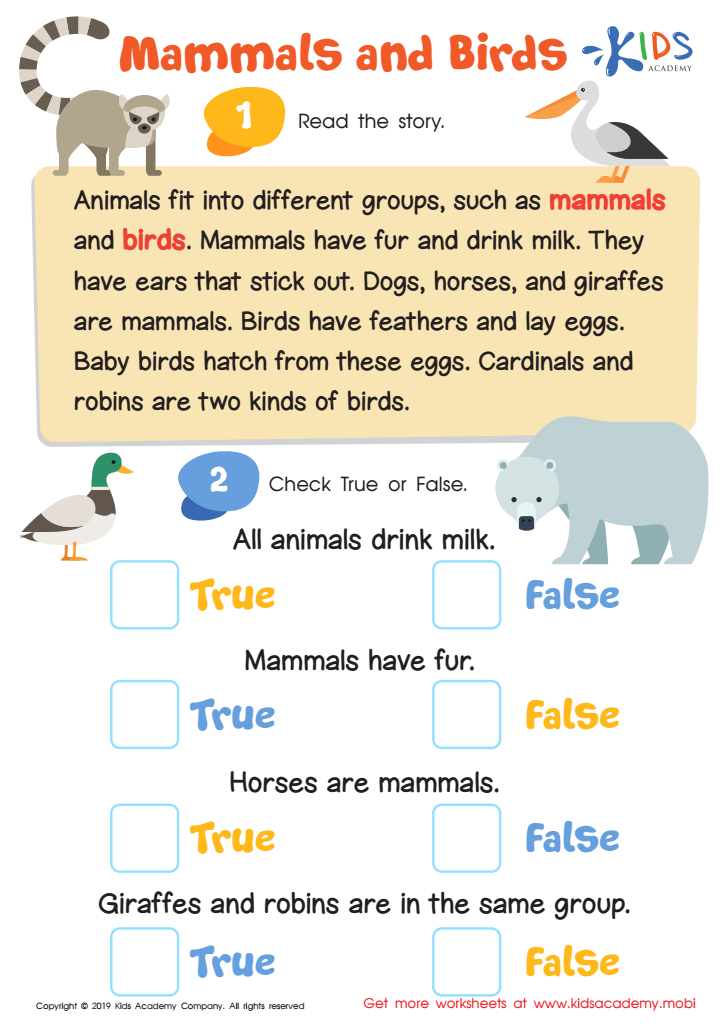
Mammals and Birds Worksheet
 Assign to My Students
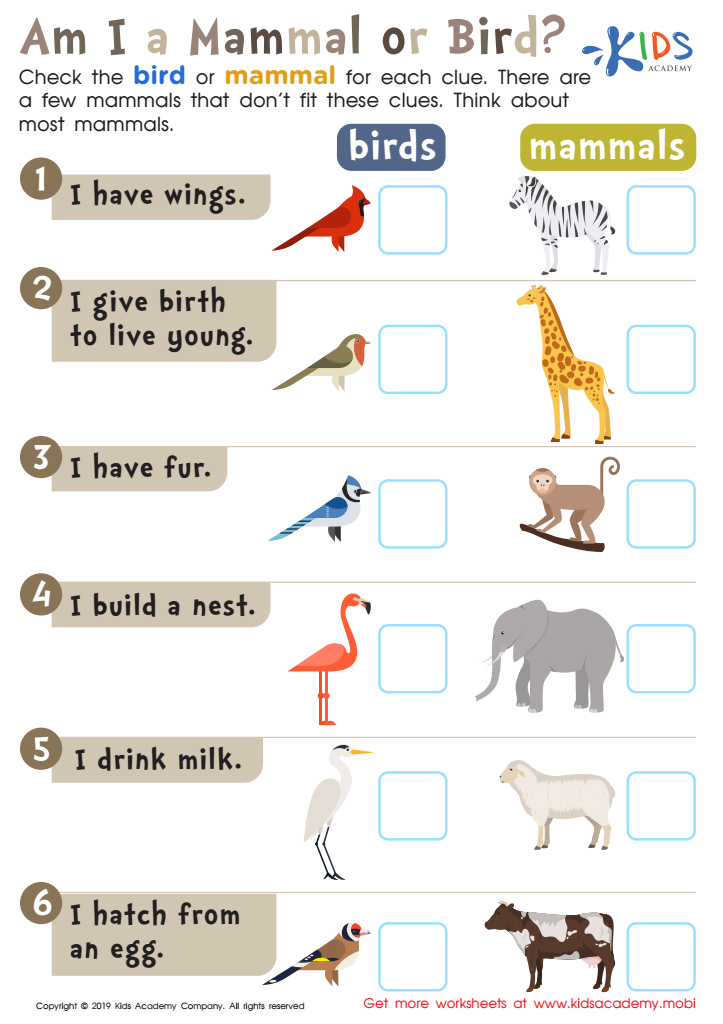
Am I a Mammal or Bird? Worksheet
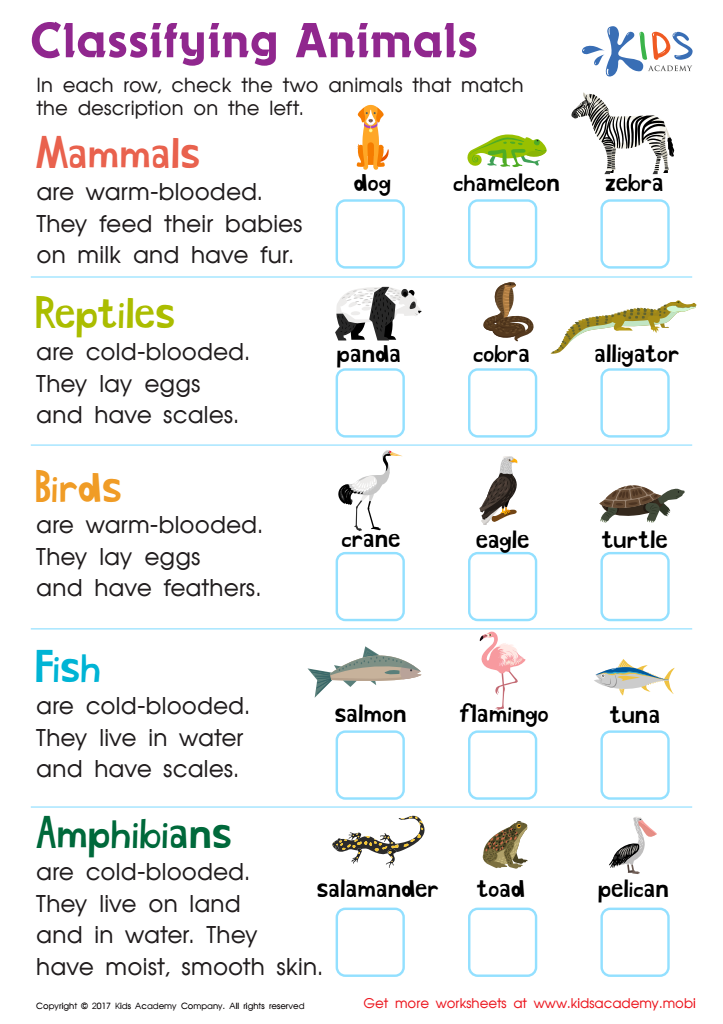
Classifying Animals Worksheet






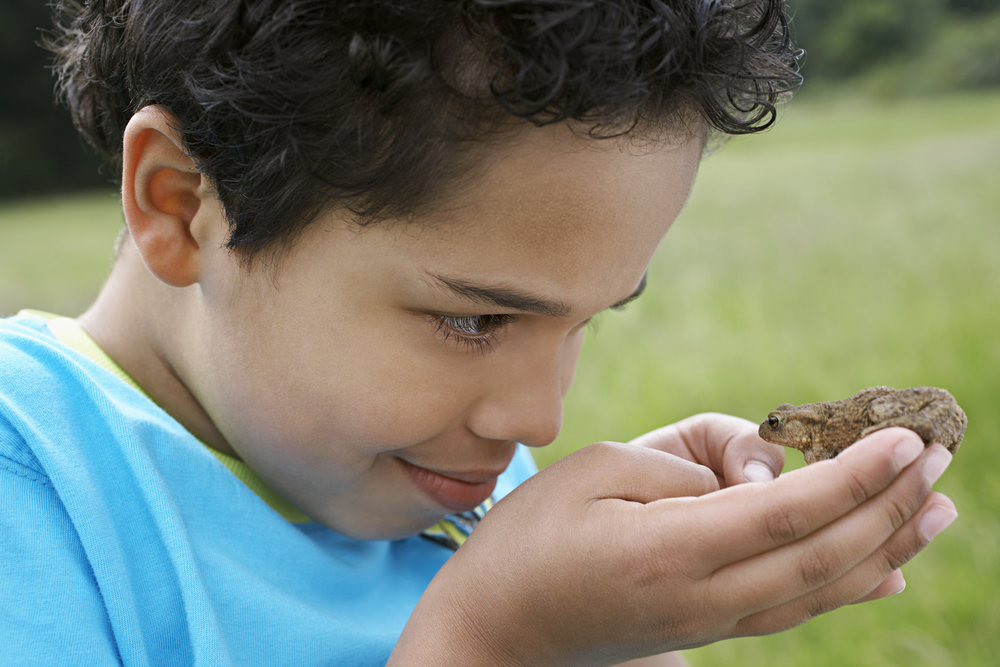
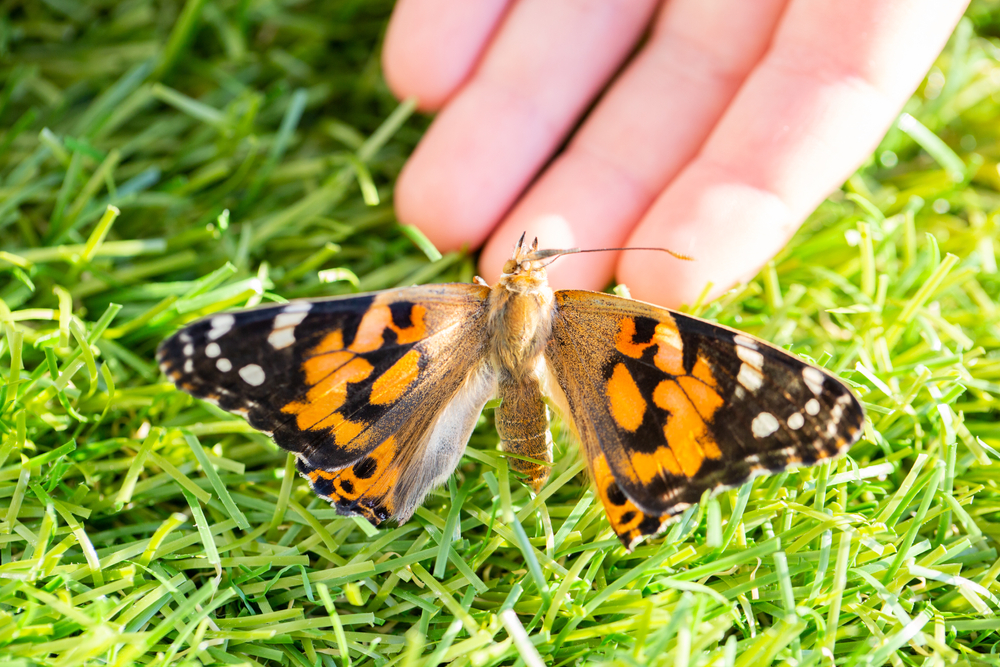
Understanding animal classification is crucial for children ages 8-9, as it lays the groundwork for critical thinking and scientific literacy. When parents and teachers encourage students to learn about how animals are grouped—into mammals, birds, reptiles, amphibians, and fish—they foster curiosity about the natural world. This classification allows children to recognize relationships among different species, understanding their shared characteristics and behaviors.
Moreover, animal classification enhances observation skills. Kids become more adept at noticing similarities and differences among animals, which cultivates analytical thinking. As they explore various habitats and ecosystems, they also learn the importance of biodiversity and the roles different animals play in their environments, fostering a sense of responsibility toward wildlife conservation.
From a broader educational perspective, lessons on animal classification engage students with various subjects, including biology, geography, and even history. It often encourages teamwork during group projects and discussions, promoting social skills. Additionally, it can ignite a lifelong interest in science and nature, benefiting students in both academic and personal development. Ultimately, by emphasizing the importance of animal classification, parents and teachers instill a deeper appreciation for life sciences and a commitment to preserving our planet’s biodiversity.








