Alphabet Recognition Letter C Worksheets for 8-Year-Olds
3 filtered results
Difficulty Level
Grade
Age
-
From - To
Subject
Activity
Standards
Our engaging "Alphabet Recognition Letter C Worksheets for 8-Year-Olds" are expertly designed to boost your child’s early reading and writing skills. These fun and educational activities focus on recognizing, tracing, and writing the letter C, featuring a mix of puzzles, matching games, and creative exercises. Each worksheet encourages children to practice letter formation while identifying the letter C in different words and contexts. By reinforcing letter recognition in a playful way, our worksheets help kids build a solid foundation for future literacy success and academic confidence. Ideal for both home and classroom use, these resources make learning enjoyable and effective.
Favorites
With answer key
Interactive
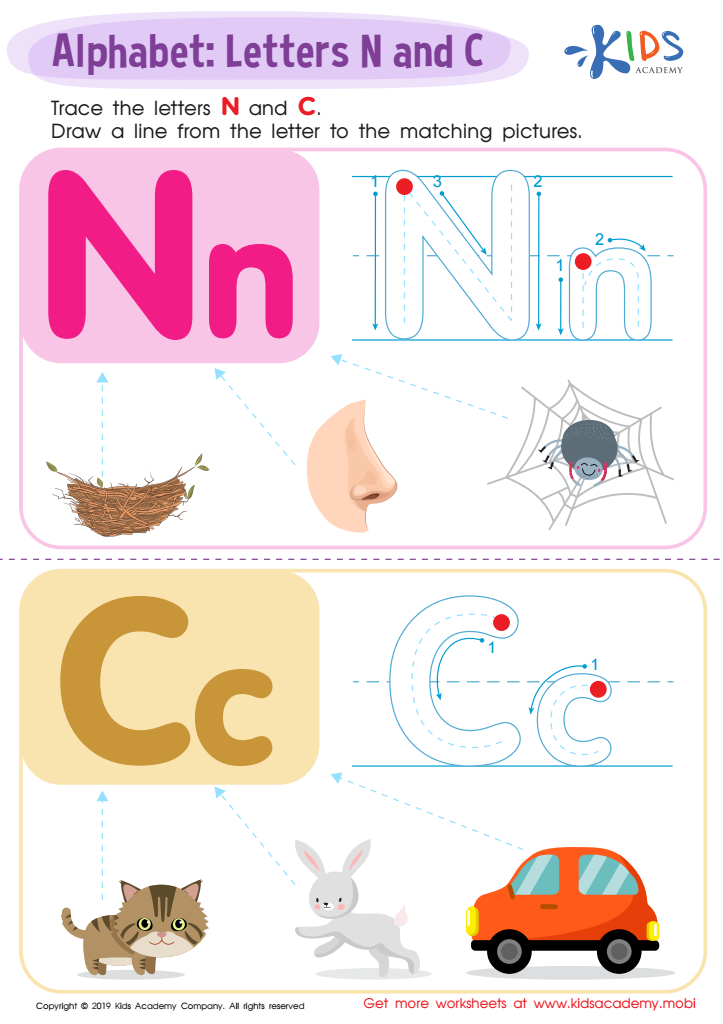
Letter N and C Tracing Worksheet
Kids can trace the letters N and C, then draw a line to the words starting with each letter. This worksheet helps them practice letter writing, distinguish capital and lowercase letters, and match pictures with the right letter. It also teaches essential skills for learning letters efficiently.
Letter N and C Tracing Worksheet
Worksheet

Letter C Tracing Page
Trace and write the letter 'C'! Put the pencil at the red dot then follow the lines – the capital letter first then the lowercase one. Cats love it and so will you! Get more free printables to practice tracing and writing.
Letter C Tracing Page
Worksheet
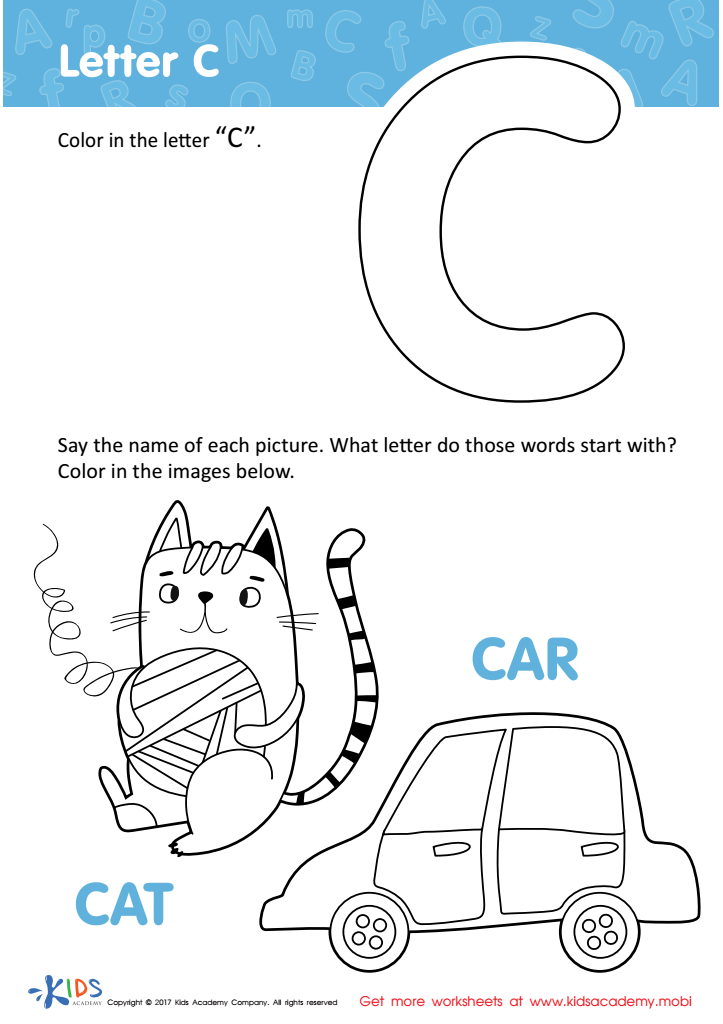
Letter C Coloring Sheet
Introduce kids to the letter 'C' with this fun coloring page! Exposing little ones to letters, words, and sounds helps them learn long before they can read. Start with simple words like 'cat' and 'car' - these are great first sight words for young children.
Download (PDF)
 Assign to My Students
Assign to My Students
Letter C Coloring Sheet
Worksheet
Join Kids Academy for Free
Who is primarily going to use this learning content?







Alphabet recognition, including understanding the letter "C," is crucial for 8-year-olds as it forms the foundation for literacy and academic success. By this age, children are transitioning from learning to read to reading to learn. Recognizing the letter "C" and its corresponding sound is essential for various language skills.
Firstly, a firm grasp of alphabetic principles helps children decode words more effectively, enhancing reading fluency. When children recognize letters and their sounds effortlessly, they can focus on comprehending texts rather than getting stuck on individual letters or words. This ease in reading promotes a love for learning and can boost self-esteem as they experience success in their efforts.
Secondly, alphabet recognition is closely linked to writing skills. Knowing how the letter "C" looks and sounds allows children to spell words correctly, aiding in their written communication. This fundamental skill also supports vocabulary development as kids can more easily add and retain new words to their lexicon.
Lastly, early mastery fosters a positive school experience, laying a strong academic foundation. Teachers and parents who emphasize the importance of alphabet recognition, including the letter "C," provide children with tools necessary for academic achievement and lifelong learning. Building these essential skills at a young age ensures that children are well-prepared for more complex literacy tasks in the future.