Compare fractions Worksheets for 8-Year-Olds
6 filtered results
-
From - To
Looking to help your child master fractions? Our "Compare Fractions Worksheets for 8-Year-Olds" offer engaging activities designed to build foundational math skills. These worksheets provide a variety of exercises to help your child understand and compare fractions through visual models and step-by-step problem-solving. Perfectly tailored for 8-year-olds, each worksheet challenges students to think critically and enhances their mathematical reasoning. Whether they’re comparing like or unlike fractions, our printable resources make learning both effective and enjoyable. Visit Kids Academy and empower your child with the confidence to excel in math!
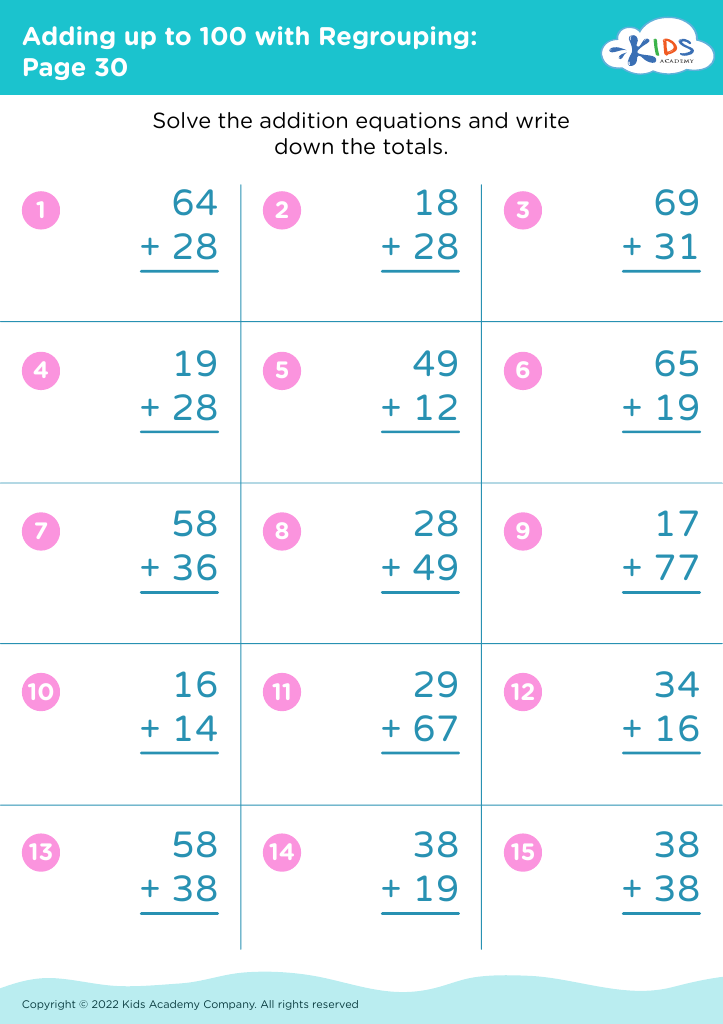
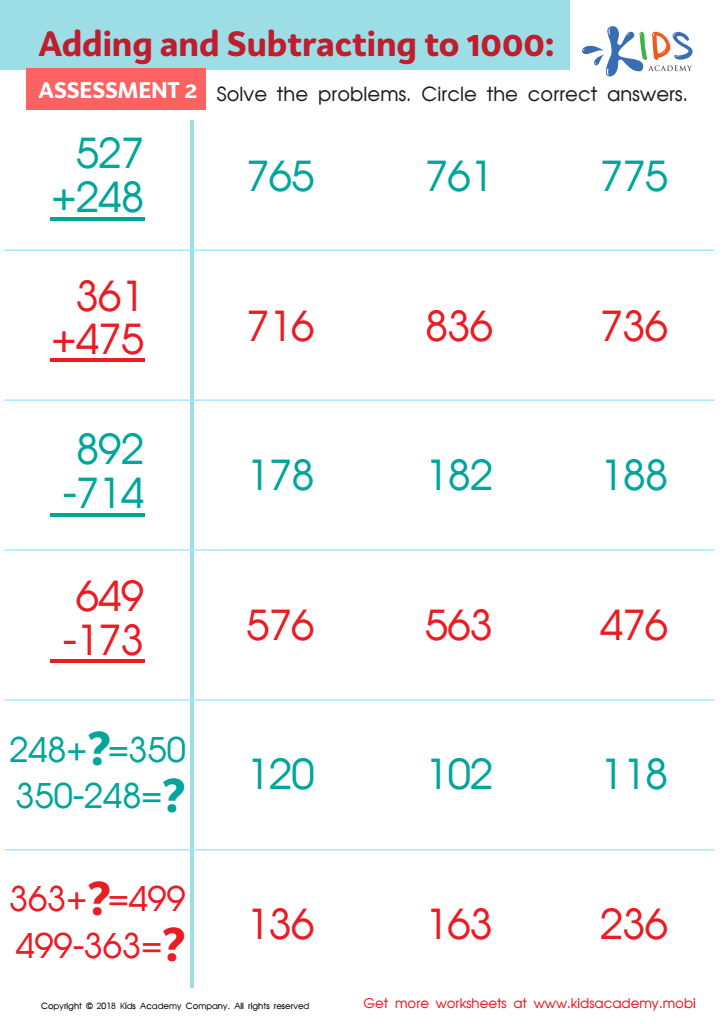
Adding and Subtracting to 1 Worksheet: Assessment 2
 Assign to My Students





Teaching 8-year-olds to compare fractions is crucial for several reasons, making it essential for both parents and teachers to care about this foundational skill.
Firstly, understanding fractions forms the basis for more complex mathematical concepts that students will encounter in higher grades, such as algebra, ratios, and percentages. Early mastery of fractions sets a strong groundwork for future success in mathematics.
Secondly, comparing fractions enhances critical thinking and problem-solving skills. Students learn to think logically and make connections, evaluating quantities and their relationships. This kind of analytical thinking is beneficial beyond mathematics, contributing to overall cognitive development.
Moreover, fractions have practical applications in daily life. Whether doubling a recipe, dividing a pizza, or understanding discounts while shopping, fractions are part of everyday decision-making. Instilling a solid grasp of fractions at a young age ensures children are equipped with essential life skills, fostering independence and confidence.
Additionally, engaging with fractions enhances number sense. It underlines the idea that numbers can be represented in various ways and helps children transition smoothly between whole numbers and parts of a whole. This flexibility with numbers can boost their arithmetic skills overall.
Therefore, prioritizing the understanding of fractions empowers children with the tools needed for academic success, practical life applications, and strong cognitive skills, warranting significant attention from both parents and educators.








