Enhance observation skills Worksheets for 8-Year-Olds
3 filtered results
-
From - To
Elevate your child's observation skills with our expertly designed worksheets for 8-year-olds at Kids Academy. These engaging and educational printables are tailored to refine critical thinking and attention to detail. Each worksheet offers a fun mix of activities, from spotting differences to sequencing events, ensuring an interactive learning experience that keeps young minds captivated. Perfect for honing the abilities crucial for academic success, these resources are a valuable addition to any educational routine. Help your child excel and observe the world with greater clarity. Explore our collection now and watch their skills flourish!
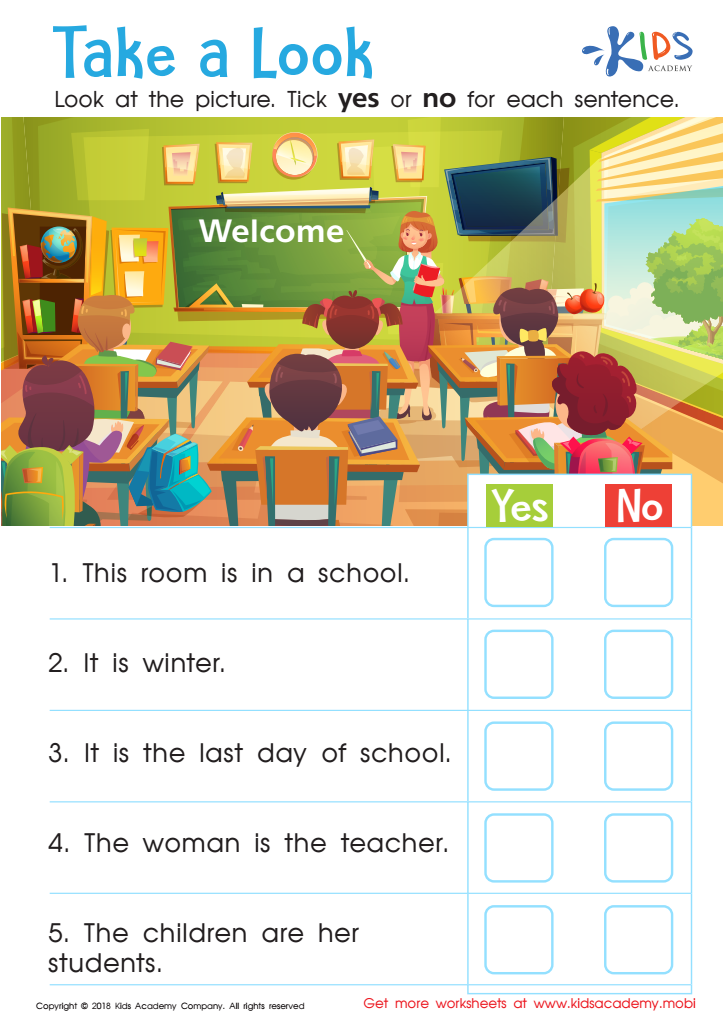
Take a Look - Part 2 Worksheet
 Assign to My Students







Parents and teachers should emphasize enhancing observation skills for 8-year-olds because it forms a foundational element of learning and cognitive development. At this age, children's brains are highly receptive and malleable, making it the perfect time to cultivate keen observational abilities. These skills enable children to notice details, patterns, and changes in their surroundings, which enhances their understanding of and interaction with the world.
First, strong observation skills directly contribute to improved academic performance. In subjects like science, math, and reading, the ability to carefully observe details fosters deeper comprehension and richer learning experiences. For example, noticing patterns in math can help kids understand concepts more thoroughly, while observing details in a story can improve reading comprehension.
Second, observation skills are critical for effective problem-solving and critical thinking. By paying close attention to their environment, children learn to analyze situations, make connections, and anticipate consequences. This kind of analytical thinking is valuable not only in academic contexts but also in everyday life, promoting independence and decision-making skills.
Lastly, enhancing observation skills nurtures creativity and curiosity. When children are encouraged to observe and inquire about the world around them, they develop a natural curiosity that drives lifelong learning. This sense of wonder opens up opportunities for creative expression and a deeper appreciation of their surroundings, enriching their overall growth and development.








