
Enhancing problem-solving abilities Worksheets for 8-Year-Olds
12 filtered results
Difficulty Level
Grade
Age
-
From - To
Subject
Activity
Standards
Unlock your child's critical thinking potential with our "Enhancing Problem-Solving Abilities Worksheets" designed for 8-year-olds. These engaging worksheets are crafted to develop essential skills like logical reasoning, creativity, and resilience through fun puzzles, brainteasers, and thought-provoking exercises. Perfect for both classroom and home use, our resources provide a balanced mix of challenge and achievement, helping young learners build confidence and proficiency in problem-solving. Encourage your child to explore different strategies and think outside the box with our expertly designed materials, setting them up for lifelong success. Visit now and start boosting your child’s problem-solving skills!
Favorites
With answer key
Interactive
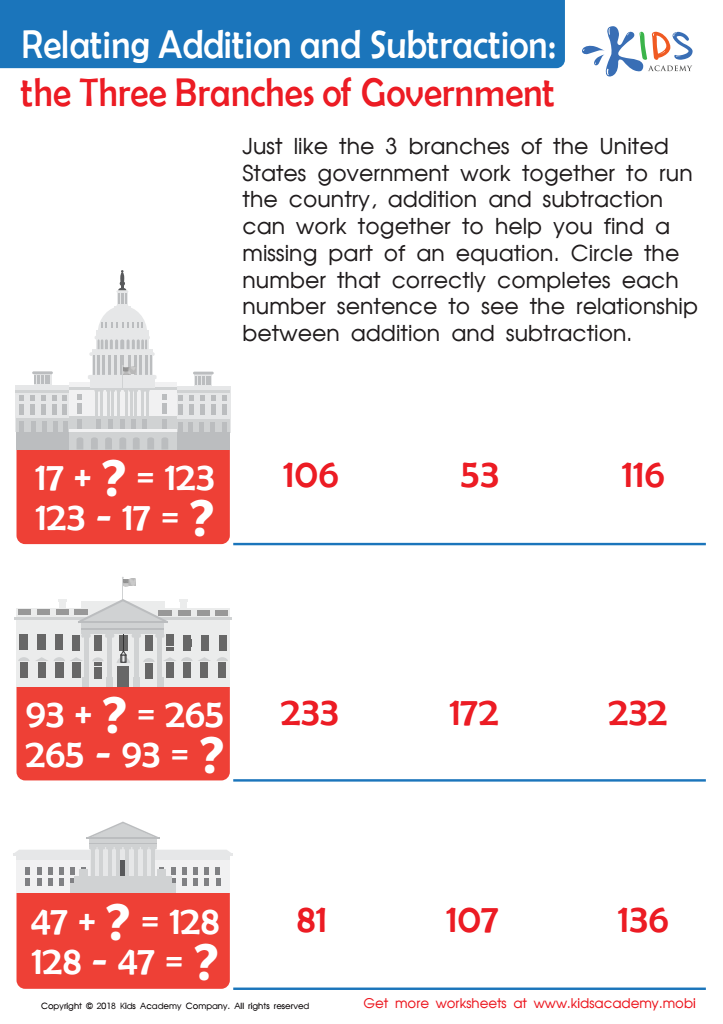
The Three Branches of Government Worksheet
Students learn best when they can relate ideas, like the three branches of government working together and addition and subtraction working together. This worksheet pairs math and social studies to help learners make an analogy. Help your child discover the relationship between addition and subtraction by completing the number sentences under each national landmark. This will help them solve tricky problems!
 Assign to My Students
The Three Branches of Government Worksheet
Worksheet
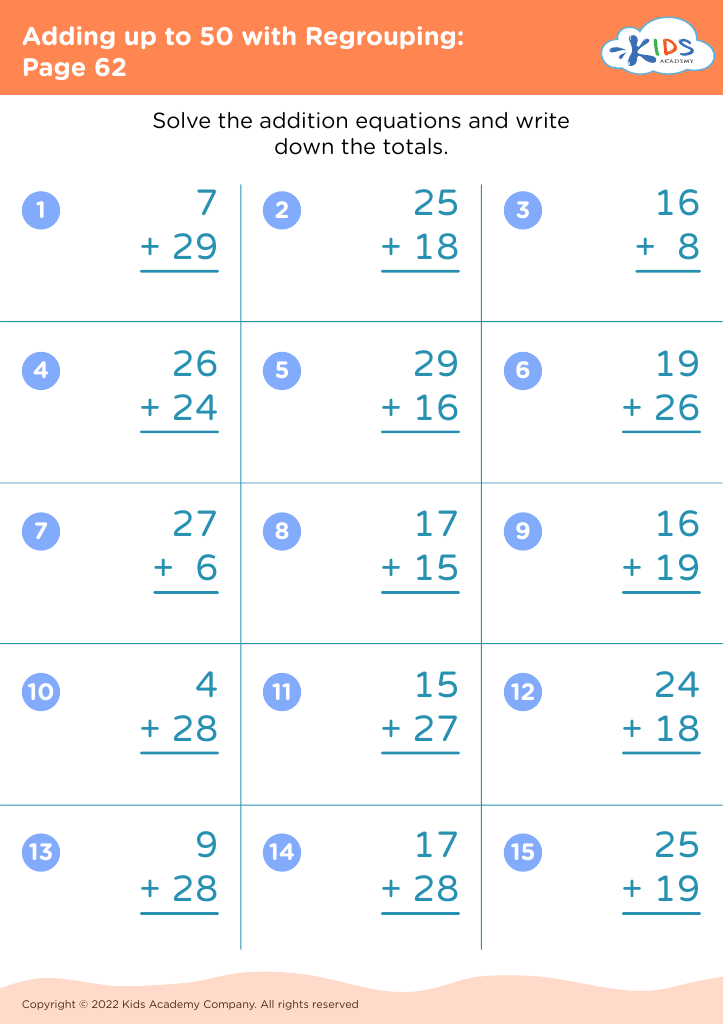
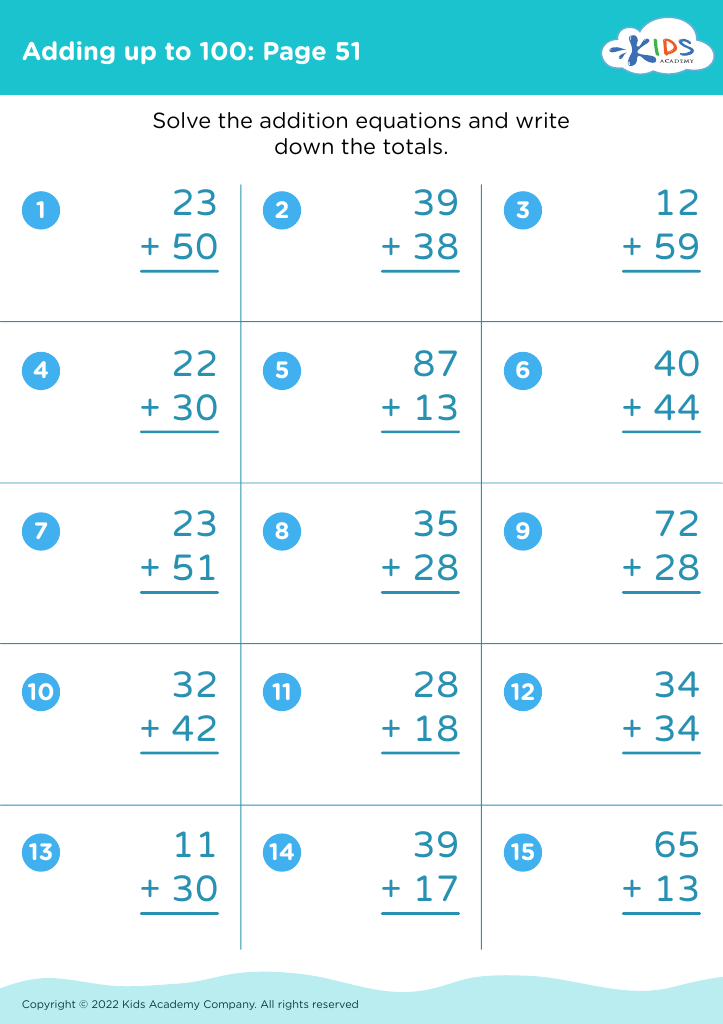
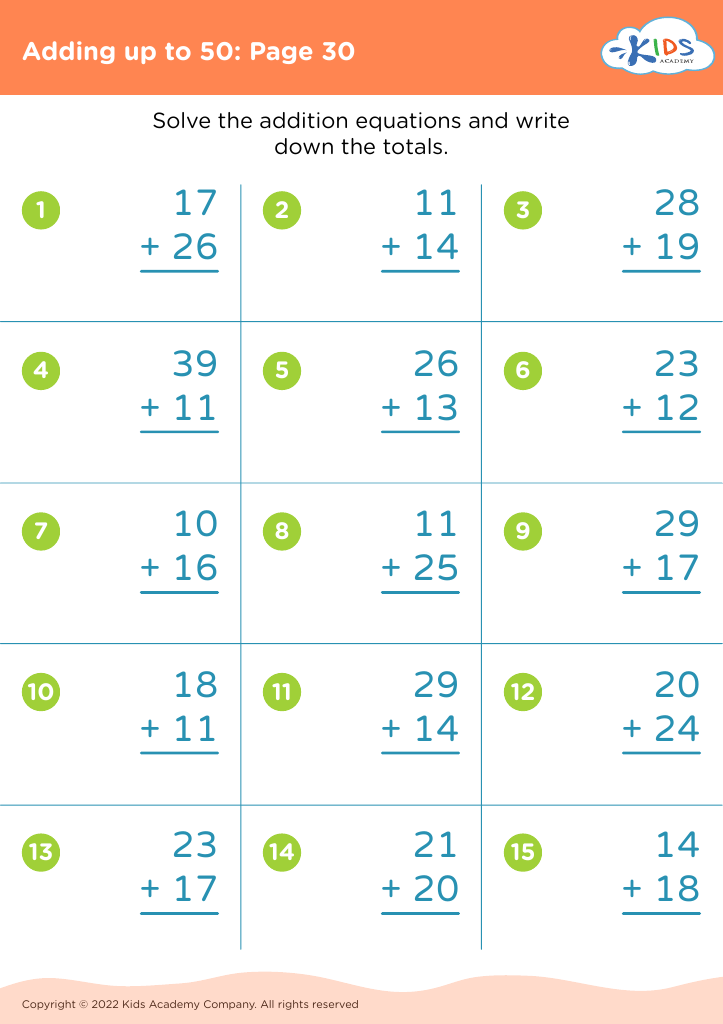
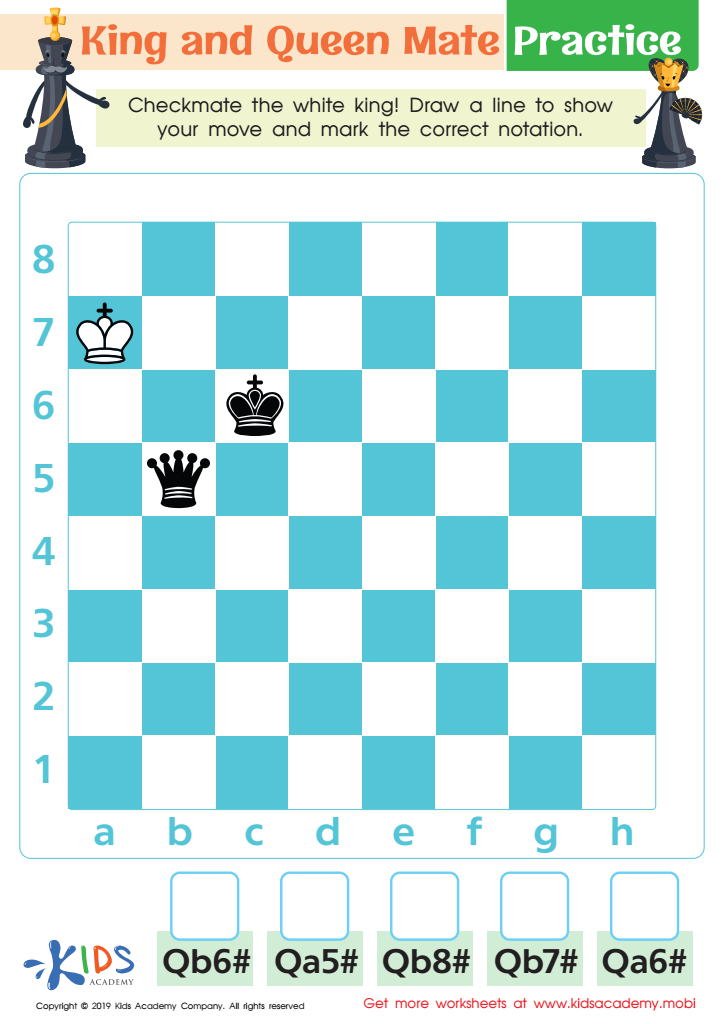
King and Queen Mate Practice Worksheet
Learning chess can open up a world of strategy, problem-solving and reasoning for your child! Our free worksheet gives them the opportunity to practice checkmating with their king and queen pieces. It also helps them develop fine-motor skills, as they draw lines to show the right moves and check off the correct notation. All without screens!
King and Queen Mate Practice Worksheet
Worksheet
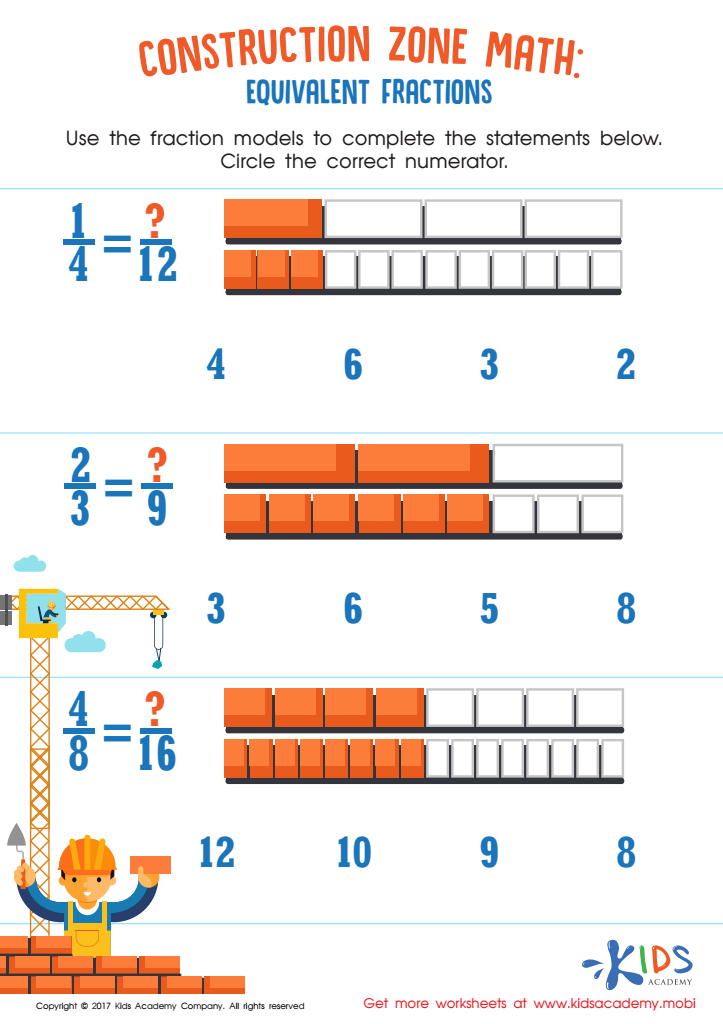
Equivalent Fractions Worksheet
Kids can easily learn fractions with pictures! This worksheet uses colorful bricks in a construction zone to help 3rd graders understand and compare fractions to find the numerator. Visuals make it simpler for kids to grasp fractions.
Equivalent Fractions Worksheet
Worksheet
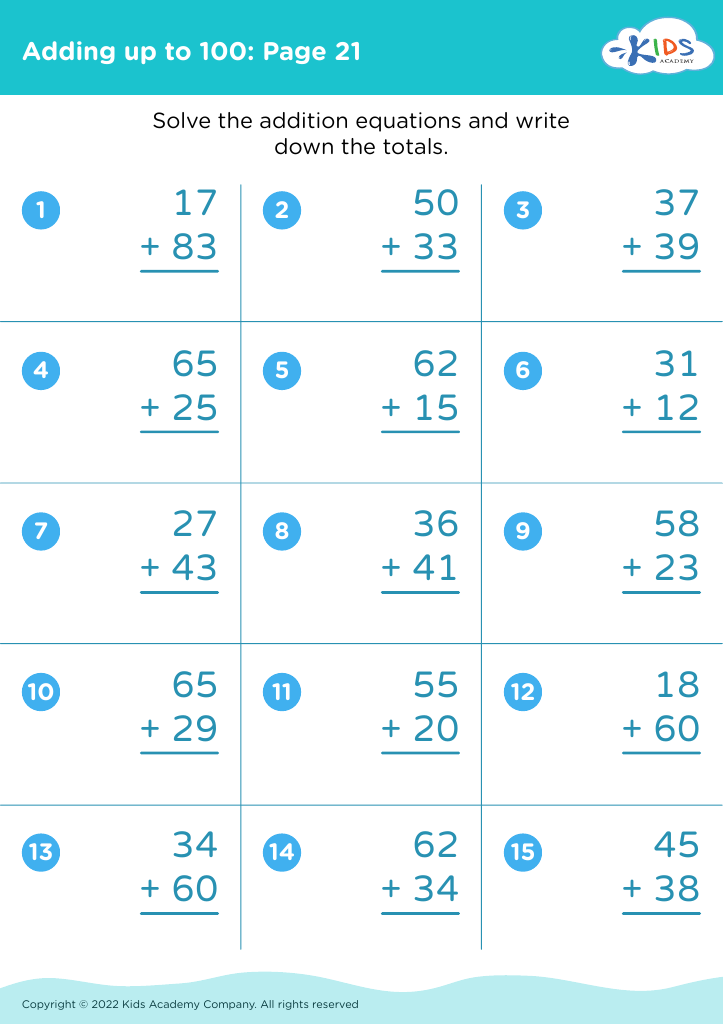
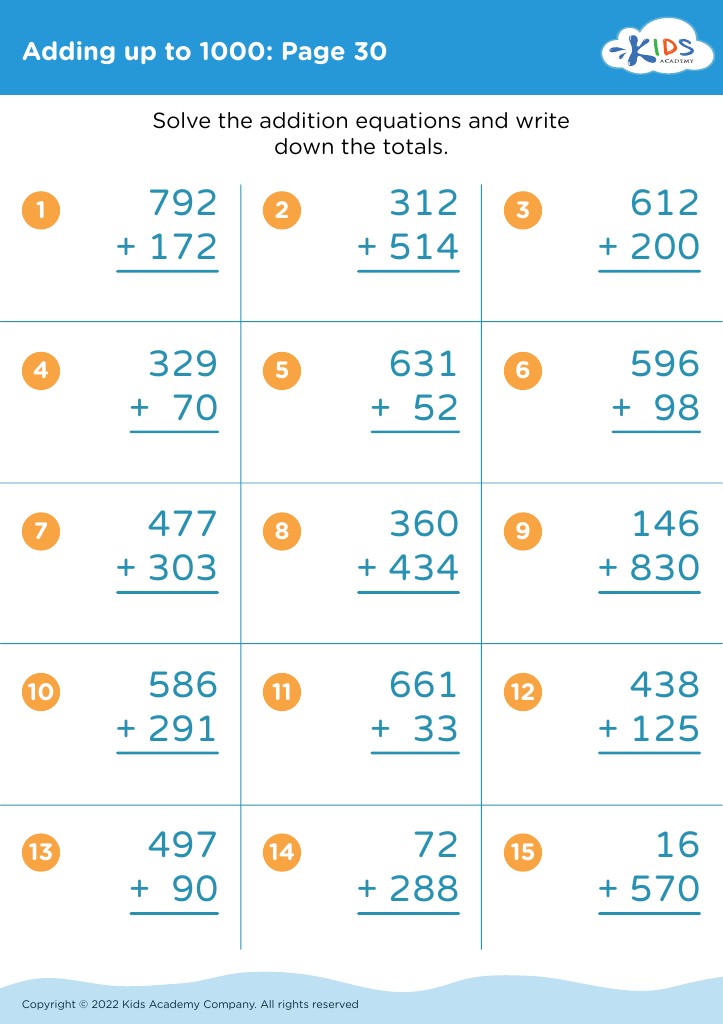
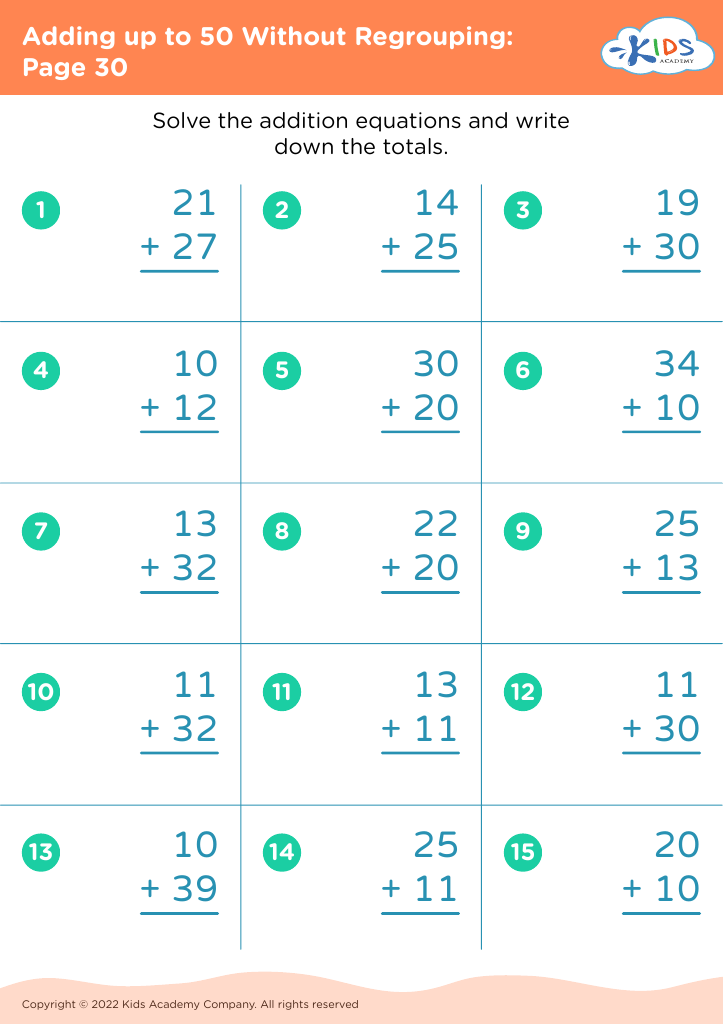
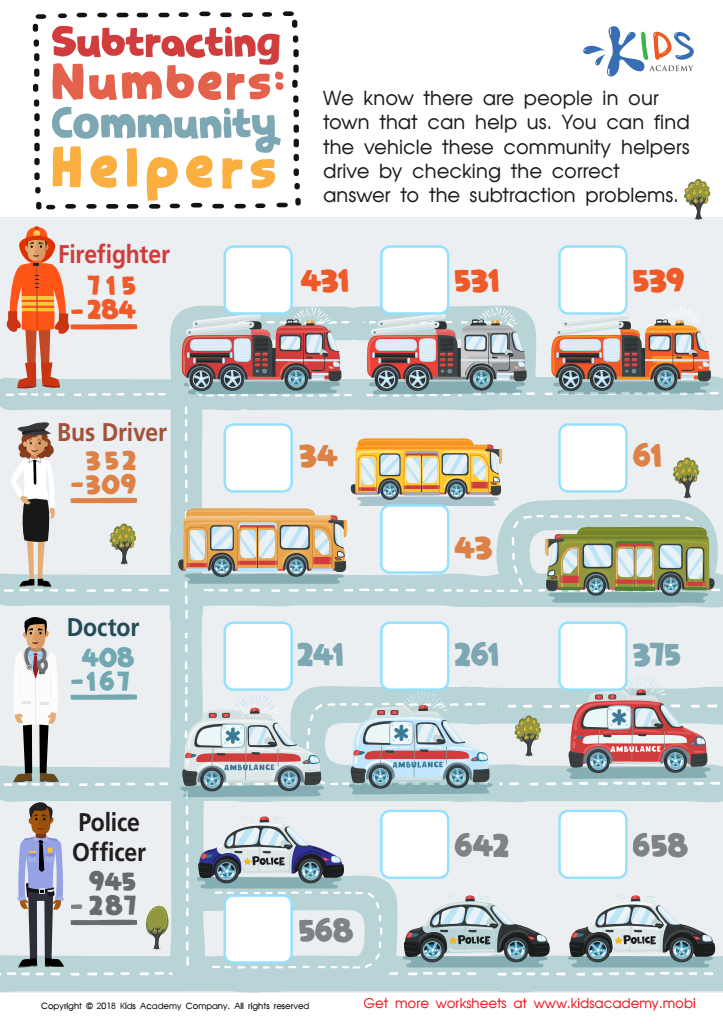
Subtracting Numbers: Community Helpers Worksheet
A community is an area of different people, buildings and other elements. People in a community have varied roles and work together to make it thrive. Ask your child what community helpers they know and how they help. Match the helpers to their vehicles by solving subtraction problems!
Subtracting Numbers: Community Helpers Worksheet
Worksheet
Learning Skills
Join Kids Academy for Free
Who is primarily going to use this learning content?




.jpg)
.jpg)


Enhancing problem-solving abilities for 8-year-olds is crucial as it directly impacts their cognitive development and future capacity to tackle challenges. Early engagement in problem-solving fosters critical thinking, resilience, and independence. For parents and teachers, cultivating these skills means empowering children to navigate everyday hurdles with confidence and creativity, from resolving playground conflicts to managing academic difficulties.
Developing strong problem-solving abilities at this age lays a foundation for lifelong learning. Children begin to understand that challenges have multiple solutions and learn to approach problems methodically. This skillset is invaluable not just academically but in every aspect of life, influencing decisions and adaptability in various situations.
Emotionally, problem-solving skills help children handle frustration and setbacks more effectively. These abilities instill a sense of accomplishment and boost self-esteem, crucial for their emotional well-being and social development. Instead of feeling overwhelmed by difficulties, children are more likely to feel capable and resourceful.
For teachers, integrating problem-solving exercises into the curriculum makes learning interactive and engaging, stimulating curiosity and active participation. For parents, encouraging problem-solving at home through games and discussions presents opportunities to bond and observe their child's growth closely. Ultimately, these skills equip children to become thoughtful, autonomous individuals capable of contributing innovatively to society.








