
Sound-letter association Worksheets for 8-Year-Olds
5 filtered results
Difficulty Level
Grade
Age
-
From - To
Subject
Activity
Standards
Explore our engaging Sound-Letter Association Worksheets designed specifically for 8-year-olds! These printable resources enhance phonemic awareness, helping children connect sounds to corresponding letters. Our fun activities and exercises promote literacy skills essential for reading and writing, making learning enjoyable. Each worksheet encourages kids to practice letter recognition, differentiate between sounds, and build a strong foundation for future reading success. Perfect for at-home learning or classroom activities, these worksheets are easy to use and adaptable for various learning styles. Ignite your child's passion for reading with our comprehensive sound-letter association materials and watch their confidence grow!
Favorites
With answer key
Interactive
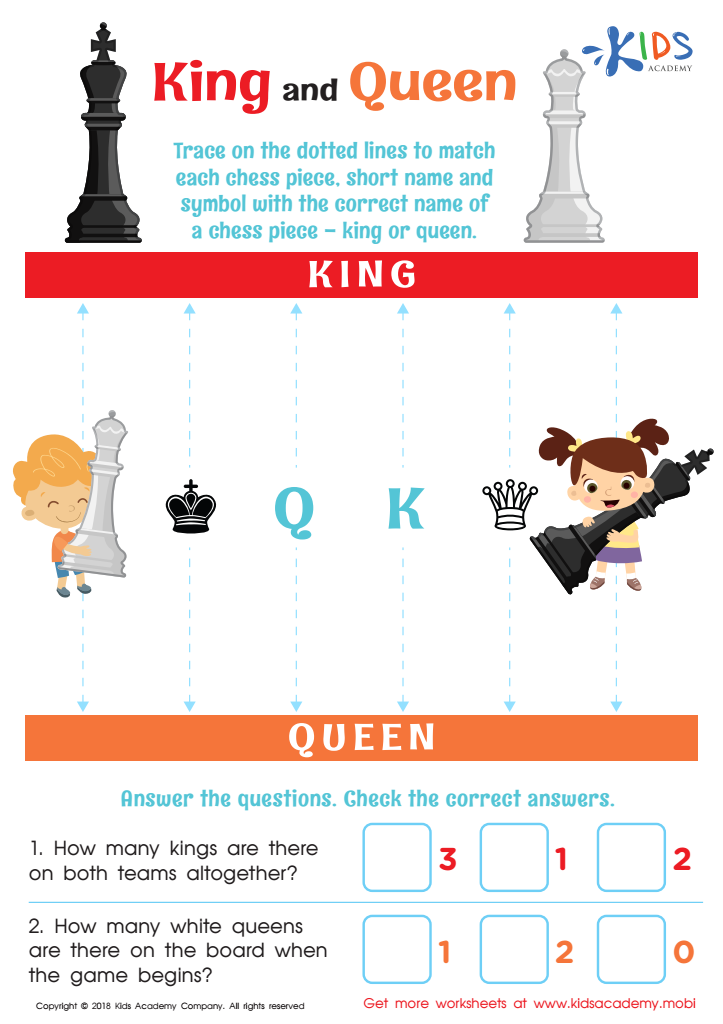
King and Queen Worksheet
Instruct your kids to trace the dotted lines to match each chess piece, short name, and symbol with either king or queen.Answer the questions at the bottom and check the answers. This exercise will help your children to differentiate between a king and queen chess piece and know their symbols.
King and Queen Worksheet
Worksheet
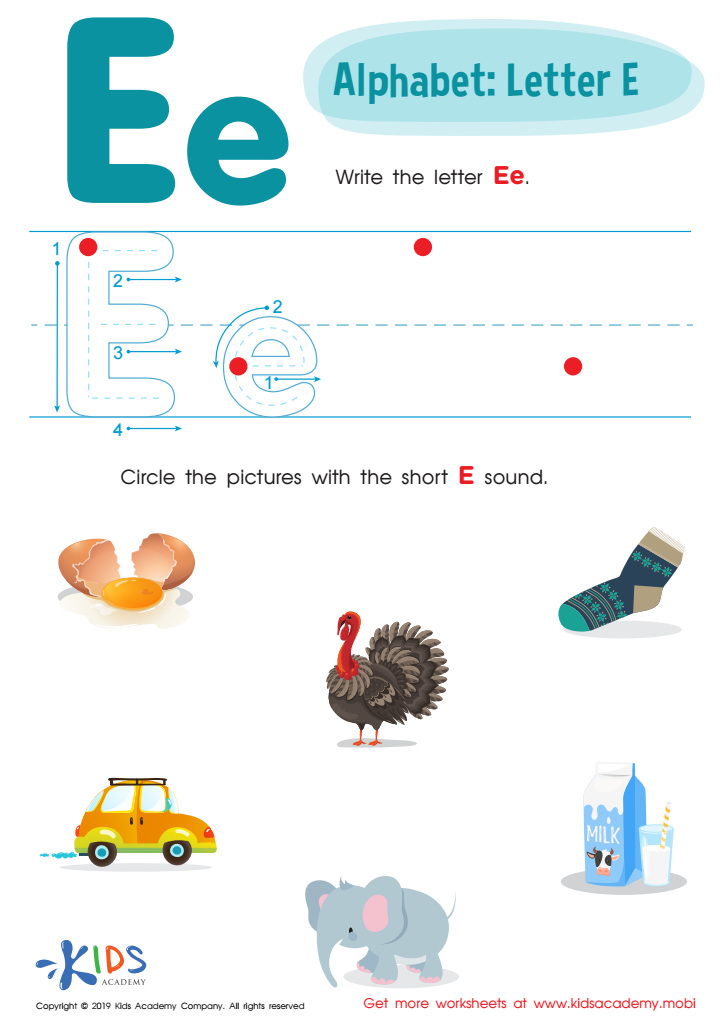
Letter E Tracing Worksheet
Students trace and write uppercase and lowercase letter E. They sound out "E" words, choosing those with short "E" sounds. Preschoolers identify the difference between the 'E' sounds in words like "egg" and "turkey." A tracing sheet helps them to understand.
Letter E Tracing Worksheet
Worksheet
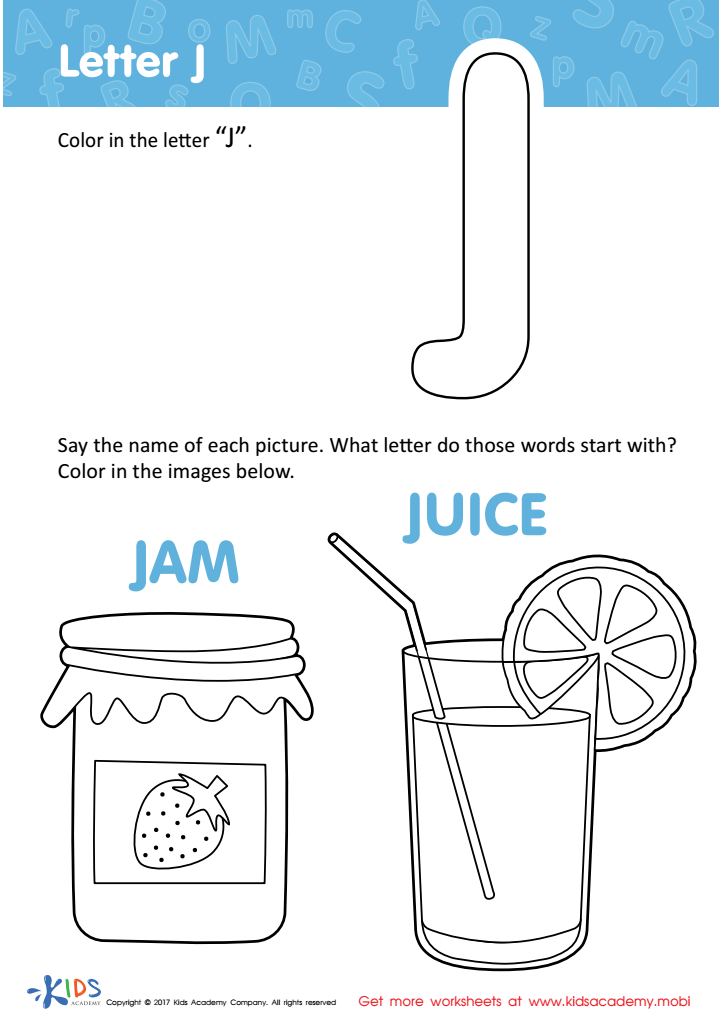
Letter J Coloring Sheet
Practice the letter 'J' with your little one with this fun coloring page! Pictures of jar, juice, jam and jelly make it an enjoyable experience for kids. Learning the letter and coloring is fun for even the youngest learners.
Download (PDF)
 Assign to My Students
Assign to My Students
Letter J Coloring Sheet
Worksheet
Join Kids Academy for Free
Who is primarily going to use this learning content?






Sound-letter association, also known as phonics, is crucial for 8-year-olds as they develop reading and writing skills. At this age, children are becoming proficient readers, and understanding the connection between sounds (phonemes) and their corresponding letters (graphemes) significantly influences literacy development.
Firstly, effective sound-letter association enhances decoding skills, allowing children to sound out words independently. This ability fosters confidence, reducing frustration and promoting a love for reading. When children can decode unfamiliar words, they are more likely to engage with a variety of texts, expanding their vocabulary and comprehension.
Secondly, mastering sound-letter associations assists with spelling. Children who understand how sounds relate to letters can better predict spelling patterns and phonetic rules. This lays the groundwork for strong writing skills as they begin to express their thoughts clearly and correctly.
Moreover, phonics instruction can be an integral part of addressing diverse learning needs. Some students may struggle with reading and can benefit from targeted interventions that focus on sound-letter relationships. Both parents and teachers have a pivotal role in providing consistent support and practice, ensuring children achieve greater literacy success for their future academic endeavors. It's a fundamental building block that supports lifelong learning and communication.








