Understanding seasons Worksheets for 8-Year-Olds
4 filtered results
-
From - To
Discover our engaging "Understanding Seasons Worksheets for 8-Year-Olds"! These captivating printables are designed to help young learners grasp the changes that occur throughout the year. By exploring various seasonal activities and weather patterns, children enhance their observational skills and deepen their understanding of the natural world. These worksheets blend fun and education with vibrant illustrations and interactive tasks, making learning about seasons an exciting adventure. Perfectly tailored for 8-year-olds, they encourage curiosity and foster a love for science. Download now to provide your child with a solid foundation in seasonal changes and cycles.
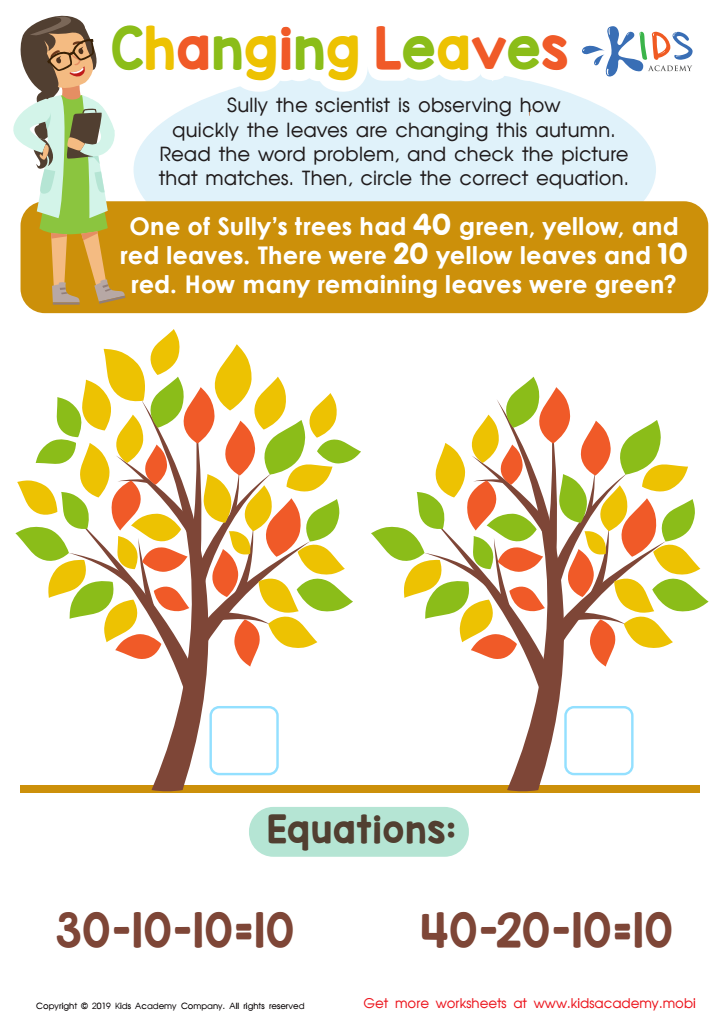
Changing Leaves Worksheet
 Assign to My Students






Understanding seasons is fundamental for 8-year-olds as it enriches their grasp of the natural world around them. For parents and teachers, fostering this knowledge is crucial for several reasons. Firstly, it anchors students’ understanding of time and climate, helping them predict and prepare for changes in weather, appropriate clothing, and seasonal activities. Knowledge of seasons also lays the groundwork for later learning in science; it's a stepping stone to grasping more complex Earth science concepts such as the Earth's rotation, orbit, and how these relate to climate and ecosystems.
Additionally, understanding seasons promotes connectedness with nature, which is crucial for fostering a sense of environmental stewardship early on. Children who know why trees shed leaves in autumn or why flowers bloom in spring are more likely to appreciate and care for their natural surroundings.
From a cognitive development viewpoint, learning about seasons boosts observational and critical thinking skills. Simple, hands-on activities like charting daily temperatures, observing plant changes, or noting daylight variations support learning through inquiry and evidence-gathering.
Finally, aligning curriculum with seasons allows for seasonal themes in art, literature, and mathematics, thereby making learning more contextual and engaging. In essence, teaching 8-year-olds about seasons is critical not just for academic growth but for overall cognitive, ecological, and emotional development.








