Recognizing Patterns Adding 2-digit Numbers Worksheets for 8-Year-Olds
3 filtered results
-
From - To
Introduce your 8-year-old to the enjoyment and educational benefits of our "Recognizing Patterns Adding 2-digit Numbers Worksheets." Specifically designed for this age group, these engaging worksheets help solidify addition skills and enhance pattern recognition, making math both fun and accessible. Perfect for use at home or in the classroom, our worksheets encourage problem-solving and logical thinking. Each worksheet features a variety of exercises to keep young learners motivated and challenged, ensuring they grasp essential math concepts. Boost your child's mathematical confidence and capabilities today with Kids Academy’s expertly crafted addition worksheets!
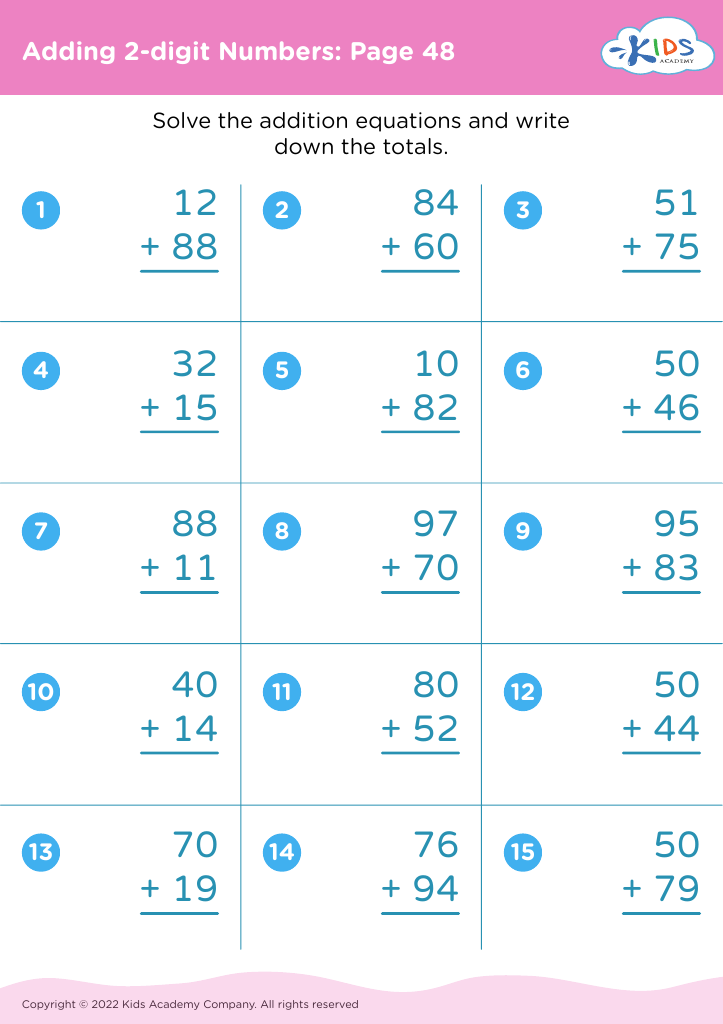
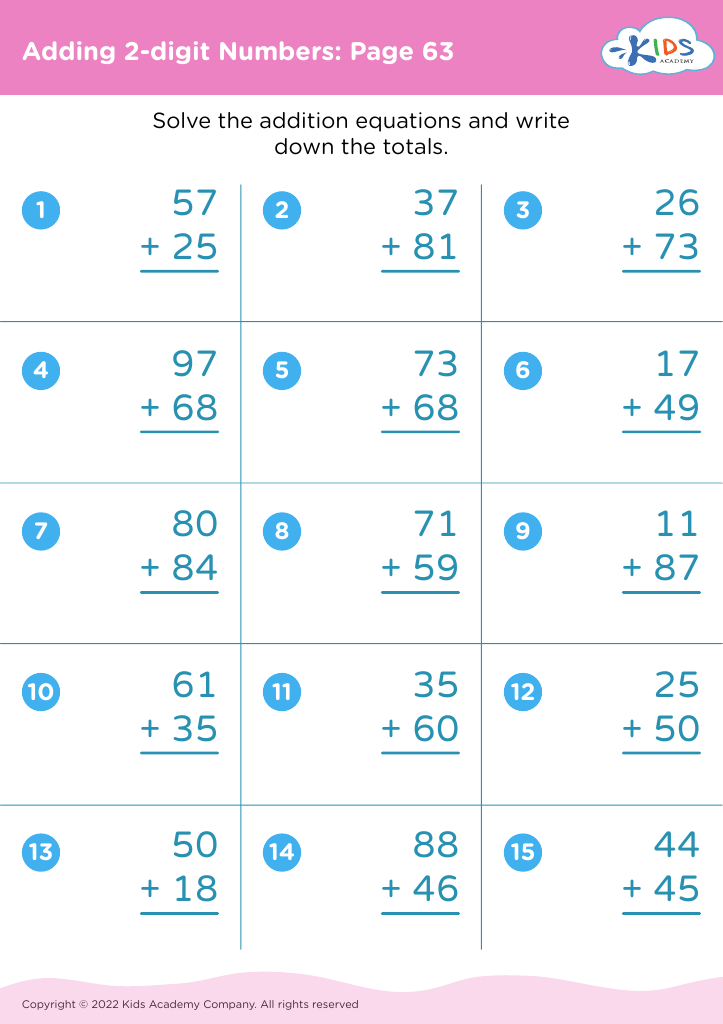
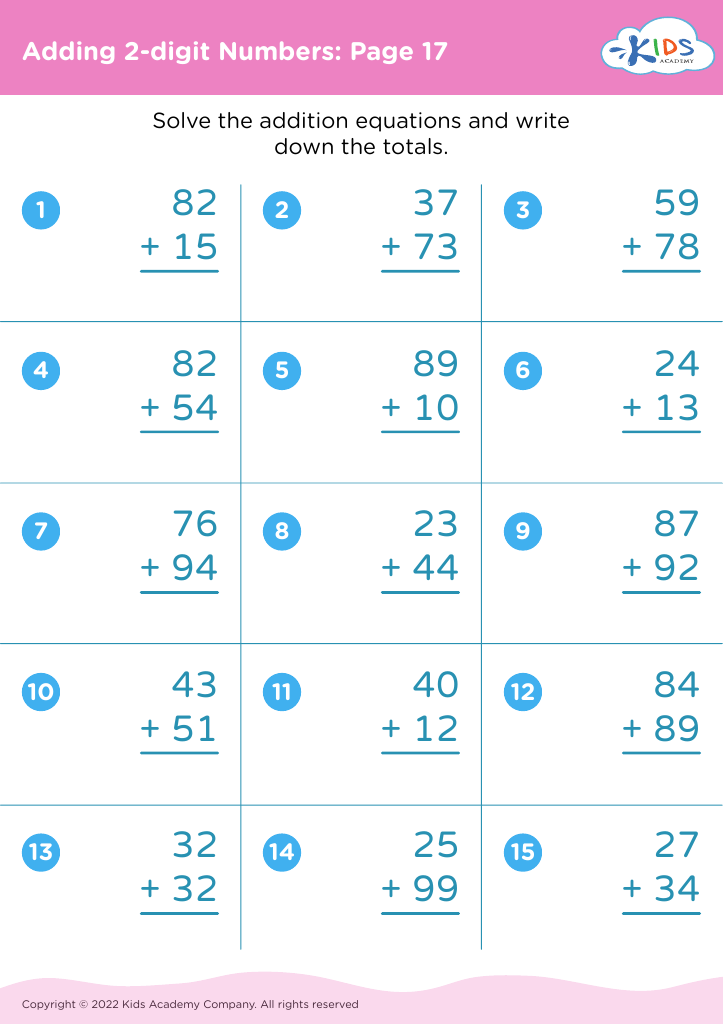








Recognizing and practicing adding 2-digit numbers is essential for 8-year-olds as it lays the groundwork for essential math skills and cognitive development. By identifying patterns in addition, children start understanding number relationships and place value, which are foundational for advanced math concepts. For instance, recognizing that adding numbers often results in a carry-over promotes an analytical approach to problem-solving.
Parents and teachers should emphasize these patterns because it enhances mental math abilities. When students see patterns, they can predict outcomes more easily and solve problems faster. This skill translates into everyday tasks, such as counting money or measuring ingredients in a recipe, fostering independence and confidence in these activities.
Additionally, pattern recognition improves logical thinking and analytical skills. It encourages children to think critically and make connections, supporting other academic areas such as science and language arts. Socially, recognizing and celebrating successes in pattern recognition boosts self-esteem and motivates continued efforts in learning.
By integrating these exercises into early education, parents and teachers help children develop a love for learning and a strong mathematical foundation, which are critical for their academic and life-long success. Invest time in reinforcing these skills to create competent and confident young learners.








