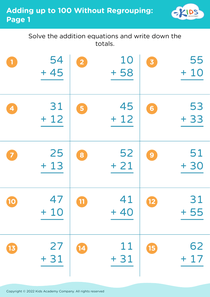
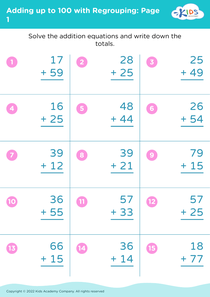
Basic Math Skills Adding up to 100 Misc Worksheets for 8-Year-Olds
5 filtered results
-
From - To
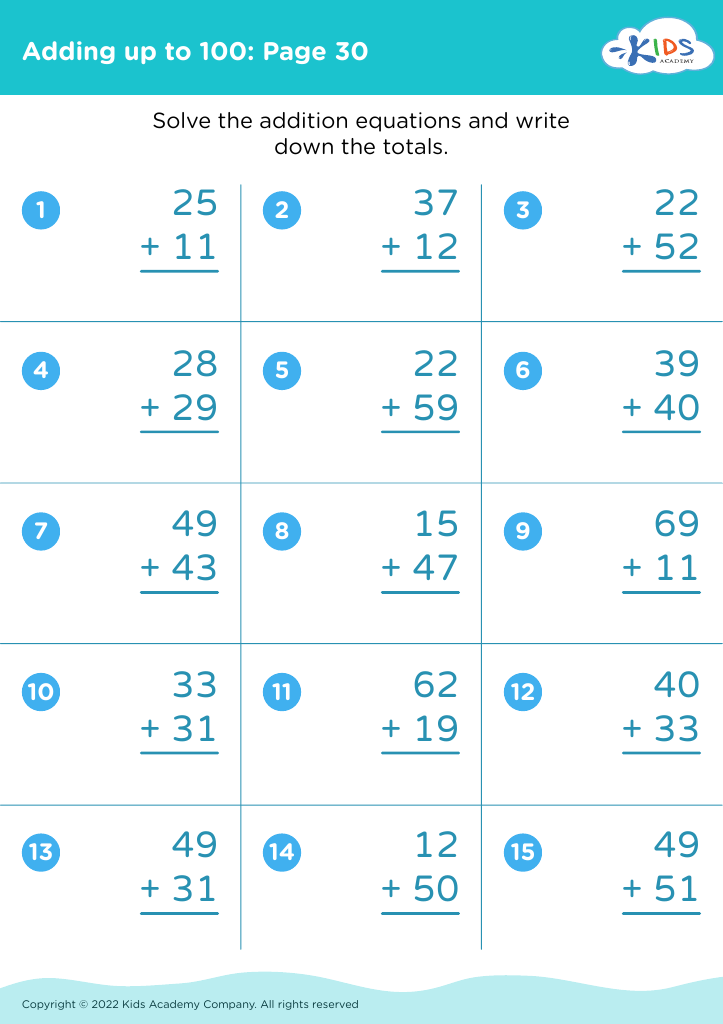
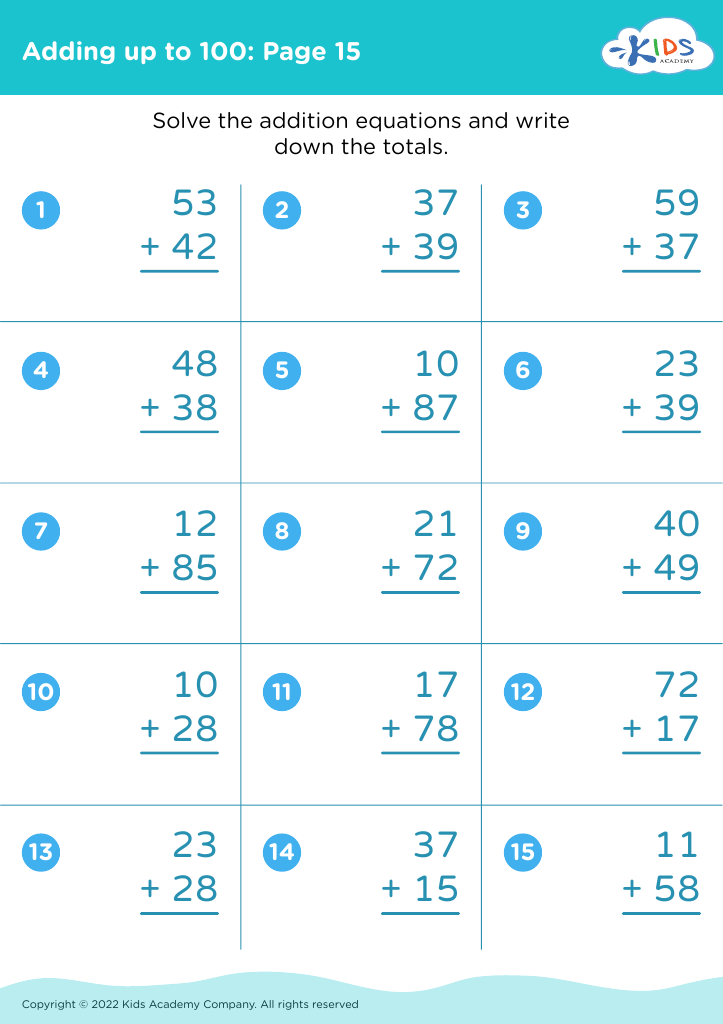
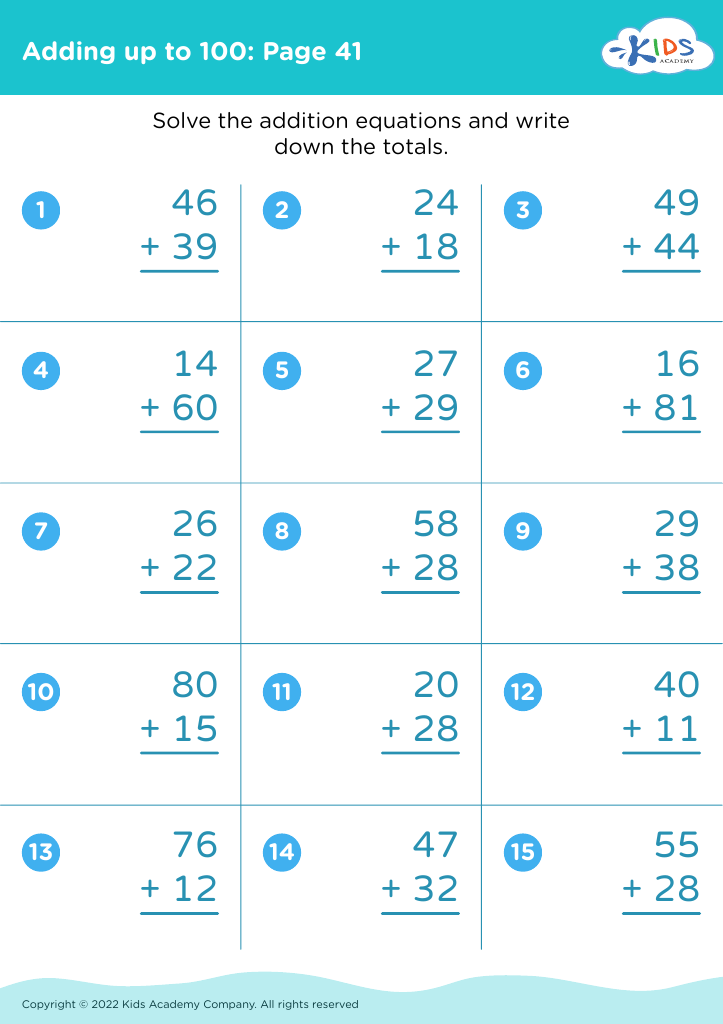
Discover an engaging collection of "Basic Math Skills: Adding Up to 100" worksheets specially designed for 8-year-olds. These fun and interactive activities help young learners master essential addition concepts while developing confidence in their math abilities. Each worksheet features a range of problems that challenge children to add numbers, reinforcing their understanding of sums up to 100. Perfect for classroom use or at-home practice, these worksheets cater to different learning styles to ensure every child thrives. Dive into a world of numbers and watch your child's math skills flourish with our carefully curated resources focused on foundational math proficiency!
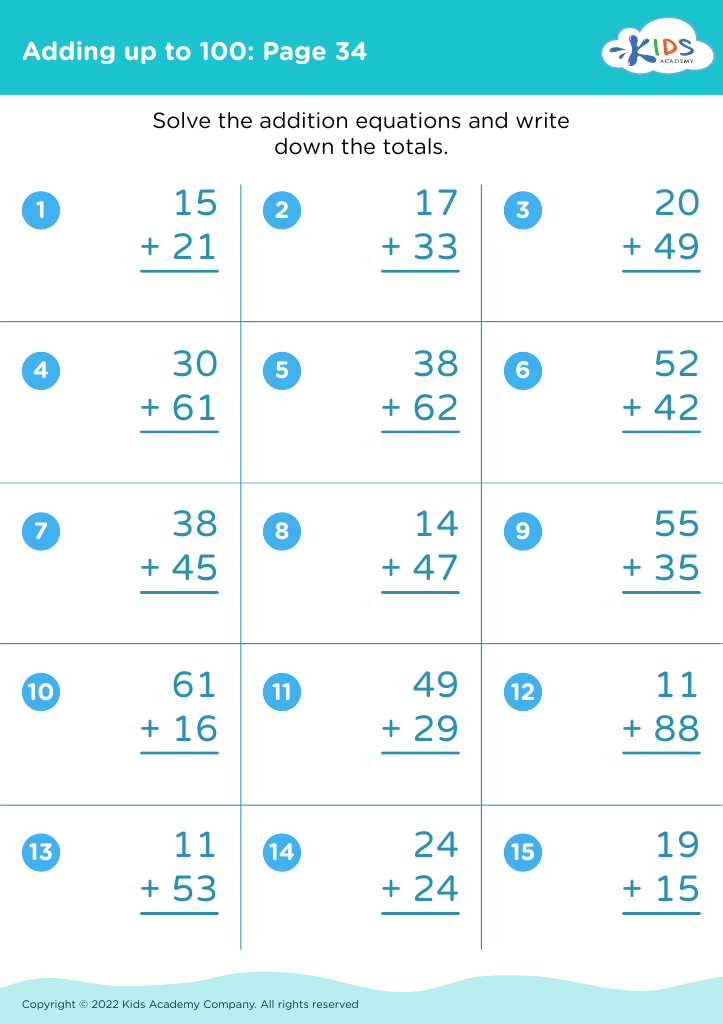
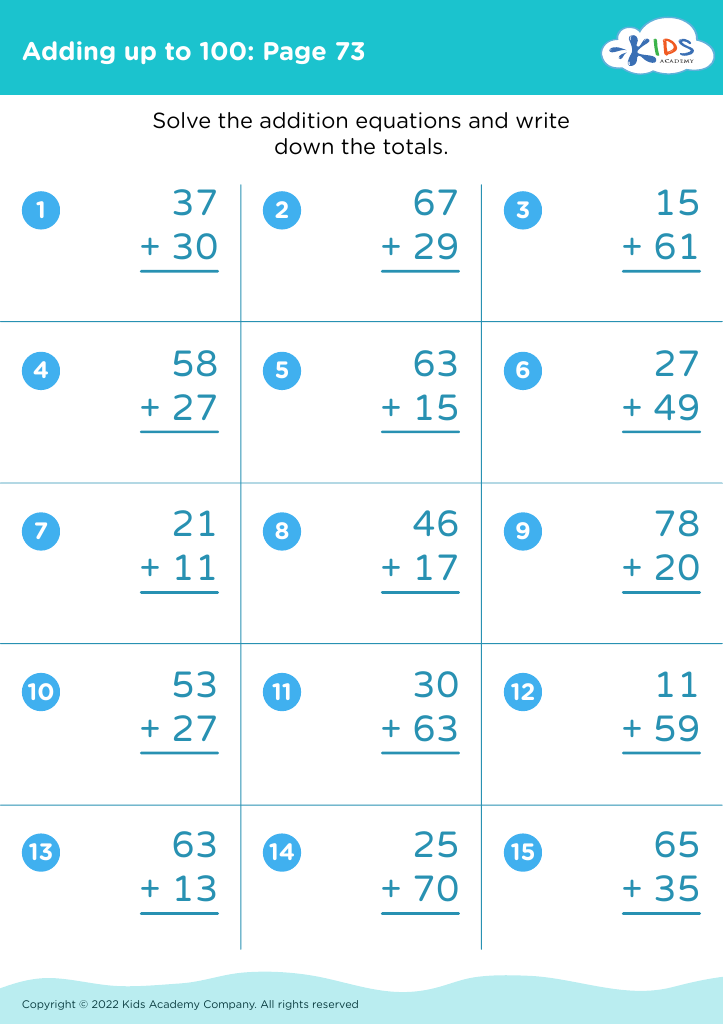


Basic math skills, particularly mastering addition up to 100, are foundational for an 8-year-old's overall future academic success. Parents and teachers should care about this skill for several reasons. Firstly, a strong understanding of addition fosters confidence in a child’s math abilities, which encourages a positive attitude towards learning. Mastering addition helps in building critical thinking skills; it enables children to tackle more complex mathematical concepts later on, such as multiplication and problem-solving.
Additionally, addition plays a significant role in real-life situations, from budgeting in household shopping to balancing time commitments. When children are comfortable with adding up to 100, they gain practical life skills.
Furthermore, basic math skills are linked to language development and cognitive growth. Engaging with numbers also enhances memory and concentration, crucial skills in all areas of learning. Teachers and parents can nurture this through everyday activities, reinforcing the relevance of math in daily life.
Investing time and effort in ensuring children grasp these fundamental concepts creates a strong educational foundation, fostering not just better performance in math but also a lifelong appreciation and competence in numerical literacy. Encouraging this early on builds resilience and adaptability as they face academic challenges ahead.