Comparing Fractions Adding up to 100 Misc Worksheets for 8-Year-Olds
10 filtered results
-
From - To
Looking for engaging worksheets to help 8-year-olds master comparing fractions that add up to 100? Explore our diverse collection that simplifies this crucial math skill through fun and interactive activities. Designed with young learners in mind, these worksheets encourage hands-on practice, aiding in the understanding of equivalent fractions, mixed numbers, and basic fraction comparison. Perfect for classrooms and at-home learning, each worksheet offers clear instructions and colorful visuals, making math both enjoyable and educational. Foster confidence and competence in your child's fraction skills with our carefully curated resources tailored to meet the learning needs of 8-year-olds.
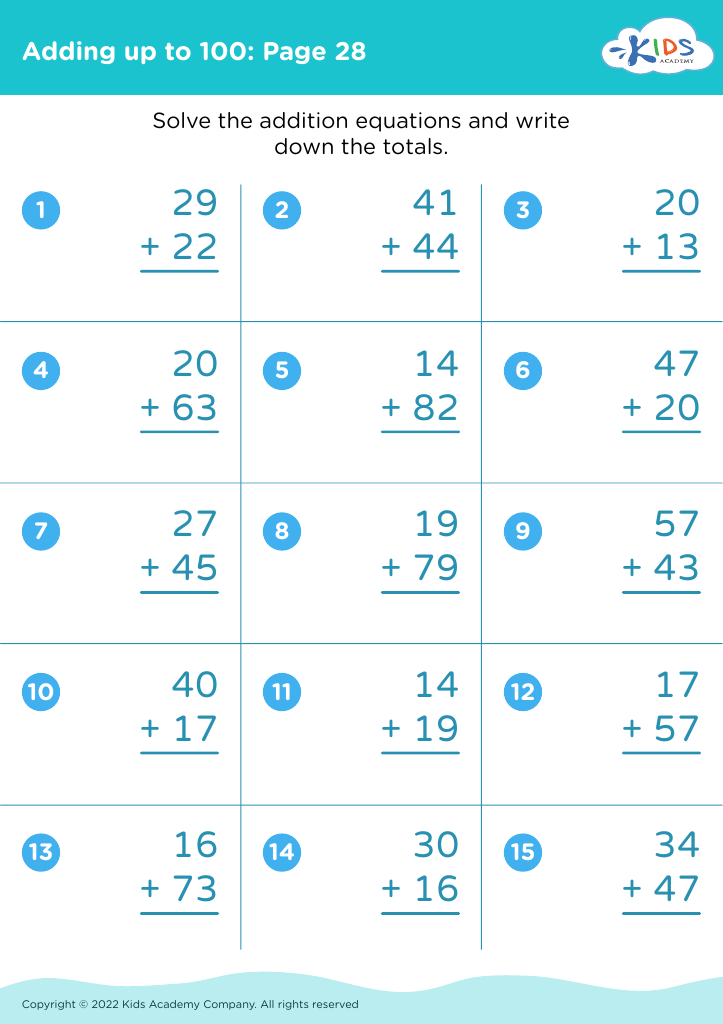
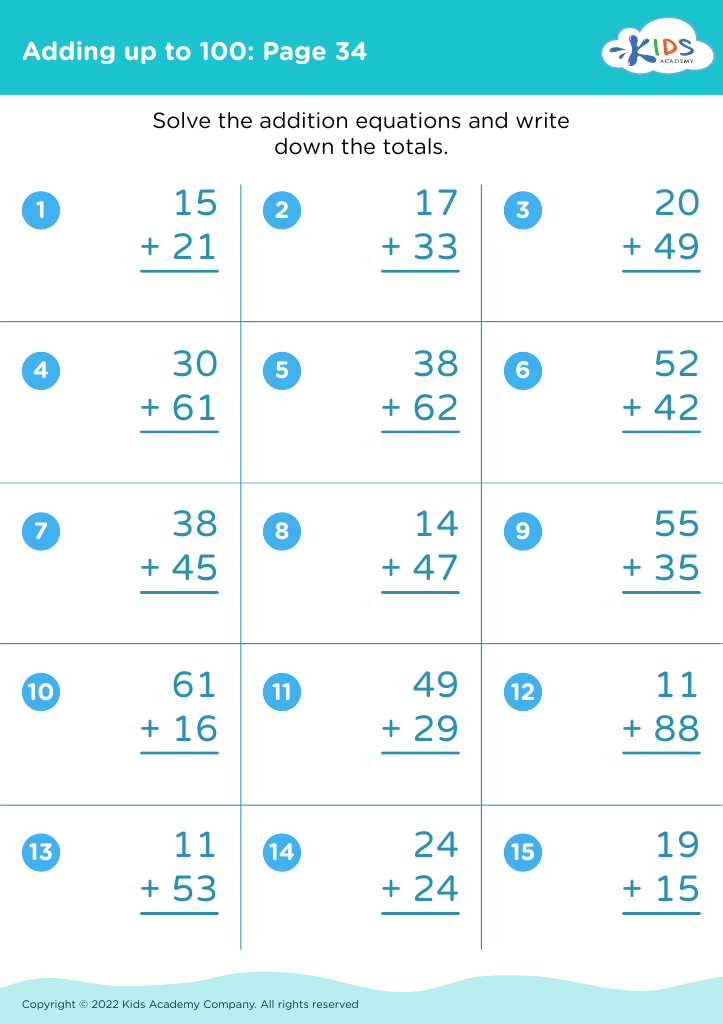
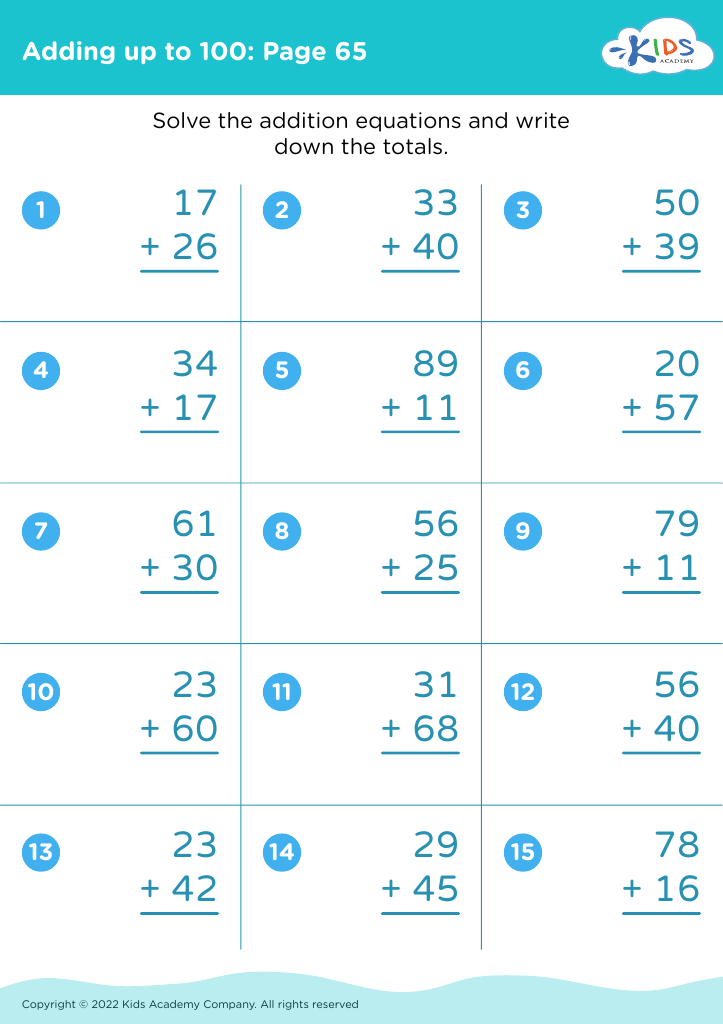
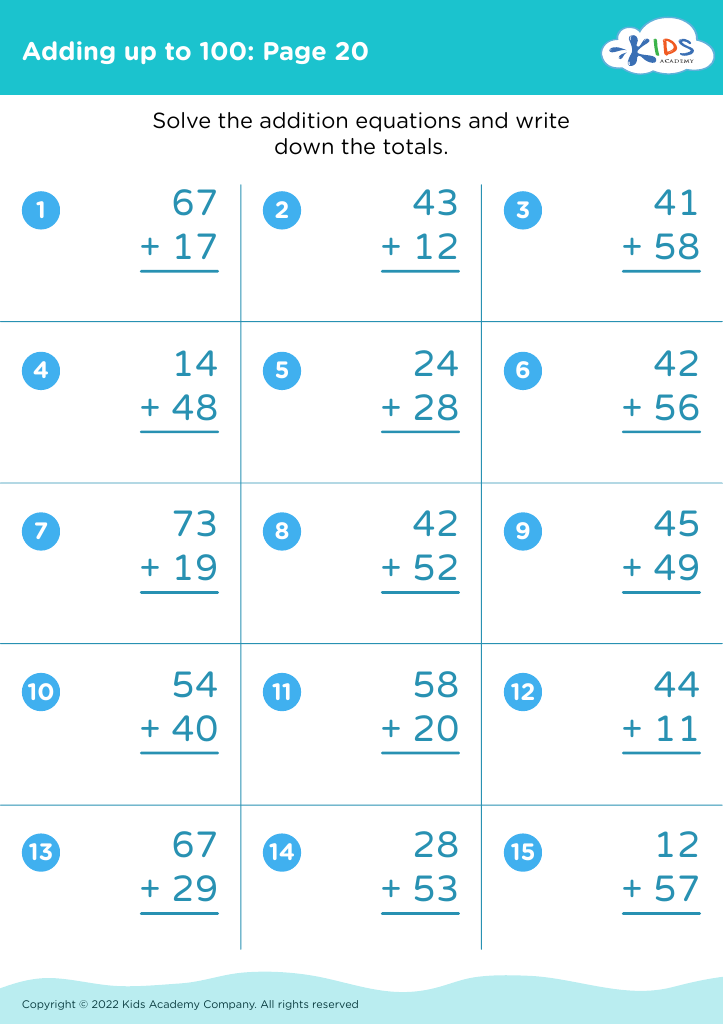
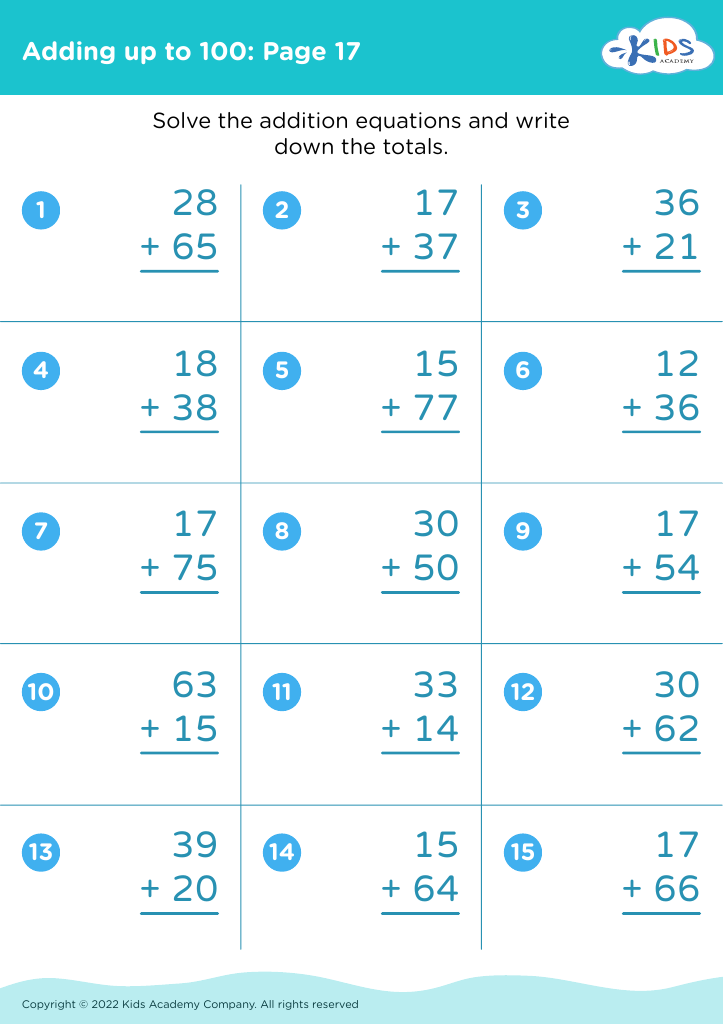
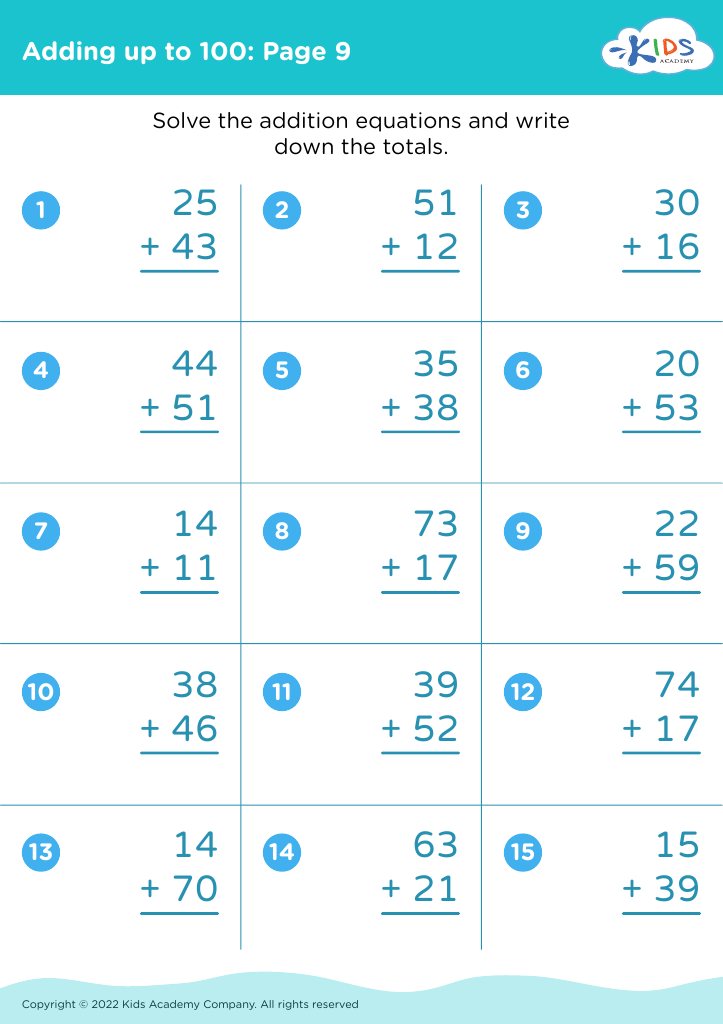
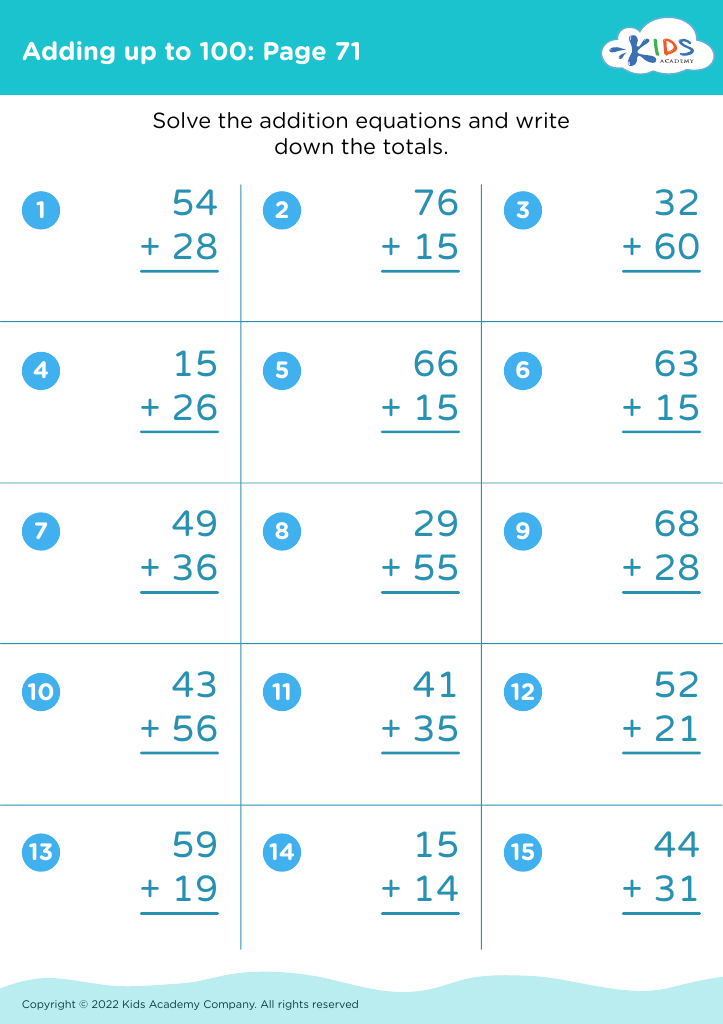
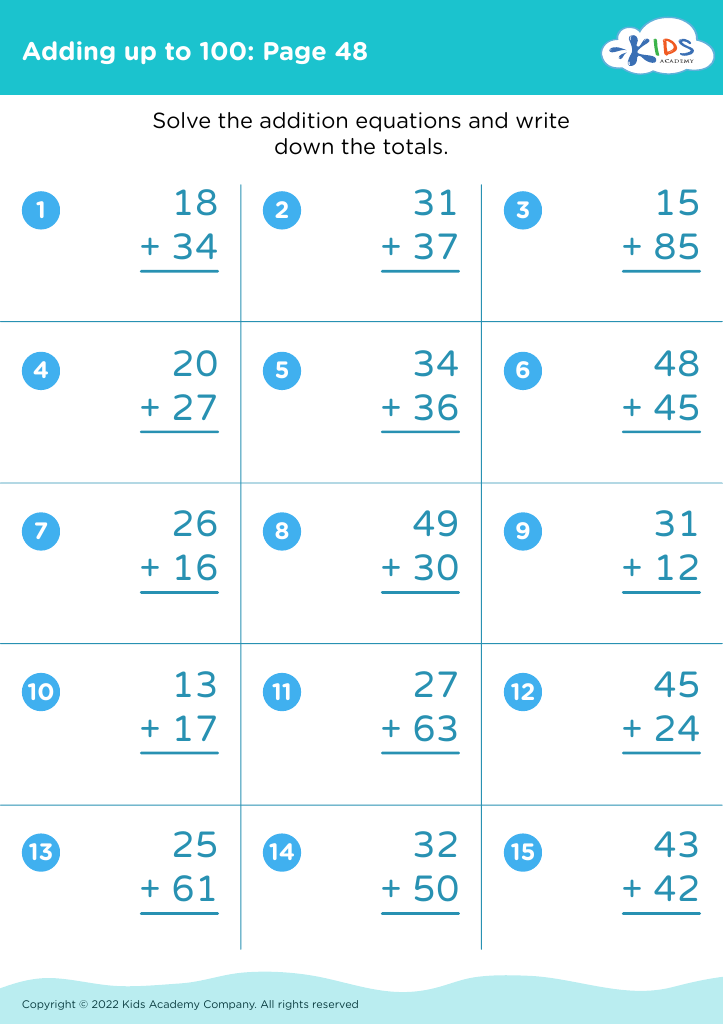
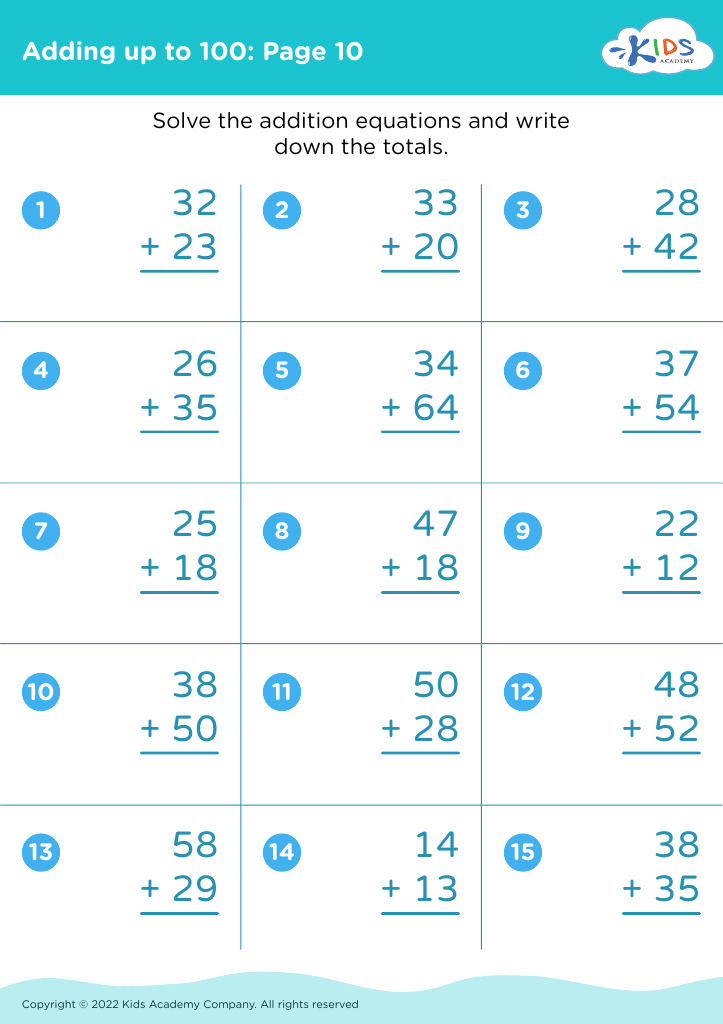
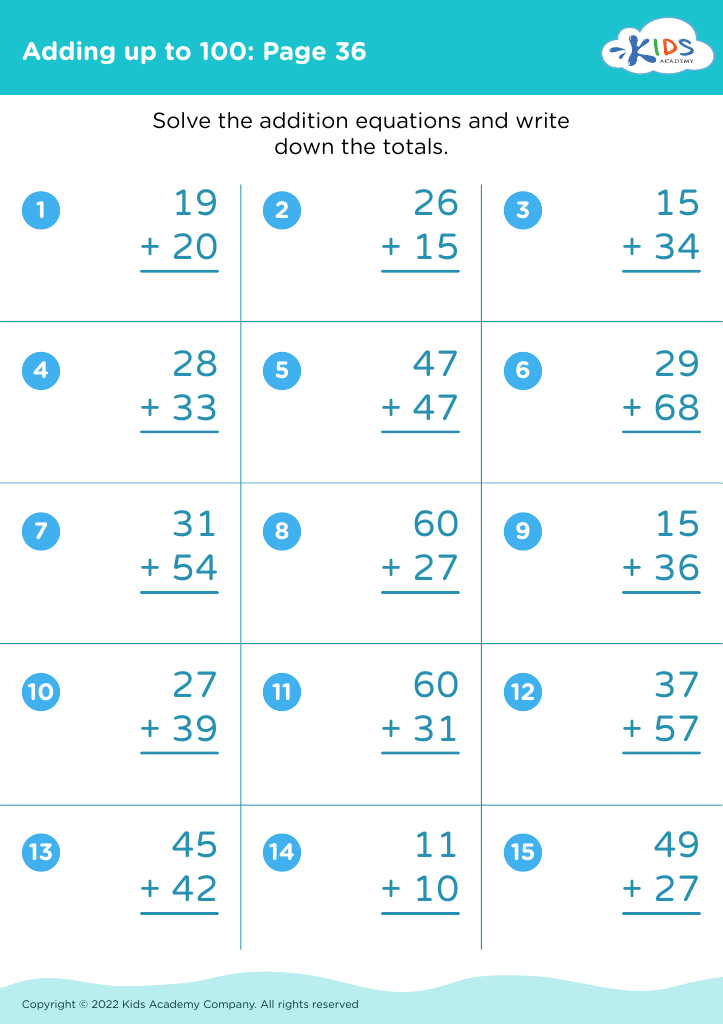


Understanding how to compare fractions and how numbers add up to 100 is crucial for 8-year-olds for several reasons. Firstly, these skills lay a foundational mathematical understanding that children will build on in more complex subjects. Learning to compare fractions helps students grasp the concept of part-whole relationships, which is essential in various aspects of math, including algebra and geometry.
Additionally, knowing how numbers add up to 100 enhances a child's ability to perform addition and subtraction with ease. This basic addition skill is essential for everyday problem-solving scenarios, such as managing allowances or realizing the concept of "half off" during shopping.
Parents and teachers should also care about these concepts because mathematics is not just about numbers; it sharpens logical and analytical thinking. By comparing fractions and working with sums that add up to 100, children develop problem-solving skills and critical thinking.
Moreover, proficiency in these areas boosts a child’s confidence in their mathematical abilities, positively impacting their overall academic performance. It ensures that children do not struggle with more advanced concepts later on. Fostering these skills early reduces math anxiety and promotes a positive attitude toward learning. In summary, mastering these skills at a young age sets the stage for future academic and real-life success.