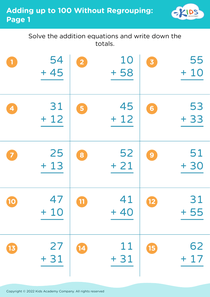
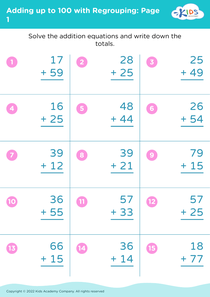
Counting practice Adding up to 100 Misc Worksheets for 8-Year-Olds
4 filtered results
-
From - To
Enhance your child's math skills with our "Counting Practice: Adding Up to 100 Misc Worksheets," designed specifically for 8-year-olds. These engaging worksheets offer a variety of exercises to make learning both fun and effective. Kids will explore addition problems, number sequences, and other activities that reinforce their counting abilities while building confidence in their math skills. Perfect for home or classroom use, these worksheets cater to different learning styles and can be easily printed for convenience. Help your child master essential math concepts and enjoy the journey to becoming a confident mathematician with our thoughtfully crafted resources!
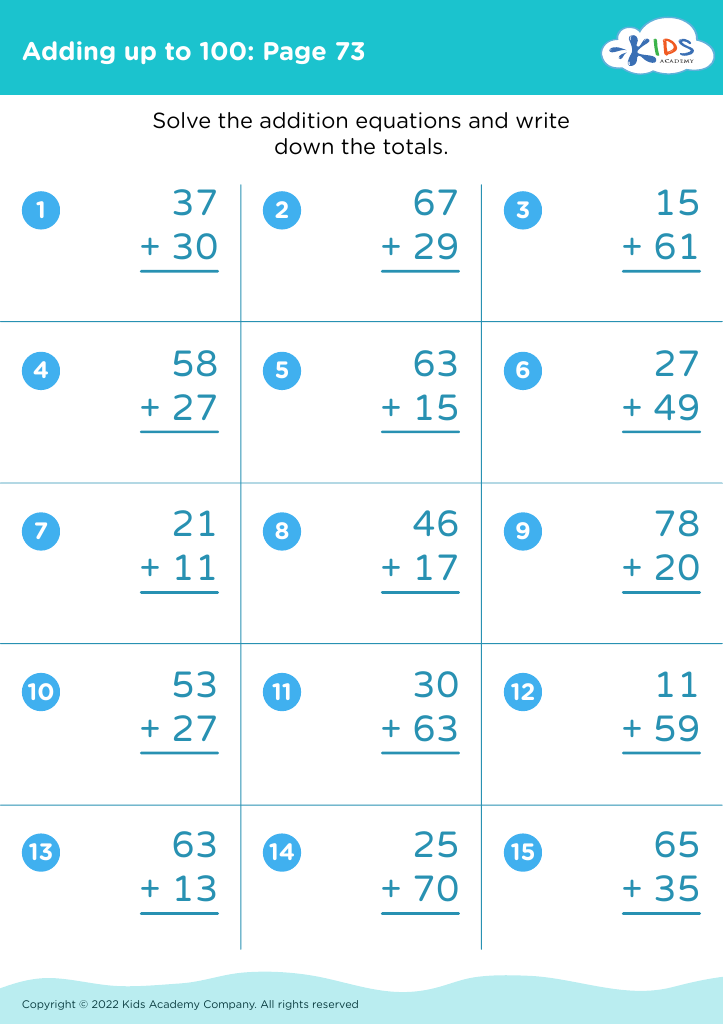
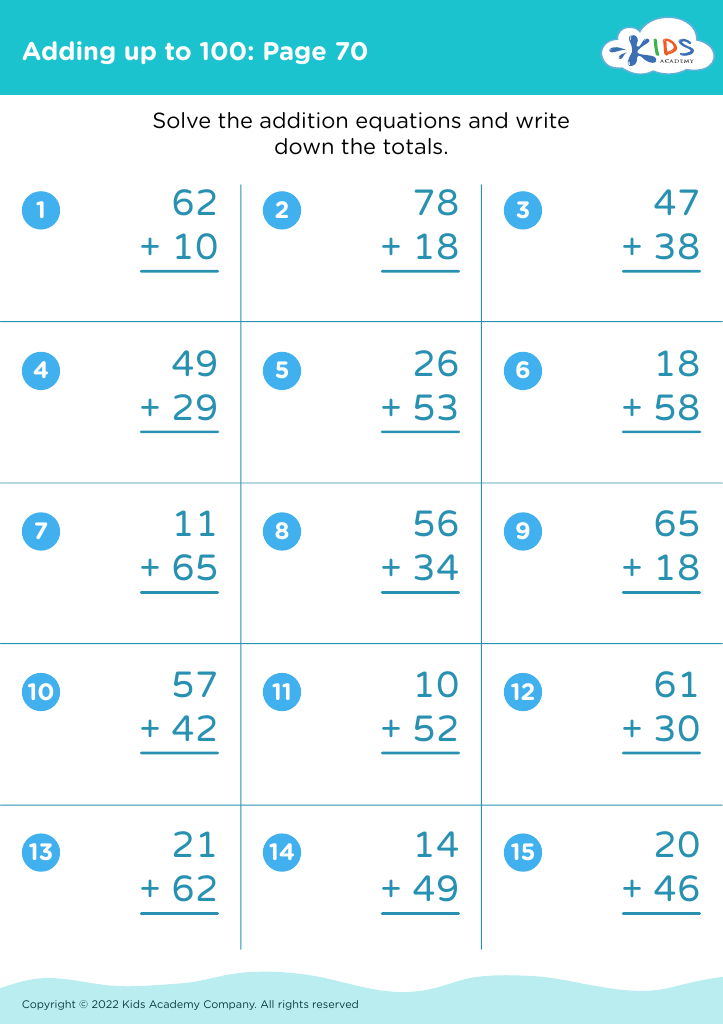
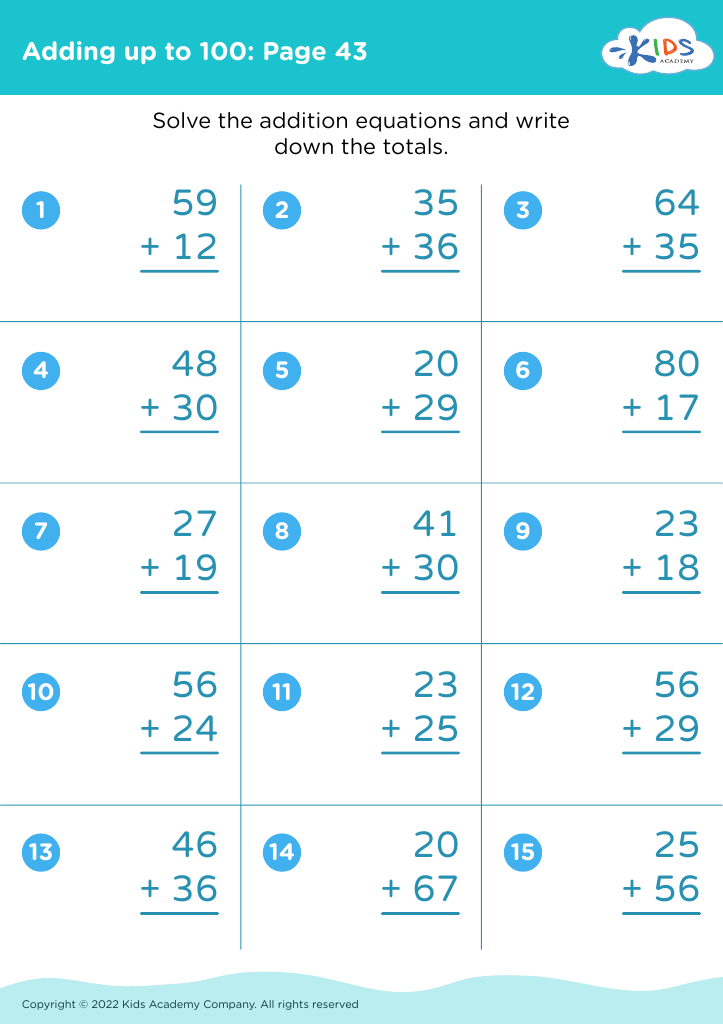
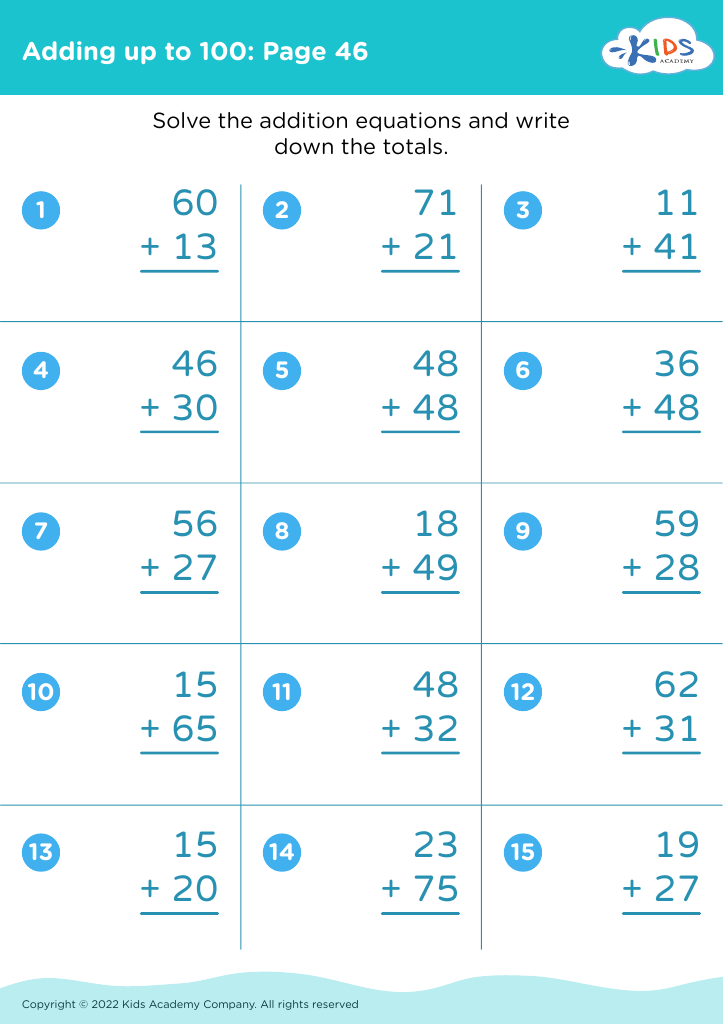


Counting practice and adding up to 100 are crucial skills for 8-year-olds, serving as foundational elements in their mathematical development. At this age, children are transitioning from concrete to more abstract mathematical concepts. Engaging in counting and addition exercises helps strengthen their number sense, which is essential for understanding more complex operations such as multiplication and division.
Teachers and parents should care about this practice because it promotes critical thinking and problem-solving skills. It allows children to develop strategies for tackling mathematical challenges, nurturing their ability to think independently. Moreover, consistent counting and addition practice aids in enhancing memory retention.
Furthermore, these skills connect to real-life applications, such as budgeting, shopping, and time management, fostering practical life skills that children will use as they grow. By incorporating counting exercises into daily routines or learning activities, adults support a child’s confidence and readiness for future academic challenges.
Lastly, early positive experiences with math contribute to a child’s overall attitude toward the subject, encouraging a lifelong appreciation for mathematics. In essence, supportive counting practice can lay the foundation for future success in both academic and everyday contexts.