Identifying shapes Adding up to 100 Misc Worksheets for 8-Year-Olds
3 filtered results
-
From - To
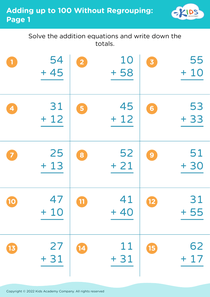
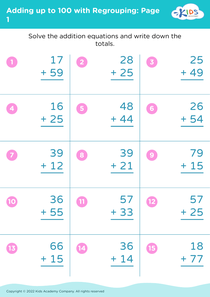
Boost your 8-year-old's math skills with our engaging worksheets designed for mastering shapes and numbers! Kids Academy offers an array of fun and educational printables tailored to help children effortlessly identify shapes and practice addition up to 100. Our worksheets are designed to capture young learners' attention, encouraging problem-solving, critical thinking, and a love for math. Whether at home or in the classroom, these resources ensure interactive and meaningful practice in key areas. Give your child the tools to succeed with Kids Academy’s meticulously crafted worksheets for identifying shapes and adding up to 100.
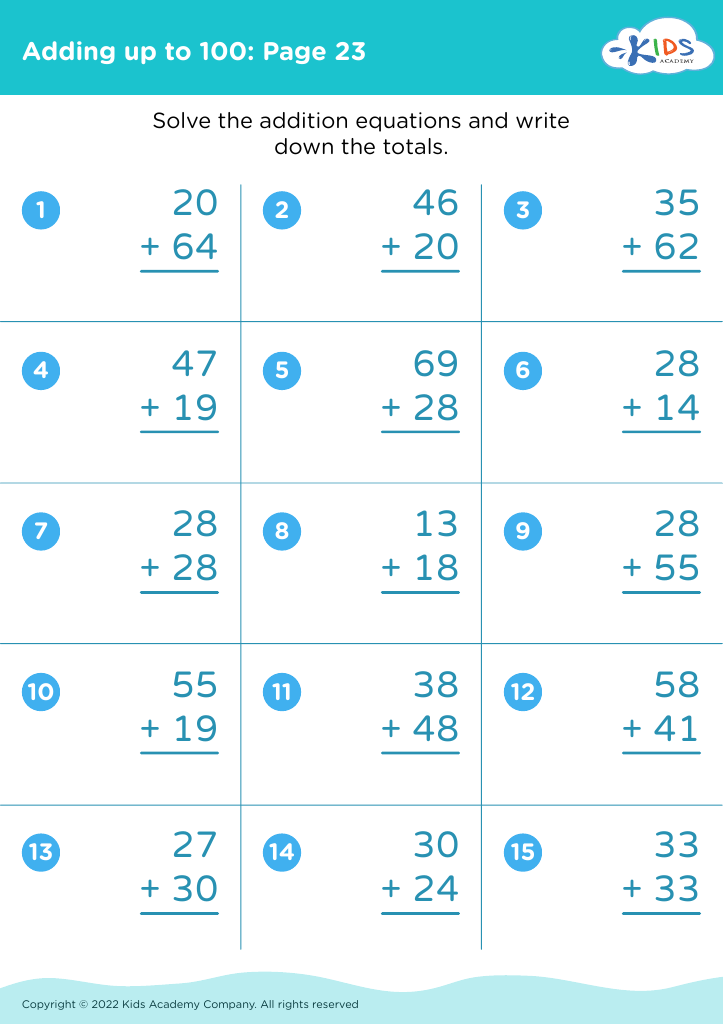
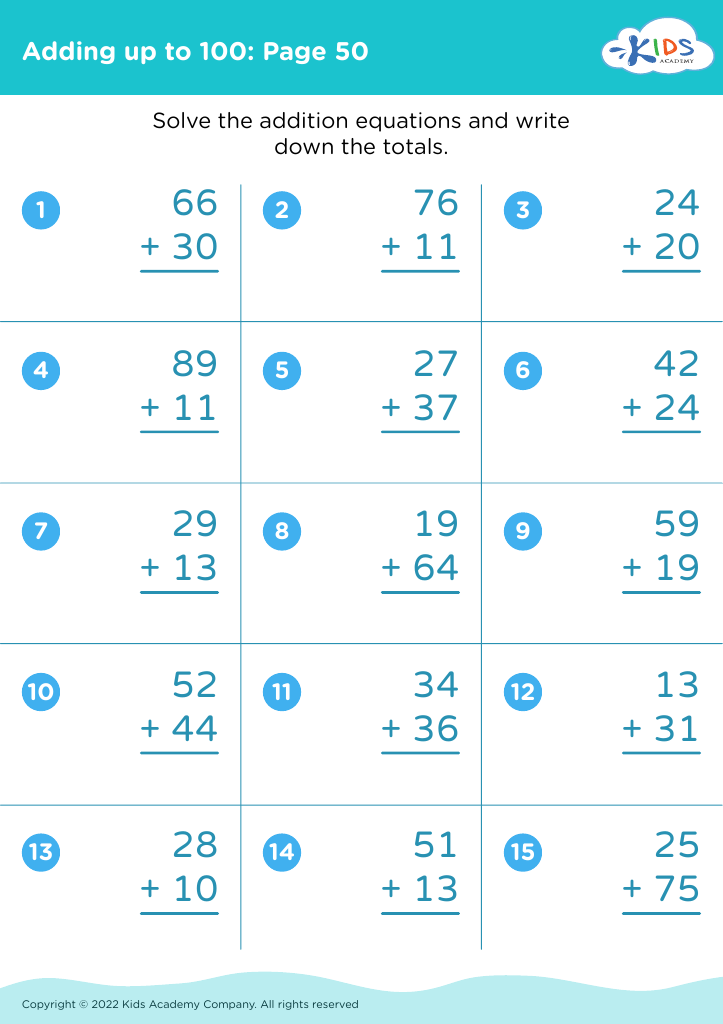
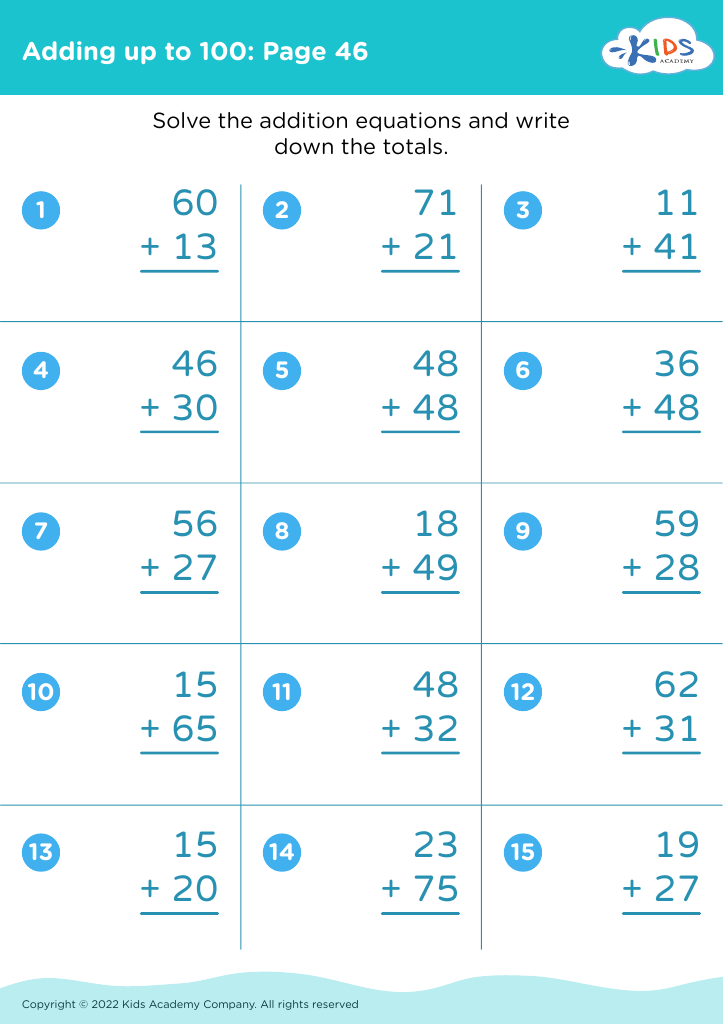


Understanding basic concepts such as identifying shapes and adding up to 100 is essential for 8-year-olds as it lays the foundation for more advanced skills. Shape recognition develops spatial reasoning, a vital cognitive skill that helps in diverse subjects, including geography (understanding maps) and science (visualizing structures in space). By identifying shapes, children enhance their visual perception, which is critical for reading and writing.
Similarly, adding up to 100 is a fundamental arithmetic skill that forms the basis for more complex mathematical operations. Proficiency in this area helps children develop logical thinking and problem-solving abilities. These skills are not only indispensable for higher-level math, including multiplication and division, but also for everyday activities such as handling money and measuring items.
Finally, paying attention to these foundational skills aligns with overall child development. Early proficiency in math and shape recognition correlates with higher confidence and enhanced academic performance later. For parents and teachers, this means nurturing an environment that encourages practice and learning through engaging activities and exercises. Ignoring these early skills may lead to gaps that could create hurdles in future learning initiatives. Therefore, consistent attention to these basic concepts is integral not only for academic success but also for holistic development in young children.