Understand fractions Adding up to 100 Misc Worksheets for 8-Year-Olds
3 filtered results
-
From - To
Explore our unique collection of printable worksheets designed to help 8-year-olds master the concept of fractions while honing their math skills. With a focus on fractions adding up to 100, these engaging activities are perfect for young learners. Each worksheet is crafted to build a strong foundation, making complex concepts easy and fun. From visual aids to interactive problems, our resources cater to various learning styles, ensuring every child can succeed. Ideal for both classroom and home practice, these tools are essential for fostering confidence and proficiency in math. Start your journey towards math mastery today!
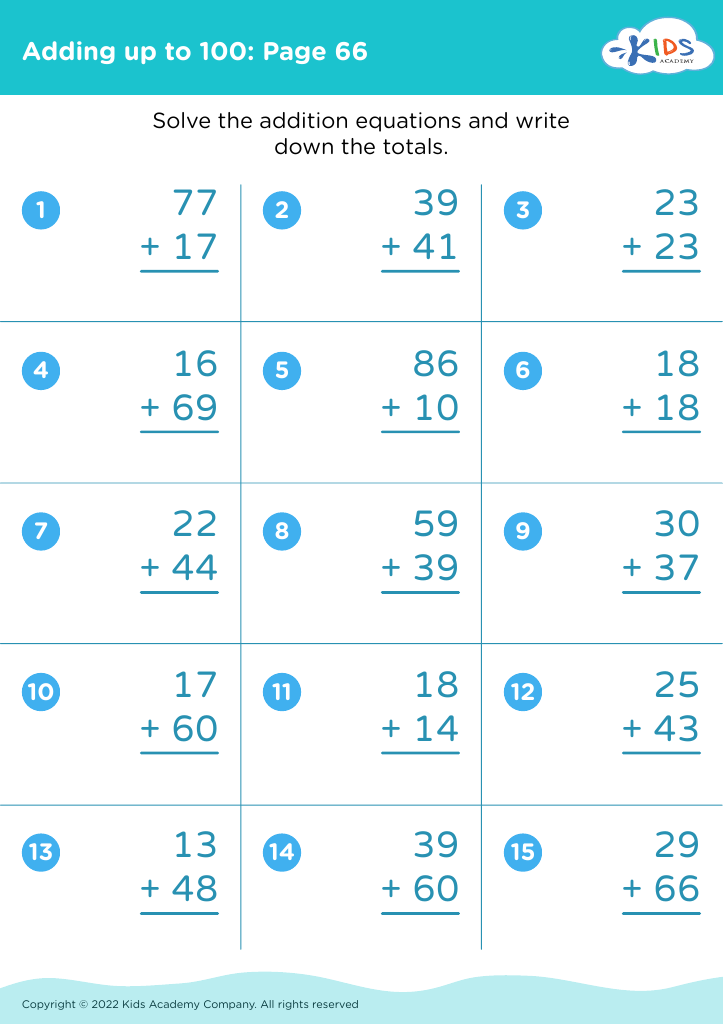
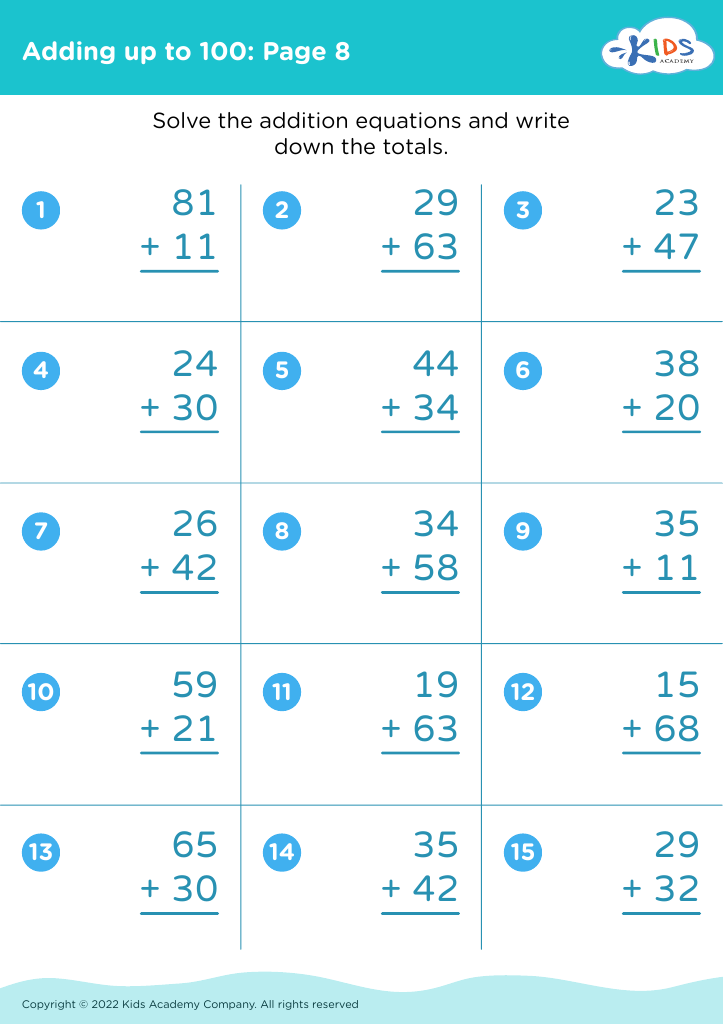
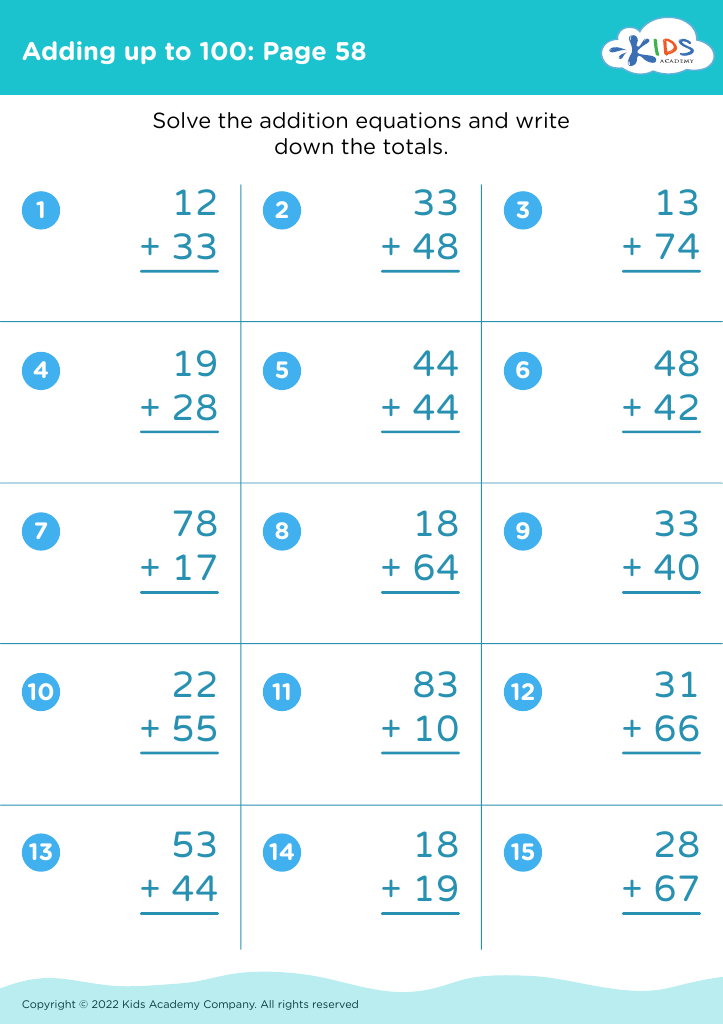


Understanding fractions, adding up to 100, and other miscellaneous elementary math skills is critical for 8-year-olds for several reasons:
-
Foundation for Advanced Math: Early mastery of these concepts lays the groundwork for more complex mathematical operations. Fractions, for instance, are essential for learning about ratios, percentages, and more advanced arithmetic.
-
Real-World Applications: These skills have immediate practical applications. Children use fractions when measuring ingredients for recipes or understanding parts of a group. Adding up to 100 helps with money management and understanding time, which are practical life skills.
-
Cognitive Development: Engaging with these concepts promotes logical thinking and problem-solving skills. Fraction problems require children to think in parts and wholes, a fundamental cognitive skill.
-
Boosts Confidence: Success in grasping these math concepts can build a child’s confidence in their ability to learn and solve problems, which has positive repercussions for their overall academic performances and attitude towards schooling.
-
Early Intervention: Parents and teachers play a crucial role. Caring about these educational building blocks allows for timely intervention if they detect struggles, ensuring children are not left behind.
Investing time and effort into teaching 8-year-olds fractions, addition, and other early math skills fosters a lifelong appreciation and competence in mathematics.