Understanding fractions Adding up to 100 Misc Worksheets for 8-Year-Olds
16 filtered results
-
From - To
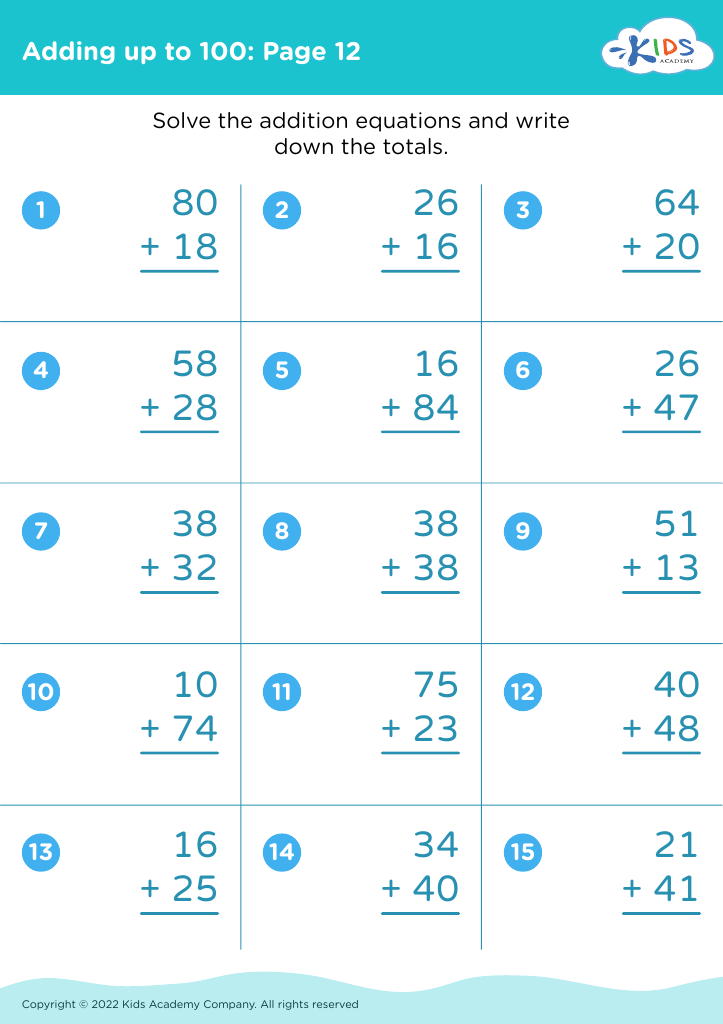
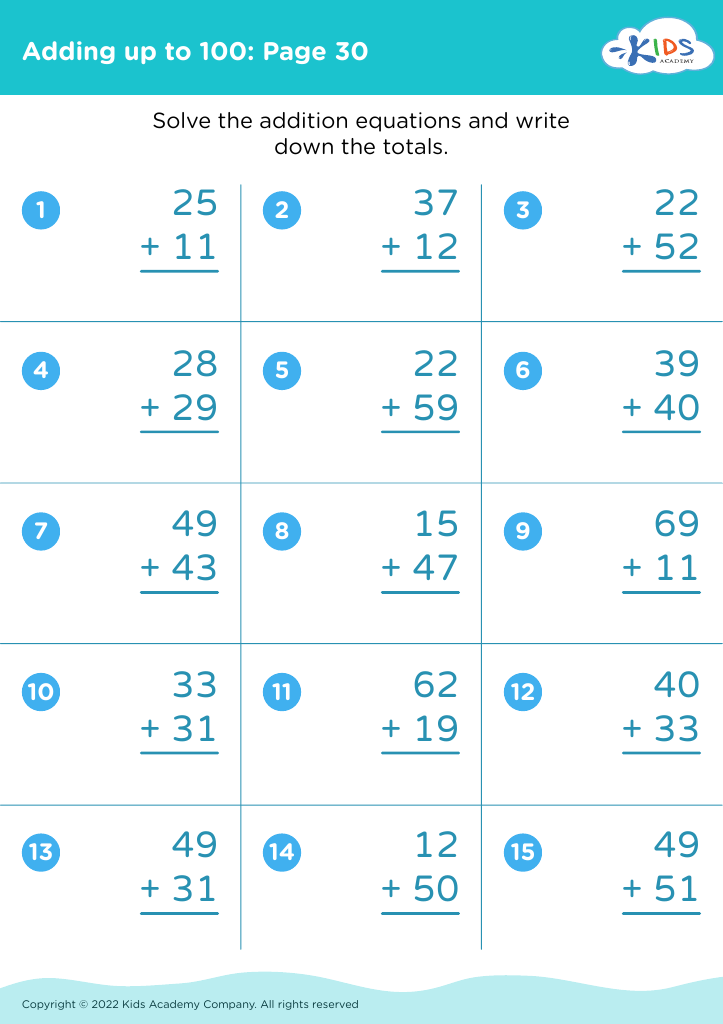
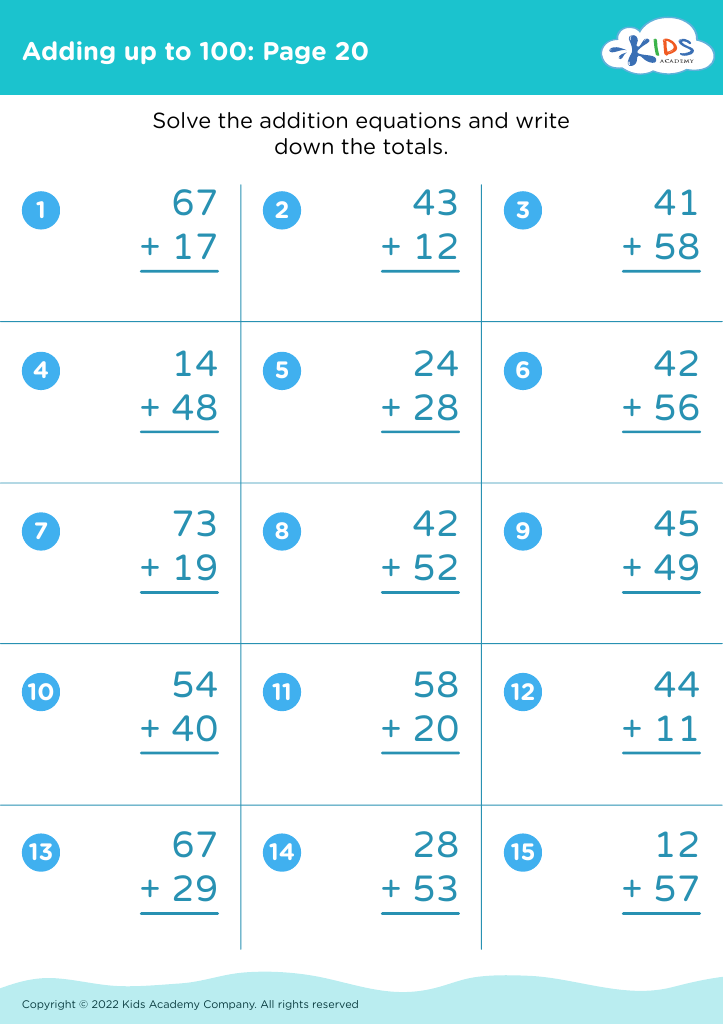
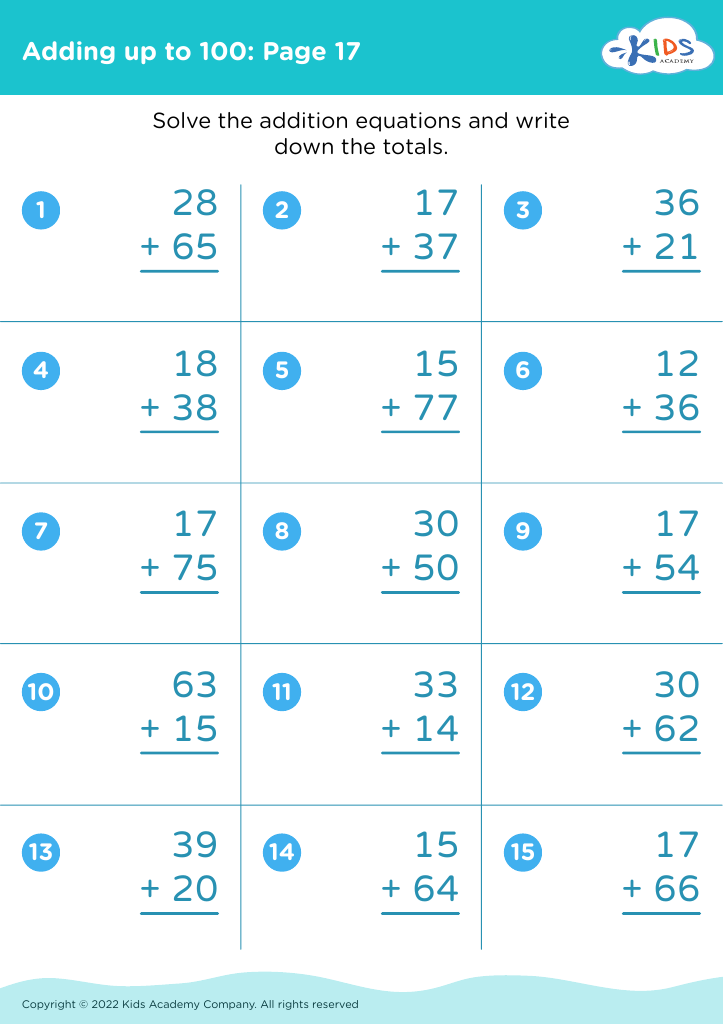
Discover engaging worksheets designed to help 8-year-olds master the concept of fractions through fun and interactive activities! Our "Understanding Fractions" collection focuses on adding fractions to total 100, enhancing critical math skills for early learners. Each worksheet is crafted to ensure children easily grasp fraction addition, making math both enjoyable and educational. With clearly defined exercises and vibrant visuals, students will build confidence as they practice various fraction concepts. Perfect for classrooms or home learning, these resources support comprehensive math understanding while keeping young minds motivated and engaged. Explore our worksheets now and watch your child's numerical skills flourish!
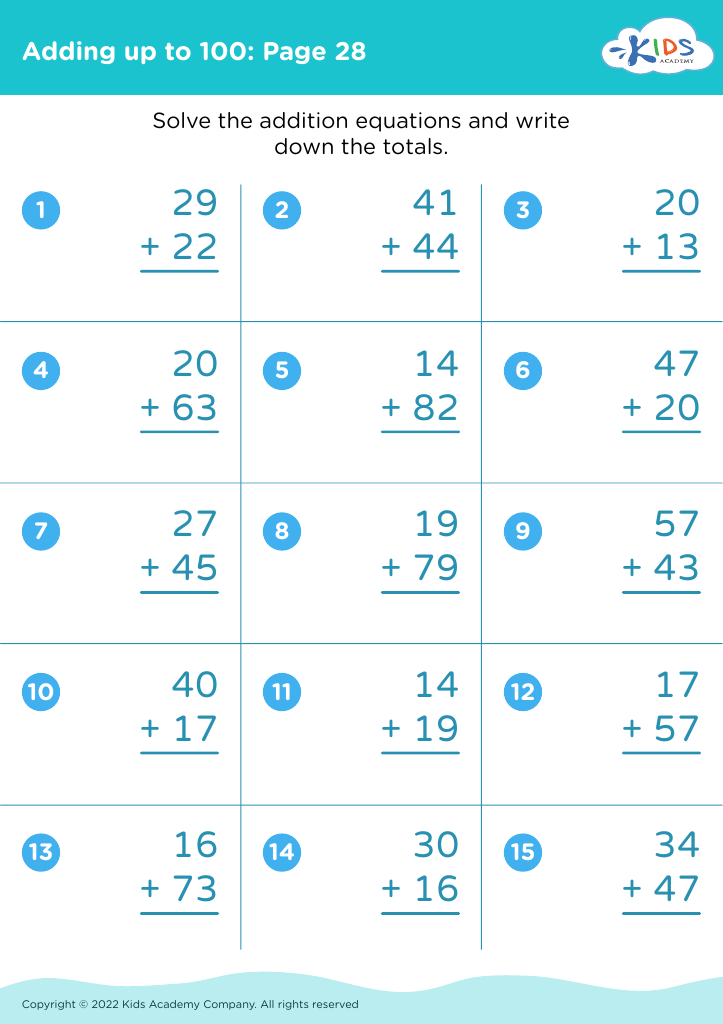
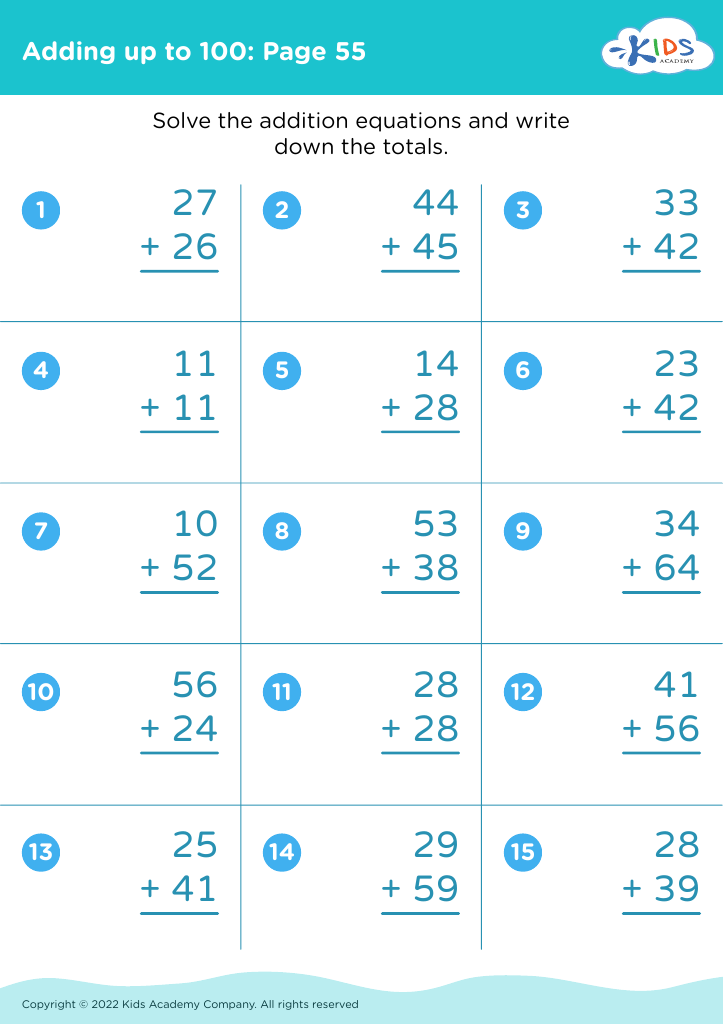
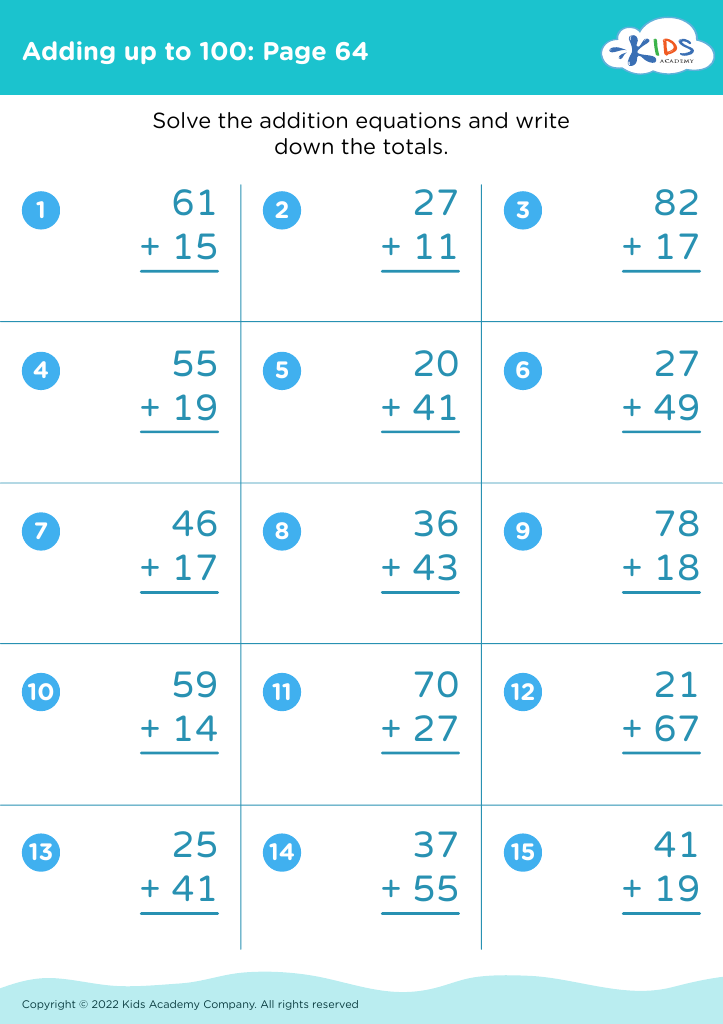
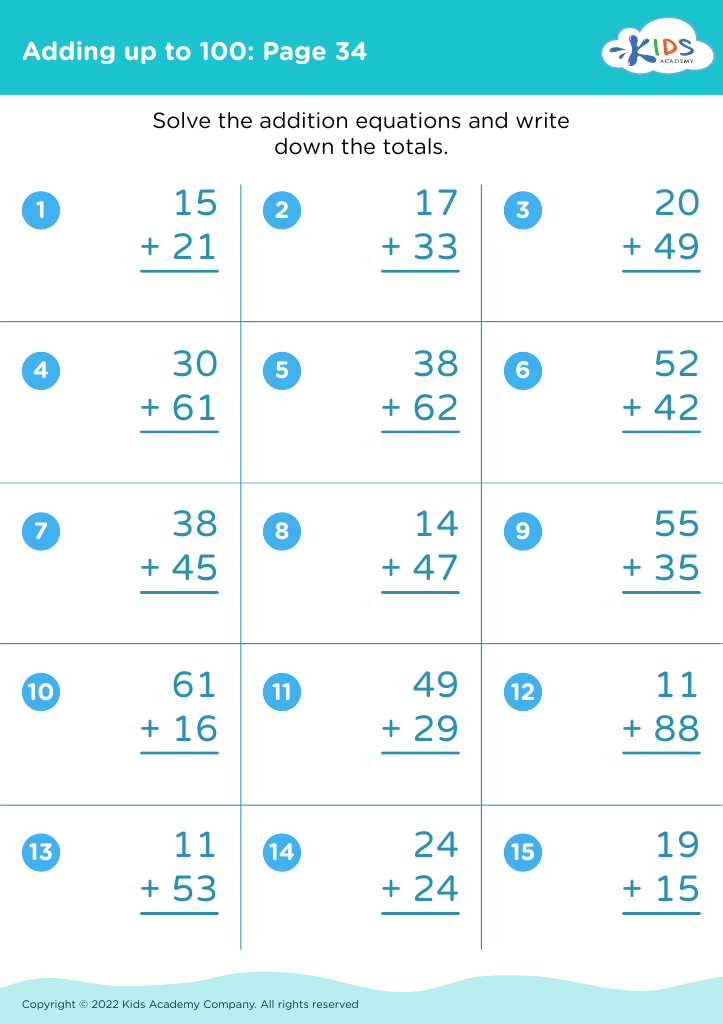
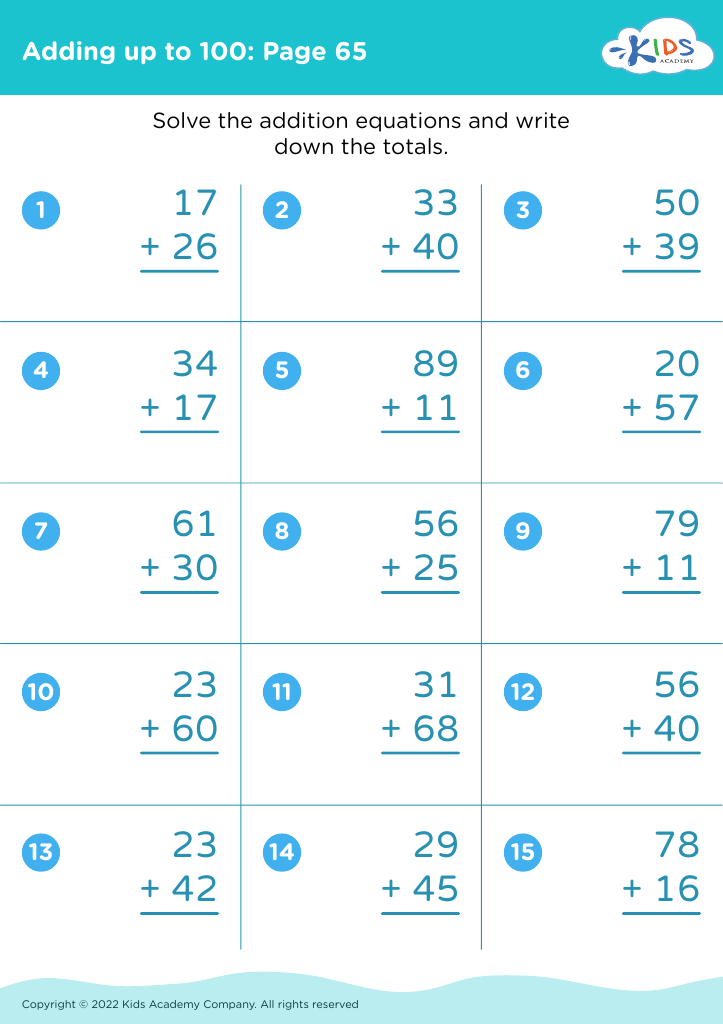
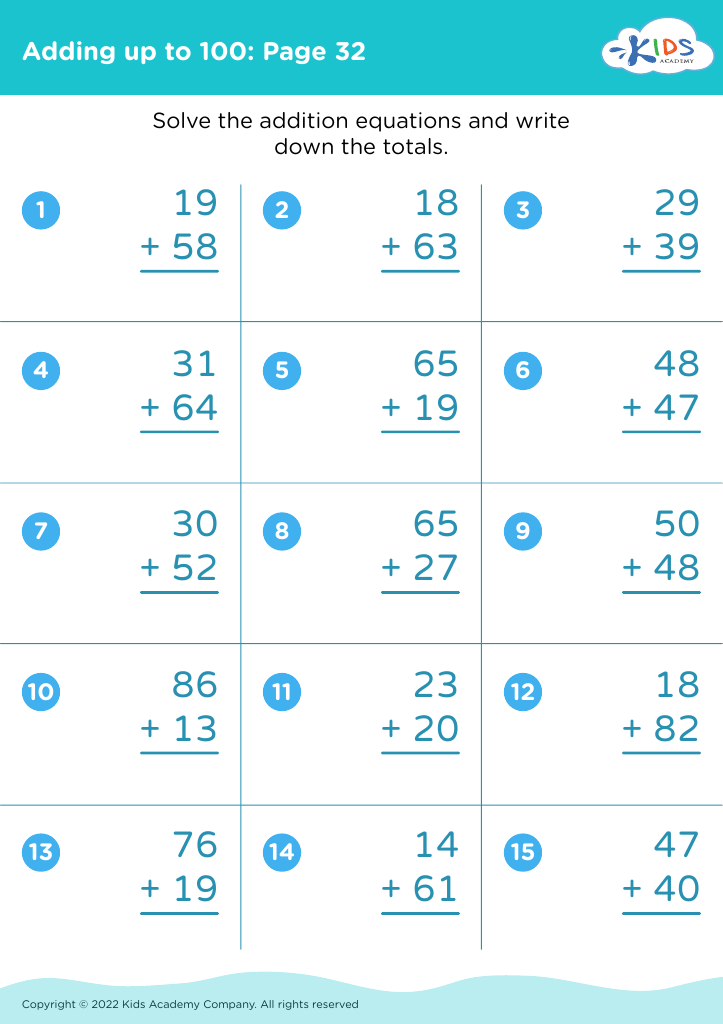
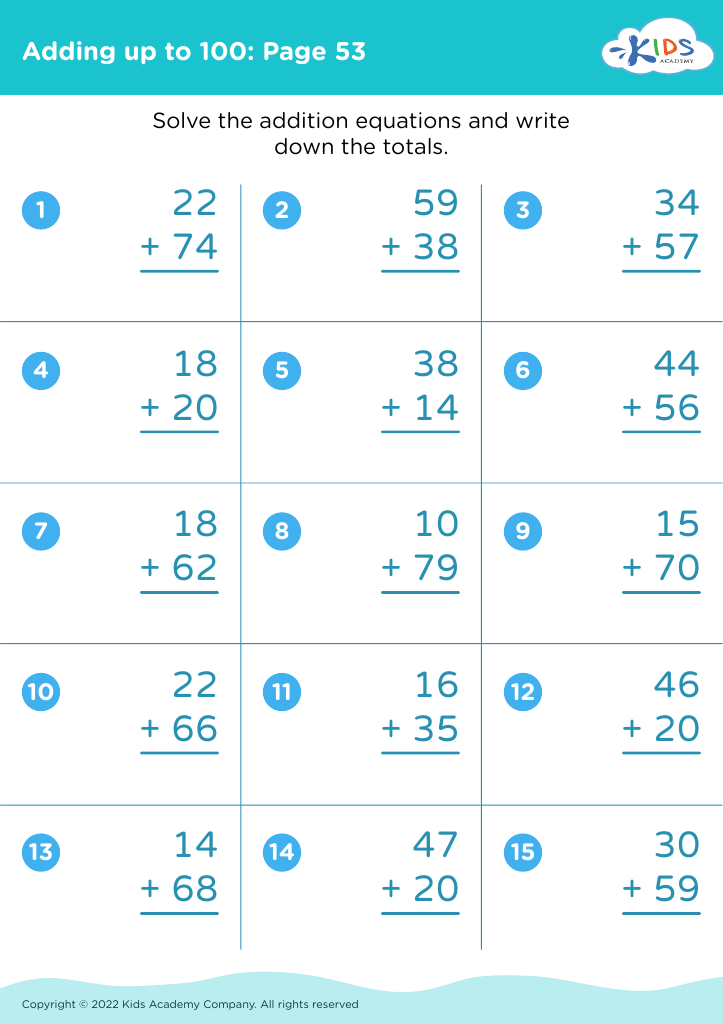
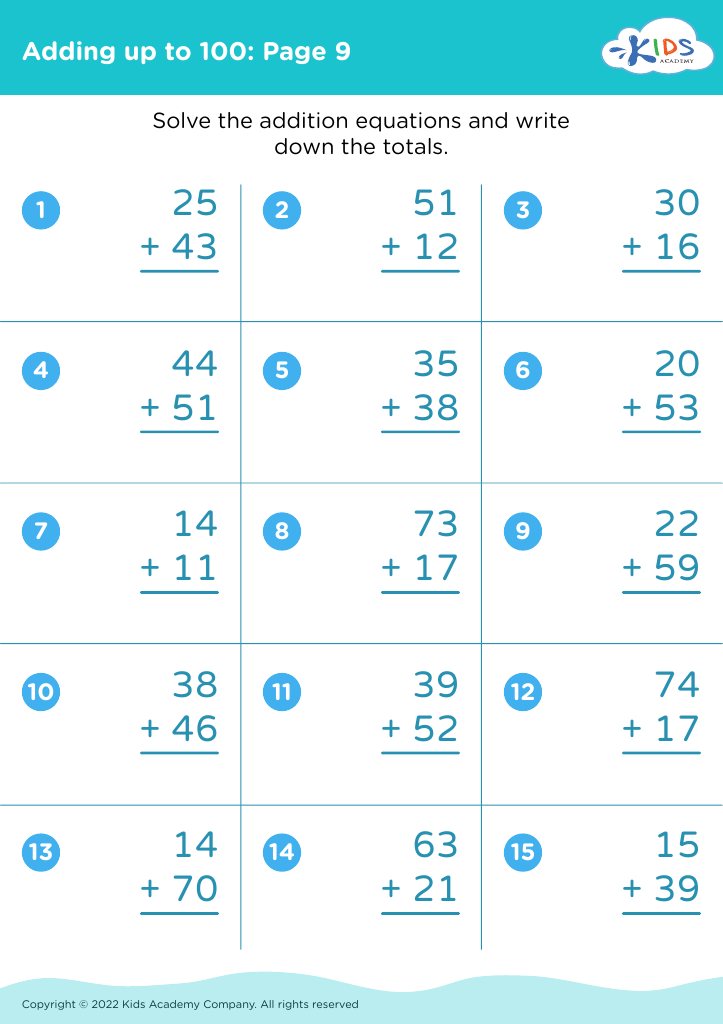
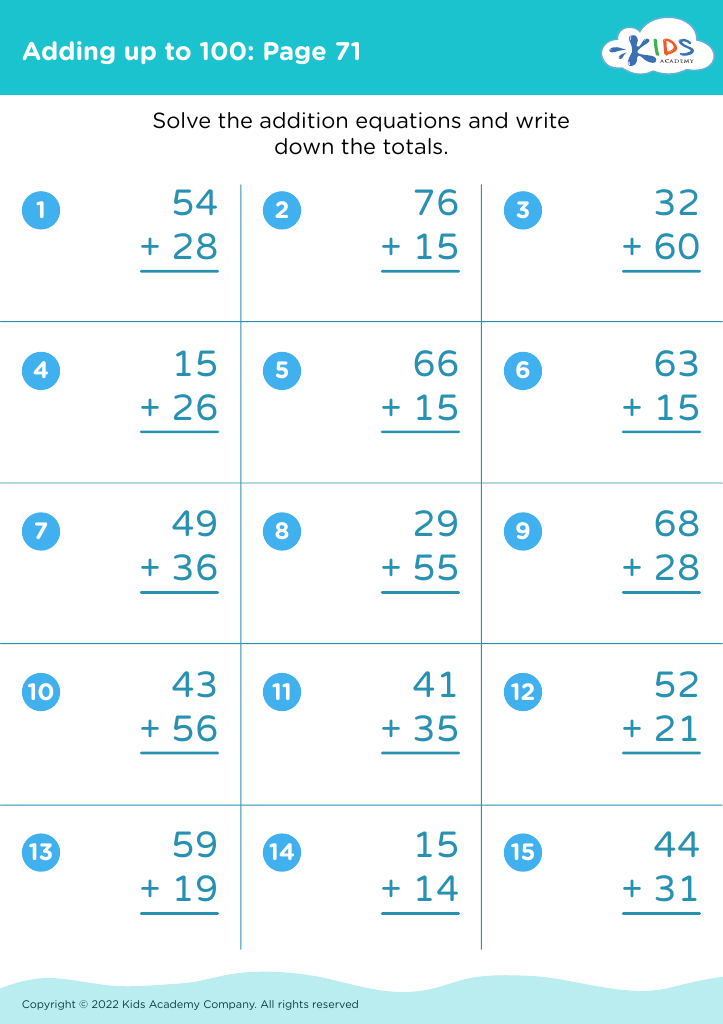
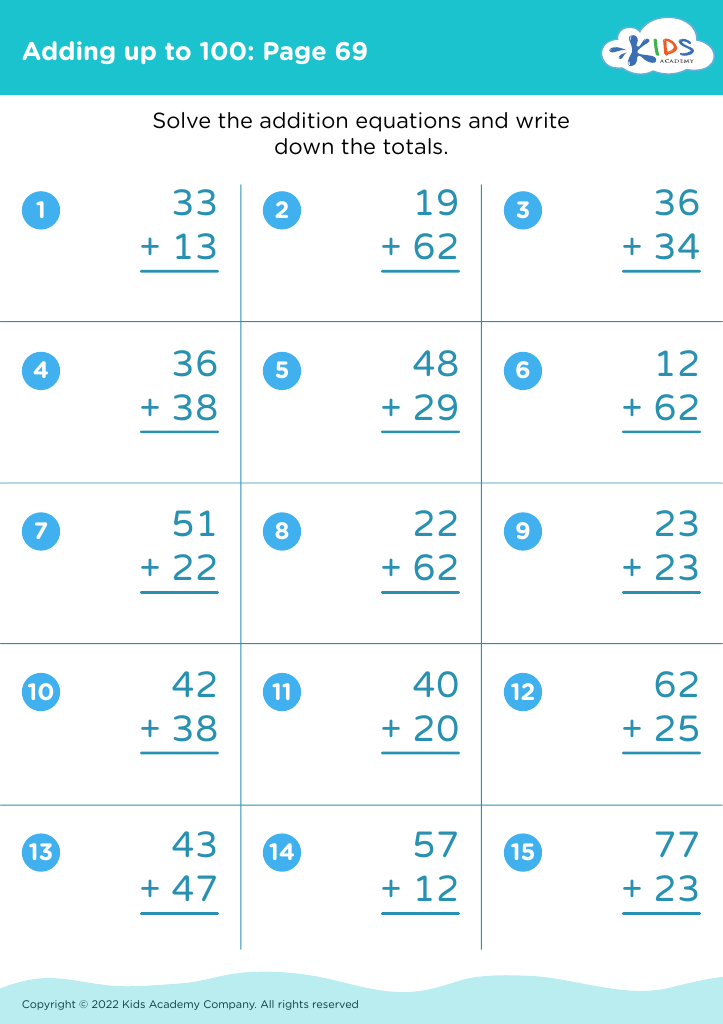
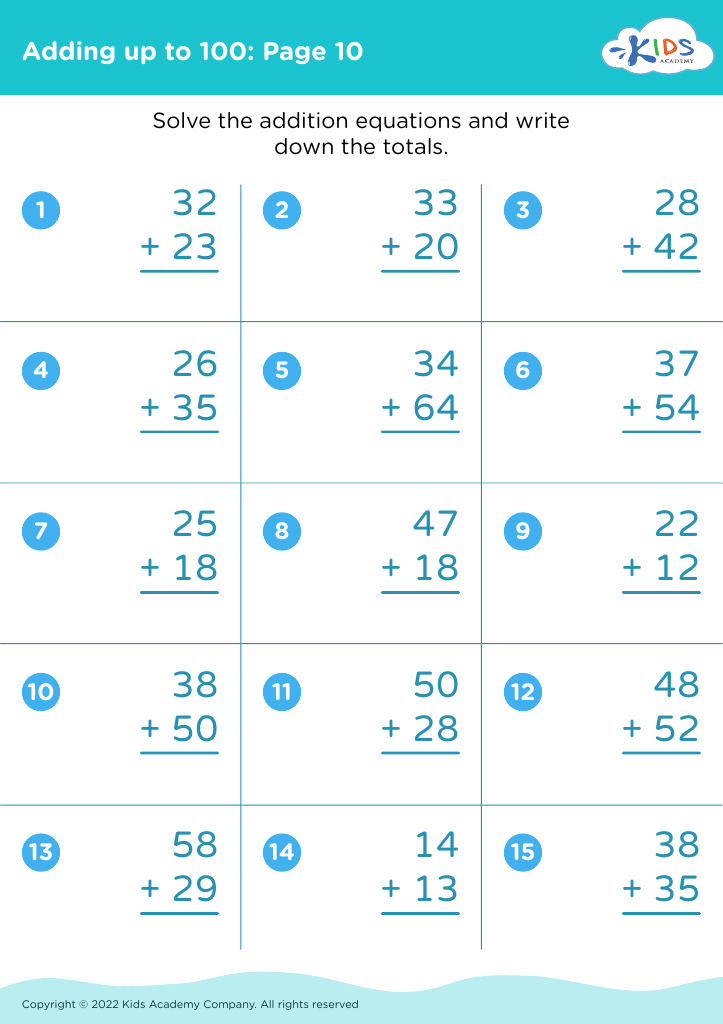
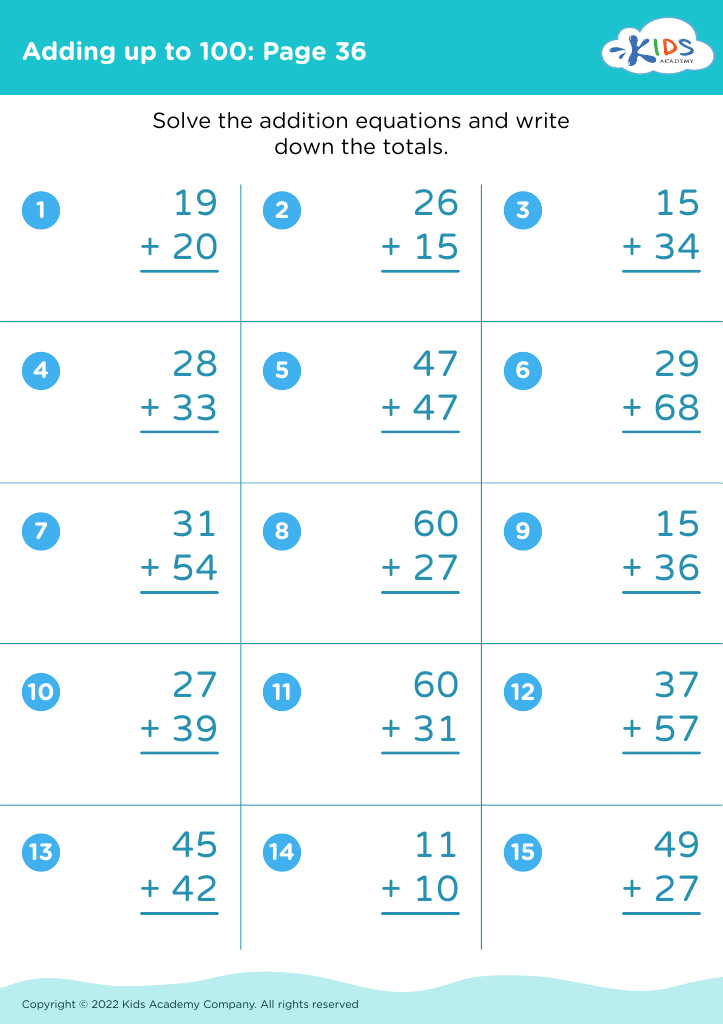


Understanding fractions and concepts related to adding up to 100 is crucial for 8-year-olds, as it lays a foundation for their mathematical literacy and critical thinking skills. At this developmental stage, children are building essential problem-solving abilities and need a strong grasp of basic math concepts to succeed in more complex topics later on.
Fractions, in particular, teach children about parts of a whole, which is an important skill not only in math but also in daily life, such as understanding measurements in cooking or dividing items fairly among friends. When children learn to relate fractions to everyday experiences, it enhances their engagement and relevance of the subject.
Moreover, an understanding of adding up to 100, including recognizing sums that total this key number, fosters number sense and fluency, encouraging strategies like counting, grouping, and estimating. These skills enhance their overall arithmetic capabilities, paving the way for more advanced topics, such as decimals and percentages.
By emphasizing these concepts, parents and teachers can empower children to feel confident in their math skills, establishing a strong framework for academic success and real-world applications alike. Engaging with these concepts early ensures readiness for future challenges in mathematics and beyond.