Understanding patterns Adding up to 100 Misc Worksheets for 8-Year-Olds
6 filtered results
-
From - To
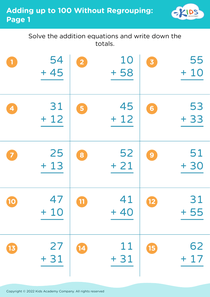
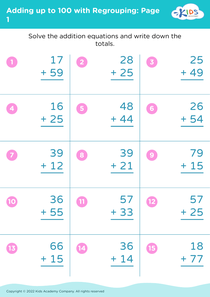
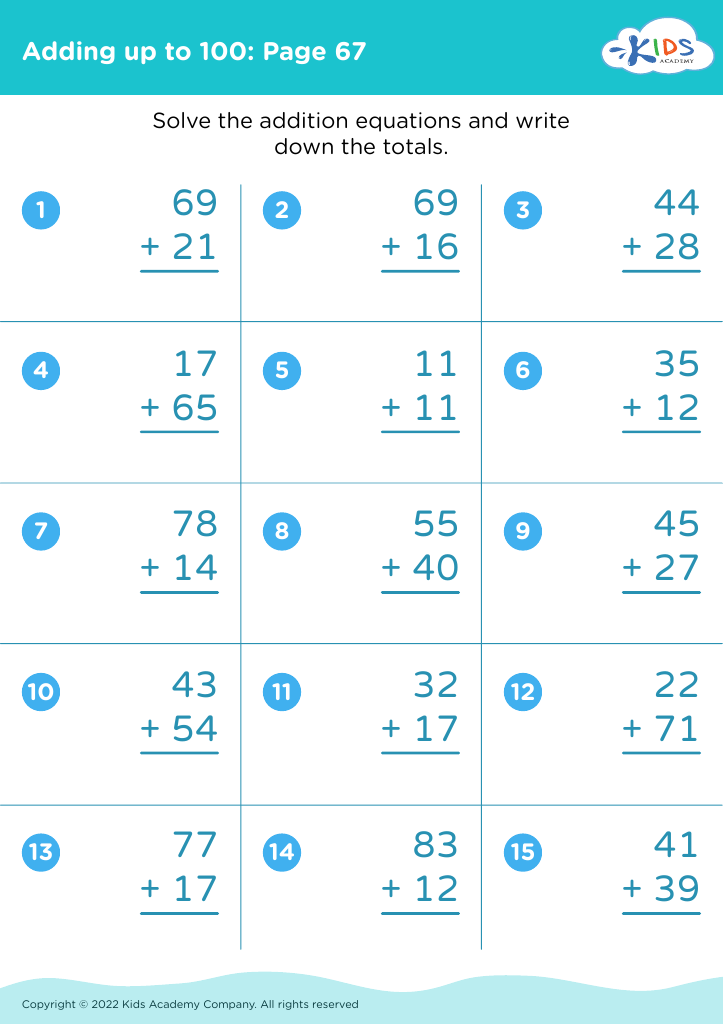
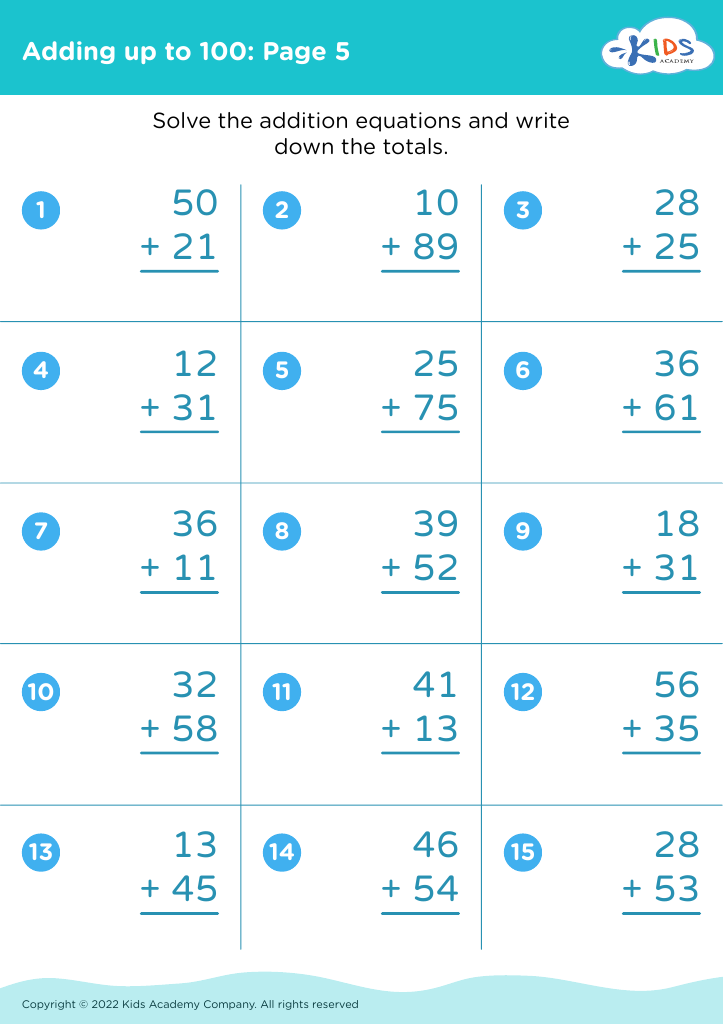
Explore our engaging "Understanding Patterns Adding up to 100" misc worksheets tailored for 8-year-olds. These printables from Kids Academy are designed to build essential math skills like recognizing numerical patterns and performing addition up to 100. Through interactive tasks and vibrant graphics, young learners will have fun while grasping fundamental concepts that lay a strong foundation for future math success. Perfect for classroom use or home practice, these worksheets enhance problem-solving abilities and boost pattern recognition. Equip your child with the tools they need to excel in math with our expertly crafted resources.
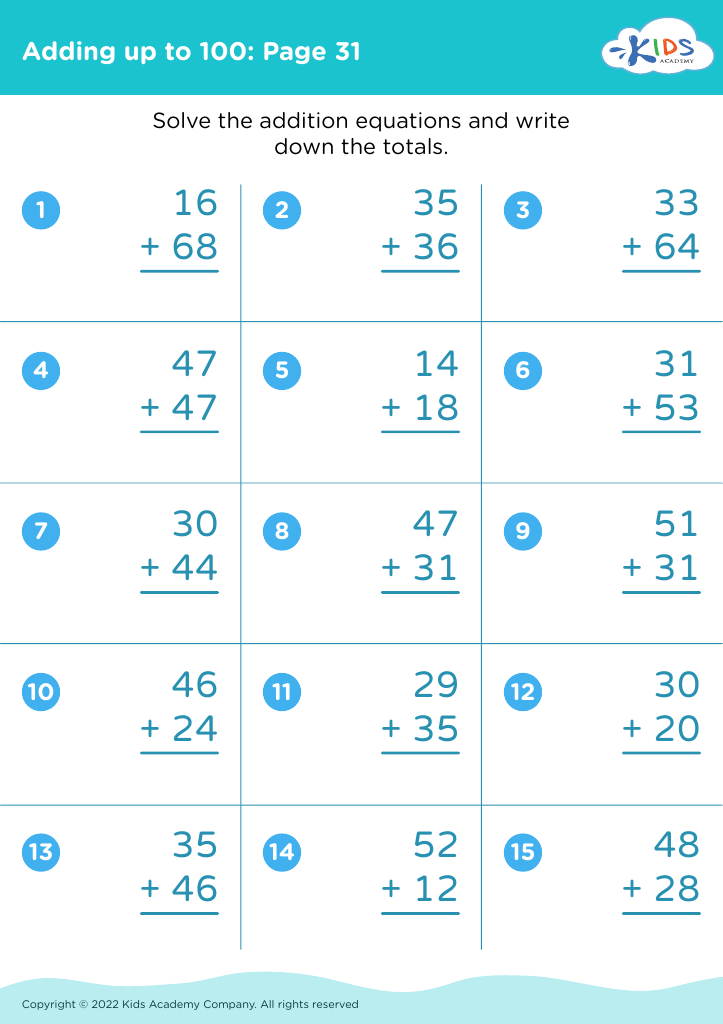
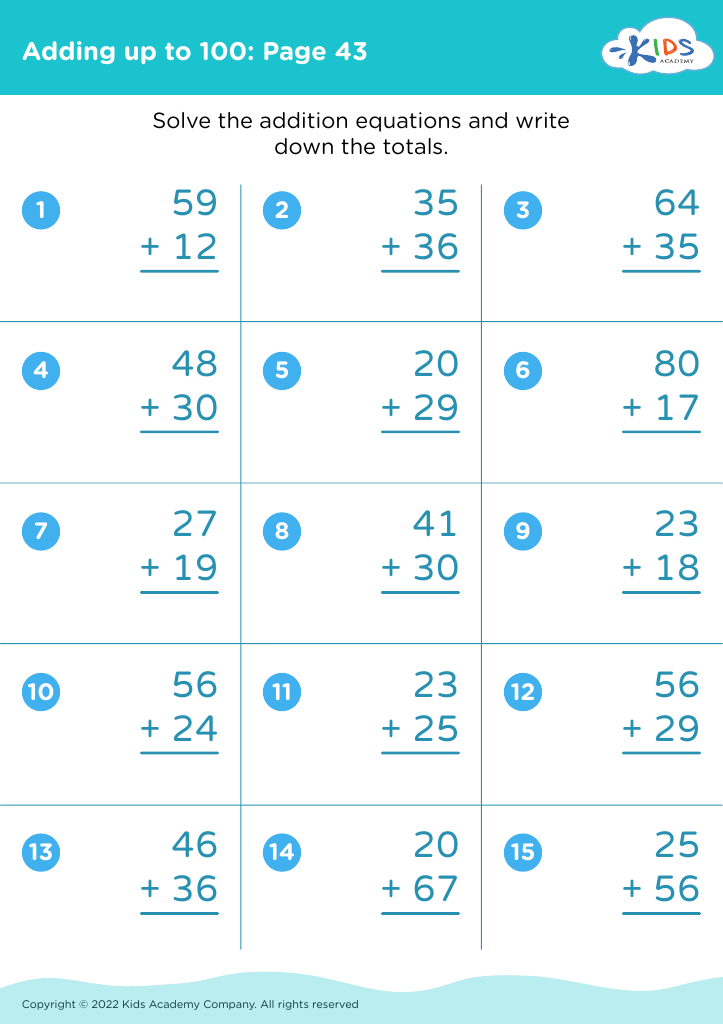
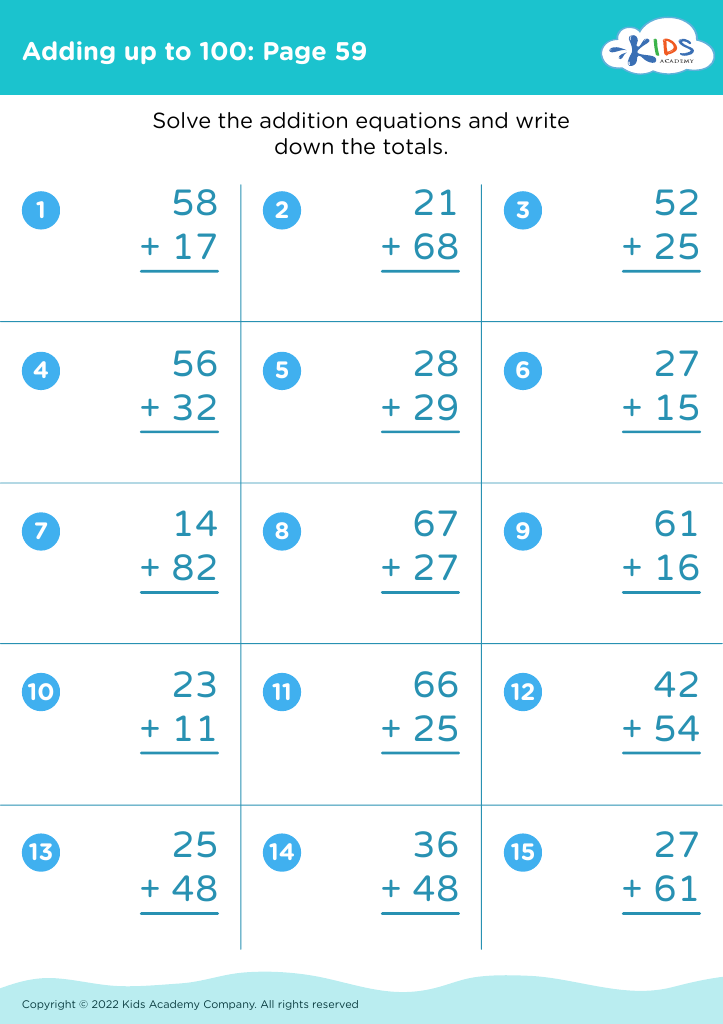
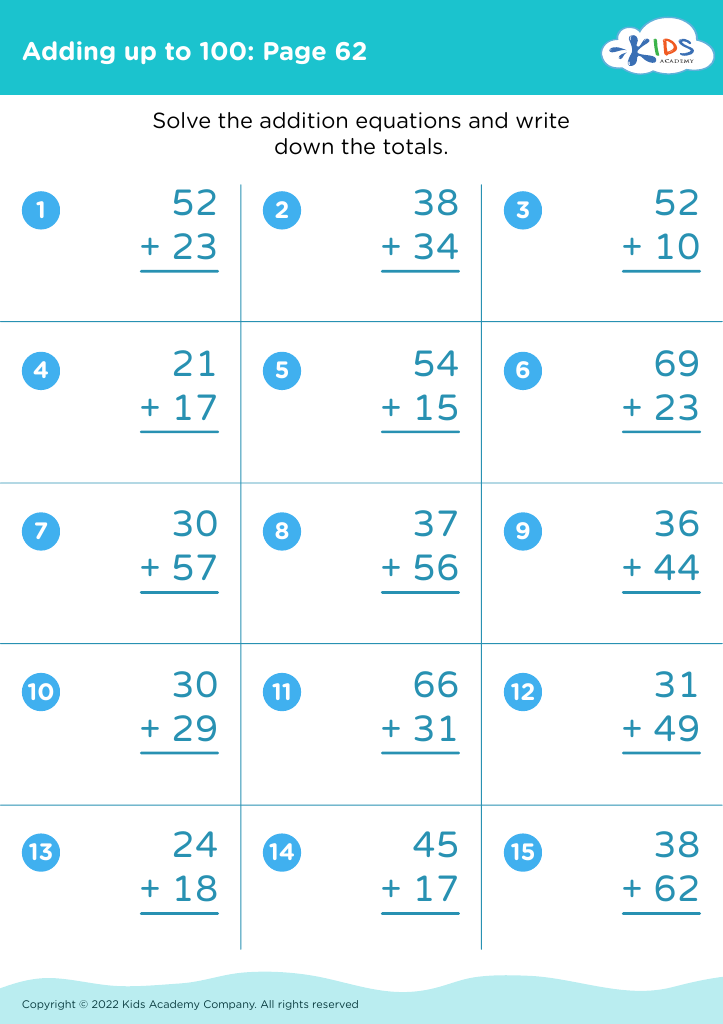


Understanding patterns, mastering addition up to 100, and generally enhancing miscellaneous mathematical skills are crucial for the development of 8-year-olds. At this age, children are in the foundational stages of their educational journey. Grasping patterns helps them to predict sequences, recognize logical relationships, and develop critical thinking skills necessary for problem-solving, not just in math but in everyday situations. For instance, being able to recognize numerical patterns can aid in understanding more complex mathematical concepts as they advance in grades.
Incorporating addition up to 100 provides a robust numerical foundation that is key for more advanced math skills such as multiplication and division. When children become proficient in addition, they develop confidence and build a positive relationship with math, which is essential given that math anxiety can deter future academic success.
Miscellaneous math skills, such as understanding basic geometry, measurements, and time, are equally vital. These skills form part of the real-world applications of math, fostering an ability to navigate various scenarios they encounter daily. Parents and teachers should nurture these competencies to support a well-rounded intellectual growth, ensuring that children feel equipped, confident, and ready to engage with a broad spectrum of challenges in and out of the classroom.